
Loading, please wait...
LOT 1816
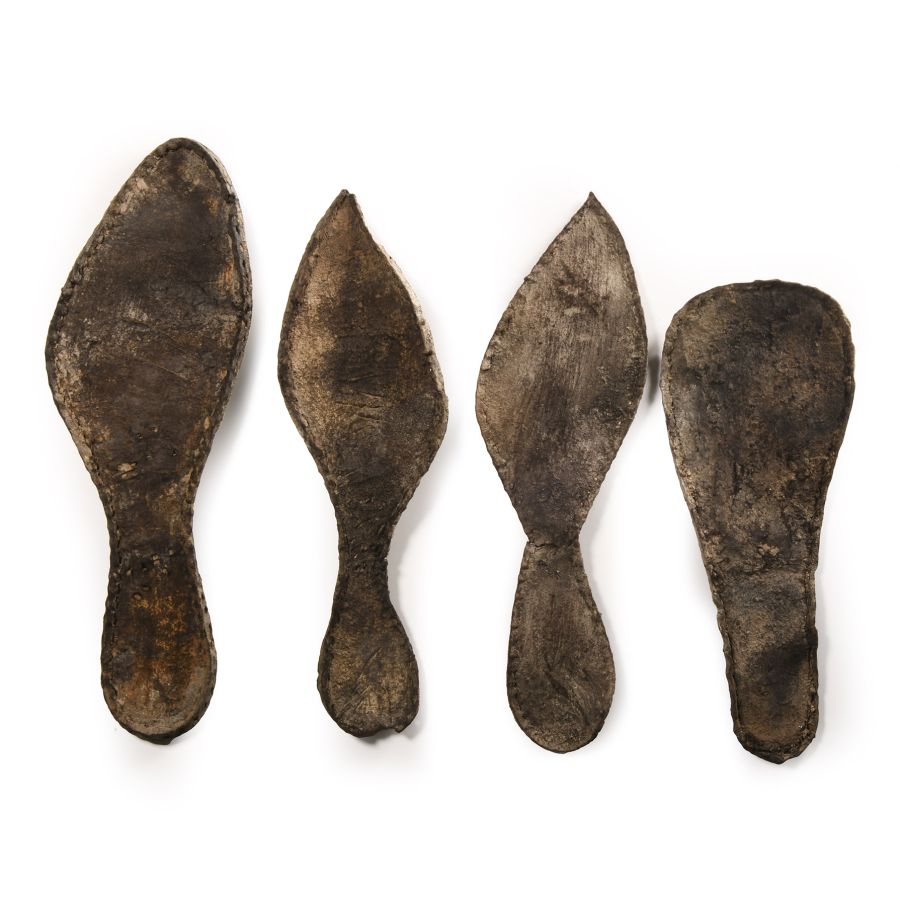
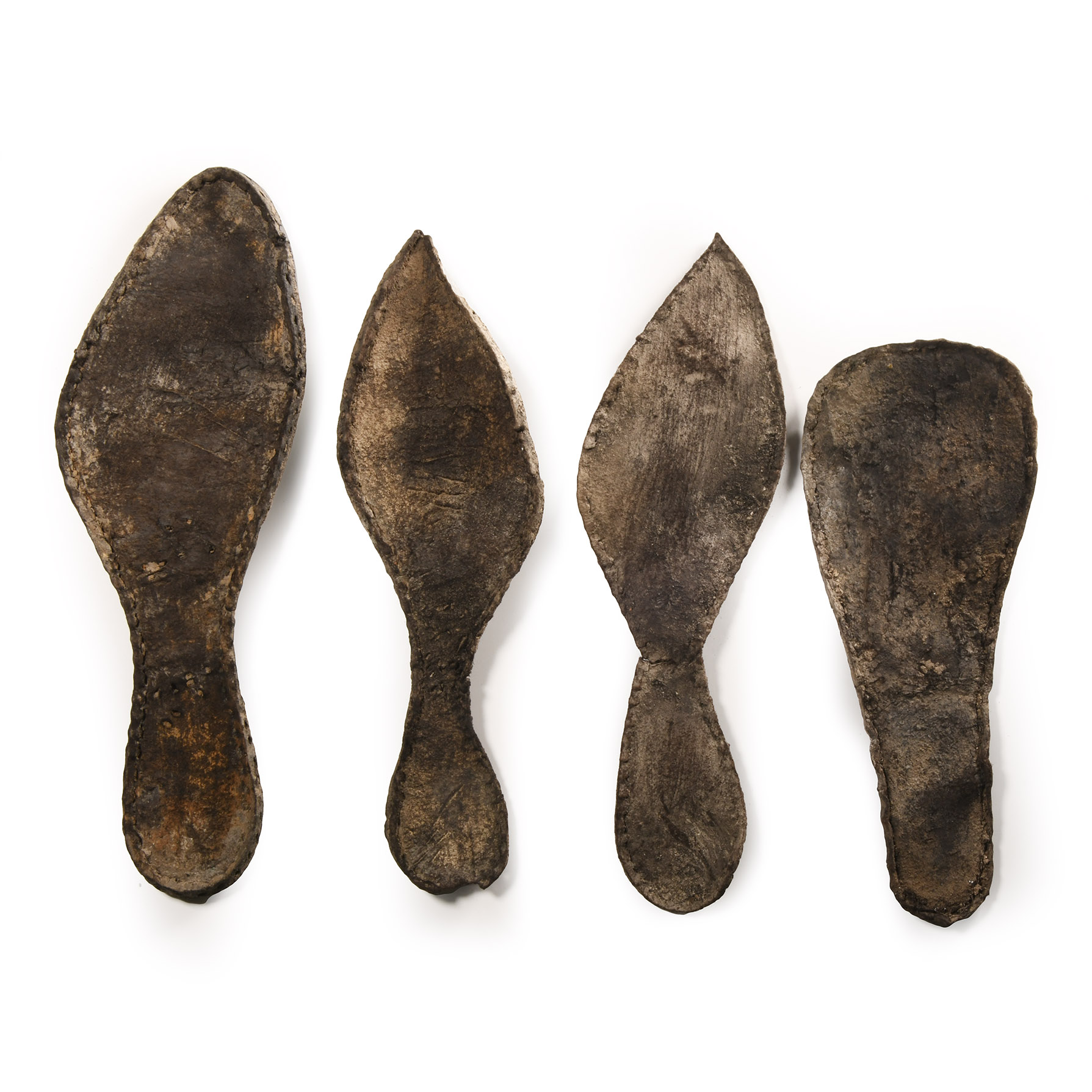
Tudor and Later 'Thames' Leather Shoe Sole Group
16TH-17TH CENTURY A.D.
7 1/4 - 9 1/8 in. (120 grams total, 18.5 - 23.1 cm).
Including two with pointed toe, pierced to accept stitching to attach the upper. [4, No Reserve]
ProvenanceFound Billingsgate spoil from the Thames foreshore, London, UK, circa 1984.
Property of an Essex collector.
TimeLine Auctions follows a vetting process to ensure the authenticity and legality of all items, reinforcing our commitment to integrity and responsible trading. Each antiquity, antique, and coin lot undergoes thorough examination by a vetting committee of at least ten external specialists, professional trade association members, scientists, and archaeologists: Our Vetting Process
AUCTIONS:
TimeLine is a leading auction house specialising in antiquities, ancient art, collectables, natural history, coins, medals, and books. Our auctions offer museums, collectors, historians, and enthusiasts the opportunity to acquire unique and historically significant pieces.
-
Bactrian Style Lapis Lazuli Bead Necklace
20th century A.D.Sold for (Inc. bp): £52
Restrung with biconvex beads. 5.84 grams, 41 cm
Acquired on the London, UK, art market in the 1990s. Ex London, UK, gallery. -
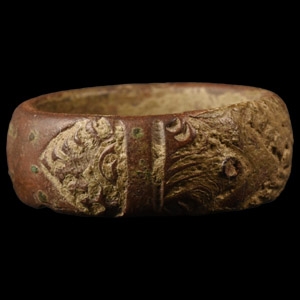
Georgian Ring with G O
18th-19th century A.D.Sold for (Inc. bp): £33
Plain hoop with faux buckle detailing with initials G and O. 12.29 grams, 25.66 mm overall, 19.41 mm internal diameter (approximate size British S 1/2, USA 9 1/4, Europe 20.63, Japan 19)
Found Suffolk, UK. -
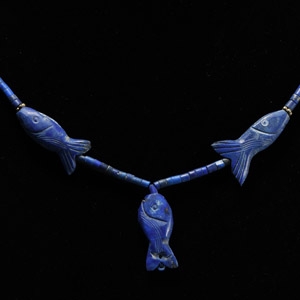
Bactrian Style Lapis Lazuli Bead Necklace
20th century A.D.Sold for (Inc. bp): £52
Restrung with fish-shaped tabular beads and seed beads. 13.6 grams, 37.5 cm
Acquired on the London, UK, art market in the 1990s. Ex London, UK, gallery.
