
Loading, please wait...
LOT 0303
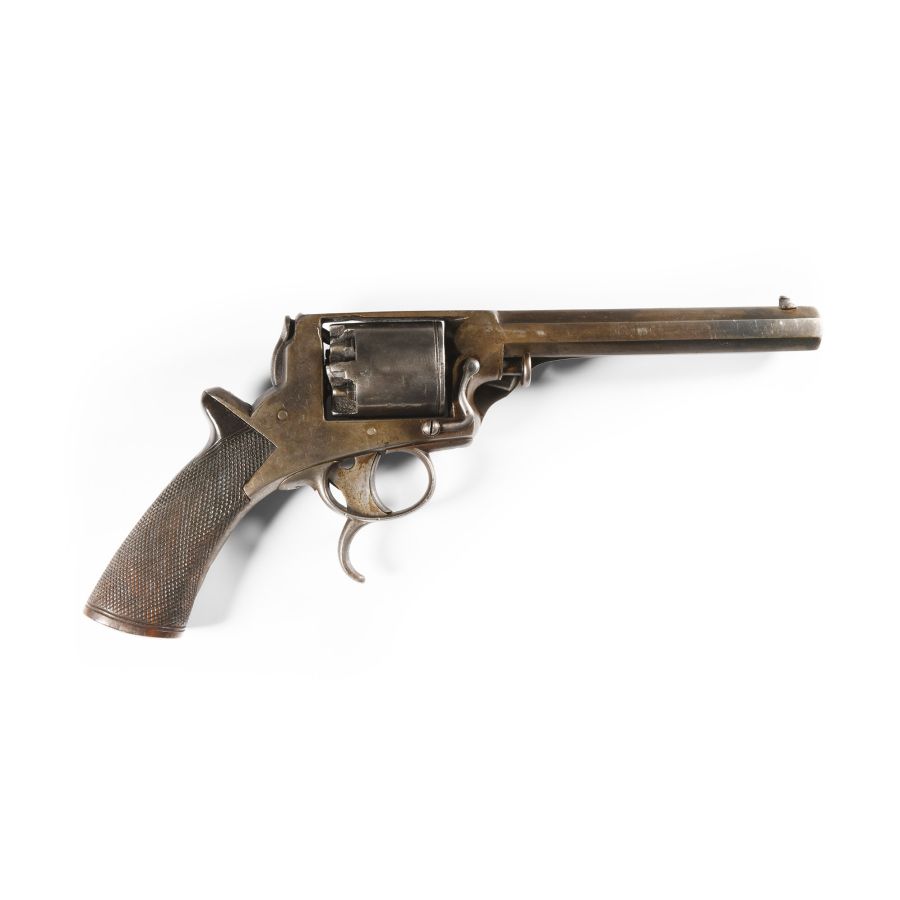
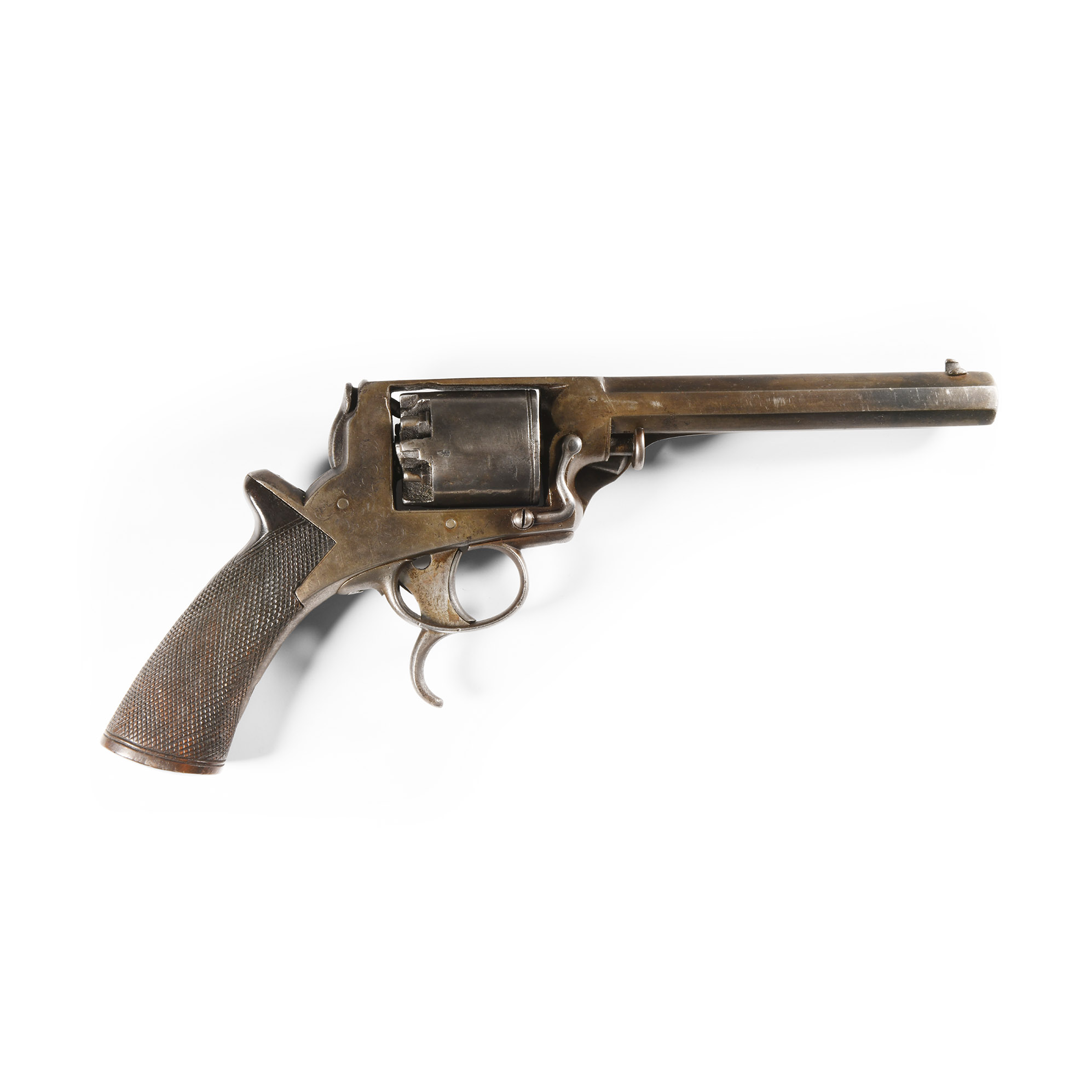
Tranter 3rd Model Double Trigger Percussion Revolver
FROM 1860 A.D.
11 1/2 in. (975 grams, 29 cm).
Solid frame, double trigger 54 bore revolver with 15cm (6") barrel, five-shot cylinder bearing London proof marks, hinged left side loading arm screwed to frame with unclear serial number to right frame and marked 'TRANTER' to cocking trigger; foliate engraved frame and chequered wood grip; action working.
ProvenanceAcquired from Michael J Noble Ltd, 2015.
The Kusmirek Collection, UK.
Accompanied by a copy of the Noble invoice.
See Prescott, G., The English Revolver, Schiffer, 2014, pp.67-68, for details.
FootnotesSold as an exempt item under Section 58 (2) of the Firearms Act, 1968, to be held as a curiosity or ornament. No license required but buyer must be over 18 years of age. Overseas bidders should note that, due to UK regulations governing export of all firearms, overseas buyers will need to make arrangements for shipping this lot out of the UK directly, by air freight, with a specialist company or agent.
CONDITIONTimeLine Auctions follows a vetting process to ensure the authenticity and legality of all items, reinforcing our commitment to integrity and responsible trading. Each antiquity, antique, and coin lot undergoes thorough examination by a vetting committee of at least ten external specialists, professional trade association members, scientists, and archaeologists: Our Vetting Process
AUCTIONS:
TimeLine is a leading auction house specialising in antiquities, ancient art, collectables, natural history, coins, medals, and books. Our auctions offer museums, collectors, historians, and enthusiasts the opportunity to acquire unique and historically significant pieces.
-
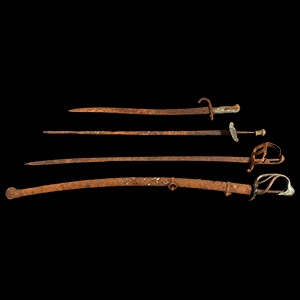
Post Medieval Iron Sword Group
18th-19th century A.D.Sold for (Inc. bp): £169
Comprising mostly military weapons: a bayonet; sabre; two swords. 3.5 kg total, 89-110 cm
Acquired 1990s-early 2000s. East Anglian private collection.
One of the swords shows analogies with post-1846 Wilkinson types, regulation steel hilt and steel scabbard with two loose rings. The Wilkinson style officers' blade was a compromise cut and thrust sabre blade with a fuller (groove), found on huge numbers of antique British military officers' swords. It replaced the pipeback blade previously used on officers' swords. -
.jpg)
French WWII 'Donkey Ears' Trench Periscope
1940s A.D.Sold for (Inc. bp): £143
Aluminium bodied binocular trench periscope with green finish, fitted with folding handle and leather neck strap; with original leather case fitted with shoulder strap and belt/webbing loop. 1.69 kg, 29.5 cm
The Kusmirek Collection, UK. -
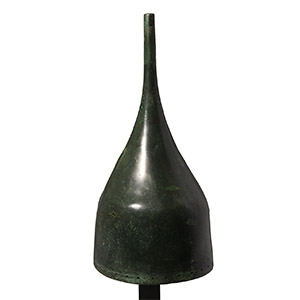
Neo-Assyrian Bronze Military Helmet
8th century B.C.Sold for (Inc. bp): £16,900
With lateral seams, attachment holes to lower edge, bowl with tall conical peak; mounted on a custom-made stand. 3.5 kg total, 55.5 cm high including stand
Acquired on the UK art market. From a private collection, 1980s. Ex central London gallery. The Kusmirek Collection, UK. Accompanied by an academic report by Dr Raffaele D'Amato. This lot has been checked against the Interpol Database of stolen works of art and is accompanied by search certificate number no.11765-203977.
From the reign of King Tiglatpilesar III (744-727 B.C.) or possibly later. The army of the Neo-Assyrian Empire consisted of large units of cavalry and skilled archers. Mobile workshops and smiths produced vast quantities of arrows and spears that were required while on campaign. The royal palaces of Nineveh, Ashur, and Nimrud were adorned with reliefs depicting Neo-Assyrian troops including foot soldiers in similar pointed bronze helmets. The helmet was originally bimetallic, made of bronze and iron. Although the iron section is now preserved only in fragments, having deteriorated long ago; the bronze half remains.
