
Loading, please wait...
LOT 1162
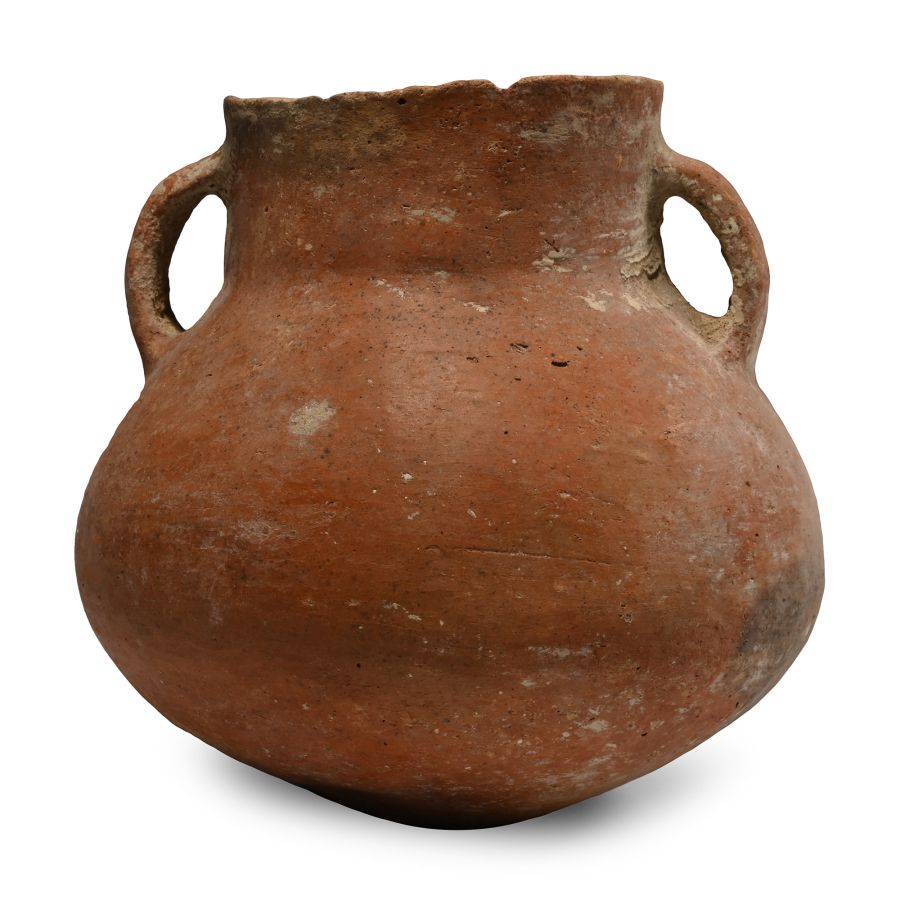
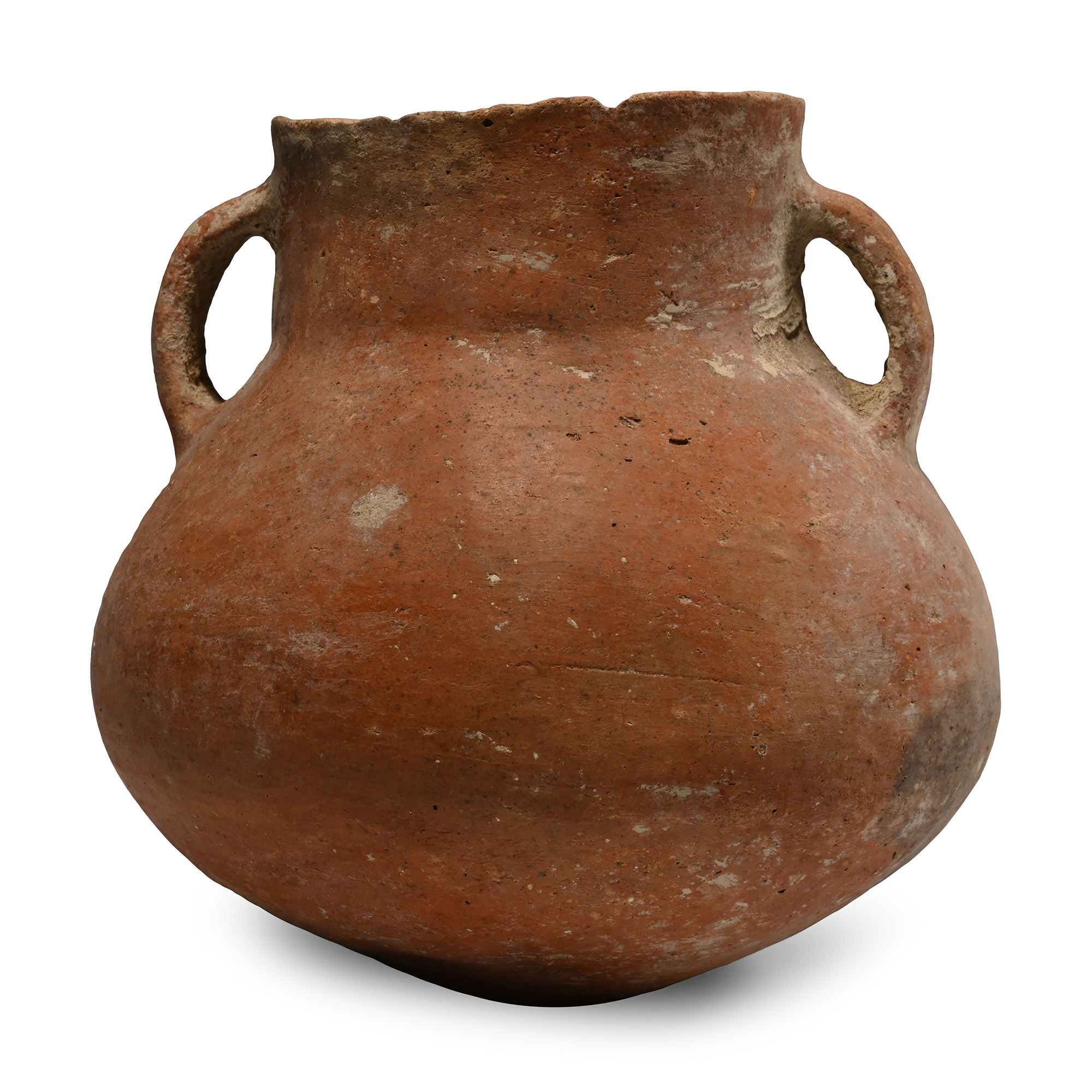
Transjordan Holy Land Terracotta Jar with Two Handles
EARLY BRONZE AGE I, 3RD MILLENNIUM B.C.
5 3/4 in. (382 grams, 14.5 cm).
Comprising a bulbous body with narrow base and short neck, two strap handles.
ProvenanceFrom the collection of a gentleman, Geneva, before 1988.
This lot has been cleared against the Art Loss Register database, and is accompanied by an illustrated lot declaration signed by the Head of the Antiquities Department, Dr Raffaele D'Amato.
TimeLine Auctions follows a vetting process to ensure the authenticity and legality of all items, reinforcing our commitment to integrity and responsible trading. Each antiquity, antique, and coin lot undergoes thorough examination by a vetting committee of at least ten external specialists, professional trade association members, scientists, and archaeologists: Our Vetting Process
AUCTIONS:
TimeLine is a leading auction house specialising in antiquities, ancient art, collectables, natural history, coins, medals, and books. Our auctions offer museums, collectors, historians, and enthusiasts the opportunity to acquire unique and historically significant pieces.
LOT 1162
Transjordan Holy Land Terracotta Jar with Two Handles
Estimate £120 - 170€140 - 200 (for guidance only)$160 - 230 (for guidance only)
-
.jpg)
Western Asiatic Cobalt-Blue Footed Bowl
9th century A.D.Estimate: £7,000 - 9,000 (+bp*)
Opening Bid: £3,150
With carinated sidewall, rolled and everted rim, shallow foot; partial lustre-glaze to surface with four trapezoidal panels: two with reserved regardant bird and two with tracery motif. 498 grams, 18.5 cm
Private collection, Japan, acquired prior to 1982. Private collection, U.K. This lot has been checked against the Interpol Database of stolen works of art and is accompanied by a search certificate number no.12724-235155. This lot has been cleared against the Art Loss Register database, and is accompanied by an illustrated lot declaration signed by the Head of the Antiquities Department, Dr Raffaele D'Amato. -
.jpg)
Western Asiatic Cylinder Seal Group
2nd millennium A.D.Estimate: £600 - 800 (+bp*)
Opening Bid: £300
Including one drum-shaped alabaster type with segmented geometric design, one polished columnar example with frieze of figures and other types. 65 grams total, 19-31 mm
From the collection of a gentleman, acquired on the London art market in the 1990s. This lot has been cleared against the Art Loss Register database, and is accompanied by an illustrated lot declaration signed by the Head of the Antiquities Department, Dr Raffaele D'Amato. -
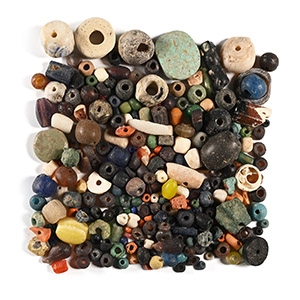
Western Asiatic Mixed Bead Group
1st millennium B.C. and laterSold for (Inc. bp): £13
Including annular, tabular, cylindrical and other beads in glass, shell, stone and ceramic. 80 grams total, 2-21 mm
Ex London, UK, collection, 1990s. This lot has been cleared against the Art Loss Register database, and is accompanied by an illustrated lot declaration signed by the Head of the Antiquities Department, Dr Raffaele D'Amato.
