
Loading, please wait...
LOT 1234
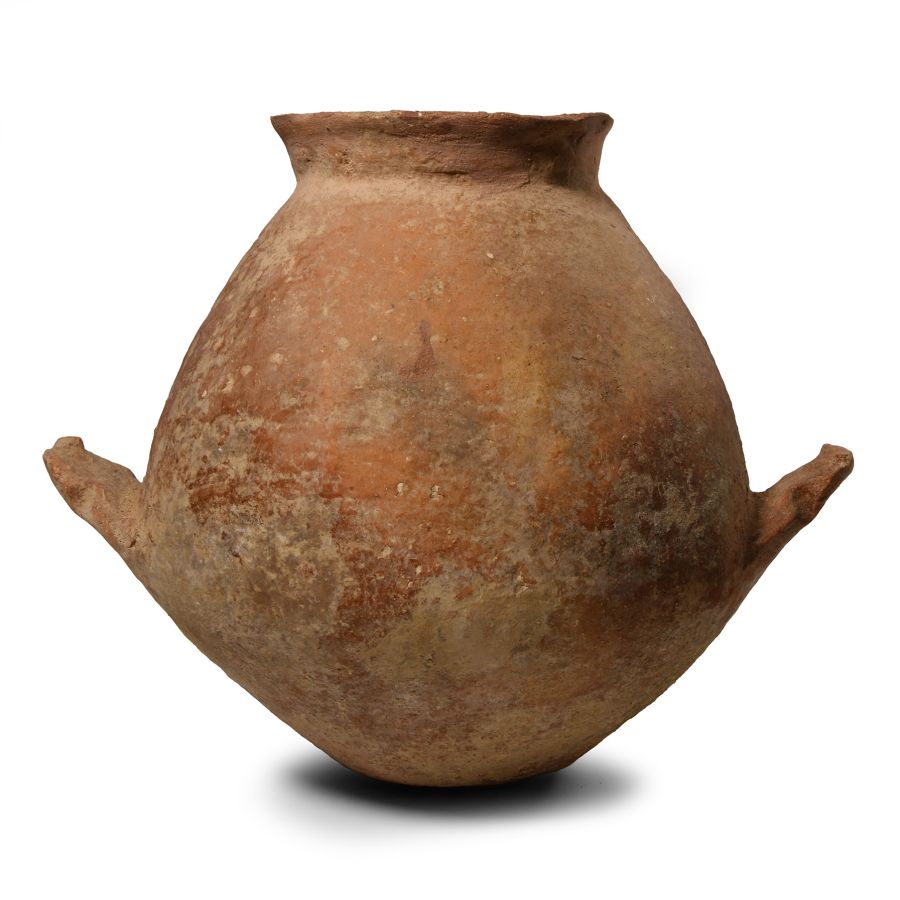
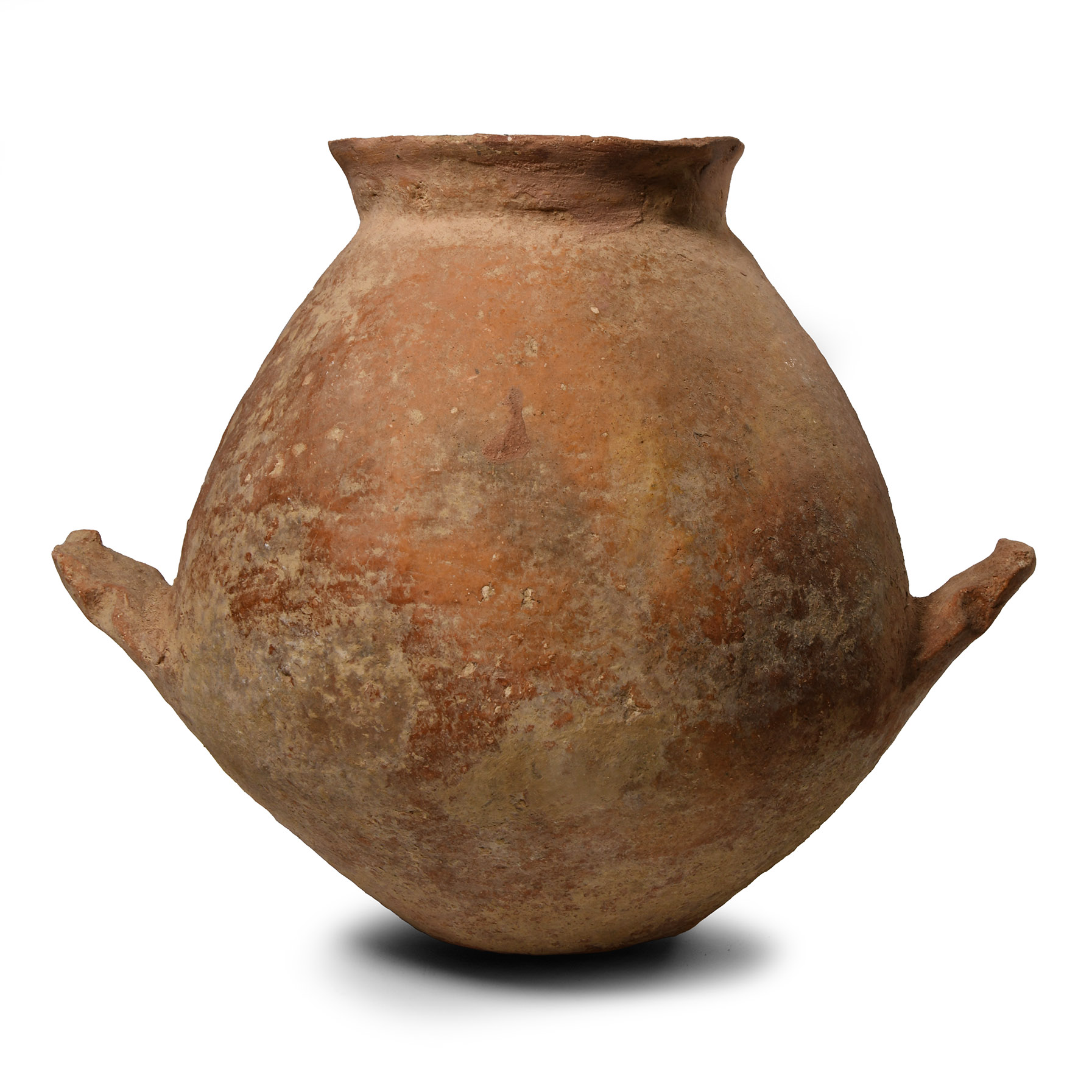
Trans Jordan Terracotta Jar
EARLY BRONZE AGE I, 3RD MILLENNIUM B.C.
10 1/2 in. (1.76 kg, 27 cm wide).
Biconvex globular body with broad neck, everted rim, two ledge handles below the equator; rim chipped.
ProvenanceFrom an important collection of terracotta pre 1988, London and Geneva.
CONDITIONTimeLine Auctions follows a vetting process to ensure the authenticity and legality of all items, reinforcing our commitment to integrity and responsible trading. Each antiquity, antique, and coin lot undergoes thorough examination by a vetting committee of at least ten external specialists, professional trade association members, scientists, and archaeologists: Our Vetting Process
AUCTIONS:
TimeLine is a leading auction house specialising in antiquities, ancient art, collectables, natural history, coins, medals, and books. Our auctions offer museums, collectors, historians, and enthusiasts the opportunity to acquire unique and historically significant pieces.
-
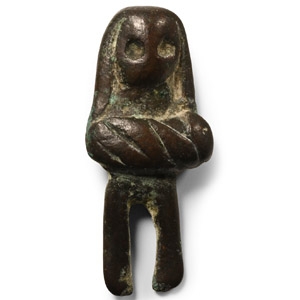
Nabataean Bronze Figure of a Woman Holding a Child
Circa 3rd-1st century B.C.Sold for (Inc. bp): £91
The mother depicted with a large head and indented eyes, holding a swaddled baby in her arms; remains of a suspension loop to the reverse. 6.83 grams, 32 mm
From the property of late Mr SM, London, UK, 1969-1999. -
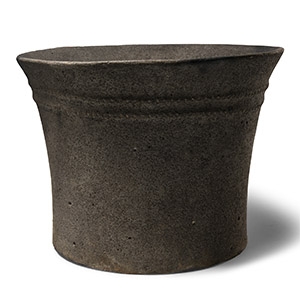
Large Bactrian Stone Vessel
2nd millennium B.C.Sold for (Inc. bp): £169
With slightly dished base, trumpet-shaped sidewall, parallel circumferential ridges below the rim with segmented detailing. 7.45 kg, 25.7 cm wide
From a collection acquired on the UK art market from various auction houses and collections mostly before 2000. From an important Cambridgeshire estate; thence by descent. -
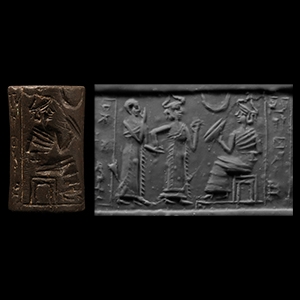
Large Akkadian Cylinder Seal with Presentation Scene
2nd millennium B.C.Sold for (Inc. bp): £546
Black stone with a seated female deity wearing long robes and horned cap and holding a sceptre in outstretched hand, crescent moon above; in front a Janus headed deity with one face human, the other a lion, wearing a horned cap and long robes, hand upraised and holding an offering, the other hand holding that of a male worshipper in long robes, hand held in front of mouth; rectangular panel with two columns of cuneiform text. 19.7 grams, 29 mm
From the Rihani family collection, formed 1970-1980s. From a collection acquired from various auction houses in the UK. From the estate of Mr R.W., a private Wiltshire, UK, collector; thence by descent.
