
Loading, please wait...
LOT 1279
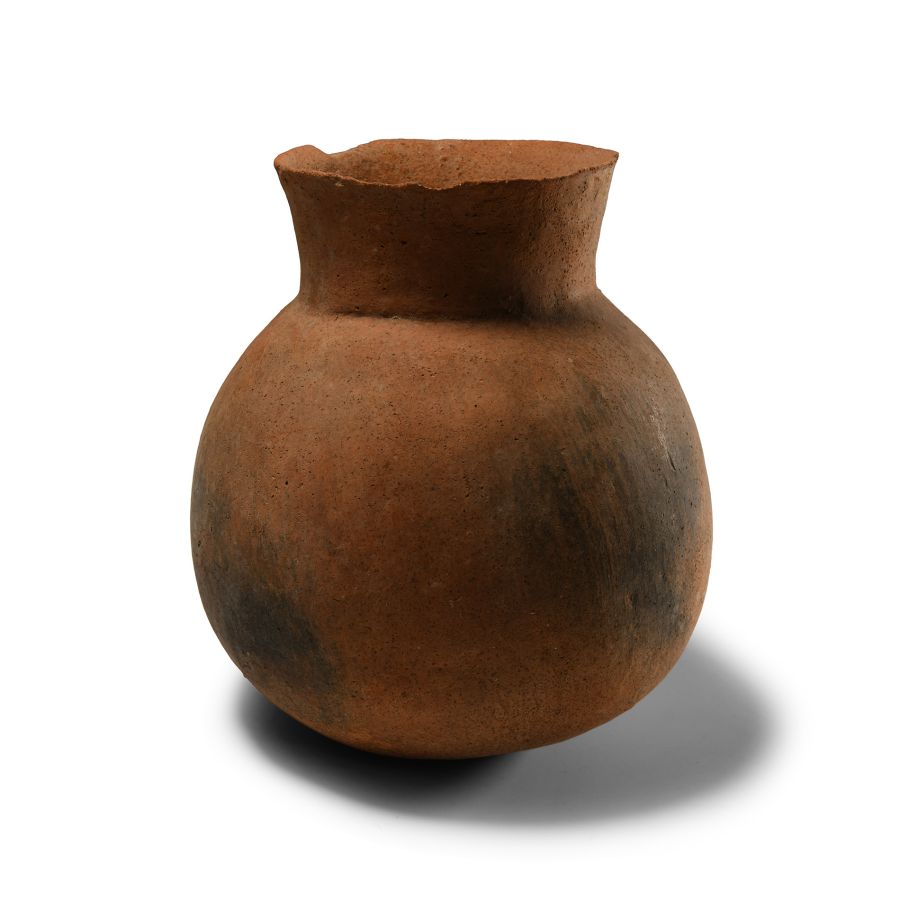
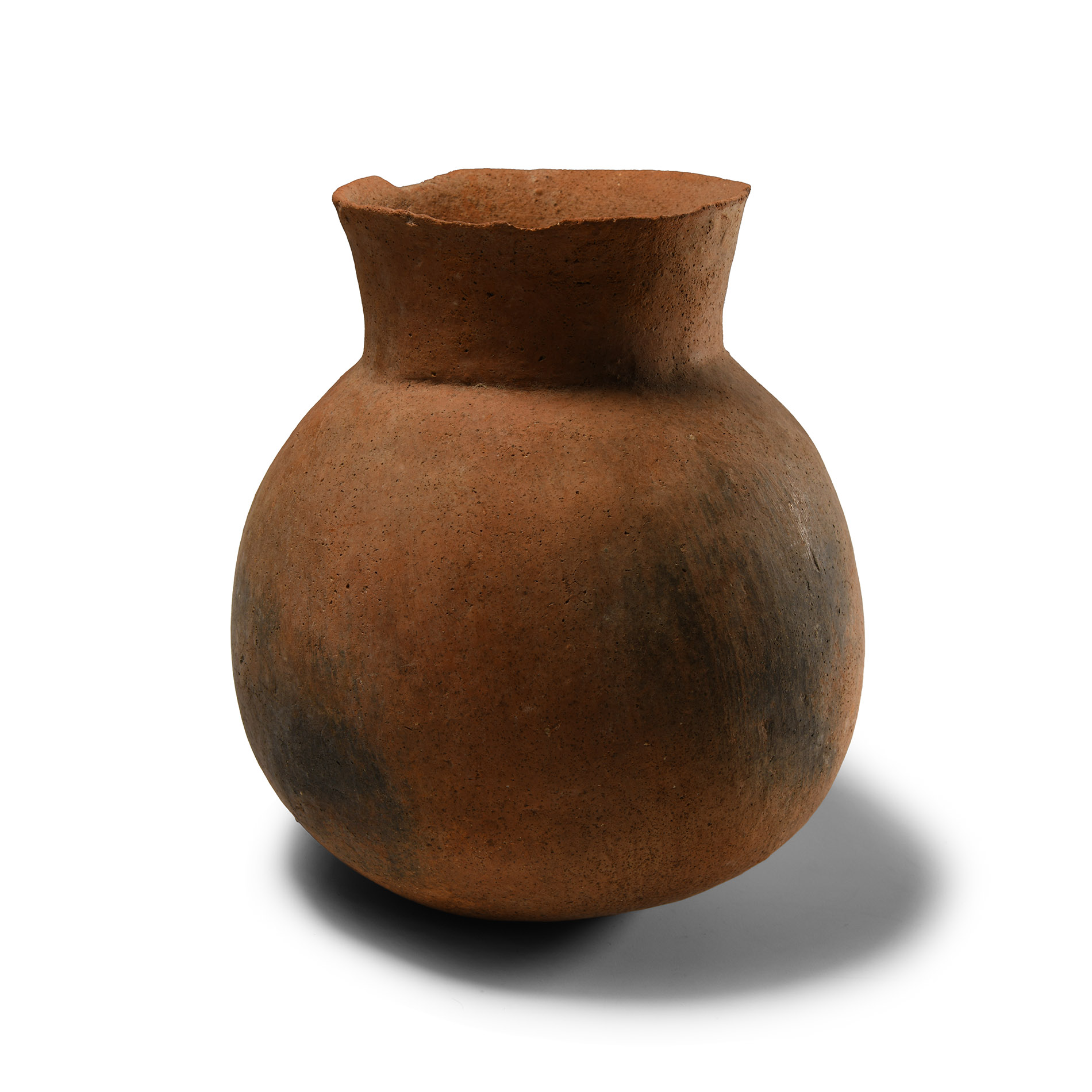
Trans Jordan Terracotta Jar
EARLY BRONZE AGE, 3RD MILLENNIUM B.C.
5 7/8 in. (415 grams, 15 cm high).
With globular body and broad flared mouth; cracked.
ProvenanceEx London, UK, collection, 1988.
CONDITIONTimeLine Auctions follows a vetting process to ensure the authenticity and legality of all items, reinforcing our commitment to integrity and responsible trading. Each antiquity, antique, and coin lot undergoes thorough examination by a vetting committee of at least ten external specialists, professional trade association members, scientists, and archaeologists: Our Vetting Process
AUCTIONS:
TimeLine is a leading auction house specialising in antiquities, ancient art, collectables, natural history, coins, medals, and books. Our auctions offer museums, collectors, historians, and enthusiasts the opportunity to acquire unique and historically significant pieces.
-
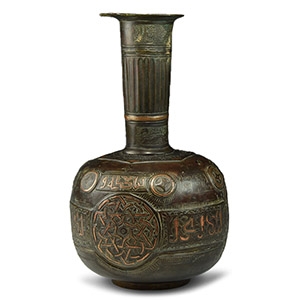
Western Asiatic Signed Bronze Calligraphic Vessel
Circa 13th-14th century A.D.Sold for (Inc. bp): £286
With basal ring, tall tubular neck, flared rim; scroll foliage detailing to the rim and shoulder, fluted neck, interlace roundel and calligraphic band to the equator; base restored, rim partly absent, holes to shoulder and lower body; base restored, possibly a marriage. 3.1 kg, 37 cm
Fair condition, base restored, rim partly absent, holes to shoulder and lower body.
Property of a Hampstead gentleman; from his family collection formed since the 1970s. -

Western Asiatic Bronze Rhyton Bull Head
Early 1st millennium B.C.Sold for (Inc. bp): £2,080
Hollow-formed head of a bull with short curved horns, large bulbous eyes, lateral scooped ears, short muzzle with flared nostrils, dewlap beneath; possibly from a rhyton; mounted on a custom-made display stand. 1.3 kg total, 22 cm high including stand
Excellent condition, very rare.
Acquired between 1980-1983. From the collection of a London, UK, gentleman. Accompanied by an academic report by Dr Raffaele D’Amato. This lot has been checked against the Interpol Database of stolen works of art and is accompanied by search certificate number no.12019-213616.
The rhyton was dipped into a krater and held above the drinker's mouth with the spout covered by a thumb, then opened to release a stream of wine into the mouth. The bull was a symbol of man’s control over the nature. Not only were these heads used to serve wine in the banquets, but they were also destined to hold blood from sacrificial animals, that was collected and then poured on the ground as a libation. -
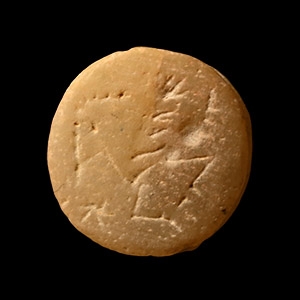
Urartu Alabaster Stamp Seal
8th-7th century B.C.Estimate: £100 - 140 (+bp*)
Opening Bid: £50
Bifacial round seal with mythical creatures, likely winged ibexes; pierced hole for suspension. 3.36 grams, 16 mm
Ex London, UK, collection, before 1988.
Animal-headed creatures are often winged bird-headed figures with human body in the Urartu and Northern-Syrian seals of ‘dnplţ ‘bd ‘mndb type, but often winged, apparently ibex-headed figures appear on the seals of the type bqšt bt ‘bdyrh. The ibex-headed figures might belong to same group of semi-divine beings visible on the Assyrian art.
