
Loading, please wait...
LOT 1276
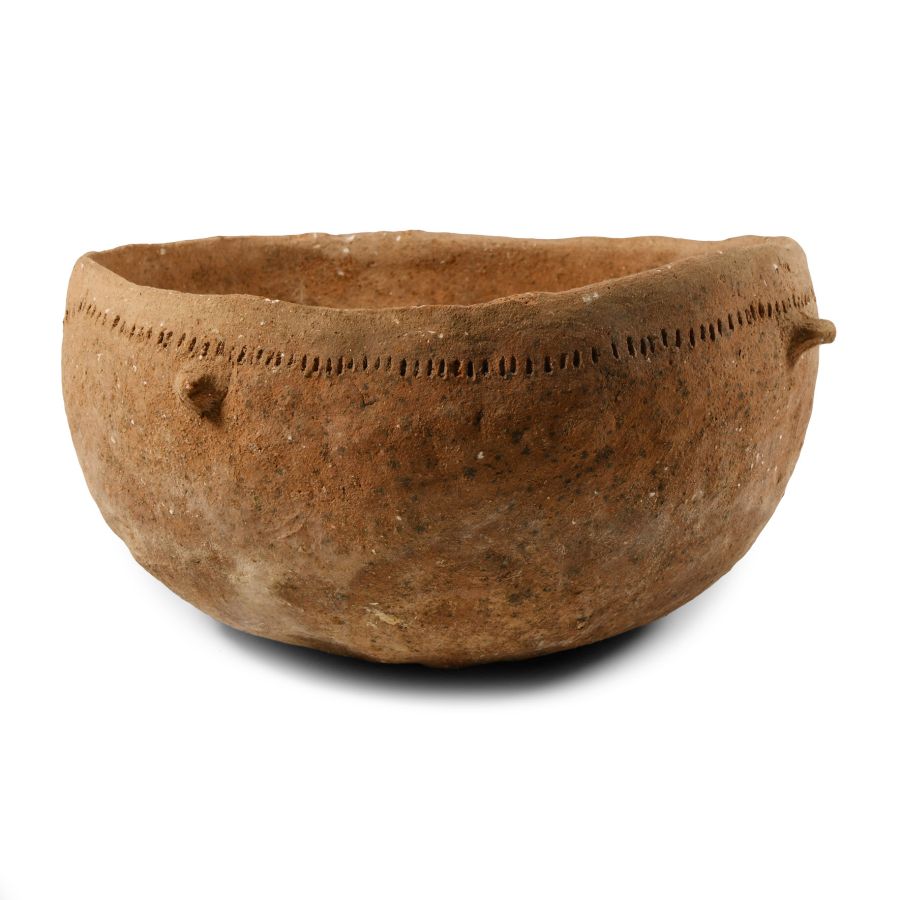
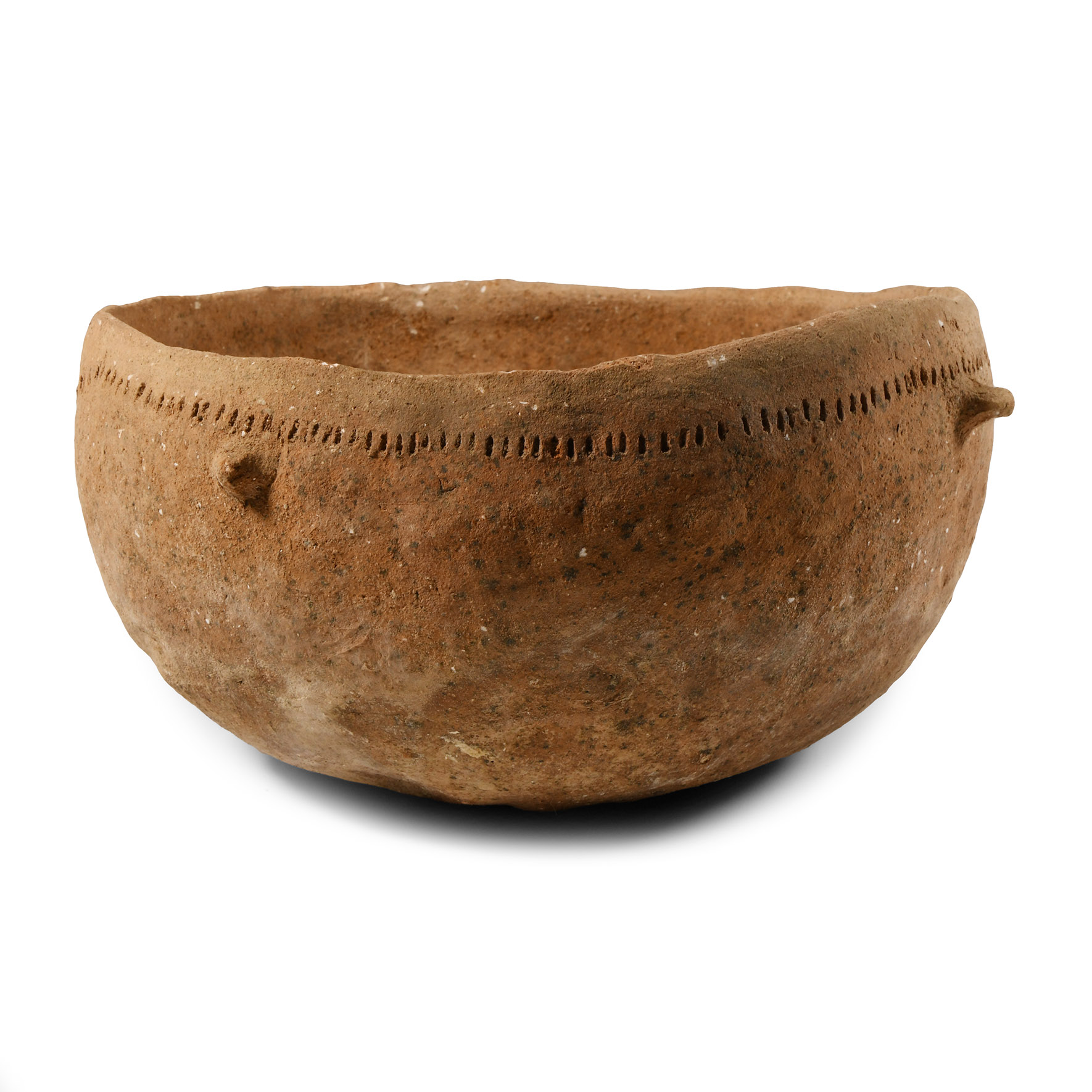
Trans Jordan Terracotta Bowl
EARLY BRONZE AGE I, 3RD MILLENNIUM B.C.
8 3/4 in. (1.21 kg, 29.5 cm wide).
Of squat profile with rounded rim, two latera; stub handles and band of pointillé ornament below the rim.
ProvenanceFrom an important collection of terracotta pre 1988, London and Geneva.
CONDITIONTimeLine Auctions follows a vetting process to ensure the authenticity and legality of all items, reinforcing our commitment to integrity and responsible trading. Each antiquity, antique, and coin lot undergoes thorough examination by a vetting committee of at least ten external specialists, professional trade association members, scientists, and archaeologists: Our Vetting Process
AUCTIONS:
TimeLine is a leading auction house specialising in antiquities, ancient art, collectables, natural history, coins, medals, and books. Our auctions offer museums, collectors, historians, and enthusiasts the opportunity to acquire unique and historically significant pieces.
-
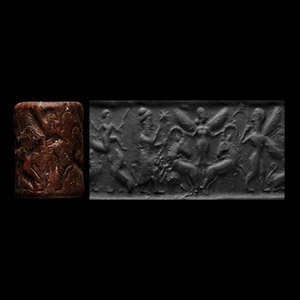
Assyrian Red Stone Cylinder Seal
Early 1st millennium B.C.Sold for (Inc. bp): £650
With intaglio frieze depicting a pair of addorsed ibexes in rampant pose, their horns held in the grip of a nude facing female with spread wings; tall male winged figure looking backwards towards the female, advancing towards two opposed hounds with heads thrown back and a small figure leaping over them holding two reeds or wands; tall male figure in pleated garment and broad-brimmed cap holding the tether of one ibex, star above; supplied with a museum-quality impression. 28.4 grams, 30 mm
From the property of late Mr SM, London, UK, 1970-1990s, thence by descent. Examined by Professor Wilfrid George Lambert FBA (1926-2011), historian, archaeologist, and specialist in Assyriology and Near Eastern archaeology, in the late 1980s and early 1990s. -
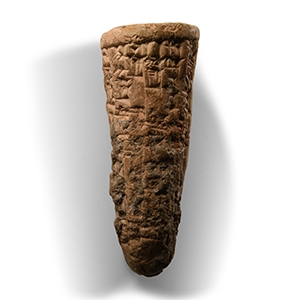
Sumerian Lipit-Ishtar King of Isin Cuneiform Foundation Cone
1936-1926 B.C.Sold for (Inc. bp): £3,900
From the House of Justice at Isin; inscribed with columns of cuneiform text: I, (the divine) Lipit-Eštar, humble shepherd of (the city of) Nippur, faithful farmer of (the city of) Ur, tireless worker for (the city of) Eridu, perfect Lord for (the city of) Uruk, King of (the city of) Isin, King of Sumer and Akkad, who pleases (the goddess) Innana, on the day I established justice in Sumer and Akkad, I built the temple of justice at the Reservoir, the great space of the gods; and bearing inked collection number: 'BEC.2 00015024' to base. 158 grams, 11.3 cm
Previously from the estate of a West Sussex, UK, collector. From a collection acquired from various auction houses in the UK. From the estate of Mr R.W., a private Wiltshire, UK, collector; thence by descent. This lot has been checked against the Interpol Database of stolen works of art and is accompanied by search certificate no.12314-215541.
Votive cones are one type of royal foundation deposit, objects that were buried in the walls and beneath the floors of important buildings during construction to sanctify the site and to create a historical memory of the ruler and his achievements. Lipit-Ishtar was the fifth king of the Dynasty of Isin, which was founded after the collapse of the Third Dynasty of Ur. He is famous as having published a series of laws in the Sumerian language anticipating the code of Hammurabi by more than a century. -
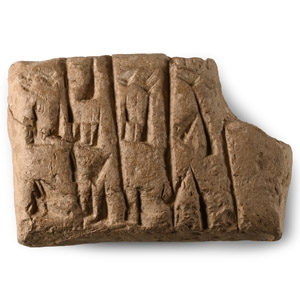
Mesopotamian Cuneiform Tablet
2nd millennium B.C.Sold for (Inc. bp): £286
Pillow-shaped clay tablet with cuneiform text to one broad face and one edge; chipped. 43.5 grams, 50 mm
Specialised collection of cuneiform texts, the property of a London gentleman and housed in London before 1992. Thence by descent to family members. Examined by Professor Wilfrid George Lambert FBA (1926-2011), historian, archaeologist, and specialist in Assyriology and Near Eastern archaeology, in the late 1980s and early 1990s. This small collection is exceptional for the variety of types, including some very rare and well preserved examples.
