
Loading, please wait...
LOT 1303
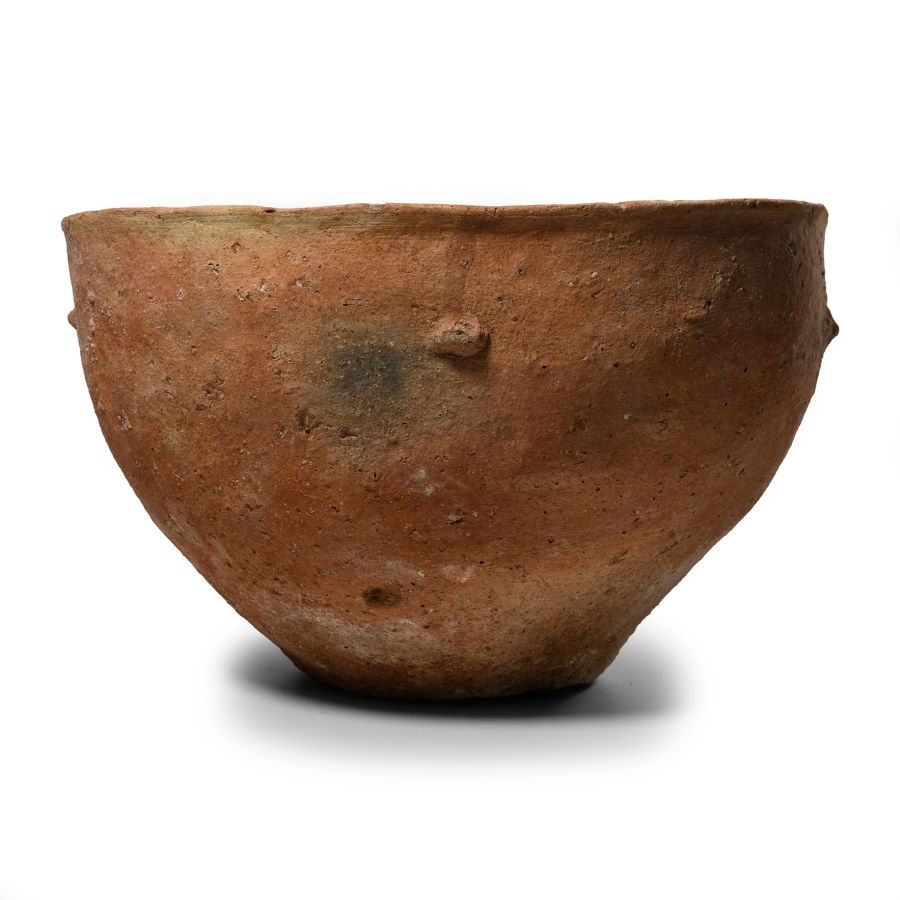
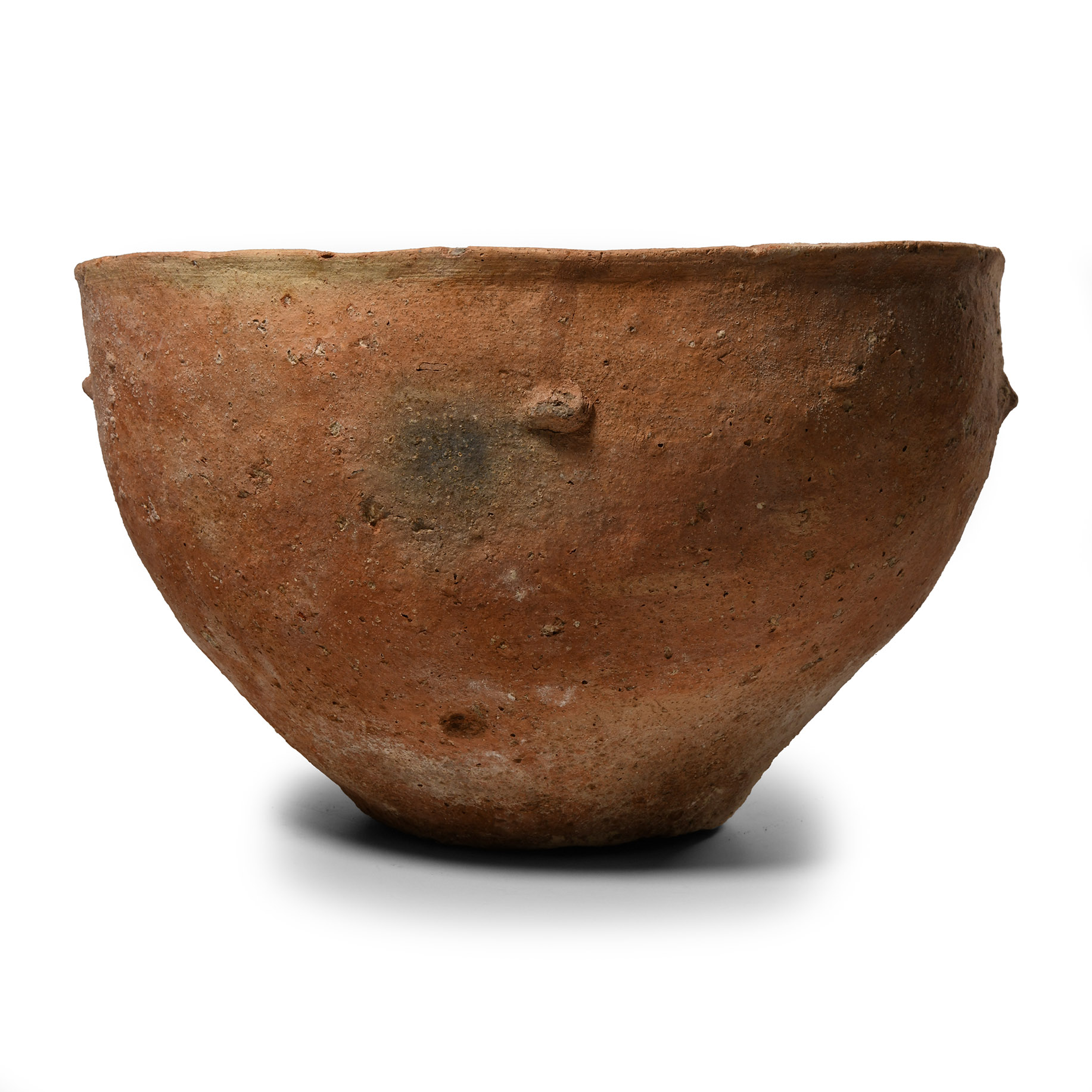
Trans Jordan Terracotta Bowl
EARLY BRONZE AGE I, 3RD MILLENNIUM B.C.
10 in. (1.64 kg, 25.5 cm wide).
Of hemispherical profile with everted rim, five radiating ledge handles to the shoulder.
ProvenanceFrom an important collection of terracotta pre 1988, London and Geneva.
CONDITIONTimeLine Auctions follows a vetting process to ensure the authenticity and legality of all items, reinforcing our commitment to integrity and responsible trading. Each antiquity, antique, and coin lot undergoes thorough examination by a vetting committee of at least ten external specialists, professional trade association members, scientists, and archaeologists: Our Vetting Process
AUCTIONS:
TimeLine is a leading auction house specialising in antiquities, ancient art, collectables, natural history, coins, medals, and books. Our auctions offer museums, collectors, historians, and enthusiasts the opportunity to acquire unique and historically significant pieces.
-
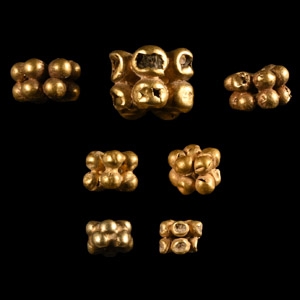
Western Asiatic Graduated Gold Tubular Bead Set
2nd-1st millennium B.C.Estimate: £250 - 350 (+bp*)
Opening Bid: £125
Mixed group of granulated beads with wide holes. 2.02 grams total, 4-8 mm
From a late Japanese specialist collector, 1970-2000s. -
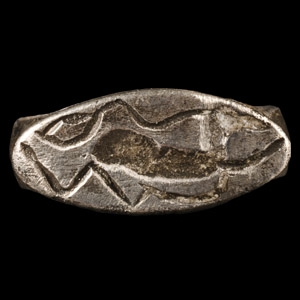
Western Asiatic Silver Ring with Animal
Circa 2nd century B.C.Sold for (Inc. bp): £59
With a wide hoop supporting a lentoid bezel, intaglio design of a running quadruped with long ear or horn projecting from the head and legs spread out beneath the body. 2.94 grams, 20.18 mm overall, 18.03 mm internal diameter (approximate size British N 1/2, USA 6 3/4, Europe 14.35, Japan 13)
UK private collection before 2000. On the UK art market. Property of a London gentleman. -
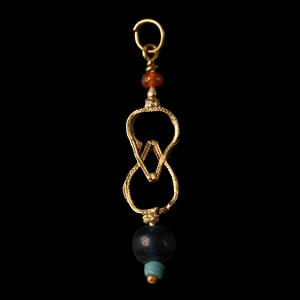
Western Asiatic Gold Openwork Bead Pendant
Circa 1st millennium B.C. and laterSold for (Inc. bp): £140
Composed of two intersecting teardrop-shaped rings with plaited borders; two blue glass bead suspended from below with a granulated collar above; the decorative suspension loop with a granulated collar and an oblate carnelian bead. 1.78 grams, 45 mm
Ex property of a late Japanese collector, 1970-2000s. Accompanied by an old collection ticket.
