
Loading, please wait...
LOT 1284
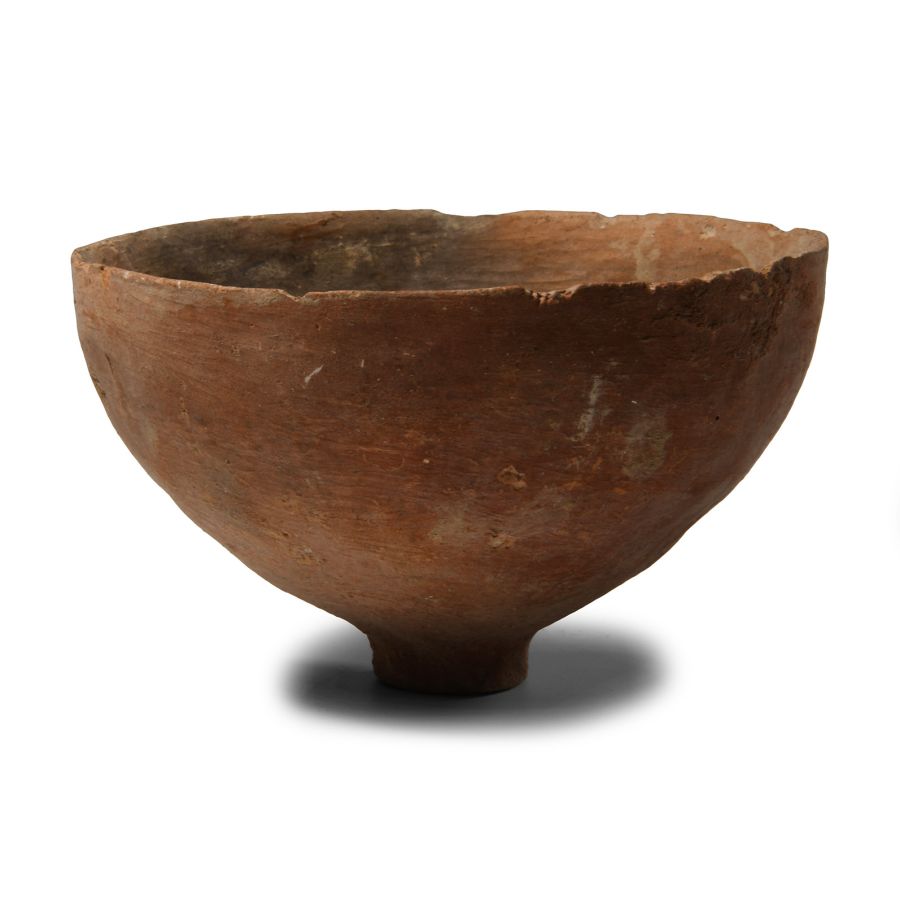
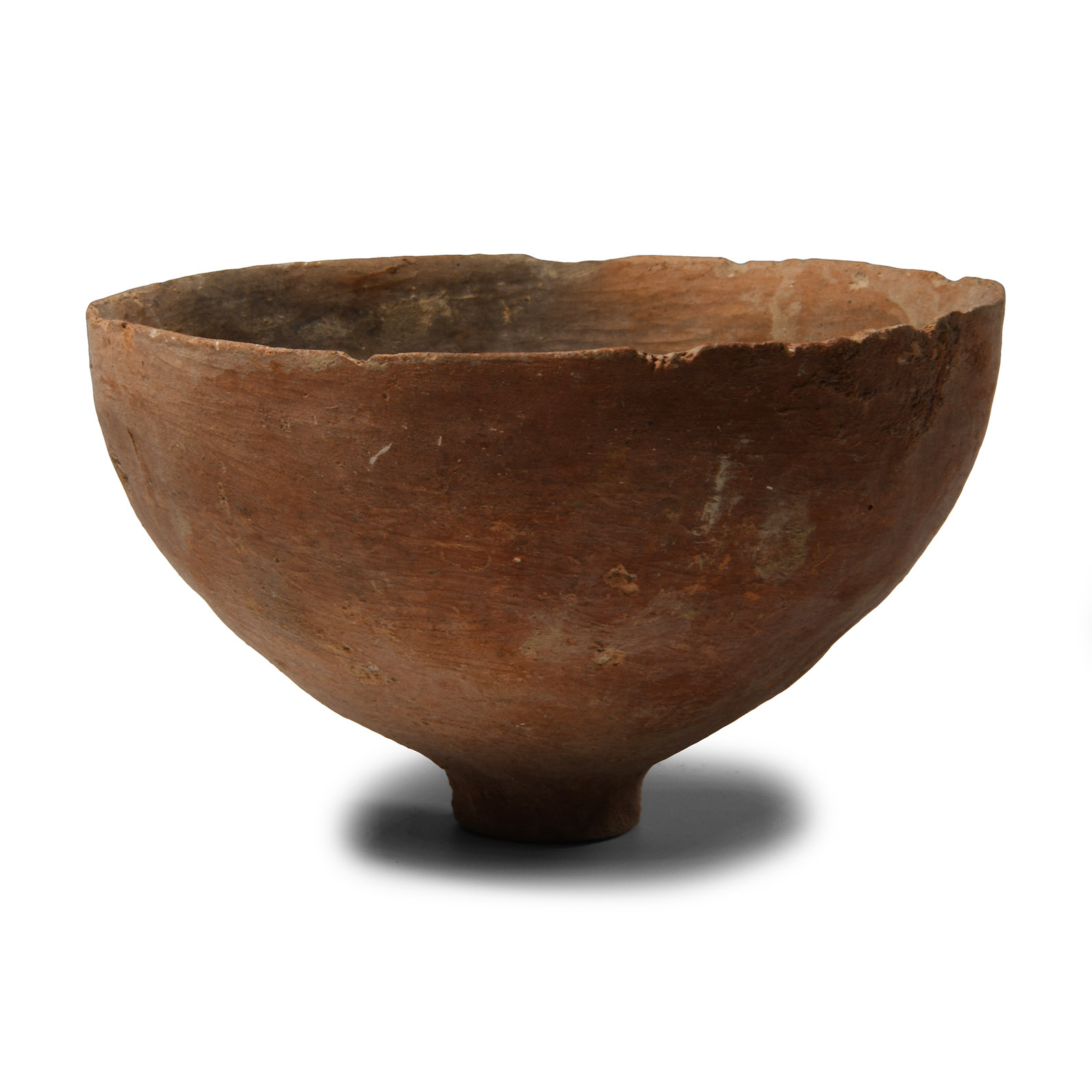
Trans-Jordan Polished Terracotta Bowl
EARLY BRONZE AGE, 3RD-2ND MILLENNIUM B.C.
2 1/2 in. (145 grams, 65 mm high).
Hemispherical n profile with small foot, dimple to the underside; rim chipped. [No Reserve]
ProvenanceFrom a family collection pre 1988.
CONDITIONTimeLine Auctions follows a vetting process to ensure the authenticity and legality of all items, reinforcing our commitment to integrity and responsible trading. Each antiquity, antique, and coin lot undergoes thorough examination by a vetting committee of at least ten external specialists, professional trade association members, scientists, and archaeologists: Our Vetting Process
AUCTIONS:
TimeLine is a leading auction house specialising in antiquities, ancient art, collectables, natural history, coins, medals, and books. Our auctions offer museums, collectors, historians, and enthusiasts the opportunity to acquire unique and historically significant pieces.
-
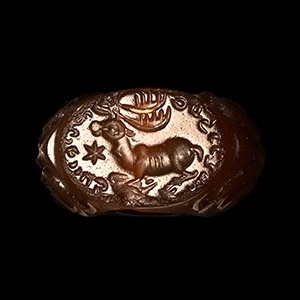
Sassanian Carnelian Stamp Seal with Stag and Inscription
3rd-7th century A.D.Sold for (Inc. bp): £1,170
With scrolls to the shoulders, ellipsoid face with intaglio running stag, star and Pahlavi legend surrounding. 6.86 grams, 23 mm
Acquired between 1980-1983. From the 'Empire' collection, an important UK private collection of seals. -
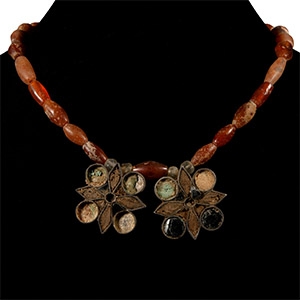
Elamite Silver Flower Pendant
1st millennium B.C.Estimate: £400 - 600 (+bp*)
Opening Bid: £200
A restrung necklace of fusiform and tubular carnelian beads with two silver cloisonné pendant quatrefoils with haematite discs in the spandrels, inset glass and other panels, oval rock crystal beads flanking. 59 grams, 43 cm
Fine condition.
Acquired 1990s. With a London gallery. Property of a London collector; from her family's private collection. -
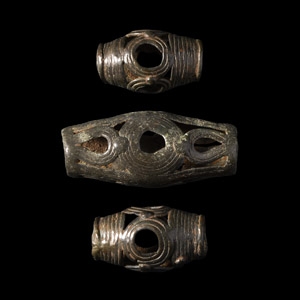
Amlash Bronze Cage Bead Collection
2nd-1st millennium B.C.Sold for (Inc. bp): £130
Each composed of a biconical body featuring openwork geometric motifs and pellets. 68 grams total, 38-63 mm
Fine condition.
Acquired before 1983. Ex London gallery, 1990s.
