
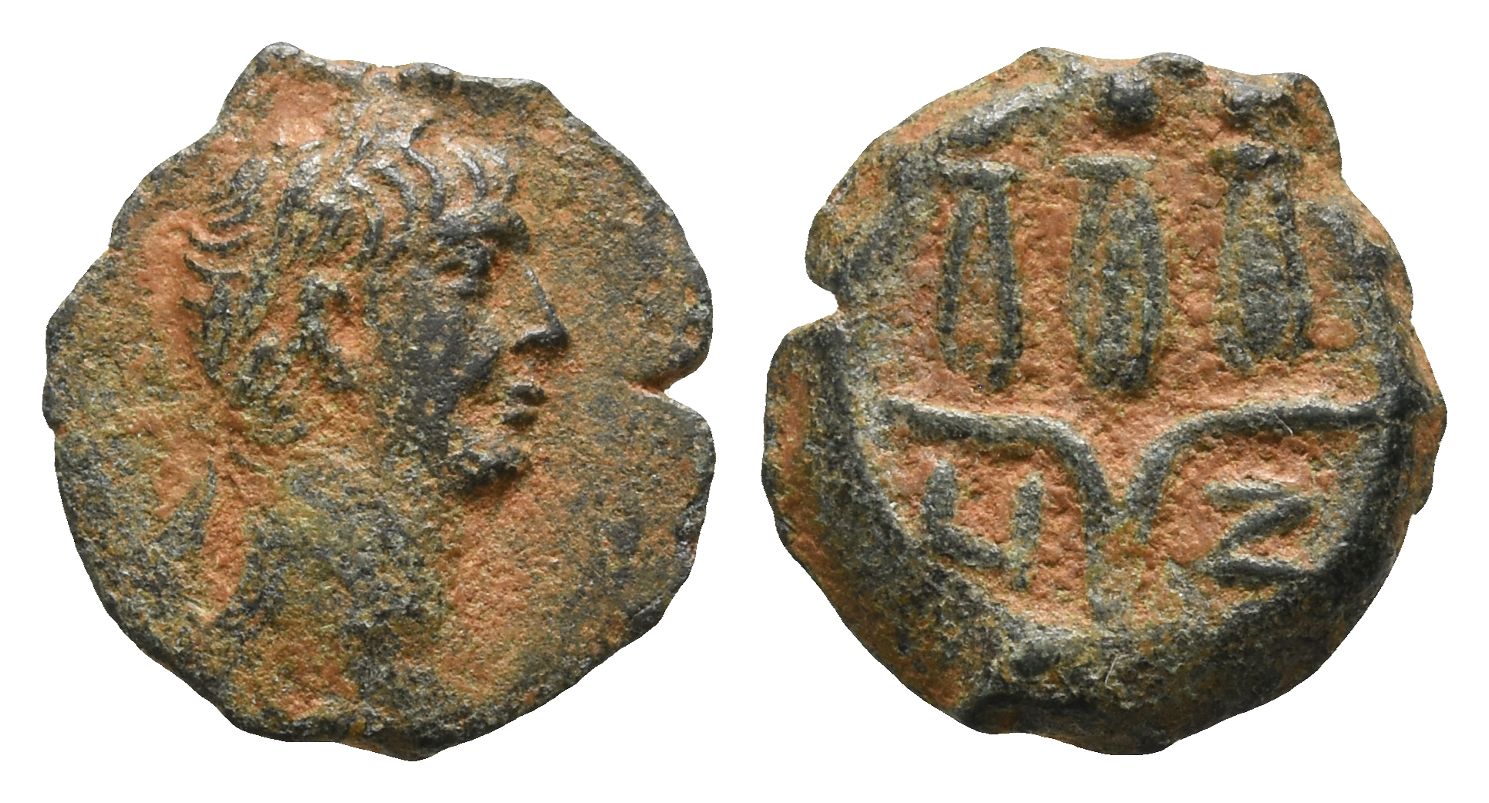
LOT 3020
Trajan AE Dichalkon of Alexandria, Egypt. AD 98-117.
Dated RY 17 (AD 113/4). Laureate head to right / Hemhem crown, L I-Z (date) below. RPC III 4820; Dattari (Savio) 7221; Emmett 707.17. Very Fine.(1.05gr, 12mm, 12h.).
ProvenanceFrom the collection of a gentleman, acquired on the London art market in the 1990s.
FootnotesThe Hemhem crown was an ornate triple Atef with corkscrew sheep horns and usually two uraeus. The Egyptian word "Hemhem" means "to shout," "cry out," possibly indicating that the Hemhem crown represented a battle horn.
TimeLine Auctions follows a vetting process to ensure the authenticity and legality of all items, reinforcing our commitment to integrity and responsible trading. Each antiquity, antique, and coin lot undergoes thorough examination by a vetting committee of at least ten external specialists, professional trade association members, scientists, and archaeologists: Our Vetting Process
AUCTIONS:
TimeLine is a leading auction house specialising in antiquities, ancient art, collectables, natural history, coins, medals, and books. Our auctions offer museums, collectors, historians, and enthusiasts the opportunity to acquire unique and historically significant pieces.
-
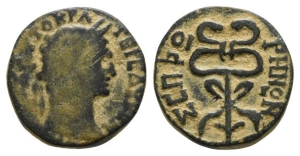
Trajan AE Hemiassarion of Sepphoris (Diocaesaraea), Judaea. AD 98-117.
Sold for (Inc. bp): £117
[ΤΡΑΙΑΝΟΣ Α]ΥΤΟΚΡΑ-ΤΩΡ ΕΔΩΚΕΝ, laureate head to right / ΣΕΠΦΩ-ΡΗΝΩΝ, filleted caduceus. RPC III 3938; BMC 12-16; Rosenberger 5; Sofaer 3. 4.52gr, 17mm, 12h.
Near Very Fine.
From the collection of a gentleman, acquired on the London art market in the 1990s. -
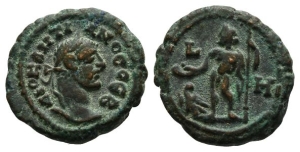
Diocletian BI Tetradrachm of Alexandria, Egypt. AD 284-305.
Sold for (Inc. bp): £33
Dated RY 8 (AD 291/2). ΔIOKΛHTIANOC CЄB, laureate head to right / Zeus standing to left, holding patera and sceptre, eagle standing to left; L H (date) across fields. RPC X Online Unassigned ID 76093; Dattari (Savio) 5641; Emmett 4087. 6.41gr, 20mm, 11h.
Very Fine.
From the collection of a gentleman, acquired on the London art market in the 1990s. -
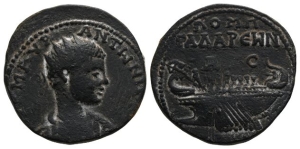
Elagabalus AE 32mm of Gadara, Decapolis. AD 218-222.
Estimate: £150 - 200 (+bp*)
Opening Bid: £75
Dated CY 281 (AD 218). [ΑΥΤ] Κ Μ ΑΥΡ ΑΝΤWΝΙΝ[ΟϹ], radiate, draped, and cuirassed bust to right, seen from front / ΠΟΜΠ ΓΑΔΑΡΕWΝ A[Π]C (date), galley to left with rowers; at stern, navigator; at prow, figure standing and holding standard. RPC VI Online 9255; Spijkerman 85; Rosenberger 79; Sofaer 91. 16.87gr, 32mm, 12h.
Near Very Fine. Dark brown patina.
From the collection of a gentleman, acquired on the London art market in the 1990s.
