
Loading, please wait...
LOT 0293
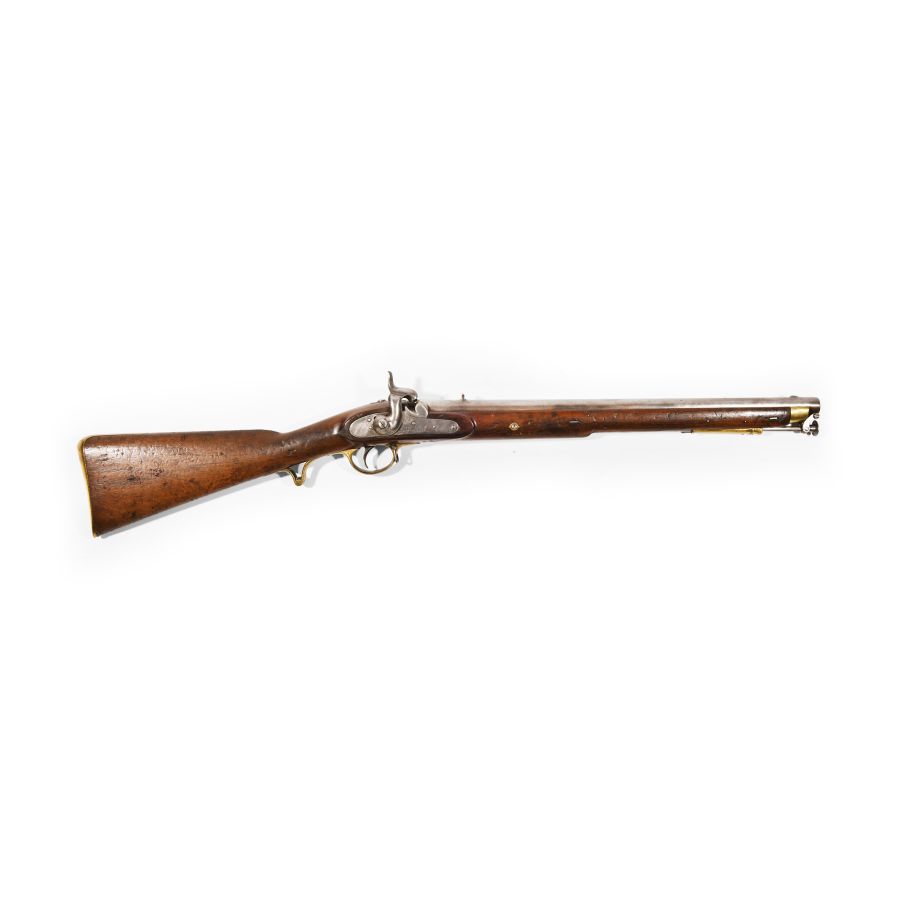
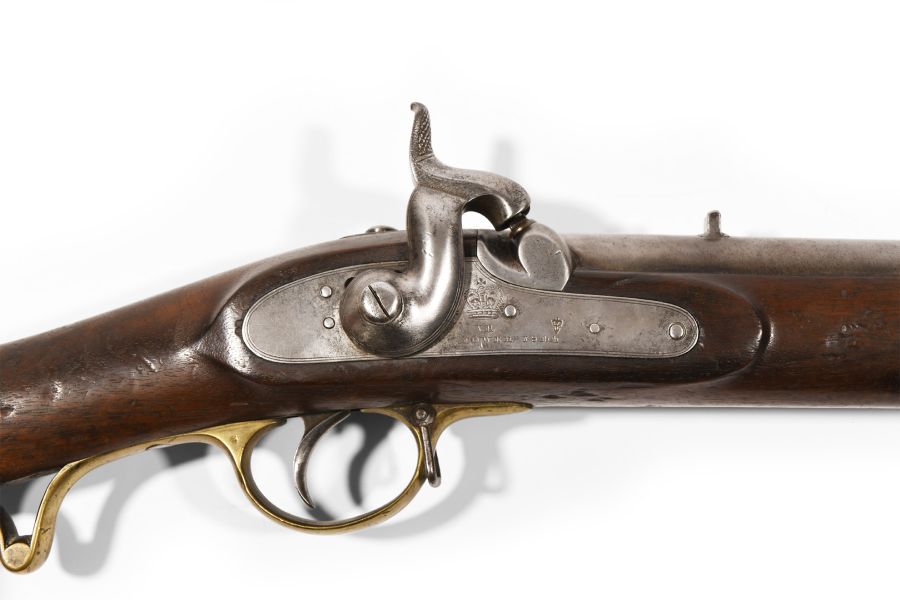
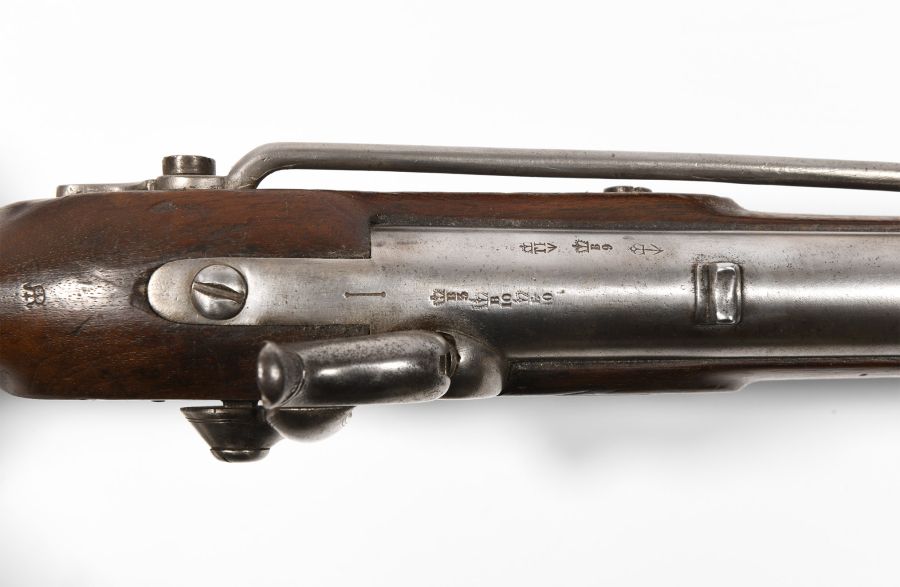
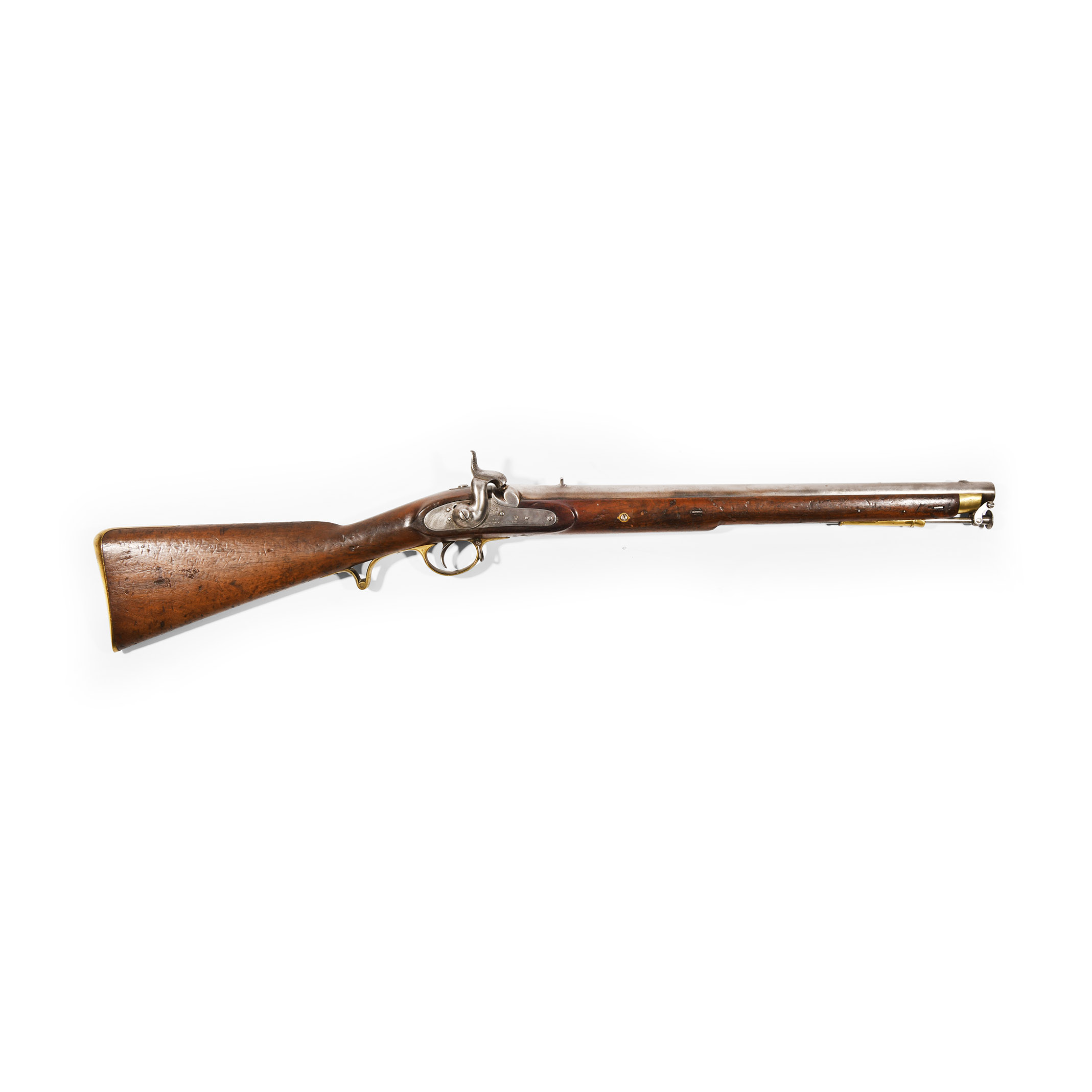
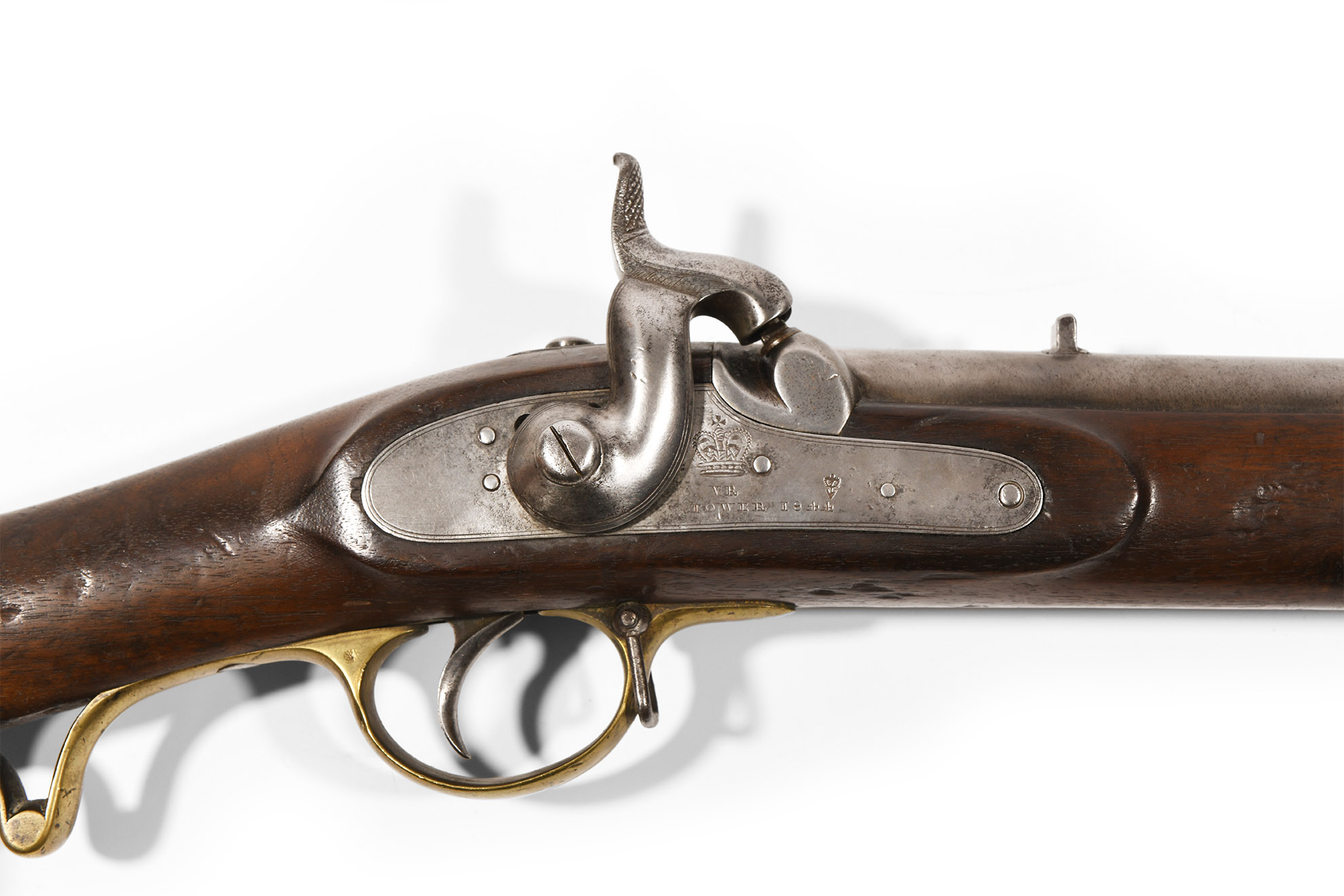
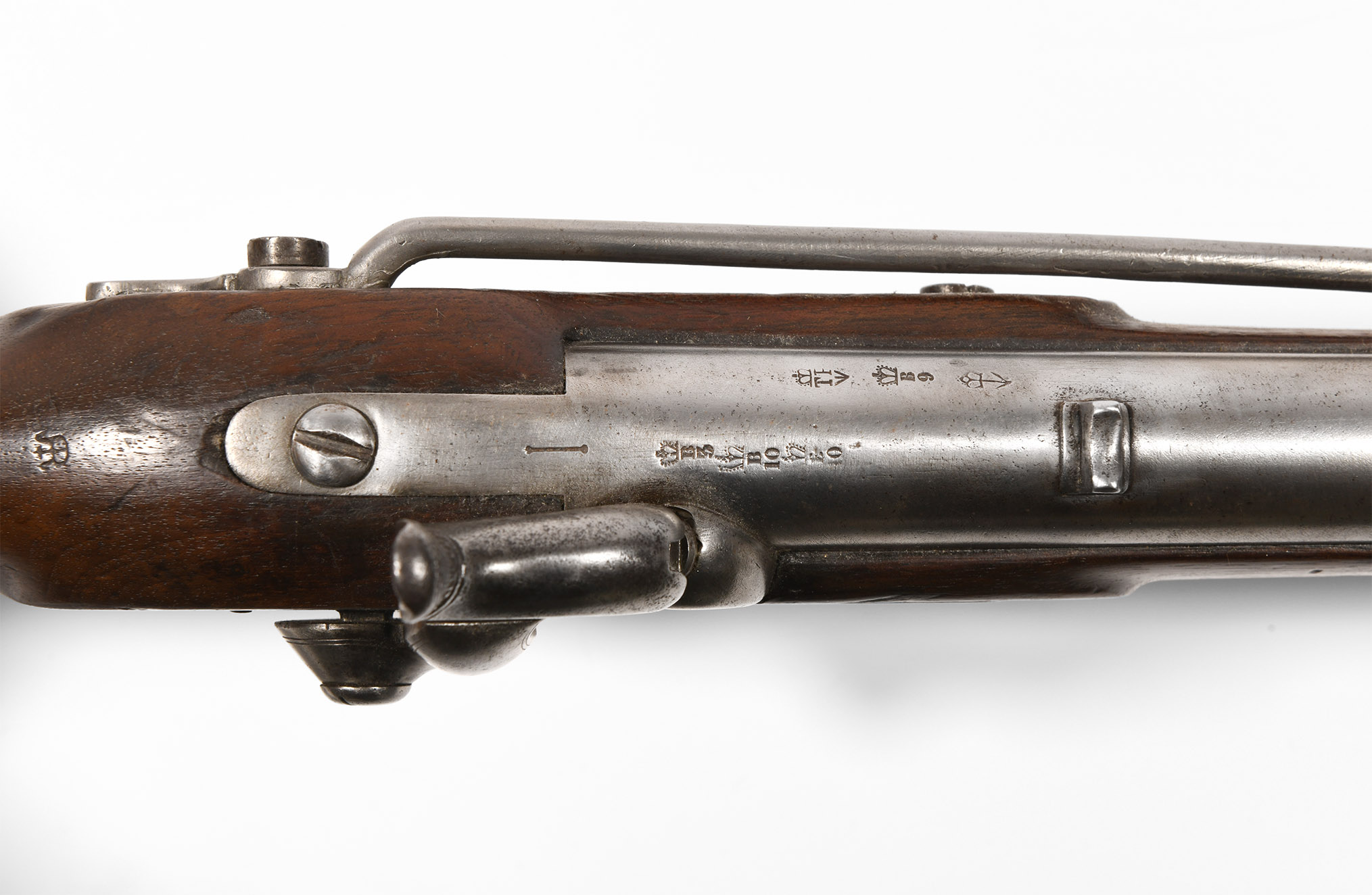
Tower Yeomanry Percussion Carbine
DATED 1844 A.D.
35 1/2 in. (2.95 kg, 90 cm).
Produced with a 51cm (20") round smooth-bore .65" barrel bearing set of London proof marks fitted with percussion lock marked 'crown-over-V R' and 'TOWER 1844' with steel captive ramrod and wood full stock fitted with brass butt plate, trigger guard, ferrule and fore-end, the side sling bar a later replacement; action working well to half and full cock.
ProvenanceAcquired from M J Noble Ltd, 2015.
The Kusmirek Collection, UK.
Accompanied by a copy of invoice and information.
Sold as an exempt item under Section 58 (2) of the Firearms Act, 1968, to be held as a curiosity or ornament. No license required but buyer must be over 18 years of age. Overseas bidders should note that, due to UK regulations governing export of all firearms, overseas buyers will need to make arrangements for shipping this lot out of the UK directly, by air freight, with a specialist company or agent.
CONDITIONTimeLine Auctions follows a vetting process to ensure the authenticity and legality of all items, reinforcing our commitment to integrity and responsible trading. Each antiquity, antique, and coin lot undergoes thorough examination by a vetting committee of at least ten external specialists, professional trade association members, scientists, and archaeologists: Our Vetting Process
AUCTIONS:
TimeLine is a leading auction house specialising in antiquities, ancient art, collectables, natural history, coins, medals, and books. Our auctions offer museums, collectors, historians, and enthusiasts the opportunity to acquire unique and historically significant pieces.
-
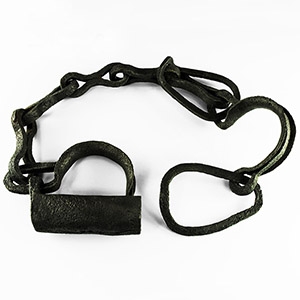
Medieval Prisoner's Iron Shackle and Fetter
14th-15th century A.D.Sold for (Inc. bp): £260
Comprising five rectangular-section doubled links with curved fetter and two loops to one end, barrel lock and hasp to the other. 2.2 kg, 87 cm
Fine condition; lock mechanism absent.
Acquired in the 1990s. From an important English collection. -
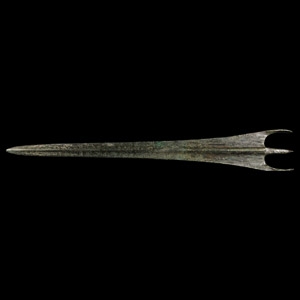
North-Western Bronze Short Sword
2nd-1st millennium B.C.Sold for (Inc. bp): £585
Featuring a prominently curved guard extending out from the ricasso of the blade and partly framing the hilt, thick midrib extending slightly above the ricasso. 346 grams, 43.5 cm
Acquired 1980-2015. Ex Abelita family collection.
The hilt of such swords was made separately, and unfortunately is nearly always missing from the archaeological records. Similar excavated examples have been recorded from the South Caspian area from Tomadjan and Ghalekuti. -
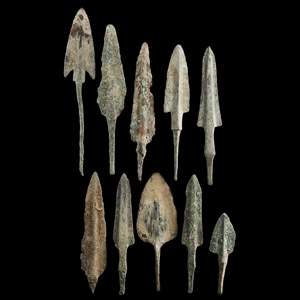
Luristan Bronze Arrowhead Group
2nd-1st millennium B.C.Estimate: £150 - 200 (+bp*)
Opening Bid: £80
Composed of tanged arrowheads of leaf-shaped and barbed types, most with midribs. 182 grams total, 6.4-12 cm
Acquired 1990s. From the collection of a late Japanese weaponry collector.
