
Loading, please wait...
LOT 0298
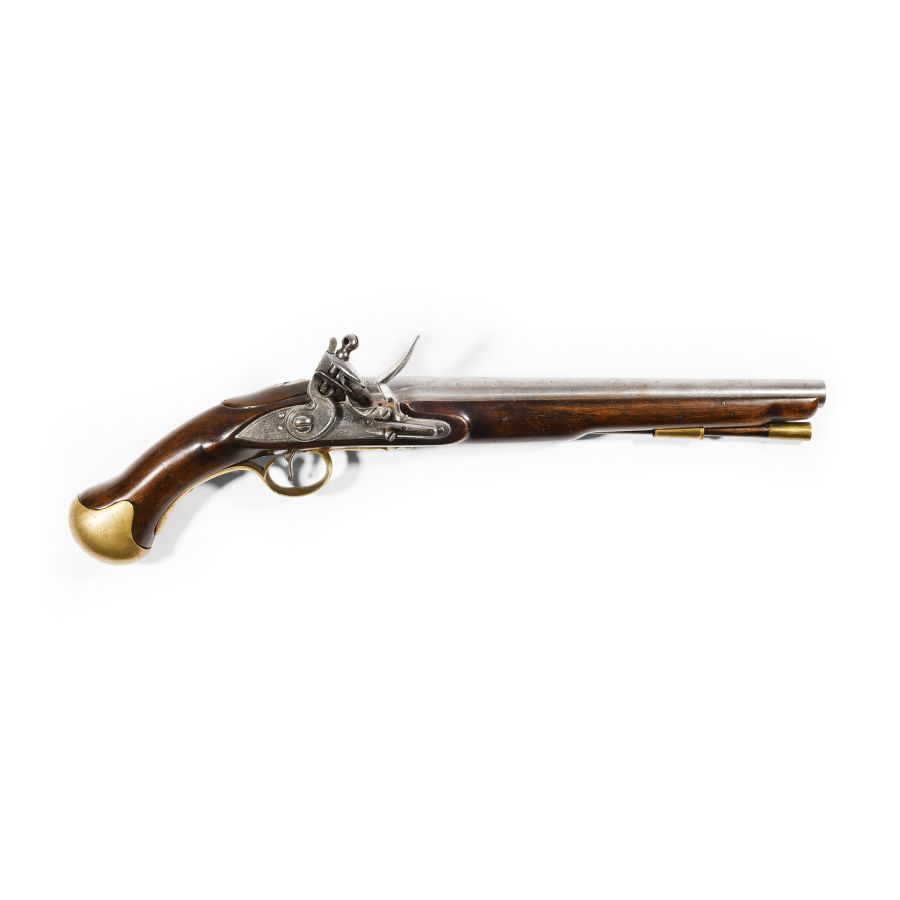
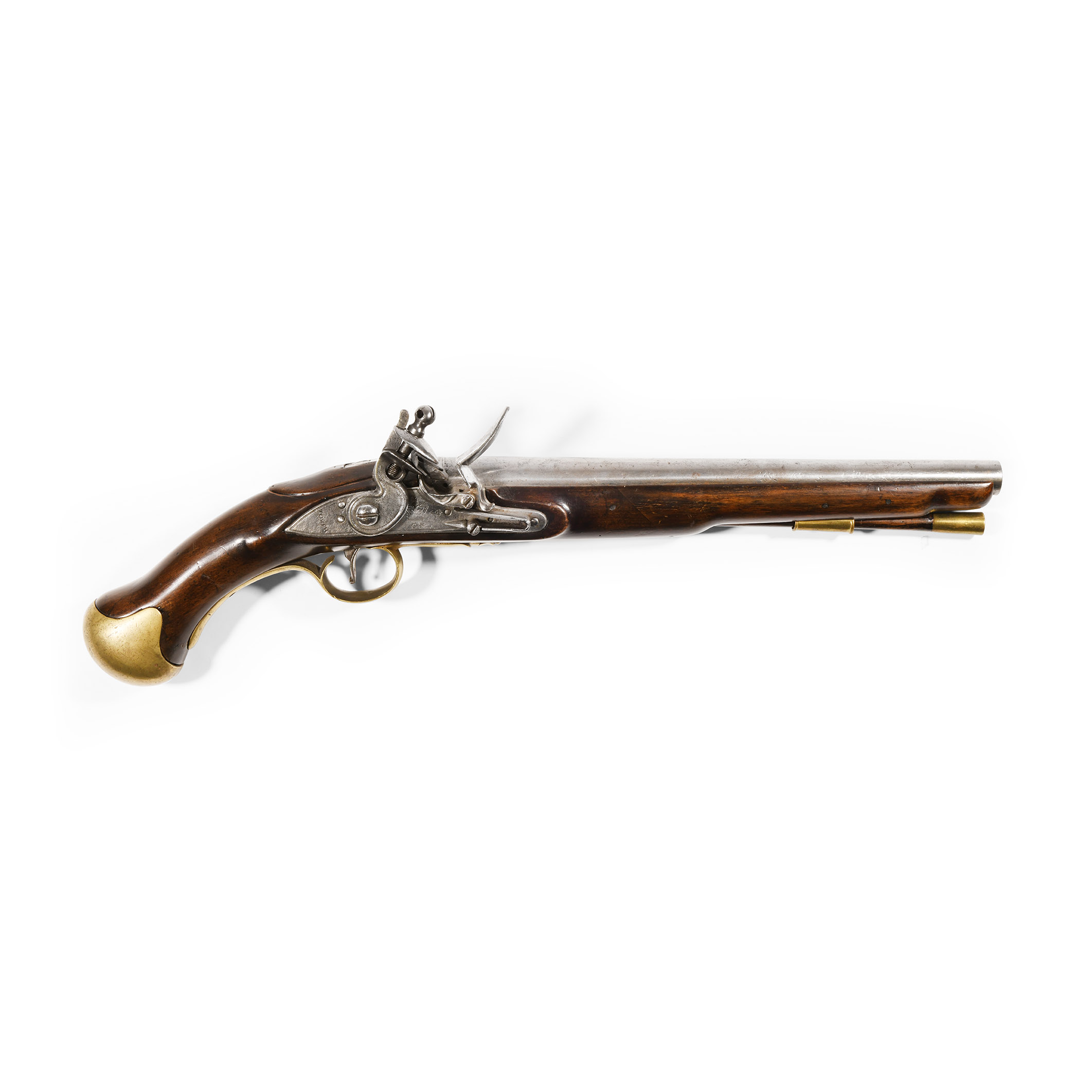
Tower Long Sea Service Flintlock Pistol
1800 A.D.
19 1/4 in. (1.40 kg, 49 cm).
Napoleonic era with 30cm (12") round smooth bore barrel of .56" bore with London proof marks, the lock with 'TOWER', 'crown-over-GR' and 'crown-over-broad-arrow' marks fitted with brass-tipped wood ramrod and wood full stock and butt with brass butt cap, trigger guard, side plate and ferrule with steel belt hook; action working to half and full cock.
ProvenanceAcquired from Andrew Bottomley, UK.
The Kusmirek Collection, UK.
Accompanied by a copy of the Bottomley listing.
This lot has been checked against the Interpol Database of stolen works of art and is accompanied by search certificate no.204079.
See National Maritime Museum, Greenwich, accession number AAA2440, for a similar example.
FootnotesSold as an exempt item under Section 58 (2) of the Firearms Act, 1968, to be held as a curiosity or ornament. No license required but buyer must be over 18 years of age. Overseas bidders should note that, due to UK regulations governing export of all firearms, overseas buyers will need to make arrangements for shipping this lot out of the UK directly, by air freight, with a specialist company or agent.
CONDITIONTimeLine Auctions follows a vetting process to ensure the authenticity and legality of all items, reinforcing our commitment to integrity and responsible trading. Each antiquity, antique, and coin lot undergoes thorough examination by a vetting committee of at least ten external specialists, professional trade association members, scientists, and archaeologists: Our Vetting Process
AUCTIONS:
TimeLine is a leading auction house specialising in antiquities, ancient art, collectables, natural history, coins, medals, and books. Our auctions offer museums, collectors, historians, and enthusiasts the opportunity to acquire unique and historically significant pieces.
LOT 0298
Tower Long Sea Service Flintlock Pistol
Estimate £3,000 - 4,000€3,480 - 4,640 (for guidance only)$4,050 - 5,400 (for guidance only)
-
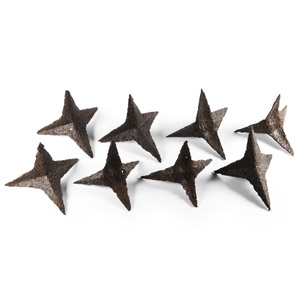
Medieval Iron Anti-Cavalry Caltrop Group
13th-15th century A.D.Sold for (Inc. bp): £208
Comprising eight caltrops, hand-forged with square-section spikes. 250 grams total, 79-84 mm
Acquired 1971-1972. From the collection of the vendor's father. Property of a London, UK, collector.
Caltrops were scattered on battlefields in an effort to stop or slow advancing enemy cavalry or foot soldiers; regardless of how a caltrop lands, one spike is always facing upwards. -
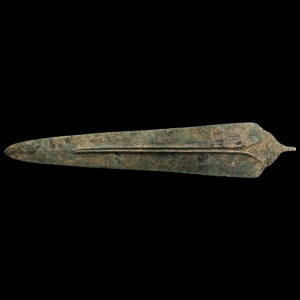
Luristan Bronze Short Sword Blade
1st millennium B.C.Sold for (Inc. bp): £130
Triangular profile with two parallel fullers tapering to a rounded tip, the tang forming an extension of the midrib. 194 grams, 30.7 cm
Ex German collection, Cologne, 1980-1990s.
The metalworking techniques used in making bronze weapons in Luristan were very complex. Surfaces were often finished in repoussé work, and some of the weapons were chased, others engraved. -
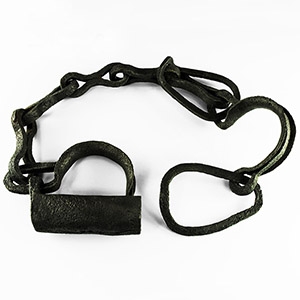
Medieval Prisoner's Iron Shackle and Fetter
14th-15th century A.D.Sold for (Inc. bp): £260
Comprising five rectangular-section doubled links with curved fetter and two loops to one end, barrel lock and hasp to the other. 2.2 kg, 87 cm
Fine condition; lock mechanism absent.
Acquired in the 1990s. From an important English collection.
