
Loading, please wait...
LOT 0296
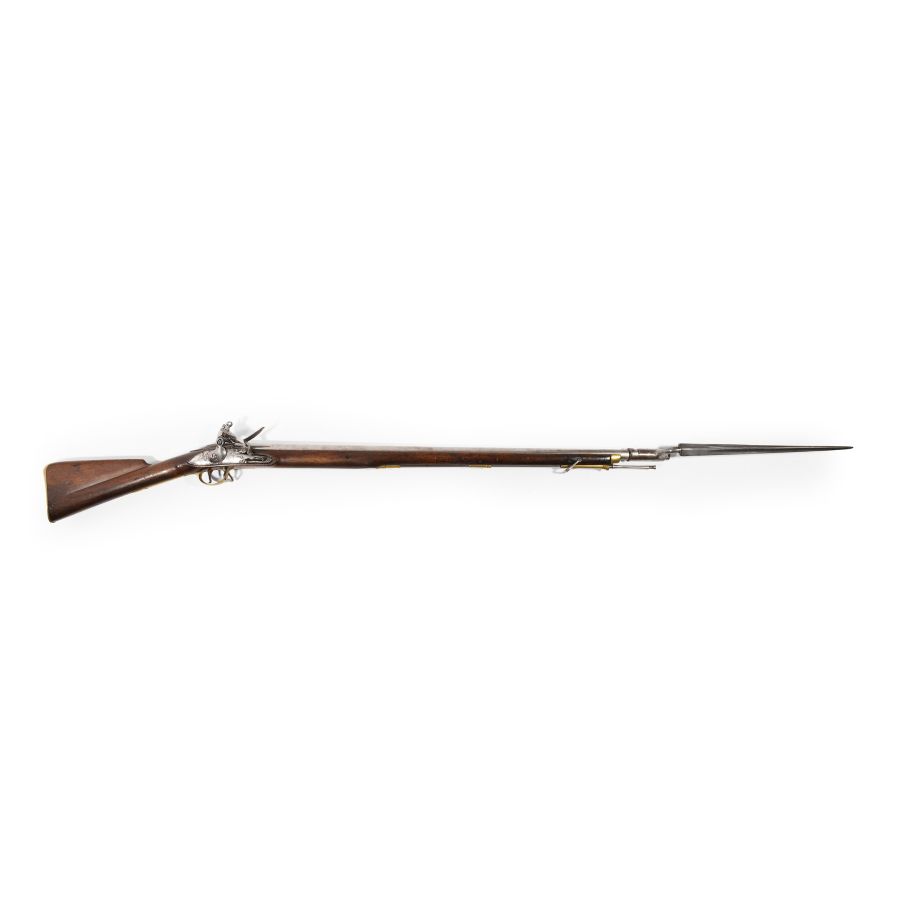
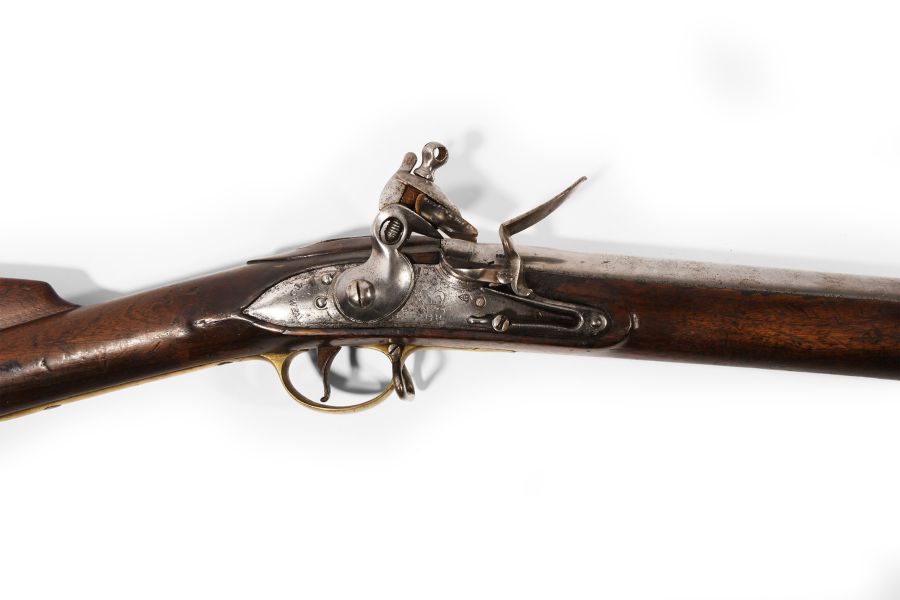
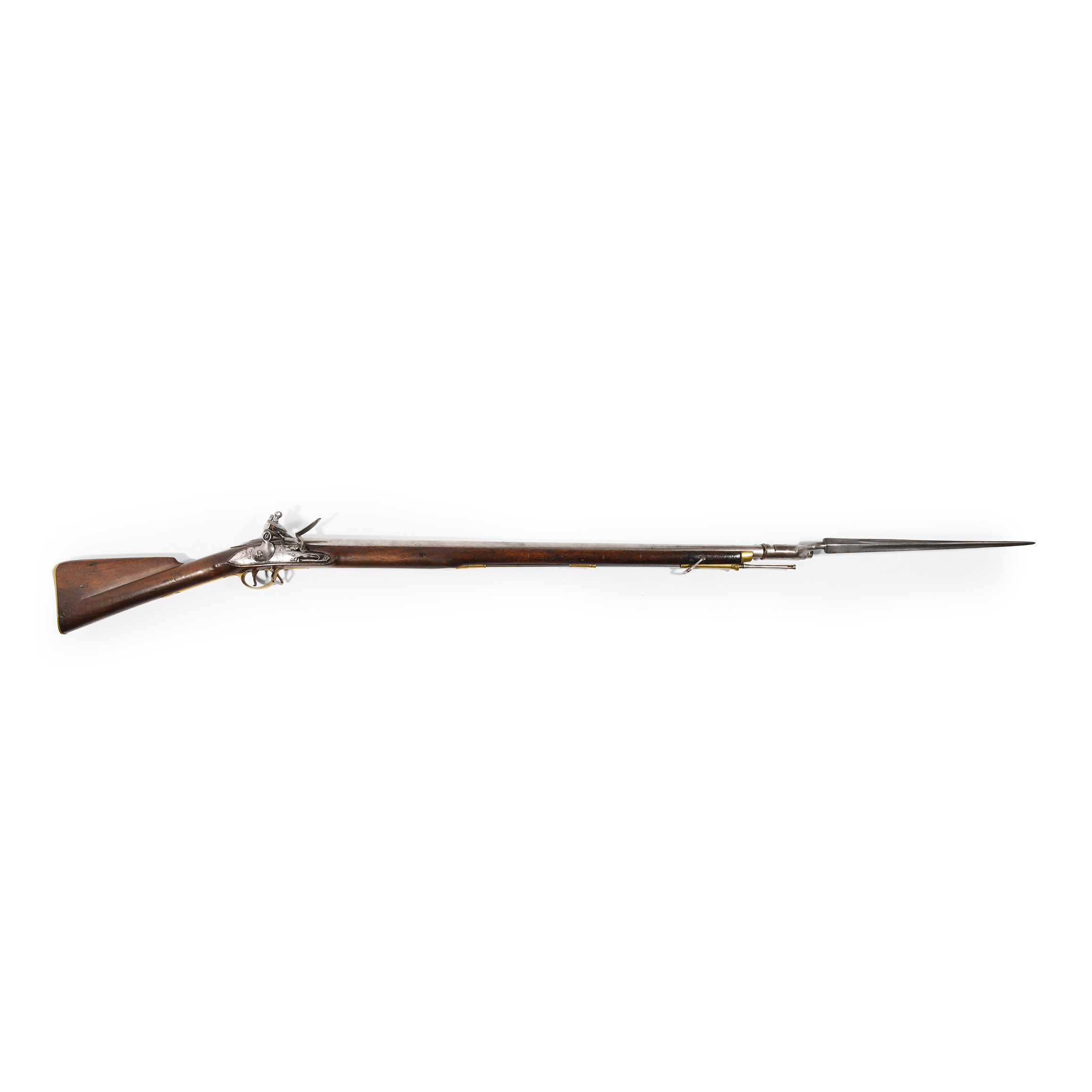
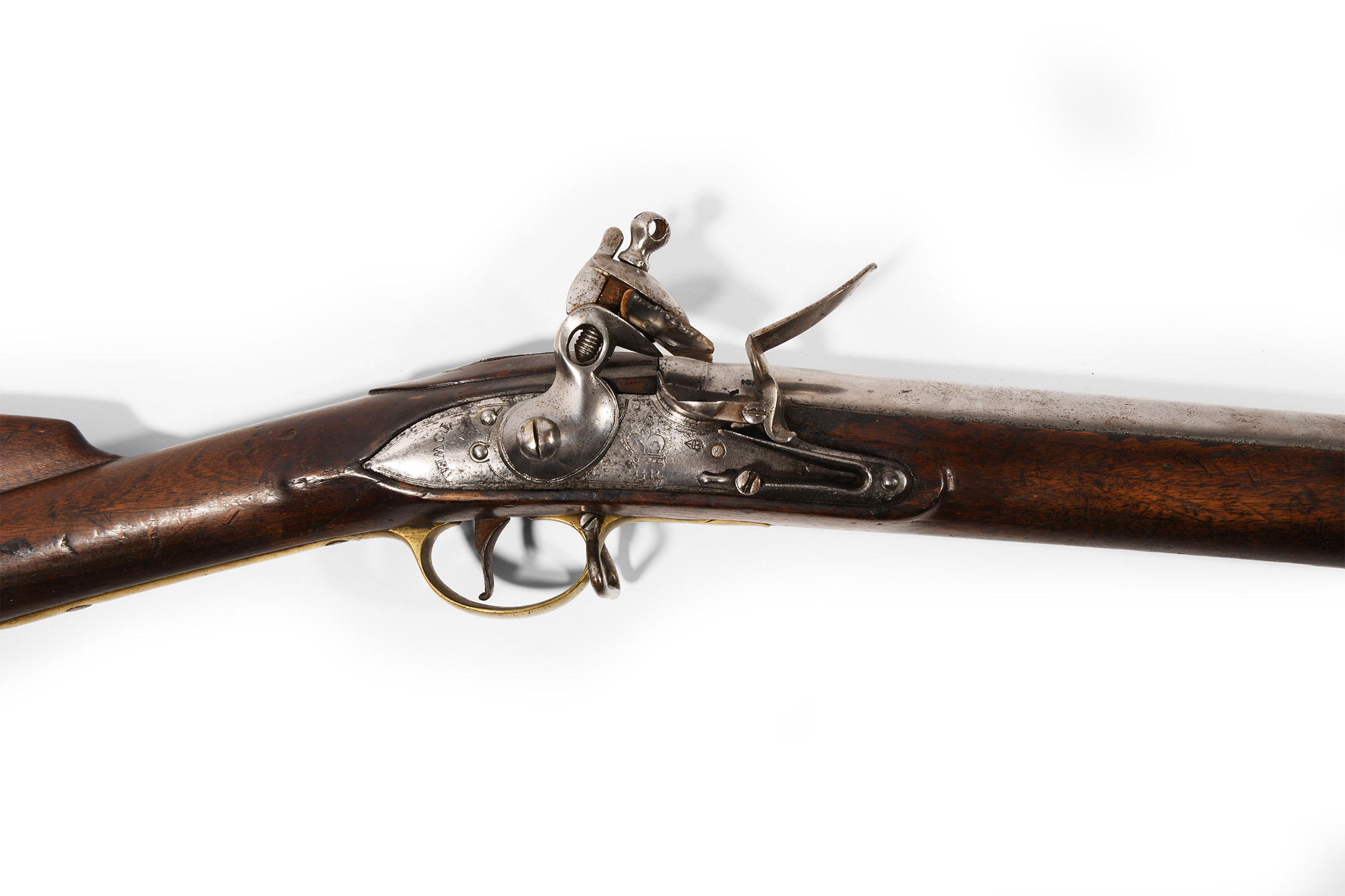
Tower 'Brown Bess' Musket and Bayonet
CIRCA 1800 A.D.
68 in. (4.60 kg, 173 cm with bayonet).
Napoleonic era musket with 93cm (36½") smooth-bore barrel of .75" bore with London proof marks, the lockplate with 'TOWER', 'crown-over-G R' and inspection marks; fitted with full wood stock stamped 'S' and 'IR' to left side and butt with brass butt plate, trigger guard, ferrules, fore-end and sideplate; fitted with sling swivel loops and steel ramrod with cleaning rag eye; action working well in half and full cock, with correct steel socket bayonet.
ProvenanceAcquired from Andrew Bottomley, UK, 2014.
The Kusmirek Collection, UK.
Accompanied by copy of the invoice and listing.
This lot has been checked against the Interpol Database of stolen works of art and is accompanied by search certificate no.204080.
The 'Brown Bess' musket, in several versions, was the standard British infantry longarm from about 1736 to 1838; some were later converted to the percussion system.
Sold as an exempt item under Section 58 (2) of the Firearms Act, 1968, to be held as a curiosity or ornament. No license required but buyer must be over 18 years of age. Overseas bidders should note that, due to UK regulations governing export of all firearms, overseas buyers will need to make arrangements for shipping this lot out of the UK directly, by air freight, with a specialist company or agent.
TimeLine Auctions follows a vetting process to ensure the authenticity and legality of all items, reinforcing our commitment to integrity and responsible trading. Each antiquity, antique, and coin lot undergoes thorough examination by a vetting committee of at least ten external specialists, professional trade association members, scientists, and archaeologists: Our Vetting Process
AUCTIONS:
TimeLine is a leading auction house specialising in antiquities, ancient art, collectables, natural history, coins, medals, and books. Our auctions offer museums, collectors, historians, and enthusiasts the opportunity to acquire unique and historically significant pieces.
-
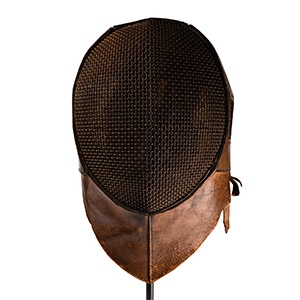
British Leather Fencing Helmet
Circa 1890-1920s A.D.Estimate: £250 - 350 (+bp*)
Opening Bid: £83
By Lillywhite Frowd Co of London, fitted with neck fringe, stamped buckled securing strap and wire mesh face and ear panels, padded lining internally marked 'broad arrow-over-67' so likely a military issue. 2.0 kg, 39 cm
Acquired from Manfred Schotten Antiques, 2016. The Kusmirek Collection, UK. Accompanied by a copy of Manfred Schotten invoice and listing.
Although masks/helmets of this general form are typically associated with sword fencing, this example is of very heavy construction so possibly for use in protecting while training with a heavier weapon than a foil or epee. -
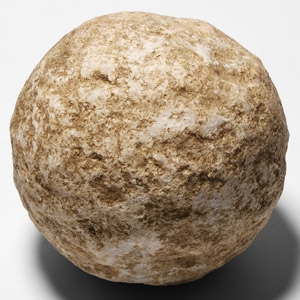
Roman Marble Ballista Catapult Shot
1st-3rd century A.D.Sold for (Inc. bp): £1,430
Suitable for use with an onager or other small catapult-type siege weapon; with roughened, abrasive surface. 682 grams, 79 mm
Acquired 1971-1972. From the collection of the vendor's father. Property of a London, UK, collector.
The operation of the onager (Latin for 'wild ass') is first mentioned in 353 A.D. by Ammianus Marcellinus in his Res Gestae and more fully in Vegetius's Epitoma Rei Militaris probably written in the reign of Emperor Theodosius I (378-395 A.D.). -
.jpg)
Roman Bronze Armour Double Fastening Hook
1st century A.D.Sold for (Inc. bp): £176
Each a scrolled and angled bar tapering to a gently carinated zoomorphic terminal, formed as a serpent or other animal with stylised geometric detailing; attachment perforations to both terminals. 33 grams total, 70 mm each
Acquired on the London art market, 1980s-1990s.
In the 1st century B.C.-1st century A.D., the Celtic fastening system of the ring mail armour (gallica, lorica ferro aspera) became the standard in the Imperial Roman army, with a pivot attached to the breast and hinged to the edges of the humeralia (shoulder guards). The chest fastener had various different designs. The double hooks, S-shaped and usually with snake-head terminals, were secured by a central rivet on the chest. The system allowed excellent freedom of movement, giving greater protection to the shoulders and the arms. Similar fasteners for infantry mail have been found on the Kalkriese battlefield, some of them also decorated with niello and inscribed with the name of the soldier.
