
Loading, please wait...
LOT 0533
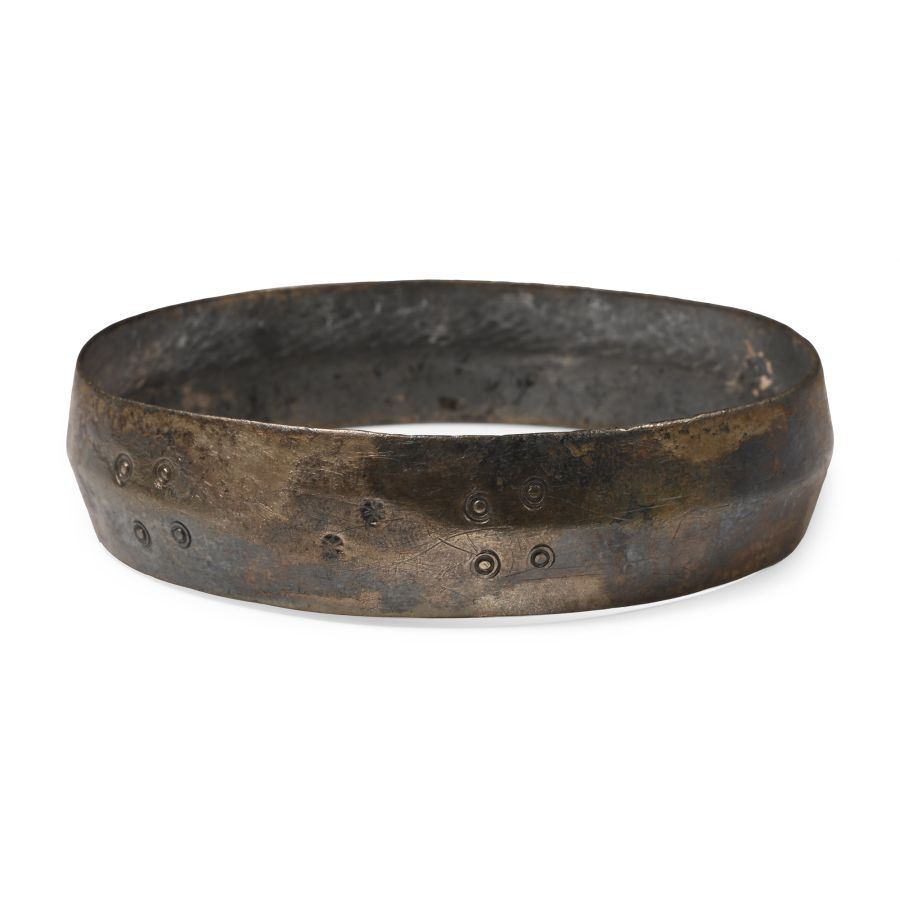
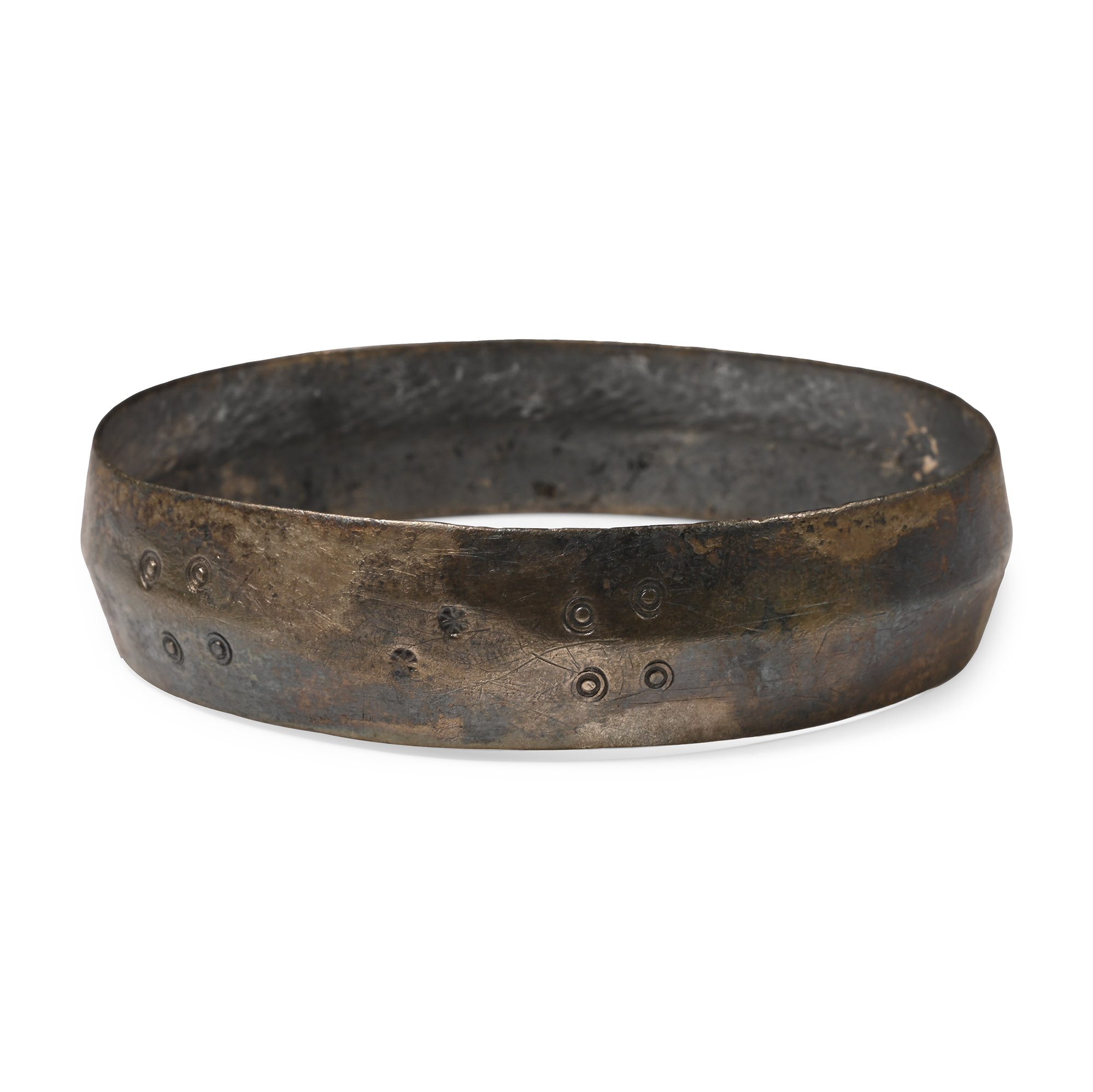
Thracian Decorated Silver Bracelet
2ND CENTURY B.C.-1ST CENTURY A.D.
3 1/2 in. (46 grams, 90 mm).
Annular in form with carinated profile, punched ring-and-dot ornament. [No Reserve]
ProvenanceEx Simmons gallery, London, UK, 1990s.
This lot is accompanied by an illustrated lot declaration signed by the Head of the Antiquities Department, Dr Raffaele D'Amato.
TimeLine Auctions follows a vetting process to ensure the authenticity and legality of all items, reinforcing our commitment to integrity and responsible trading. Each antiquity, antique, and coin lot undergoes thorough examination by a vetting committee of at least ten external specialists, professional trade association members, scientists, and archaeologists: Our Vetting Process
AUCTIONS:
TimeLine is a leading auction house specialising in antiquities, ancient art, collectables, natural history, coins, medals, and books. Our auctions offer museums, collectors, historians, and enthusiasts the opportunity to acquire unique and historically significant pieces.
-
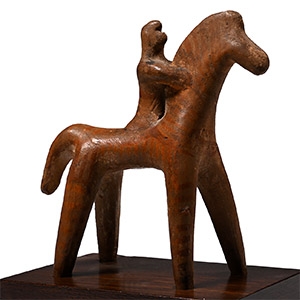
Greek Boeotian Horse and Rider Figure
Mid 6th century B.C.Sold for (Inc. bp): £1,365
In static stance with forelegs straight and head erect, rider gripping the neck, painted detailing to mane and body; mounted on a custom-made stand. 117 grams, 11.5 cm (268 grams total, 14 cm high including stand)
Acquired from Spink, London, UK, 30 June 1956. Ex private collection. with Sotheby's, New Bond Street, London, 8 December 1994, no.184. Accompanied by copies of the relevant Sotheby's catalogue pages. This lot is accompanied by an illustrated lot declaration signed by the Head of the Antiquities Department, Dr Raffaele D'Amato. -
.jpg)
Greek Terracotta Head Collection
1st millennium B.C.Sold for (Inc. bp): £390
Comprising: a head of a kore wearing a tall polos crown; head of Eros; a head of a lady with almond-shaped eyes and Archaic smile; a rectangular plaque with low-relief nude figure; all mounted on custom-made display stands. 118 grams total, 4-10.5 cm including stand
Private collection, before 1970. with Galerie Rhéa, Zurich, Switzerland. This lot is accompanied by an illustrated lot declaration signed by the Head of the Antiquities Department, Dr Raffaele D'Amato. -
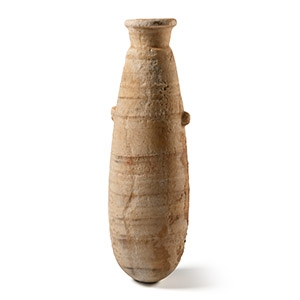
Cypriot Alabaster Alabastron
6th-4th century B.C.Sold for (Inc. bp): £104
With a slender piriform body and two lug handles, conical neck with everted rim. 72 grams, 11 cm
Acquired in the mid 1980s-1990s. Private collection, Switzerland, thence by descent. Private collection, since the late 1990s. This lot is accompanied by an illustrated lot declaration signed by the Head of the Antiquities Department, Dr Raffaele D'Amato.
An example of the greater variability in form is the stone type with alabastron body and anthropomorphic top, sculpted with the upper body of a female. These types have been found in the eastern Mediterranean and Italy dating from the 7th century to the mid to late 6th century and can be divided into two groups: an eastern group beginning in the seventh century, based on Mesopotamian prototypes, and probably produced on Cyprus, as evidenced by its close relation to contemporary Cypriot sculpture; and a western group dating to the first half of the sixth century and produced in Etruria, probably in imitation of eastern examples.
