
Loading, please wait...
LOT 0644
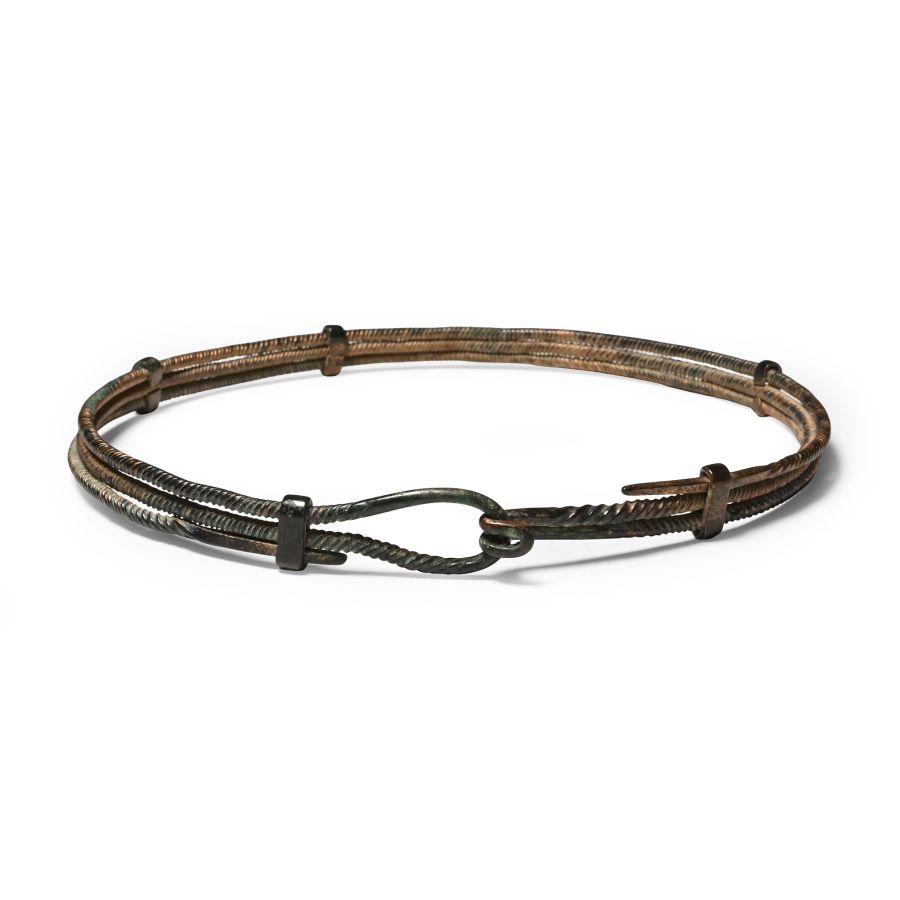
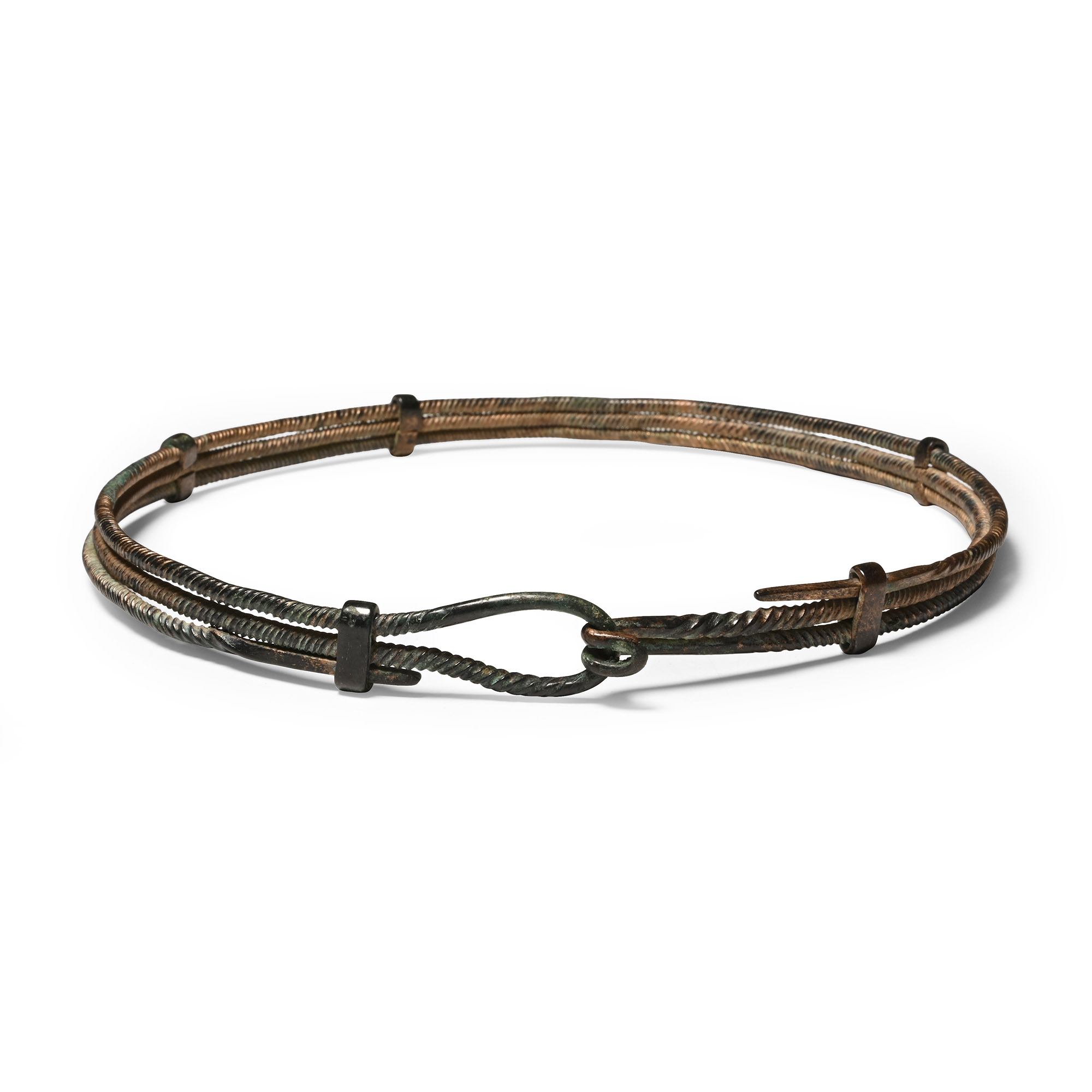
Thracian Bronze Twisted Neck Torc
1ST MILLENNIUM B.C.
5 1/2 in. (60 grams, 14 cm).
Composed of a single twisted rod forming a triple loop with looped terminals, five rectangular-section straps securing the structure. [No Reserve]
ProvenanceFrom a private Tyneside collection, formed since the early 2000s.
CONDITIONTimeLine Auctions follows a vetting process to ensure the authenticity and legality of all items, reinforcing our commitment to integrity and responsible trading. Each antiquity, antique, and coin lot undergoes thorough examination by a vetting committee of at least ten external specialists, professional trade association members, scientists, and archaeologists: Our Vetting Process
AUCTIONS:
TimeLine is a leading auction house specialising in antiquities, ancient art, collectables, natural history, coins, medals, and books. Our auctions offer museums, collectors, historians, and enthusiasts the opportunity to acquire unique and historically significant pieces.
-
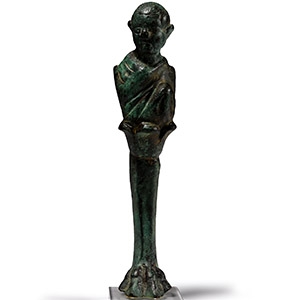
Hellenistic Bronze Furniture Mount with Mime Actor
Alexandria, 1st century B.C.Estimate: £700 - 900 (‡+bp*)
Opening Bid: £350
Modelled with large prominent ears and neatly cut short hair, rounded facial detailing with large eyes and flattened nose, the upper body and hands wrapped inside a pleated cloak, hollow to the reverse; the bust emerging from a lotus flower resting atop a lion's claw foot with a mounting spike on the reverse; mounted on a display stand. 130 grams total, 11.9 cm including stand
Collection of Ambassador G.P., nr.126, before 1965. with Galerie Rhéa, Zurich, Switzerland. -
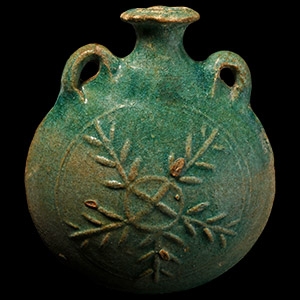
Parthian Blue-Glazed Water Vessel
2nd century B.C.Sold for (Inc. bp): £650
Discoid in plan and biconvex in section with trumpet-shaped spout and loop to each shoulder; radiating fronds to tondo on each face. 278 grams, 14.1 cm
Ex London, UK gallery, 1971-early 2000s. Private collection, London, UK. -
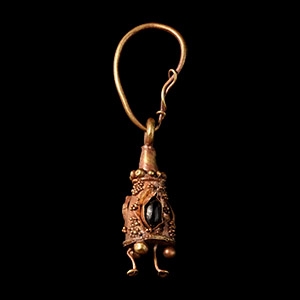
Greek Gold Earring with Garnets
Circa 5th-3rd century B.C.Sold for (Inc. bp): £390
Comprising a conical body with applied granules and three inset teardrop-shaped garnets, three pellets below with wires to accept separate bead inserts; wire loop above. 1.87 grams, 40 mm
From the collection of a gentleman, acquired on the London art market in the 1990s.
