
LOT 2662
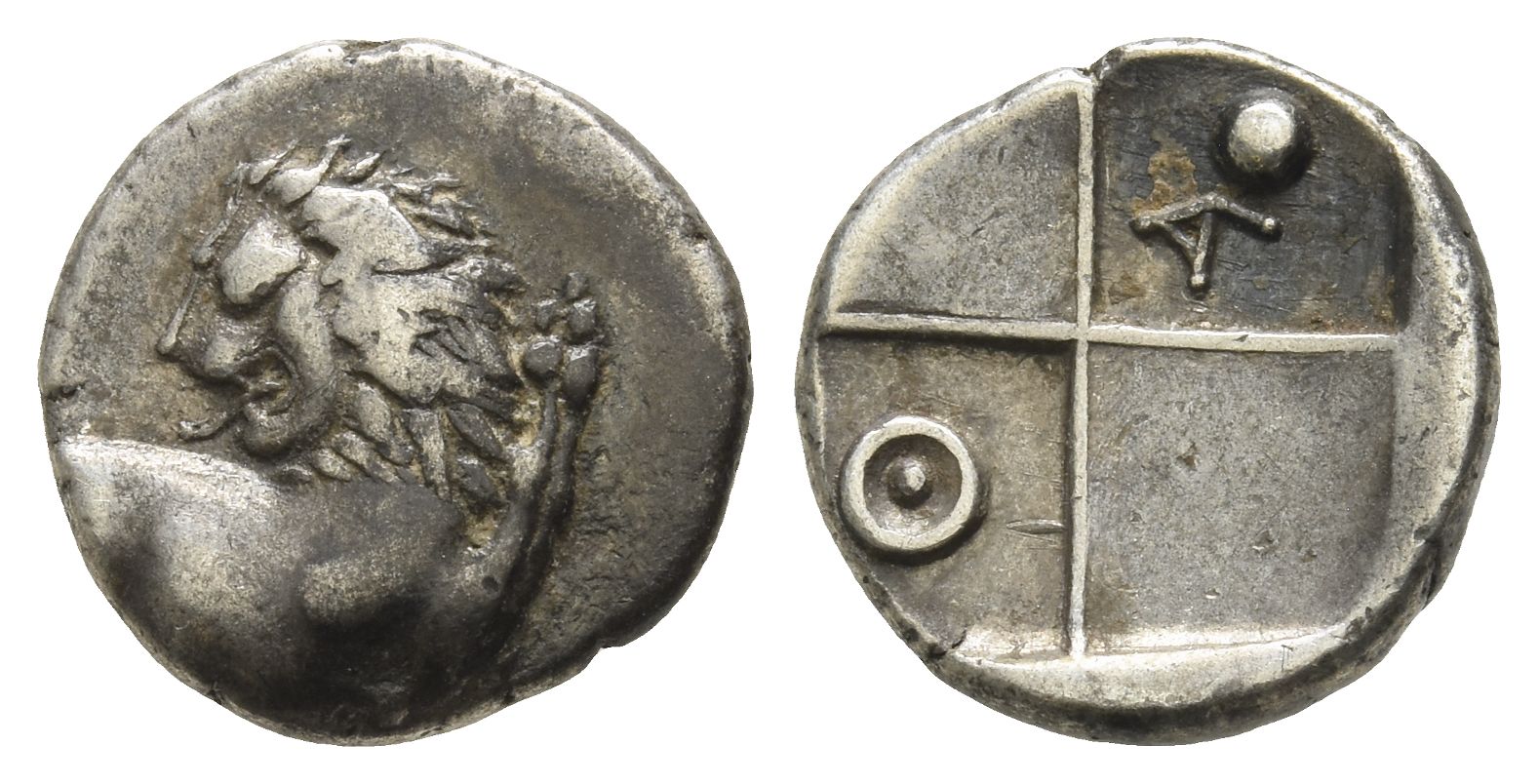
Thrace, Chersonesos AR Hemidrachm. Circa 386-338 BC.
Forepart of lion to right, head reverted / Quadripartite incuse square with alternating raised and sunken quarters; pellet over AΓ monogram and Θ (or shield) in opposite quarters. McClean -; HGC 3.2, 1437; Weber 2430. Very Fine.(2.33gr, 13mm.).
ProvenanceEx German art market, 2000s.
Acquired from an EU collector living in London.
From the collection of a Surrey, UK, gentleman.
TimeLine Auctions follows a vetting process to ensure the authenticity and legality of all items, reinforcing our commitment to integrity and responsible trading. Each antiquity, antique, and coin lot undergoes thorough examination by a vetting committee of at least ten external specialists, professional trade association members, scientists, and archaeologists: Our Vetting Process
AUCTIONS:
TimeLine is a leading auction house specialising in antiquities, ancient art, collectables, natural history, coins, medals, and books. Our auctions offer museums, collectors, historians, and enthusiasts the opportunity to acquire unique and historically significant pieces.
-
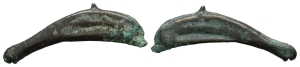
Skythia, Olbia Cast AE Dolphin. Circa 500-450/25 BC.
Sold for (Inc. bp): £26
Dolphin / Dolphin. SNG Stancomb 334-337; SNG BM Black Sea 359-367. 2.46gr, 35mm x 12mm.
Good Very Fine.
Acquired Munich, Germany, in the early 1990s. From a private German collection. Property of a Kent, UK, lady collector since 2015.
The method of casting this unique type of coin was adopted by the Gallic Celts who originally came from this region. Dolphins were generally struck in the form of a tree attached to the tail, although some examples appear to have been cast individually. -
.jpg)
Judaea. Hasmoneans, Alexander Jannaeus (Yehonatan) AE Prutah. 104-76 BCE.
Sold for (Inc. bp): £13
Jerusalem mint. Splayed double cornucopiae with pomegranate/poppy between the horns / 'Yehonatan the High Priest and the Council of the Jews' (in Paleo-Hebrew) within wreath. Cf. Hendin GBC 6, 6181; HGC 10, 638. 1.50gr, 15mm, 6h.
Very Fine.
From the collection of a gentleman, acquired on the London art market in the 1990s. -
![Group of Three [3] Greek AE Coins.](https://timelineauctions.com/upload/images/items/small/232632s.jpg)
Group of Three [3] Greek AE Coins. 4th-1st century BC.
Sold for (Inc. bp): £13
Various types. 25.84gr total.
Condition as seen.
Property of a Cambridgeshire, UK, collector. From his private collection since the 1970s; thence by descent circa 2000. Ex private collection of a Bedfordshire gentleman.
