
Loading, please wait...
LOT 0182
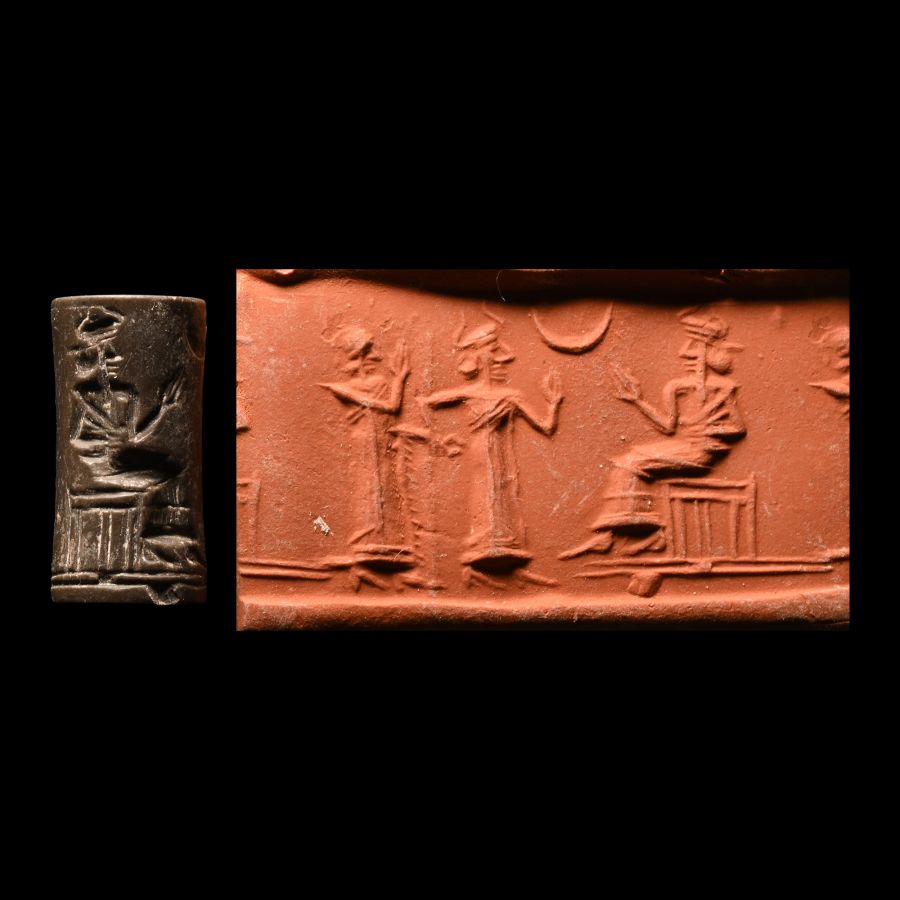
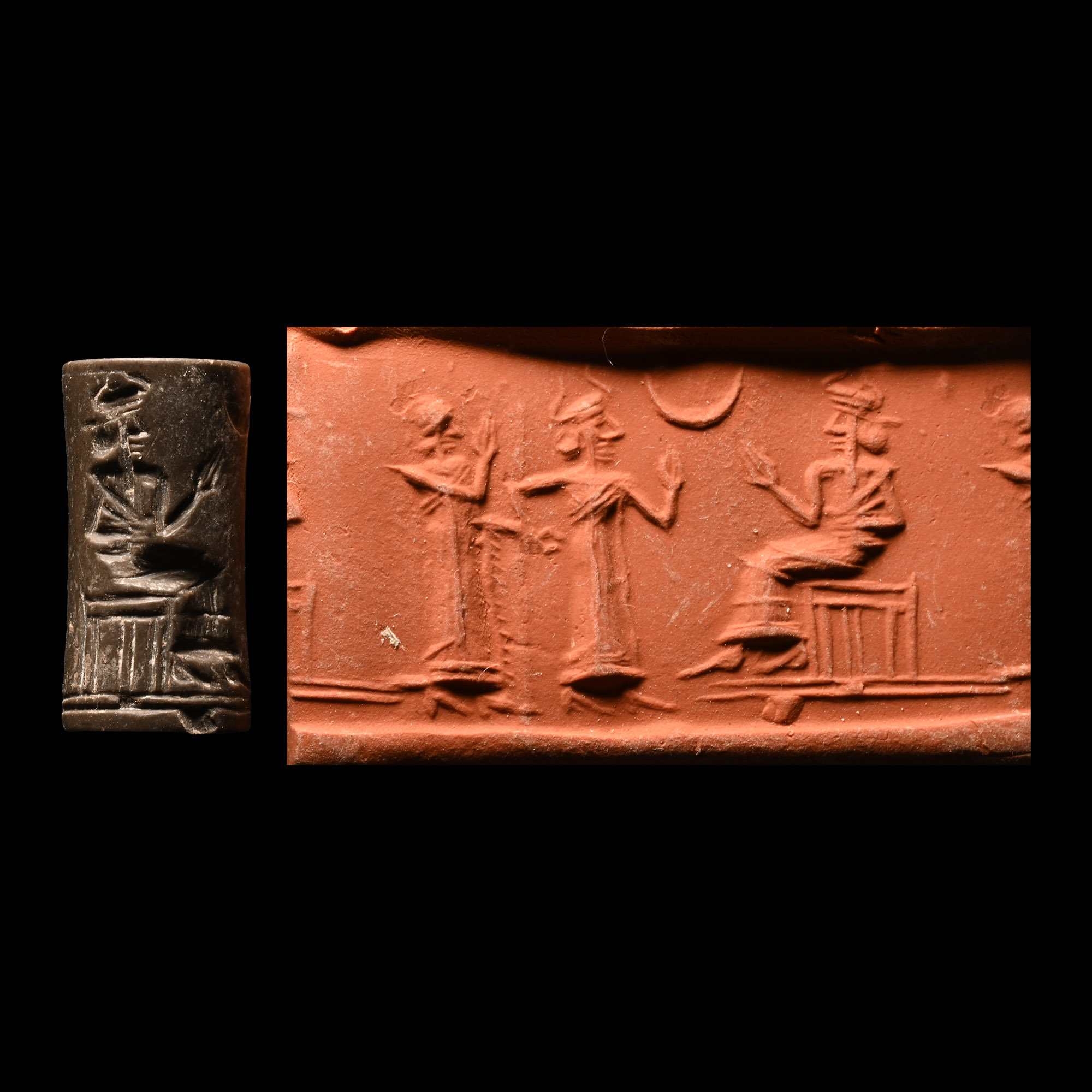
Third Dynasty of Ur Brown Stone Cylinder Seal with Worship Scene
CIRCA 2060-2000 B.C.
1 in. (7.6 grams, 25 mm).
Showing two goddesses and a worshipper; accompanied by a museum quality impression and a copy of an old scholarly note by W.G. Lambert, late Professor of Assyriology, University of Birmingham, 1970-1993, which states: 'Cylinder seal of brown stone, 26 x 13 mm. Seated goddess to right, raising a hand, before her a minor goddess introducing a worshipper, both raising a hand. Crescent in sky. Third Dynasty of Ur, c. 2060-2000 B.C. Good engraving, very good condition.'
ProvenanceFrom the private collection of a North American lady, formed 1970s-early 1990s, with collection reference no.192.
Accompanied by a copy of a scholarly note, handwritten and signed by Professor Wilfrid George Lambert and an old photograph.
TimeLine Auctions follows a vetting process to ensure the authenticity and legality of all items, reinforcing our commitment to integrity and responsible trading. Each antiquity, antique, and coin lot undergoes thorough examination by a vetting committee of at least ten external specialists, professional trade association members, scientists, and archaeologists: Our Vetting Process
AUCTIONS:
TimeLine is a leading auction house specialising in antiquities, ancient art, collectables, natural history, coins, medals, and books. Our auctions offer museums, collectors, historians, and enthusiasts the opportunity to acquire unique and historically significant pieces.
LOT 0182
Third Dynasty of Ur Brown Stone Cylinder Seal with Worship Scene
Sold for (Inc. bp): £780
-
.jpg)
Western Asiatic Glass and Silver Bead Necklace
1st millennium A.D. and laterSold for (Inc. bp): £65
Restrung, composed of brown oblate Indian glass beads with silver melon beads between; garnet and blue glass spool-shaped bead finials. 94 grams, 57.5 cm
Previously acquired on the UK art market in the 1990s. Ex property of a London, UK, gentleman. Ex property of a Californian, USA, collector. -
.jpg)
Western Asiatic Cobalt-Blue Footed Ceramic Bowl
9th century A.D.Estimate: £5,000 - 7,000 (+bp*)
Opening Bid: £2,000
With a carinated sidewall, rolled and everted rim, shallow foot; partial lustre-glaze to the surface with four trapezoidal panels: two with a reserved regardant bird and two with a tracery motif. 498 grams, 18.5 cm
Private collection, Japan, acquired prior to 1982. Private collection, UK. This lot has been checked against the Interpol Database of stolen works of art and is accompanied by a search certificate number no.12724-235155. -
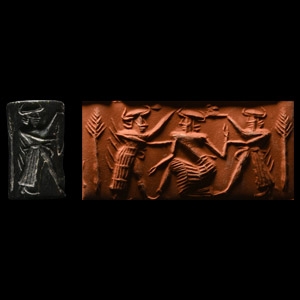
Akkadian Black Stone Cylinder Seal with Combat Scene
Circa 2300-2200 B.C.Sold for (Inc. bp): £749
Showing a combat of gods; accompanied by a museum quality impression and a copy of an old scholarly note, typed and signed by W.G. Lambert, late Professor of Assyriology, University of Birmingham, 1970-1993, which states: 'Cylinder Seal of Black Stone 27 x 16 mm. The design shows a combat of gods: all three wear horns on their heads as a mark of divinity. To each side of the scene is a god in long robe from waist to feet, open at the front with one leg projecting. They stand grappling with a god on one knee between them. He wears a robe of similar length, but not open at the front. Diagonal lines rise from the robes of the two attacking gods, probably marking them as fire gods. A stylised tree serves as a terminal. This is an Akkadian seal, c. 2500-2200 B.C. It is one of the rarer designs to see gods, and such fighting gods are not seen in other periods. But we have no written form of the myth to explain exactly what is happening. the seal is in very good condition and has an interesting design.' 12 grams, 27 mm
From the private collection of a North American lady, formed 1970s-early 1990s, with collection reference no.589/3. Accompanied by a copy of a scholarly note, typed and signed by Professor Wilfrid George Lambert and an old photograph.
