
Loading, please wait...
LOT 0353
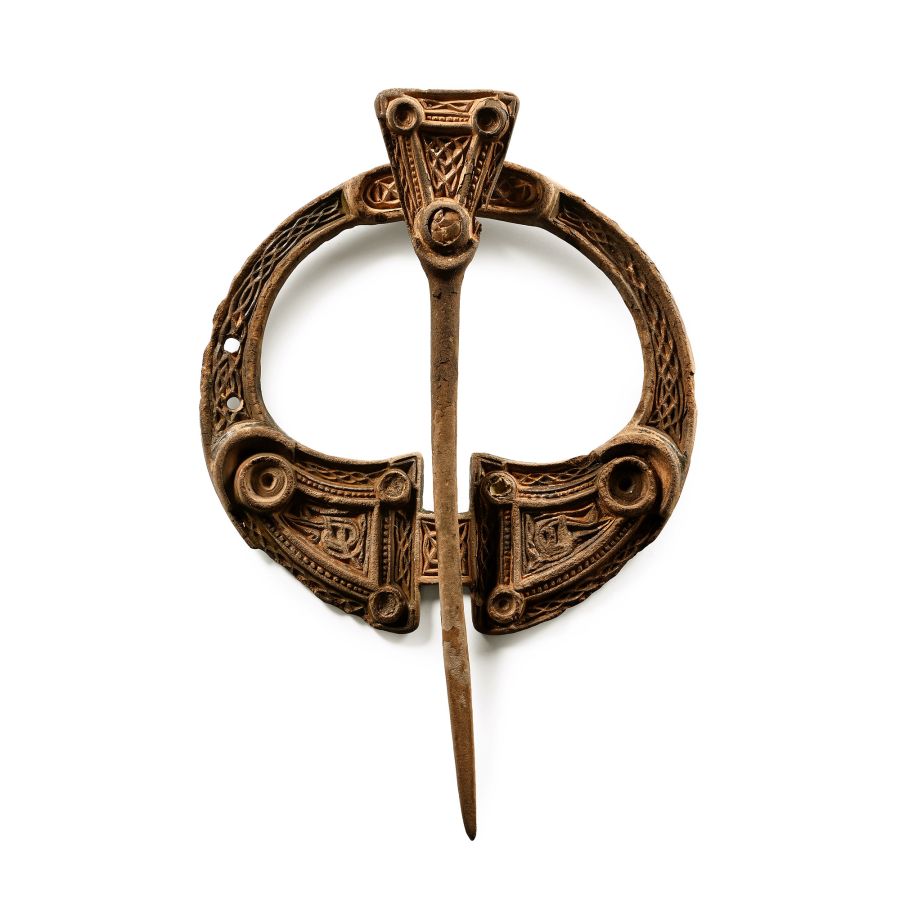
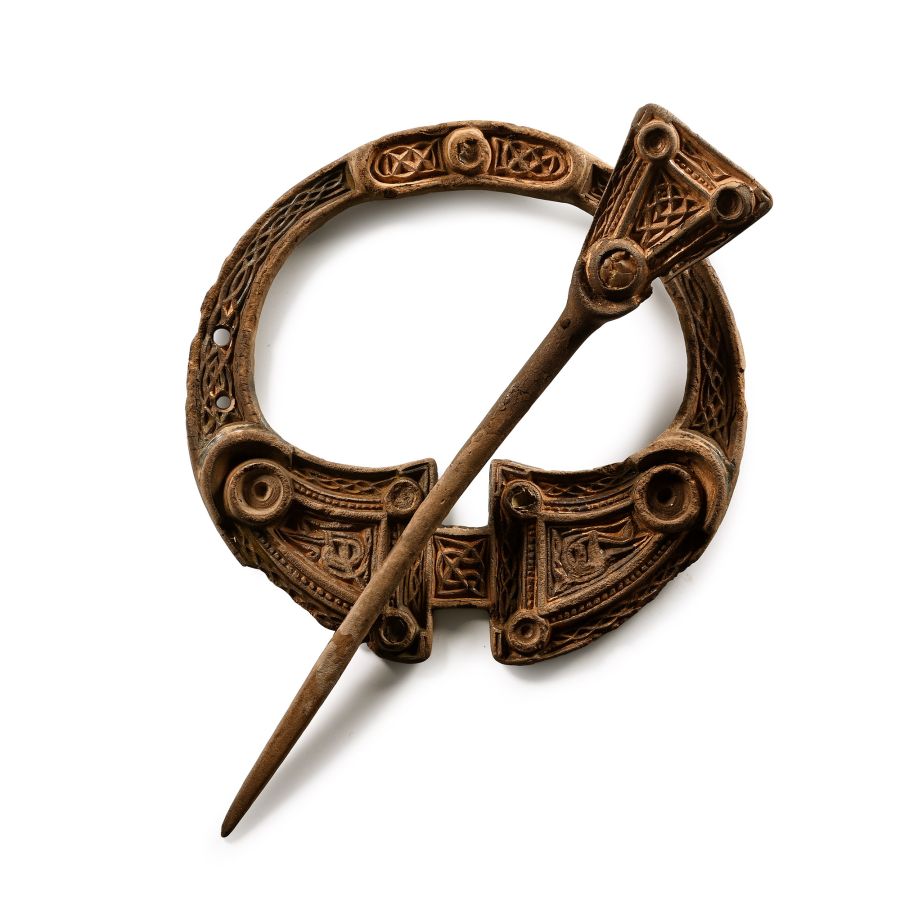
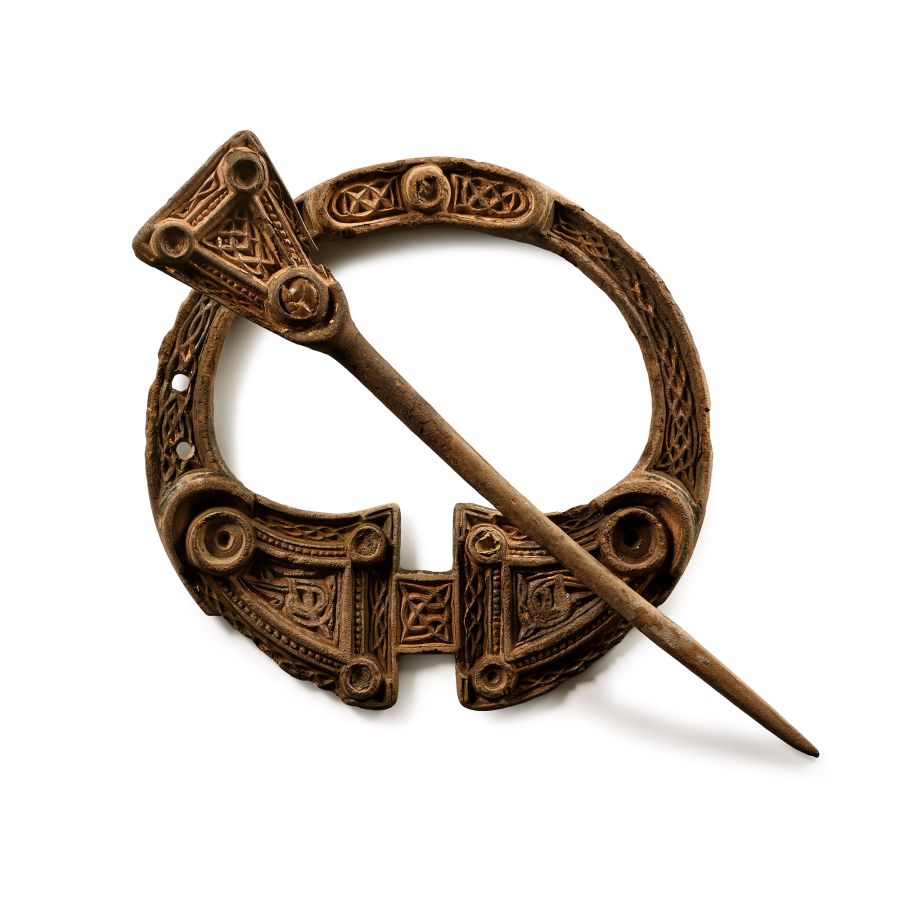
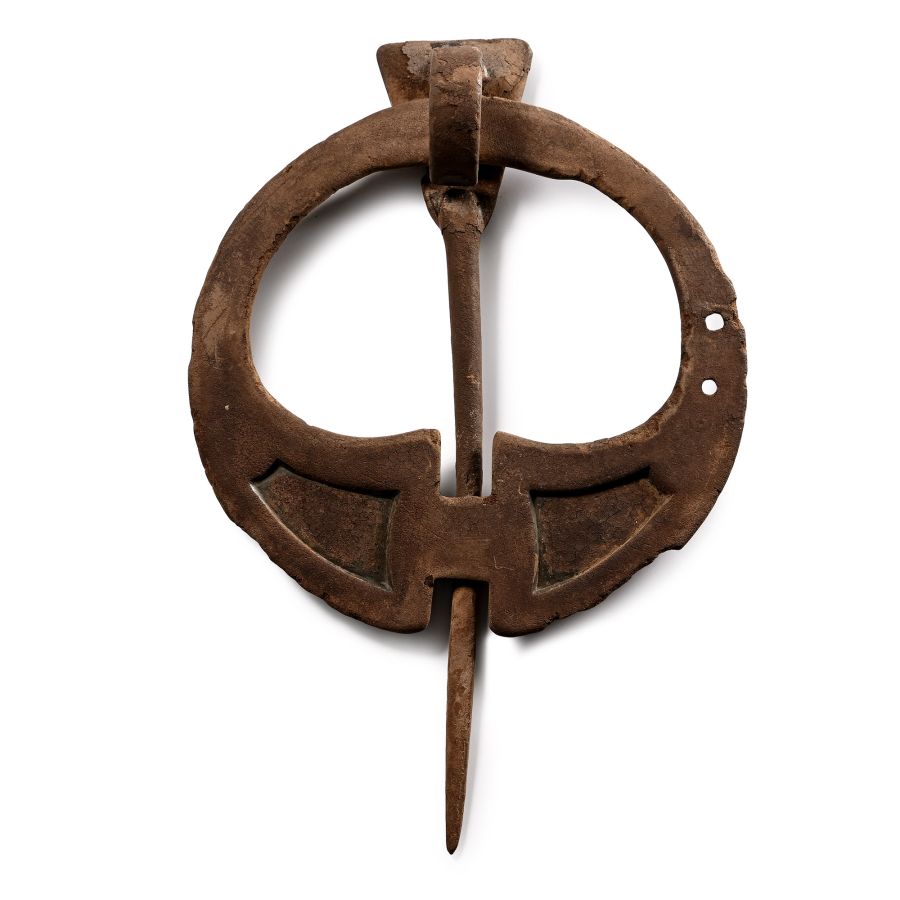
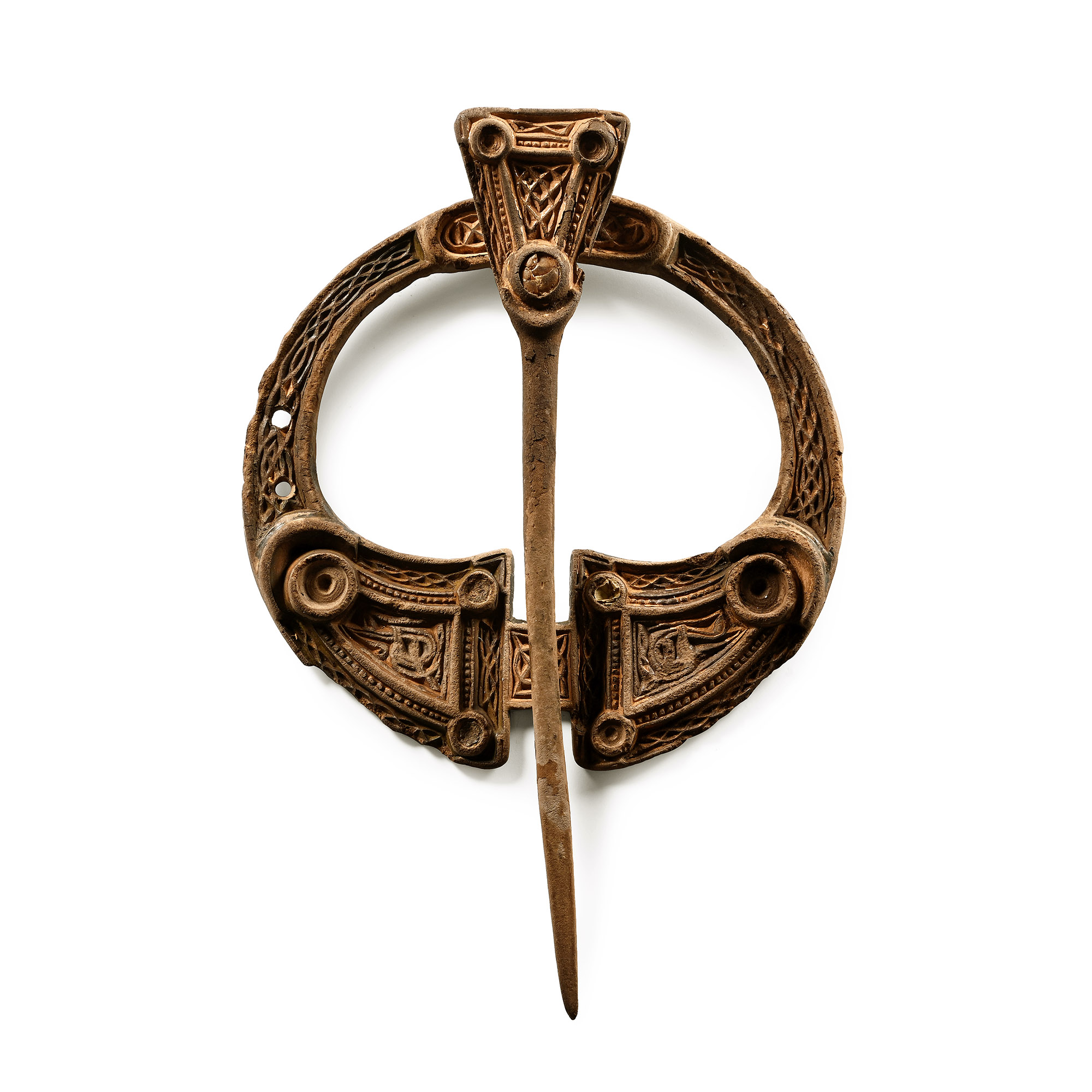
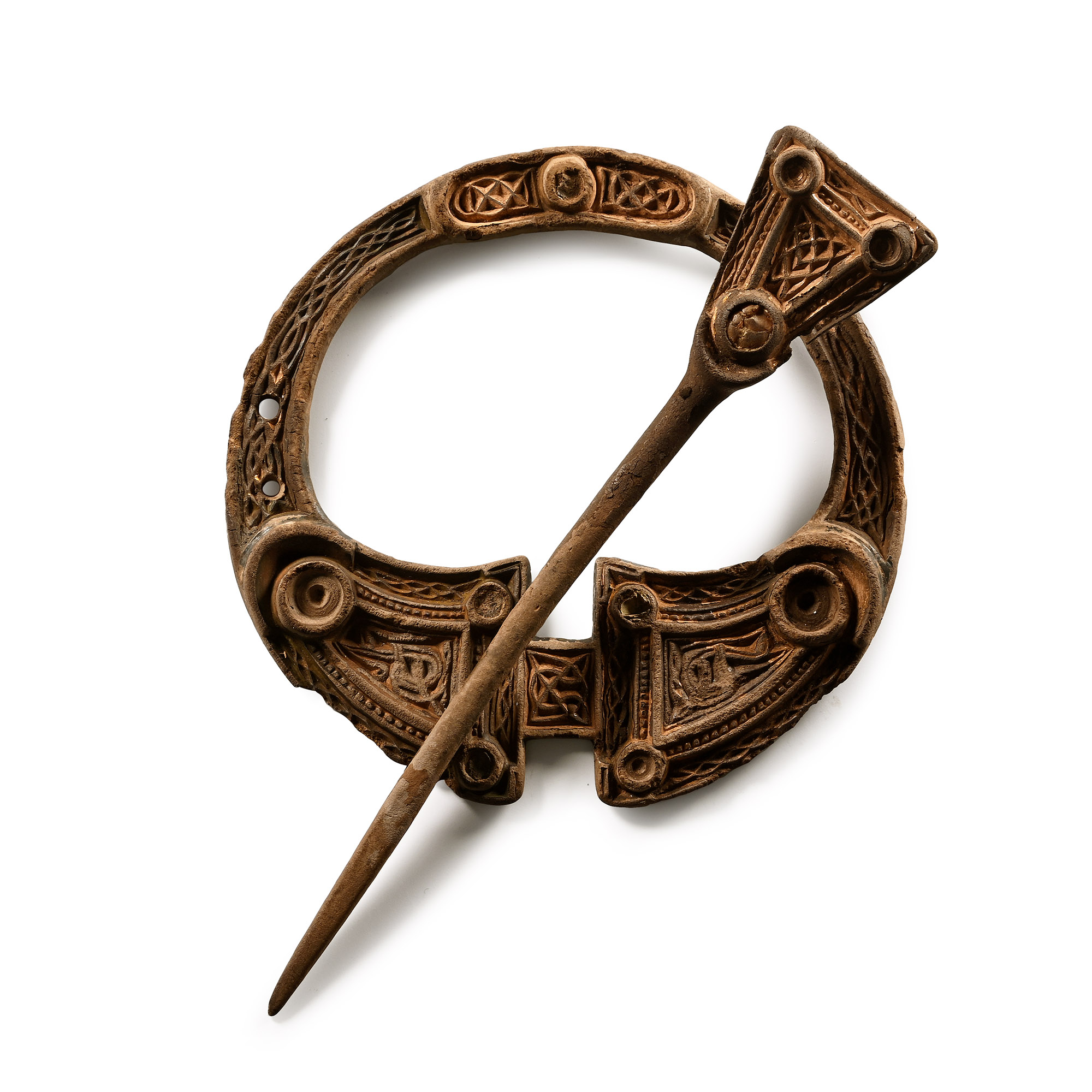
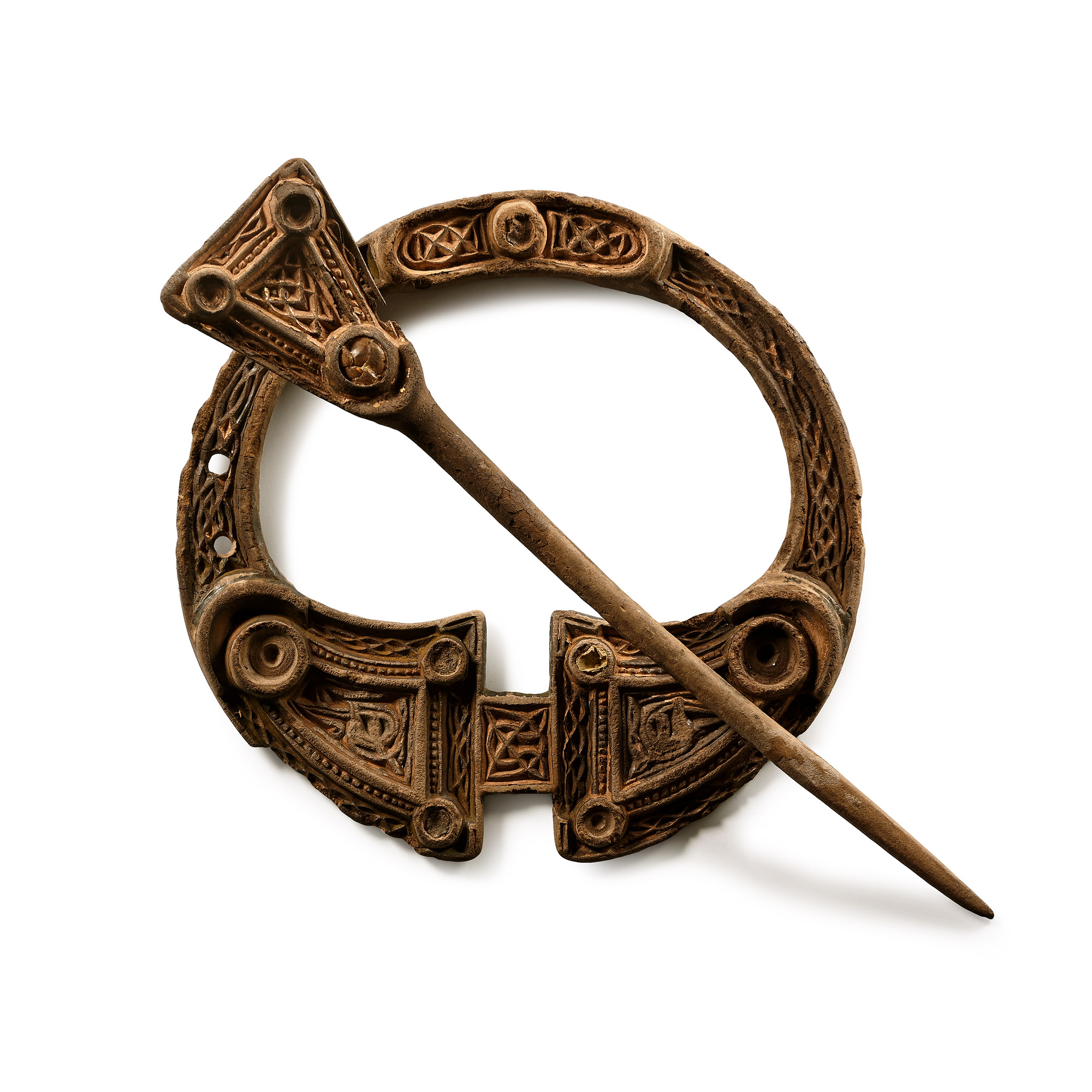
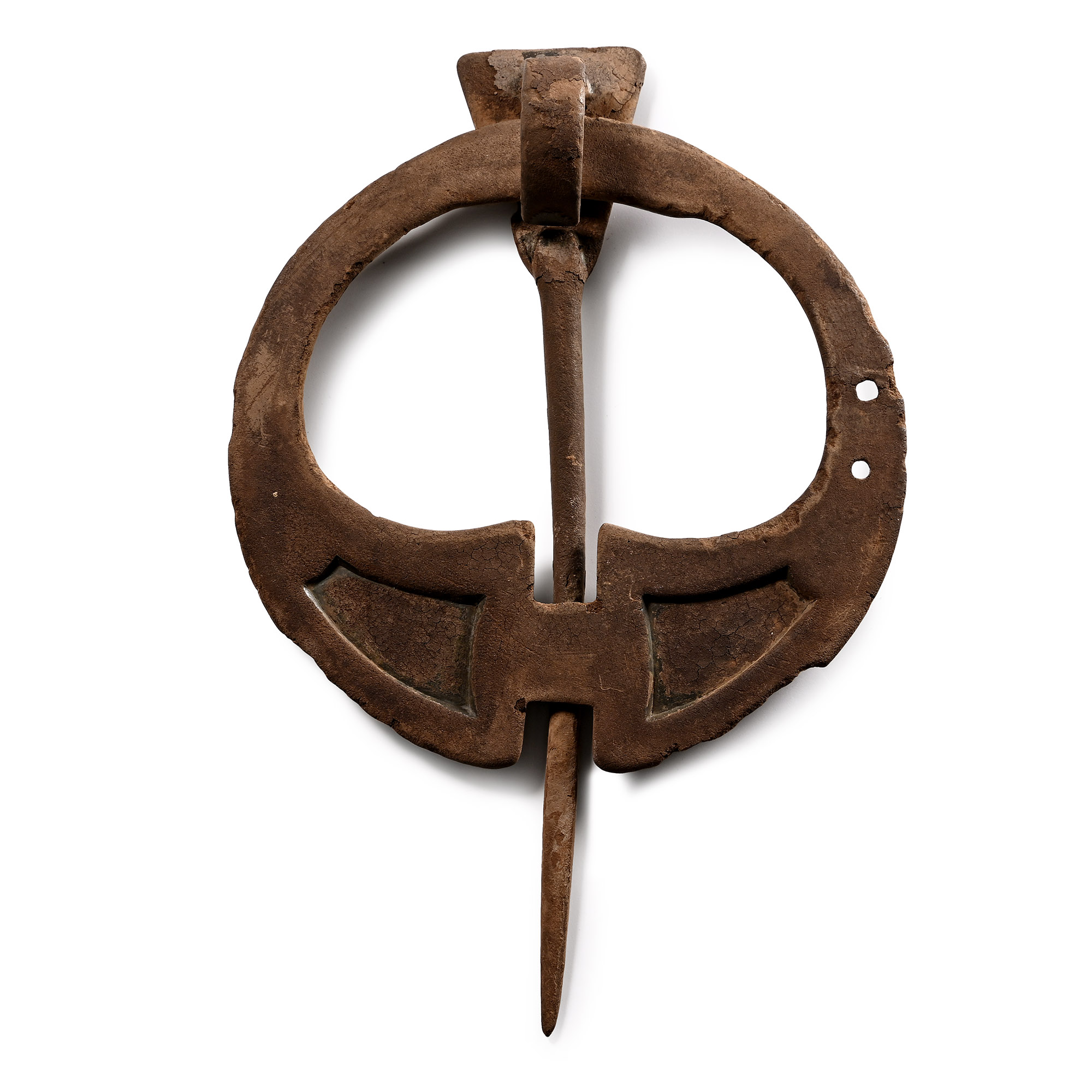
'The Powys' Hiberno-Norse Viking Gilt Bronze Pseudo-Penannular Brooch
8TH CENTURY A.D.
5 1/4 in. (74.4 grams, 13.2 cm).
Comprising: hoop formed from two convergent crescentic flat-section arms with panels of Insular Style interlace to the obverse, the left arm with two later holes (to accept a securing chain or thong); at each wide end, a trapezoidal panel with regardant beast motif and three discoid cells; at the upper junction, a panel of two-strand interlace; between the wide ends, a narrow rectangular panel with interlace motif; the pin slightly hipped and with round-section shank, triangular headplate with three disc cells (one with amber fill) and central interlace panel; some gilding remaining.
ProvenanceFound by Mr Steven Thomas whilst searching with a metal detector in Powys, Wales, UK, on 28th July 2023.
Accompanied by a copy of the Cymru Portable Antiquities Scheme (PAS) report no.SN 91399 13122; NMGW-67571D.
Accompanied by a condition report and analysis, no.012501 by the Nation Museum of Cardiff.
This lot has been checked against the Interpol Database of stolen works of art and is accompanied by a search certificate number no.12730-236283.
This lot has been cleared against the Art Loss Register database, and is accompanied by an illustrated lot declaration signed by the Head of the Antiquities Department, Dr Raffaele D'Amato.
Cf. Youngs, S. (ed.), The Work of Angels. Masterpieces of Celtic Metalwork, 6th-9th centuries AD, London, 1989, for general treatment of Insular metalwork; Stevenson, R.B.K., The Hunterston Brooch and its Significance, Medieval Archaeology vol.18, 1974; Redknap, M., Insular Non-Ferrous Metalwork from wales of the 8th to 10th Centuries, in Bourke, C. (ed.), From the Isles of the North. Early Medieval Art in Ireland and Britain, Belfast, 1995; Rynne, E., Gilt Bronze Brooch from Near Kilshanny, Co.Clare, in North Munster Antiquarian Journal, vol.30, 1988.
FootnotesThe brooch is 'pseudo-penannular' because of the apparent gap between the flared terminals is blocked by the small rectangular panel; thus the pin cannot pass between the flared ends in the normal manner of a penannular brooch, where one of the curved arms is passed behind the pin to lock it in place. The findspot lies close to a major highway running from the kingdom of Brycheiniog to the southern part of Wales, not far from the Maen Madoc inscribed stone.
CONDITIONTimeLine Auctions follows a vetting process to ensure the authenticity and legality of all items, reinforcing our commitment to integrity and responsible trading. Each antiquity, antique, and coin lot undergoes thorough examination by a vetting committee of at least ten external specialists, professional trade association members, scientists, and archaeologists: Our Vetting Process
AUCTIONS:
TimeLine is a leading auction house specialising in antiquities, ancient art, collectables, natural history, coins, medals, and books. Our auctions offer museums, collectors, historians, and enthusiasts the opportunity to acquire unique and historically significant pieces.
LOT 0353
'The Powys' Hiberno-Norse Viking Gilt Bronze Pseudo-Penannular Brooch
Sold for (Inc. bp): £12,350
-
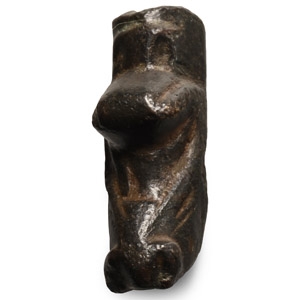
Anglo-Scandinavian Viking Stirrup Terminal with Beast
10th-11th century A.D.Sold for (Inc. bp): £59
With beast-head and other detailing, hollow to the underside. 15.3 grams, 31 mm
Found Cambridgeshire, UK. This lot is accompanied by an illustrated lot declaration signed by the Head of the Antiquities Department, Dr Raffaele D'Amato. -
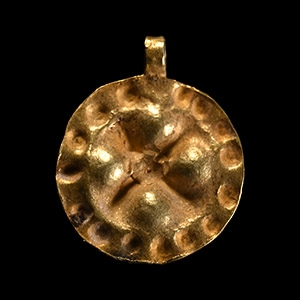
Viking Age Gold Bracteate Pendant
9th-11th century A.D. or earlierSold for (Inc. bp): £169
A circular repoussé pendant with four raised domes to the centre arranged in the shape of a cross, stamped pellets to the border. 0.51 grams, 13 mm
Ex property of a late Japanese collector, 1970-2000s. This lot is accompanied by an illustrated lot declaration signed by the Head of the Antiquities Department, Dr Raffaele D'Amato. -
.jpg)
Frankish Silver-Gilt S-Shaped Bird Brooch with Garnets
5th-6th century A.D.Sold for (Inc. bp): £3,120
S-shaped plate brooch formed with a profile bird-head finial at each end with inset garnet cabochon eye, hatched panels and inlaid garnet cloisons; pin-lugs and catch to reverse. 7.58 grams, 30 mm
Private collection formed in Europe in the 1980s. Westminster collection, central London, UK. This lot has been cleared against the Art Loss Register database, and is accompanied by an illustrated lot declaration signed by the Head of the Antiquities Department, Dr Raffaele D'Amato.
During the mid-sixth century the S-brooch, along with the disc brooch, became popular. These were made primarily of gilded silver embellished with garnet inlays or in garnet cloisonné. Early forms of S-shaped brooches appear in graves in Scandinavia throughout the fifth century and in Europe during the first decades of the sixth century, and reached the height of their popularity during the latter half of that time. They were widespread across Europe and are found in central and western Europe, Italy, Scandinavia and Anglo-Saxon England. They generally take the form of an S-shaped body with heads at either end facing in opposite directions. The heads are generally depicted as birds but examples are known of unidentified animals with splayed open jaws, possibly dragons or wolves. The use of the head imagery is consistent with the aesthetic tendencies associated with the northern, Pagan Germanic world.
