
Loading, please wait...
LOT 0713
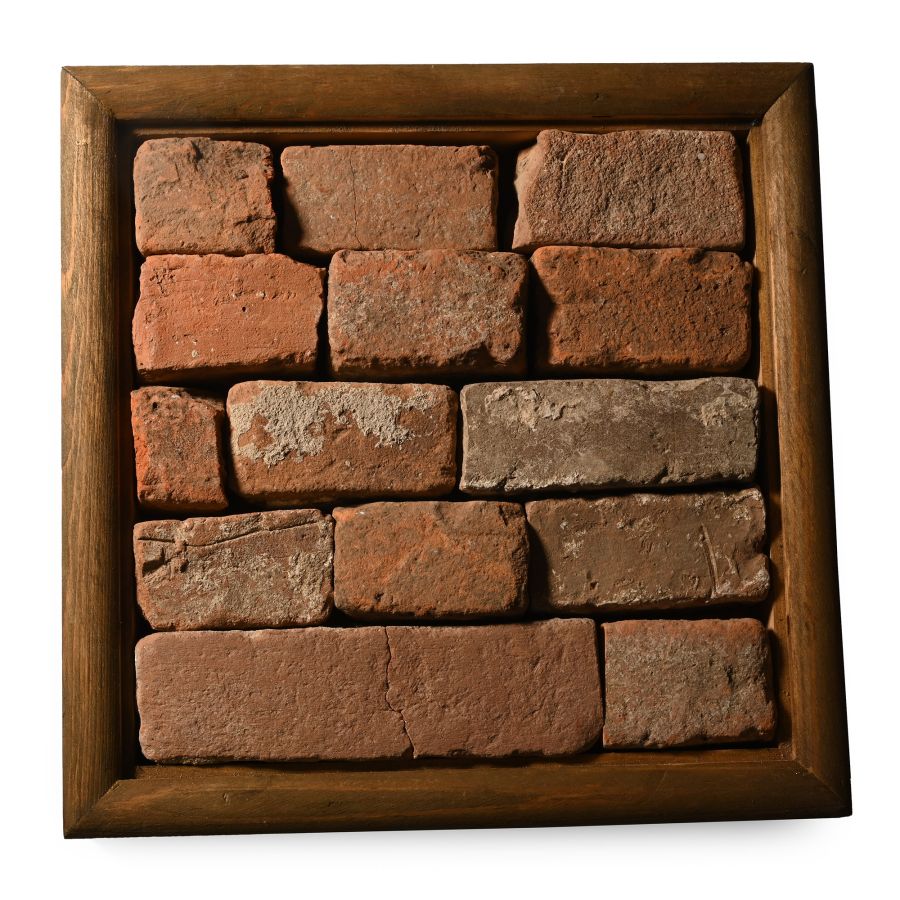
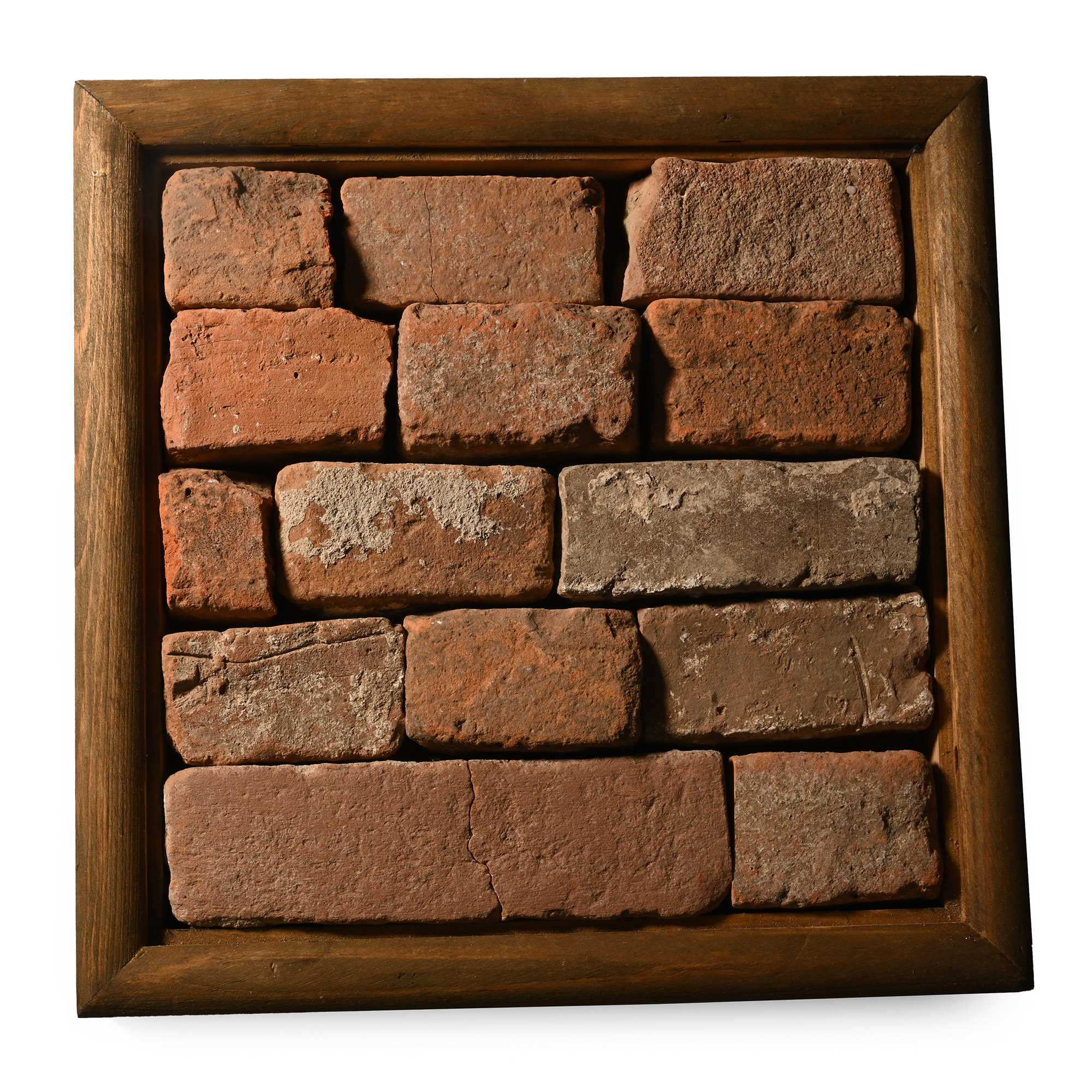
'The Harston' Roman Terracotta Floor Brick Framed Display
1ST-4TH CENTURY A.D.
7 7/8 x 7 7/8 in. (1.39 kg total, 20 x 20 cm).
Comprising fourteen rectangular bricks and fragments set in a wooden box frame. [No Reserve]
ProvenanceFound Harston, Cambridgeshire, UK.
Ex M. Graham collection, UK.
This lot is accompanied by an illustrated lot declaration signed by the Head of the Antiquities Department, Dr Raffaele D'Amato.
TimeLine Auctions follows a vetting process to ensure the authenticity and legality of all items, reinforcing our commitment to integrity and responsible trading. Each antiquity, antique, and coin lot undergoes thorough examination by a vetting committee of at least ten external specialists, professional trade association members, scientists, and archaeologists: Our Vetting Process
AUCTIONS:
TimeLine is a leading auction house specialising in antiquities, ancient art, collectables, natural history, coins, medals, and books. Our auctions offer museums, collectors, historians, and enthusiasts the opportunity to acquire unique and historically significant pieces.
LOT 0713
'The Harston' Roman Terracotta Floor Brick Framed Display
Sold for (Inc. bp): £124
-
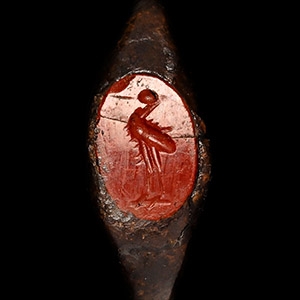
Roman Bronze Ring with Stork Gemstone
2nd-3rd century A.D.Estimate: £600 - 800 (‡+bp*)
Opening Bid: £300
Slender round-section hoop with red jasper intaglio engraved with a standing stork. 2.57 grams, 23.68 mm overall, 19.66 mm internal diameter (approximate size British O, USA 7, Europe 14.98, Japan 14)
Ex Prof. Dr Emil Vogt (1906-1974), the former Director of the Swiss National Museum, Zürich, in his collection before 1970. with Galerie Rhéa, Zurich, Switzerland. This lot is accompanied by an illustrated lot declaration signed by the Head of the Antiquities Department, Dr Raffaele D'Amato. -
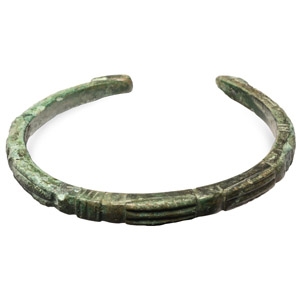
Late Roman Decorated Bronze Military Bracelet
4th-5th century A.D.Sold for (Inc. bp): £124
Thick penannular body with tapering finials, the upper faces divided into decorative panels with linear motifs. 24.1 grams, 65 mm
Ex German art market, 2000s. Acquired from an EU collector living in London. From the collection of a Surrey, UK, gentleman. This lot is accompanied by an illustrated lot declaration signed by the Head of the Antiquities Department, Dr Raffaele D'Amato. -
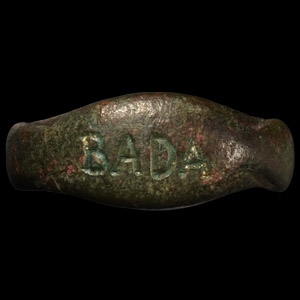
Late Roman Bronze Ring with BADA
4th-5th century A.D.Sold for (Inc. bp): £39
With expandable hoop and narrow bezel inscribed with 'BADA'. 4.14 grams, 23.09 mm overall, 19.53 mm internal diameter (approximate size British R 1/2, USA 8 3/4, Europe 19.38, Japan 18)
Ex German art market, 2000s. Acquired from an EU collector living in London. From the collection of a Surrey, UK, gentleman. This lot is accompanied by an illustrated lot declaration signed by the Head of the Antiquities Department, Dr Raffaele D'Amato.
