
Loading, please wait...
LOT 0375
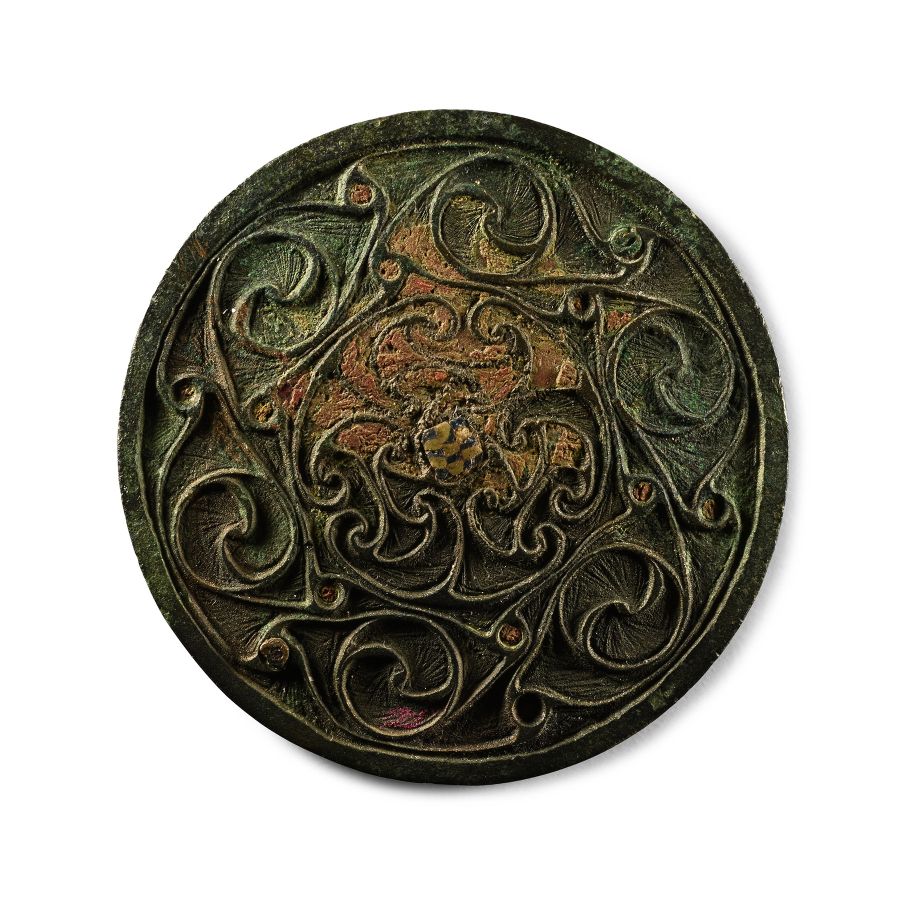
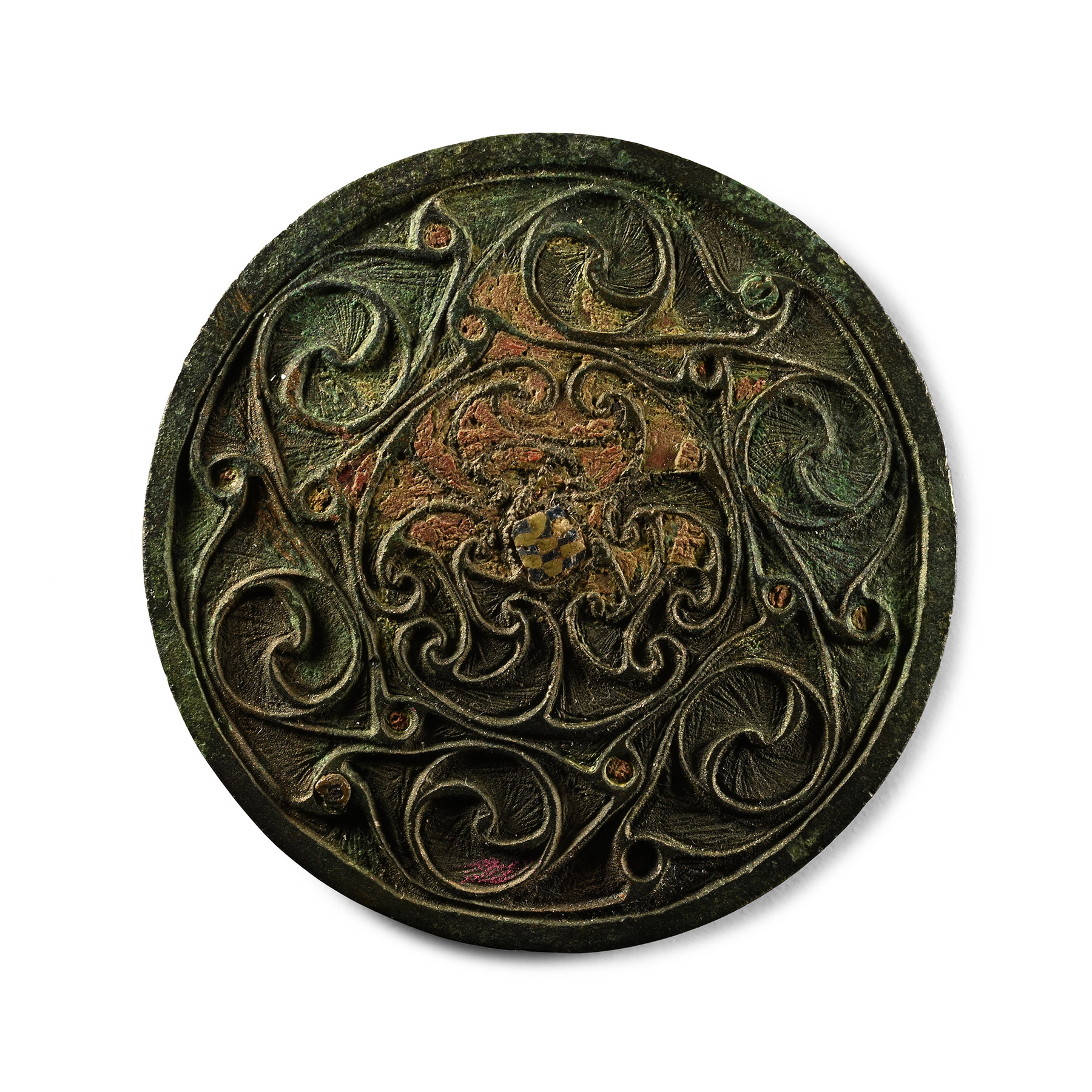
'The Driffield' Anglo-Saxon Enamelled Bowl Mount
CIRCA 500-700 A.D.
2 in. (23.4 grams, 51 mm).
With a slightly domed profile and a raised circumferential border to the upper face; decorated with Celtic designs featuring elaborate curvilinear tendrils and triskele-style swirls enclosing an area of fine-line trumpet spiral designs, set around a central rectangular panel filled with millefiori-style enamel work in the form of an irregular chequerboard of blue and yellow enamel, the circular recesses retaining red enamel traces; two parallel rivets to the reverse.
ProvenanceFound whilst searching with a metal detector near Driffield, East Riding of Yorkshire, UK, in 2018.
Accompanied by a copy of the British Museum's Portable Antiquities Scheme (PAS) report no.YORYM-73B821.
This lot has been checked against the Interpol Database of stolen works of art and is accompanied by search certificate no.12075-124454.
See Portable Antiquities Scheme, YORYM-975799, for a similar example.
CONDITIONTimeLine Auctions follows a vetting process to ensure the authenticity and legality of all items, reinforcing our commitment to integrity and responsible trading. Each antiquity, antique, and coin lot undergoes thorough examination by a vetting committee of at least ten external specialists, professional trade association members, scientists, and archaeologists: Our Vetting Process
AUCTIONS:
TimeLine is a leading auction house specialising in antiquities, ancient art, collectables, natural history, coins, medals, and books. Our auctions offer museums, collectors, historians, and enthusiasts the opportunity to acquire unique and historically significant pieces.
-
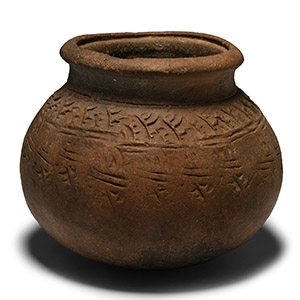
Anglo-Saxon Decorated Grey-Ware Urn
Circa 6th-11th century A.D.Sold for (Inc. bp): £442
Squat vessel with rounded underside, gusseted neck and carinated mouth with inner lip; stamped frond decoration to the shoulder and body, arched stamp pattern between; underside with impressed ropework spiral pattern. 497 grams, 14 cm wide
Ex English private collection, formed in the 1960s. Acquired from Bonhams, London, 13 April 2011, no.245 (part). From an important Cambridgeshire estate; thence by descent. Accompanied by copies of the relevant Bonhams catalogue pages and the original Bonhams lot tag. -
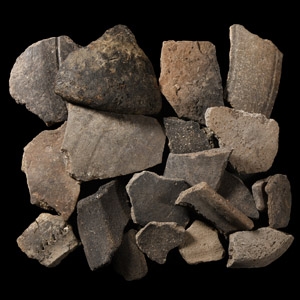
Anglo-Saxon Greyware Pottery Fragment Collection
6th-8th century A.D.Sold for (Inc. bp): £20
Mixed group of pottery shards including Ipswich Ware and other types. 682 grams total, 33-90 mm
UK gallery, early 2000s. -
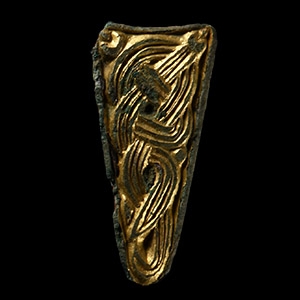
Anglo-Saxon Gilt Bronze Interlaced Belt Mount
Late 5th-6th century A.D.Sold for (Inc. bp): £286
Triangular gilt-bronze appliqué with two pierced lugs to the reverse, obverse with three-strand knotwork motif (Style II). 1.56 grams, 22 mm
Found near Skirpenbeck, East Riding of Yorkshire, UK. Accompanied by a copy of the British Museum's Portable Antiquities Scheme (PAS) report no.YORYM-2C0918.
