
Loading, please wait...
LOT 0988
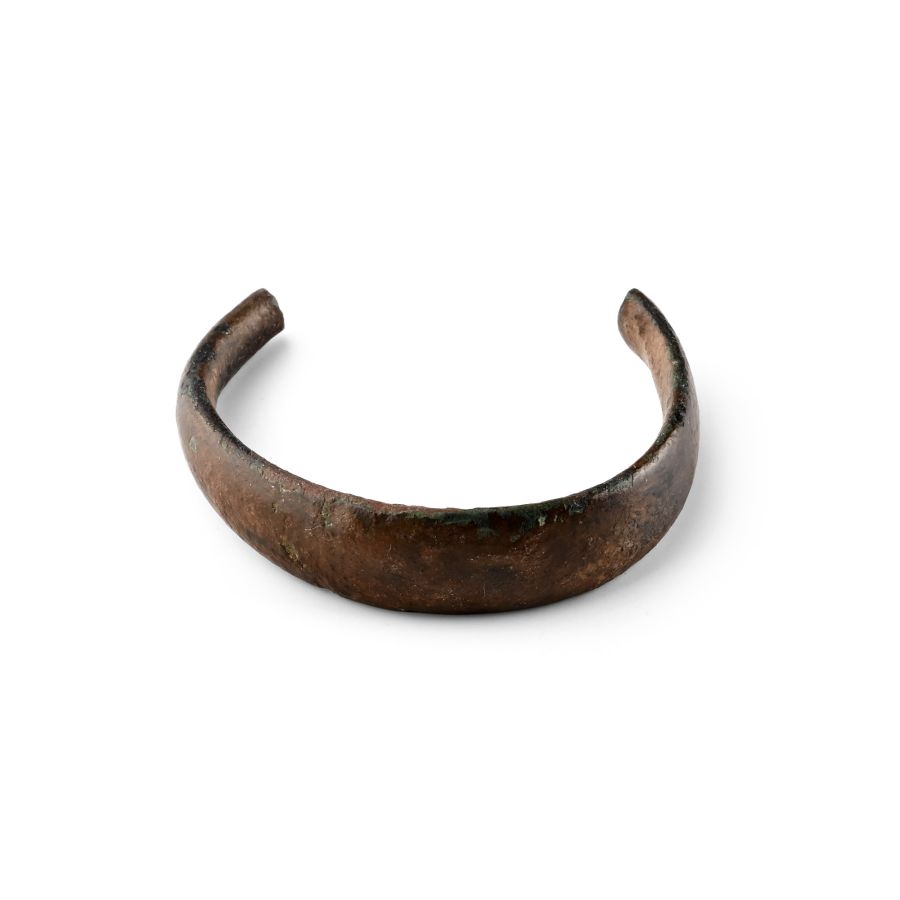
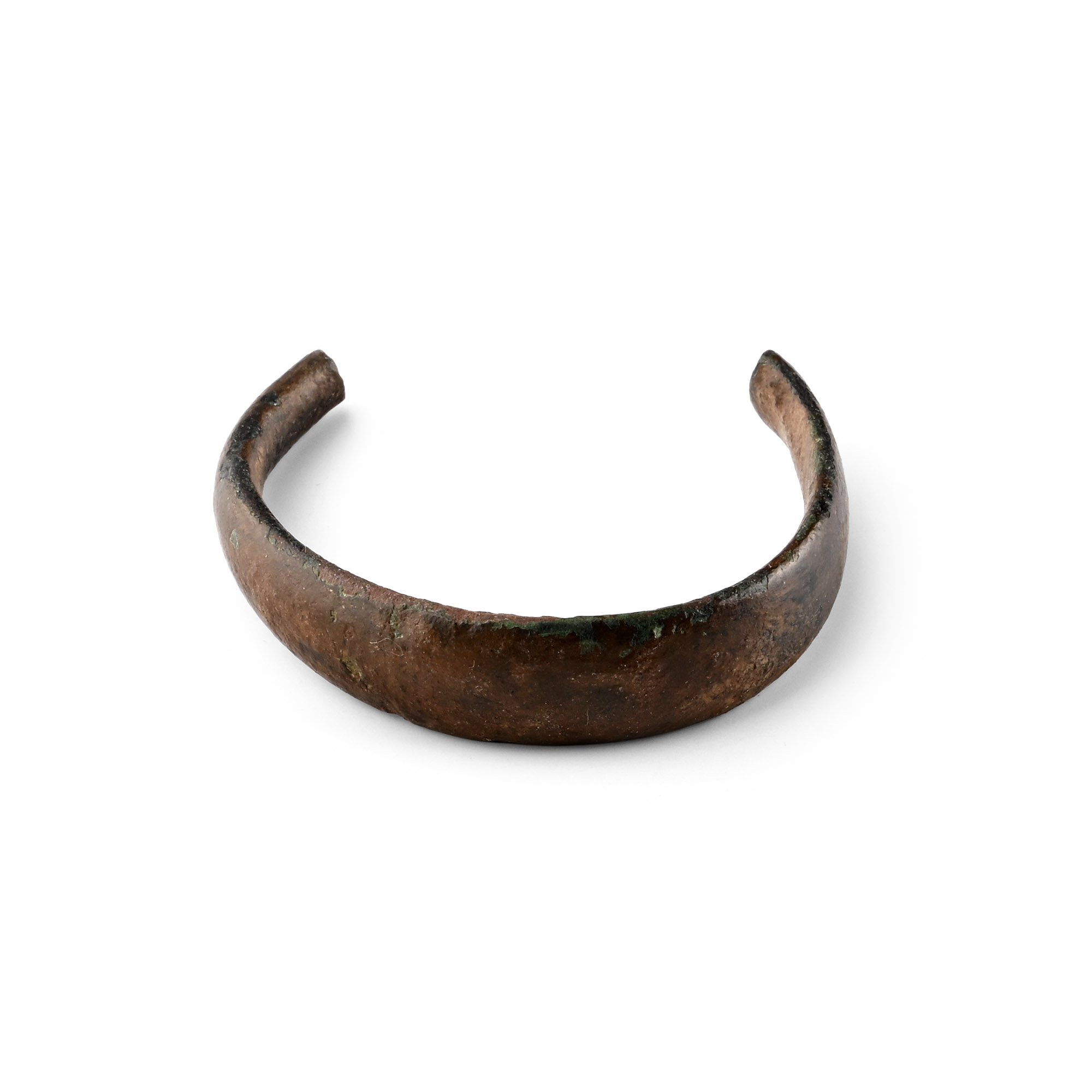
'The Dale Abbey' Romano-British Bronze Bracelet
300-450 A.D.
2 1/2 in. (45 grams, 63 mm).
Penannular in form and D-plano-convex in section, tapering to the end of each arm; finials absent. [No Reserve]
ProvenanceFound whilst searching with a metal detector in Dale Abbey, Erewash, Derbyshire, UK.
Accompanied by a copy of the British Museum's Portable Antiquities Scheme (PAS) report no.DENO-89B82E.
TimeLine Auctions follows a vetting process to ensure the authenticity and legality of all items, reinforcing our commitment to integrity and responsible trading. Each antiquity, antique, and coin lot undergoes thorough examination by a vetting committee of at least ten external specialists, professional trade association members, scientists, and archaeologists: Our Vetting Process
AUCTIONS:
TimeLine is a leading auction house specialising in antiquities, ancient art, collectables, natural history, coins, medals, and books. Our auctions offer museums, collectors, historians, and enthusiasts the opportunity to acquire unique and historically significant pieces.
-
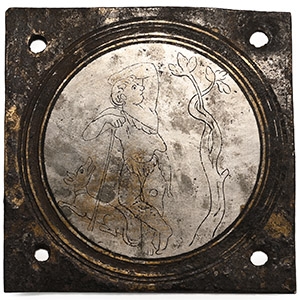
Roman Silver Military Belt Plaque
Circa 4th century A.D.Sold for (Inc. bp): £520
Square plaque from a baldric or military belt, with an engraved circle in the centre depicting a shepherd resting under a tree with two crossed branches, leaning on his staff with a greyhound beside him. 48.7 grams, 66 mm
From a UK collection since before 1990.
The plaque is related to a series of late Antique bronze plates destined to decorate the military baldrics or belts. Some of them were found in a late Roman tomb in Totanés (Toledo), ornamented with busts, and a plaque from Merida (Badajoz) was decorated with the personification of Rome. The plaque is related to similar ones from Italian and Syrian-Palestinian workshops, whose ornamentation seems sometimes to be connected to imperial authority. Parallels are linked to similar pieces of different iconographic types, but which were equally popular in the late Roman Empire, such as hunting or bucolic motifs. -
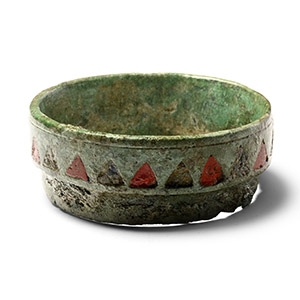
'The Kniveton' Romano-British Enamelled Bronze Drinking Horn Rim
2nd century A.D.Sold for (Inc. bp): £494
A sub-circular rim, emulating the natural shape of a cow-horn aperture, with alternating triangular inlaid cells of red and blue enamel, the lower internal socket with the remains of three fixing rivets. 52 grams, 53 mm
Found whilst searching with a metal detector in Kniveton, Derbyshire Dales, East Midlands, UK. Accompanied by a copy of the British Museum's Portable Antiquities Scheme (PAS) report no.WWID-7C901E.
The British Museum's Portable Antiquities Scheme (PAS) states: 'This is a find of note and has been designated: County / local importance'. -
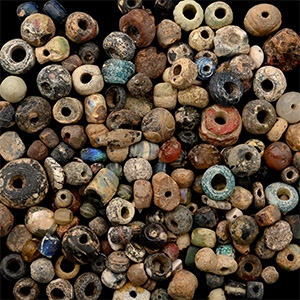
Ancient Glass and Other Bead Collection
Early 1st millennium A.D.Sold for (Inc. bp): £156
Including annular, tabular, polyhedral and other types. 94 grams total, 4-16 mm
From an old deceased estate. Property of an East London lady collector, acquired at auction before 1995.
