
Loading, please wait...
LOT 0293
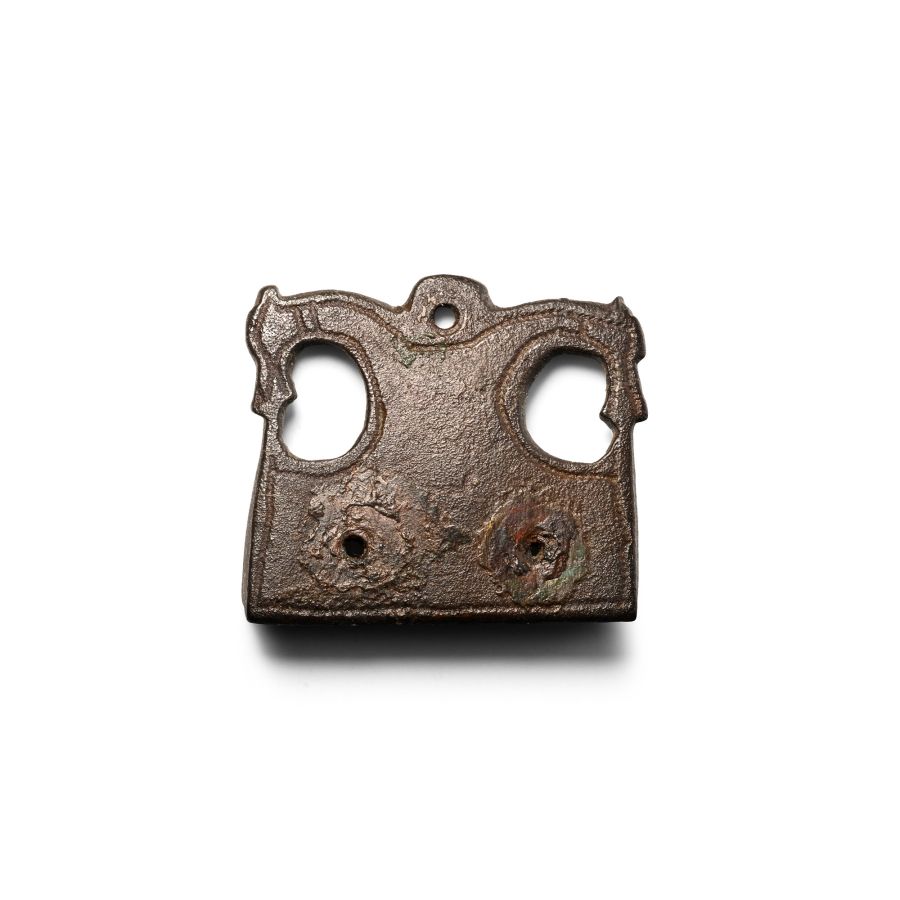
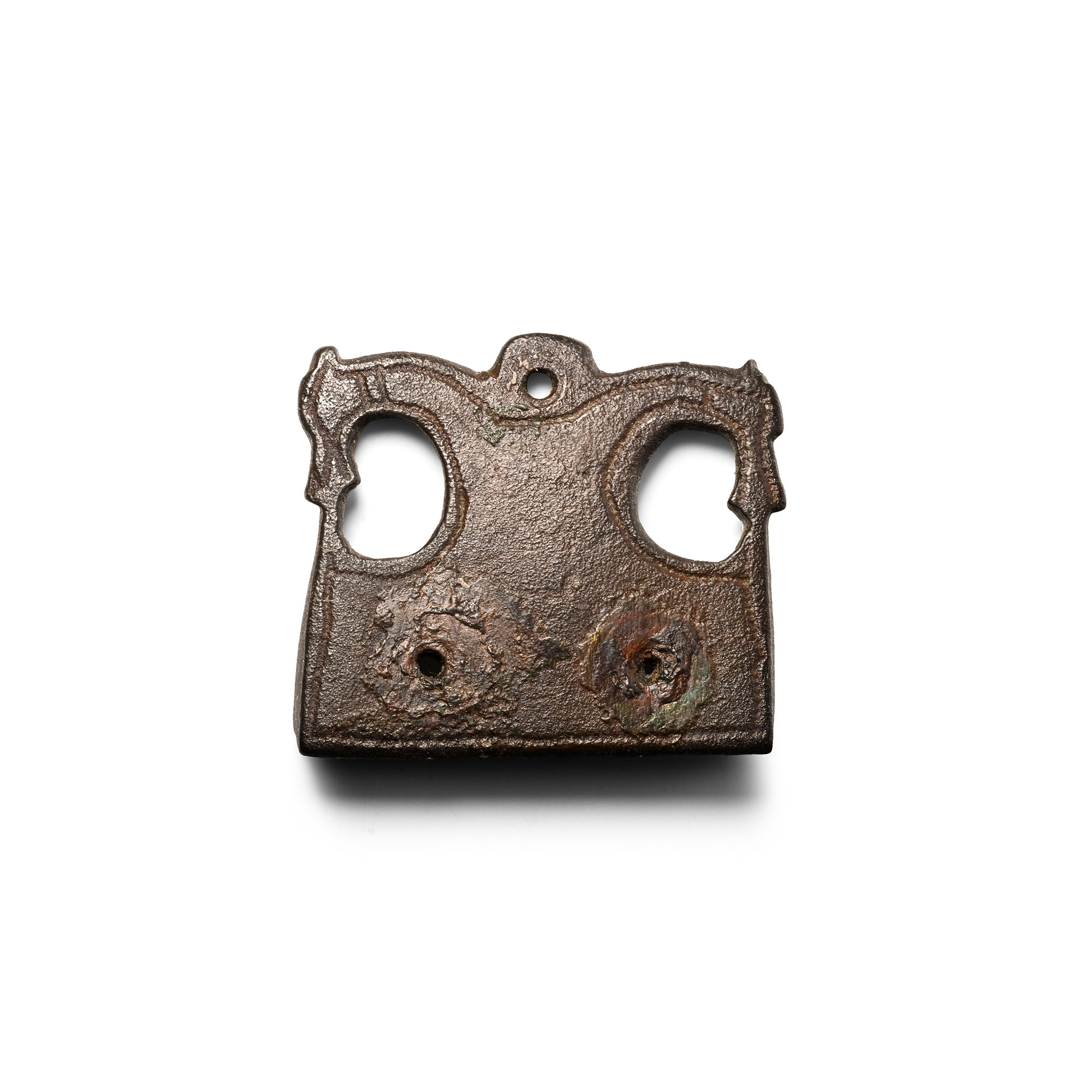
'The Bradbourne Horses' Anglo-Scandinavian Viking Bronze Ringerike Stirrup Apex Mount
1000-1100 A.D.
4 in. (47 grams, 53 mm).
Rectangular mount with flange to each side of the reverse at the base, two mounting holes; upper edge formed as two addorsed horse-heads and median pierce lug; shallow incised line following the outer edges of the heads and necks, with suggestion of a bridle; Ringerike style.
ProvenanceFound whilst searching with a metal detector in Bradbourne, Derbyshire Dales, East Midlands, UK.
Accompanied by a copy of the British Museum's Portable Antiquities Scheme (PAS) report no.WMID-793298.
Cf. Pedersen, A., Riding Gear from Late Viking Age Denmark, Journal of Danish Archaeology, vol.13 (1996-7), fig.10(a).
FootnotesThe sub-rectangular shape of this strap mount is similar to that of a Williams Class C, Type 2, although it is unusual in having the flanges on the sides as opposed to the base. The British Museum's Portable Antiquities Scheme (PAS) states: 'This is a find of note and has been designated: County / local importance'.
CONDITIONTimeLine Auctions follows a vetting process to ensure the authenticity and legality of all items, reinforcing our commitment to integrity and responsible trading. Each antiquity, antique, and coin lot undergoes thorough examination by a vetting committee of at least ten external specialists, professional trade association members, scientists, and archaeologists: Our Vetting Process
AUCTIONS:
TimeLine is a leading auction house specialising in antiquities, ancient art, collectables, natural history, coins, medals, and books. Our auctions offer museums, collectors, historians, and enthusiasts the opportunity to acquire unique and historically significant pieces.
LOT 0293
'The Bradbourne Horses' Anglo-Scandinavian Viking Bronze Ringerike Stirrup Apex Mount
Sold for (Inc. bp): £715
-
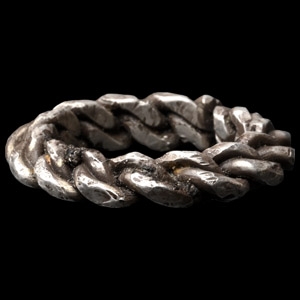
Viking Age Silver Plaited Ring
9th-11th century A.D.Sold for (Inc. bp): £195
Formed as a penannular hoop with butted ends, from braided wires. 7.10 grams, 25.44 mm overall, 16.58 mm internal diameter (approximate size British K 1/2, USA 5 1/2, Europe 10.58, Japan 10)
Acquired on the UK art market. Property of a Suffolk, UK, gentleman. -
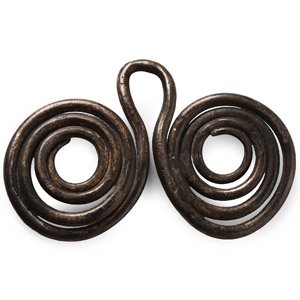
Scandinavian Pre-Viking Silver Wrist Clasp
5th century A.D.Sold for (Inc. bp): £65
Spiral-coiled wrist-clasp of Hines's Class A with a broad rounded loop to the centre. 5.78 grams, 36 mm
Ex property of a gentleman; acquired in the 1970s.
The spiral-coil type of wrist clasp is the earliest form of an artefact type which became a very popular costume element in especially Norway and the English East Midlands in the early Anglo-Saxon Period. Grave-finds indicate that they were used to secure the cuffs of robes worn by high-status women. -
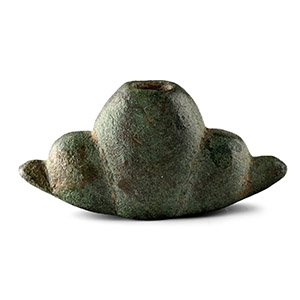
Anglo-Scandinavian Viking Bronze Five-Lobed Pommel
10th-11th century A.D.Sold for (Inc. bp): £338
Of Petersen's Type S (Wheeler Type III) with five graduated lobes; hollow, the lower face a swept arc; pierced through the tallest lobe to accept the tang of the sword's blade. 48.7 grams, 50 mm
Found Norfolk, UK.
