
Loading, please wait...
_900x900.jpg "'The Anglesey' Romano-British Marble Head of a Celtic Warrior")
_200x200.jpg "'The Anglesey' Romano-British Marble Head of a Celtic Warrior")
.jpg "'The Anglesey' Romano-British Marble Head of a Celtic Warrior")
LOT 0193
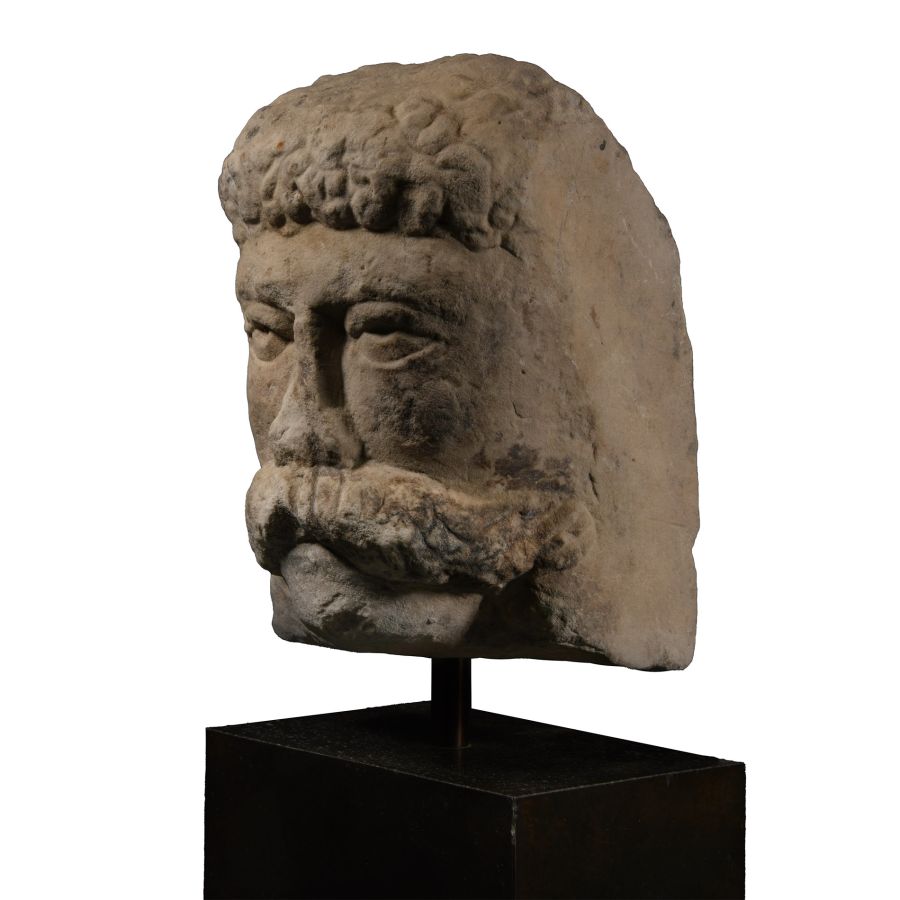
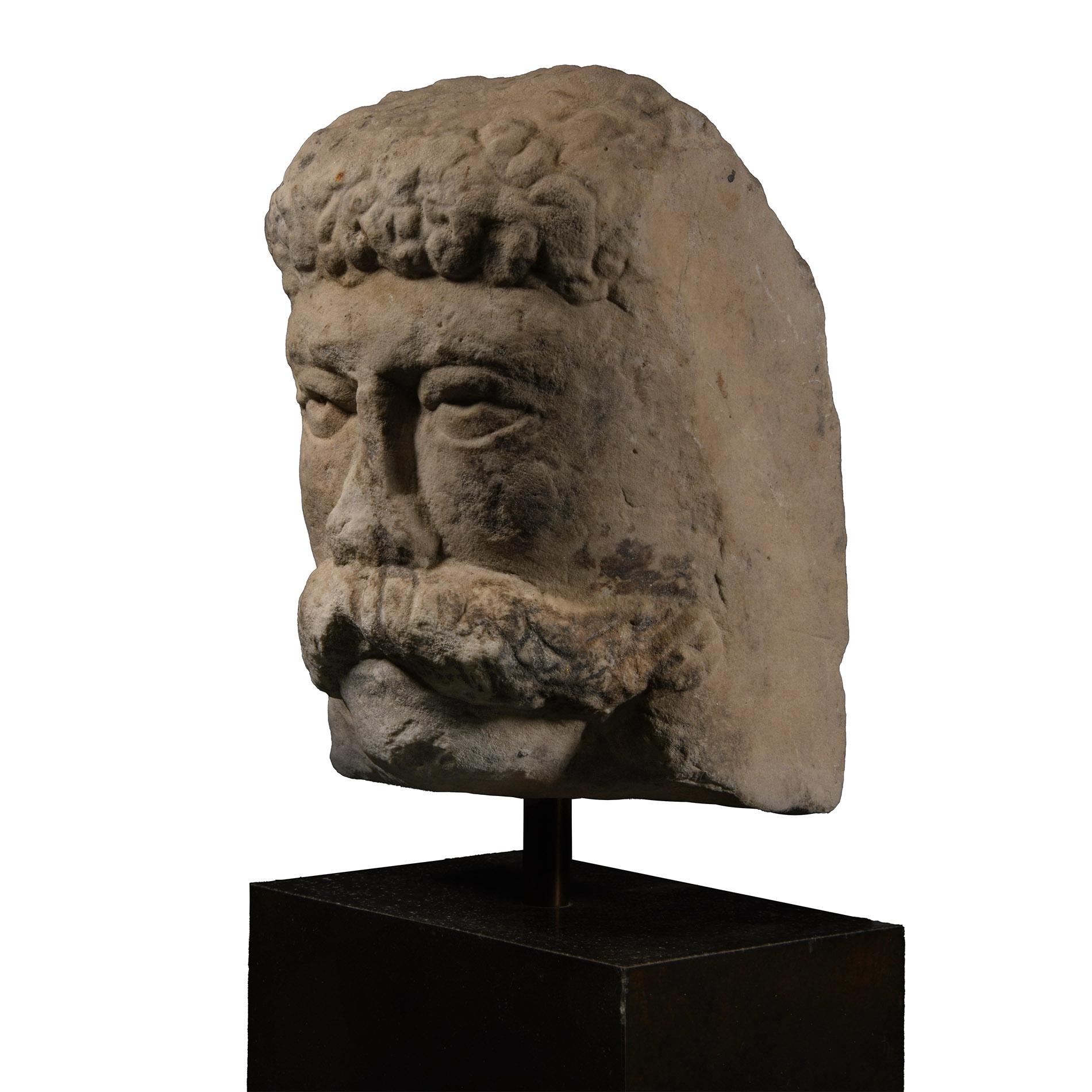
'The Anglesey' Romano-British Marble Head of a Celtic Warrior
1ST-2ND CENTURY A.D.
11 1/4 in. (7.3 kg total, 28.5 cm high including stand).
Carved with comma-leaf detailing to the hair, a low brow over almond-shaped eyes, broad triangular nose and thick moustache obscuring the mouth; mounted on a custom-made stand. [No Reserve]
ProvenanceFound Anglesey, Wales, 1978.
From a collection acquired on the UK art market from various auction houses and collections mostly before 2000.
From an important Cambridgeshire estate; thence by descent.
Accompanied by a newspaper article on the find.
Cf. Jackson, S., Celtic and Other Stone Heads, Shipley, 1973, item 16.
FootnotesThe style of execution is rather more refined than for the majority of stone heads, and lacks the characteristic slit mouth. Same elements of the design are seen on the figure from Otley (Jackson, no.25) and especially that from Bradford-Heaton (no.16) which shares the prominent moustache.
CONDITIONTimeLine Auctions follows a vetting process to ensure the authenticity and legality of all items, reinforcing our commitment to integrity and responsible trading. Each antiquity, antique, and coin lot undergoes thorough examination by a vetting committee of at least ten external specialists, professional trade association members, scientists, and archaeologists: Our Vetting Process
AUCTIONS:
TimeLine is a leading auction house specialising in antiquities, ancient art, collectables, natural history, coins, medals, and books. Our auctions offer museums, collectors, historians, and enthusiasts the opportunity to acquire unique and historically significant pieces.
LOT 0193
'The Anglesey' Romano-British Marble Head of a Celtic Warrior
Sold for (Inc. bp): £7,150
-
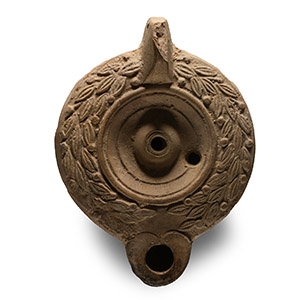
Roman Terracotta Oil Lamp with Wreath
2nd-3rd century A.D.Sold for (Inc. bp): £260
Lug handle to rear, deep discus with a dome filling hole, another filling hole to the side; wide shoulder with low-relief laurel wreath; low basal ring and incised maker's mark in Greek letters (ΗΙϹΧΛ). 138 grams, 11.8 cm
Acquired on the European art market, 1980s. English private collection.
This form of lamps is characterised by their shoulder decoration - a laurel wreath. This decoration may be treated realistically or be stylised. Both groups appear on lamps found in Italy. The hypothesis that they might only be African imports is contradicted by the signature on many lamps of L.C A E S A E, a prolific Italic lamp maker (late Antonine and early Severan); his products are scarce in North Africa. -
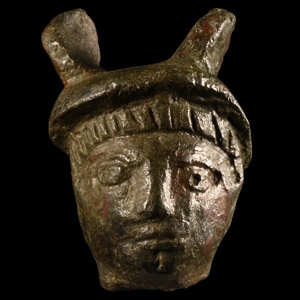
Roman Bronze Mercury Statuette Head
1st-2nd century A.D.Sold for (Inc. bp): £234
With winged petasos traveller's headgear and low-relief facial detailing. 13.3 grams, 20 mm
Property of a Gloucestershire, UK, collector. Property of an East Sussex, UK, gentleman. -
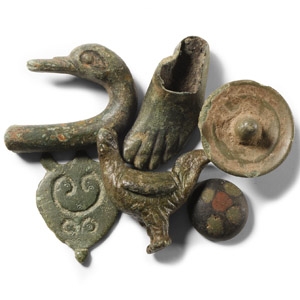
Roman Bronze Artefact Group
Mainly 1st-2nd century A.D.Sold for (Inc. bp): £72
Including a foot from a statuette, la Tène style military mount, mosaic glass gaming counter and other items. 124 grams total, 18-43 mm
Property of a Gloucestershire, UK, collector. Property of an East Sussex, UK, gentleman.
