
Loading, please wait...
LOT 2039
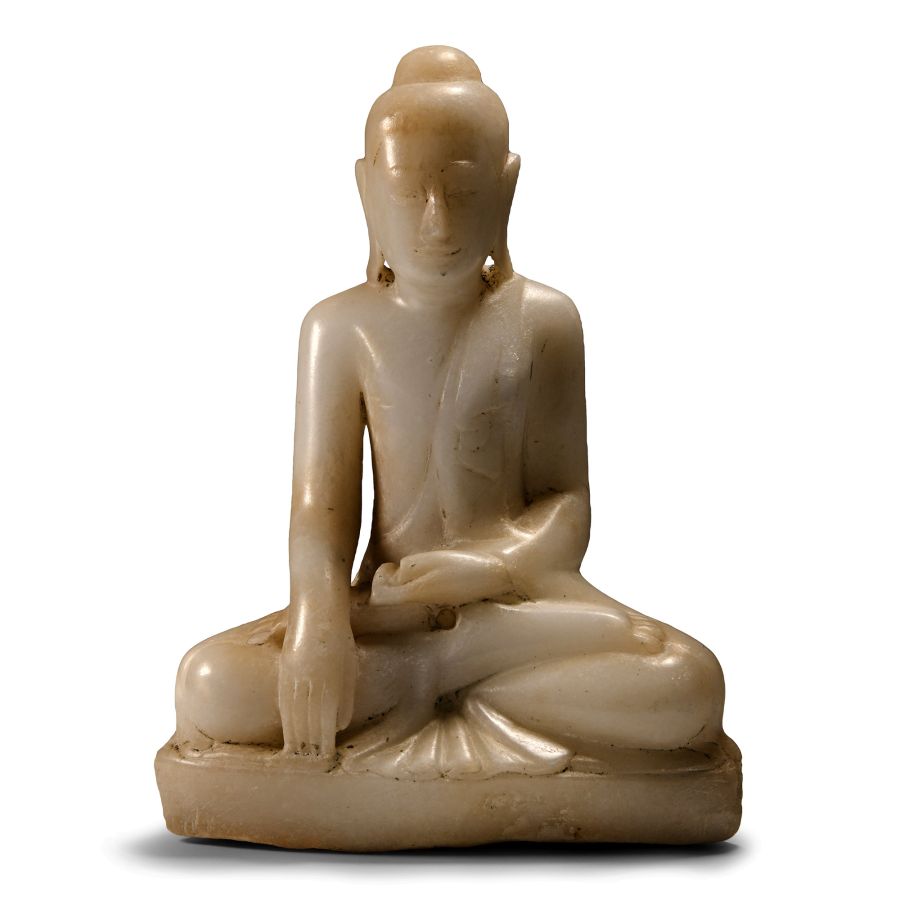
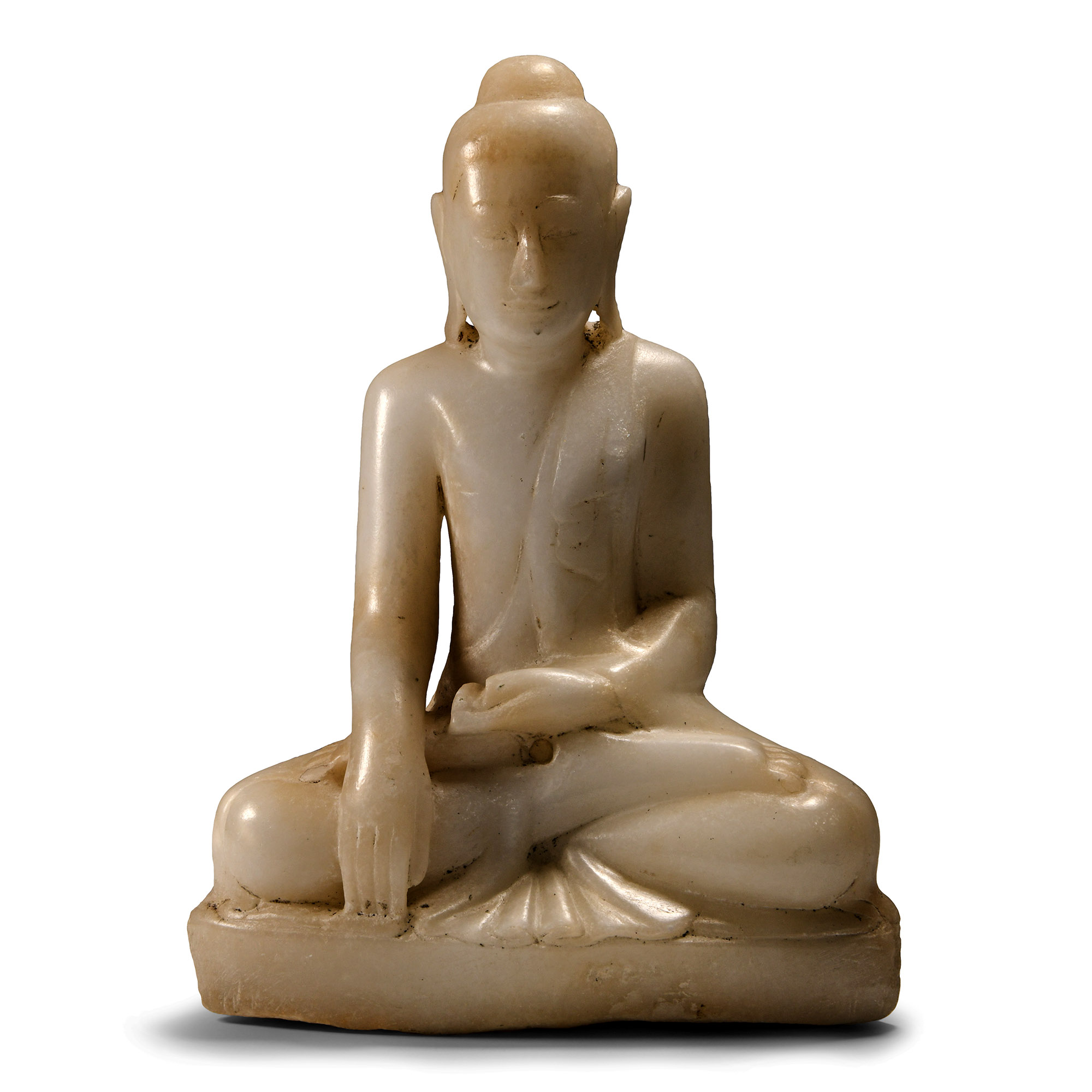
Thai Alabaster Buddha Touching the Earth
16TH-17TH CENTURY A.D. OR LATER
9 7/8 in. (3.07 kg, 25 cm high).
Carved in the round seated on a lotus flower base, right hand in Bhumisparsha mudra.
ProvenanceAcquired 1970s onwards.
Private collection of Michael O'Hara, Cambridgeshire, UK.
Ex private collection of Benjamin Hyde-Smith, Hertfordshire, UK.
TimeLine Auctions follows a vetting process to ensure the authenticity and legality of all items, reinforcing our commitment to integrity and responsible trading. Each antiquity, antique, and coin lot undergoes thorough examination by a vetting committee of at least ten external specialists, professional trade association members, scientists, and archaeologists: Our Vetting Process
AUCTIONS:
TimeLine is a leading auction house specialising in antiquities, ancient art, collectables, natural history, coins, medals, and books. Our auctions offer museums, collectors, historians, and enthusiasts the opportunity to acquire unique and historically significant pieces.
-
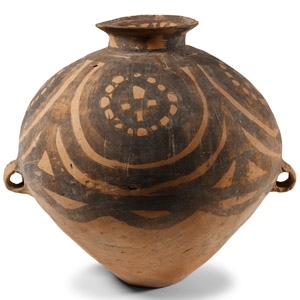
Chinese Neolithic Terracotta Jar
3rd-2nd millennium B.C.Estimate: £250 - 350 (+bp*)
Opening Bid: £125
With everted neck and rim, rectangular-section loop handles, painted circles with reserved pellets and crosses between plain bands and swags, band and pendants to the inner rim. 2.1 kg, 29 cm high
From a West Country, UK, collection, formed in the 1990s. -
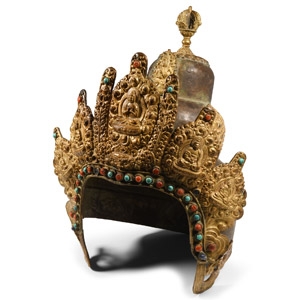
Sino-Tibetan Gilt Bronze Headdress
20th century A.D.Sold for (Inc. bp): £1,170
Formed as a tiered cap with applied gilt plaques and vajra (thunderbolt sceptre) crest; applied repoussé frame to the open face with Buddha-figures and inset cabochon studs. 870 grams, 34 cm high
Ex North West London, UK, collection, 1990-2000. -
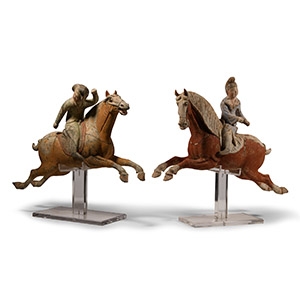
Chinese Tang Terracotta Polo Player Pair
Tang Dynasty, 618-907 A.D.Sold for (Inc. bp): £7,150
A dynamic pair of ceramic polo player figures modelled in the round, riding galloping horses in vigorous poses, each a female in a robe with long sleeves and extensive remains of polychrome pigmentation, detailing to the harnesses and rider's garments; each with a custom-made display stand. 10.65 kg total, 45-47 cm high including stands
From a West Country, UK, collection, formed in the 1990s. Accompanied by a thermoluminescence analysis report no.C124a7 from Oxford Authentication for one of the figures. This lot has been checked against the Interpol Database of stolen works of art and is accompanied by search certificate no.12097-213518.
