
Loading, please wait...

LOT 1967
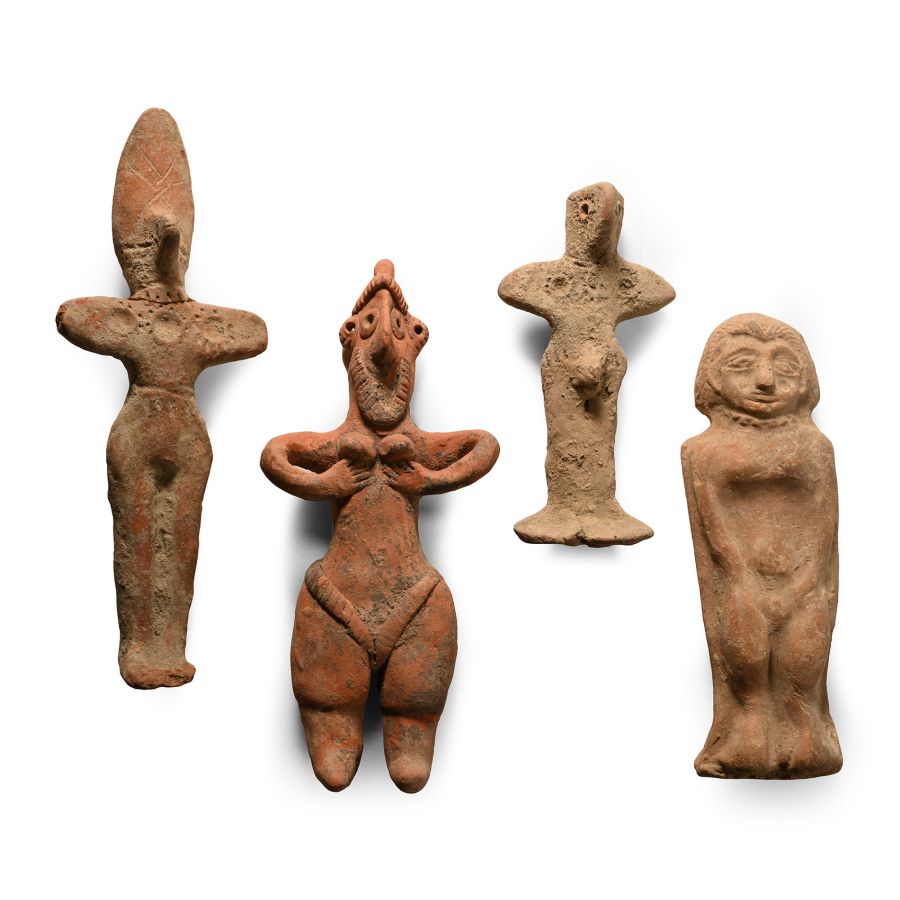
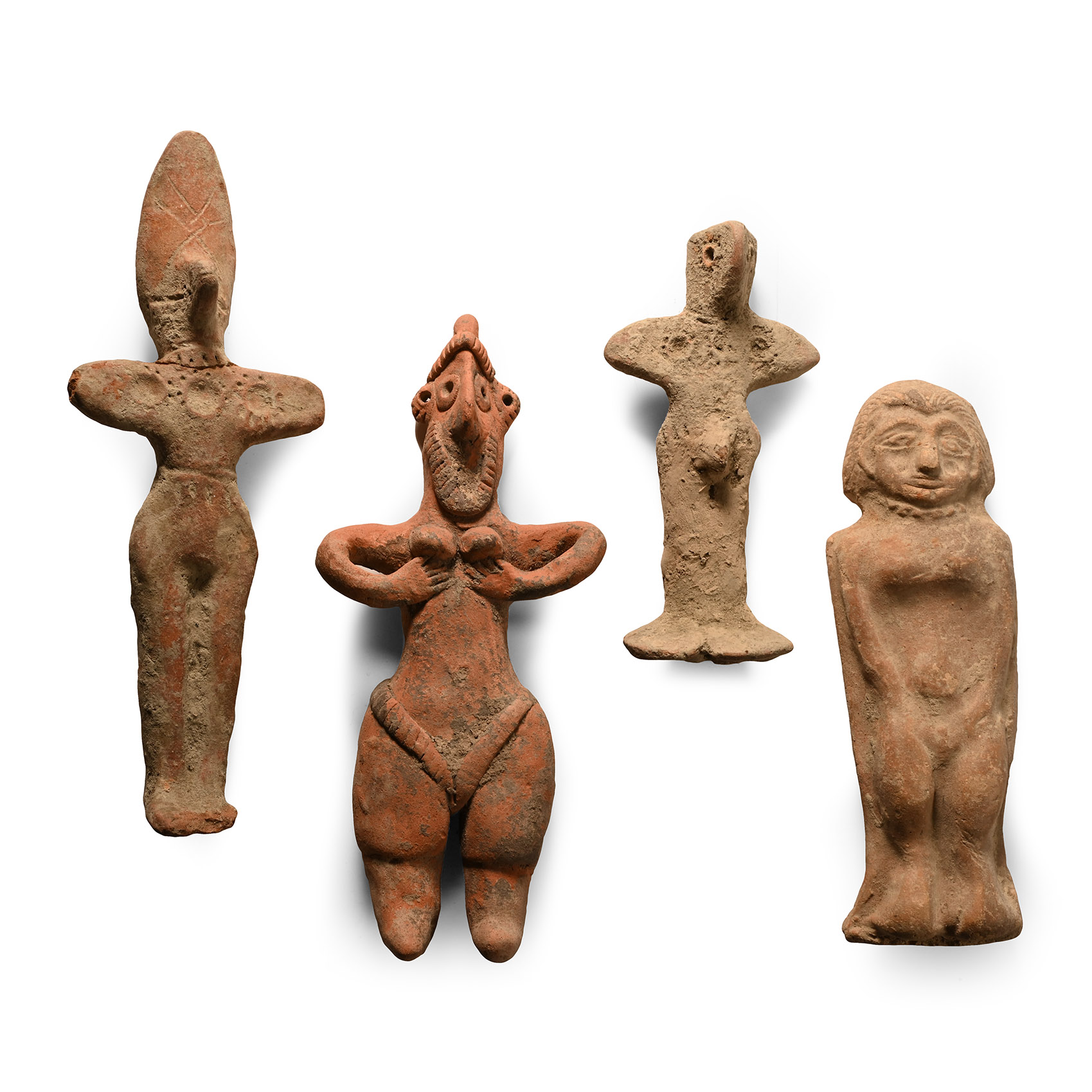
Terracotta Figure Group
20TH CENTURY A.D.
3 7/8 - 6 1/8 in. (330 grams total, 9.8-15.7 cm).
Including a standing nude female with her hands placed beneath her breasts, a standing male with pinched facial features and impressed eyes and other types; after the antique. [4, No Reserve]
ProvenanceLondon art market, 1990s.
CONDITIONTimeLine Auctions follows a vetting process to ensure the authenticity and legality of all items, reinforcing our commitment to integrity and responsible trading. Each antiquity, antique, and coin lot undergoes thorough examination by a vetting committee of at least ten external specialists, professional trade association members, scientists, and archaeologists: Our Vetting Process
AUCTIONS:
TimeLine is a leading auction house specialising in antiquities, ancient art, collectables, natural history, coins, medals, and books. Our auctions offer museums, collectors, historians, and enthusiasts the opportunity to acquire unique and historically significant pieces.
-
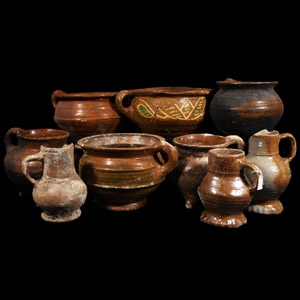
Post Medieval and Later Pottery Group
Circa 16th-17th century A.D.Sold for (Inc. bp): £111
Comprising glazed and unglazed vessels and fragments, including tripod vessels, chamber pots, tankards and others, including a pot with handle and polychrome geometric motif around the shoulder. 7.45 kg total, 16 - 25 cm
Acquired 1990s-early 2000s. East Anglian private collection. -
.jpg)
Silver Bowl with Animals and Calligraphy
18th-19th century A.D.Sold for (Inc. bp): £244
Decorated with circumferential bands of lozenges, floral vines, calligraphic text, animals processing right amid flowers, second band of floral vines and panel of text to base. 140 grams, 12.2 cm wide
Fine condition.
Acquired on the UK art market, 2000s. Property of a Suffolk gentleman. -
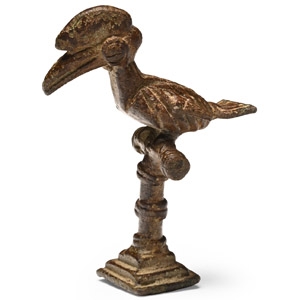
Georgian Bronze Statuette of a Giant Hornbill
18th-19th century A.D.Sold for (Inc. bp): £78
Perching on a column on a tiered plinth, modelled in the round. 11.2 grams, 38 mm
Found Suffolk, UK. From an old private collection of Norfolk, UK, gentleman, formed since 1998.
