
Loading, please wait...
LOT 0233
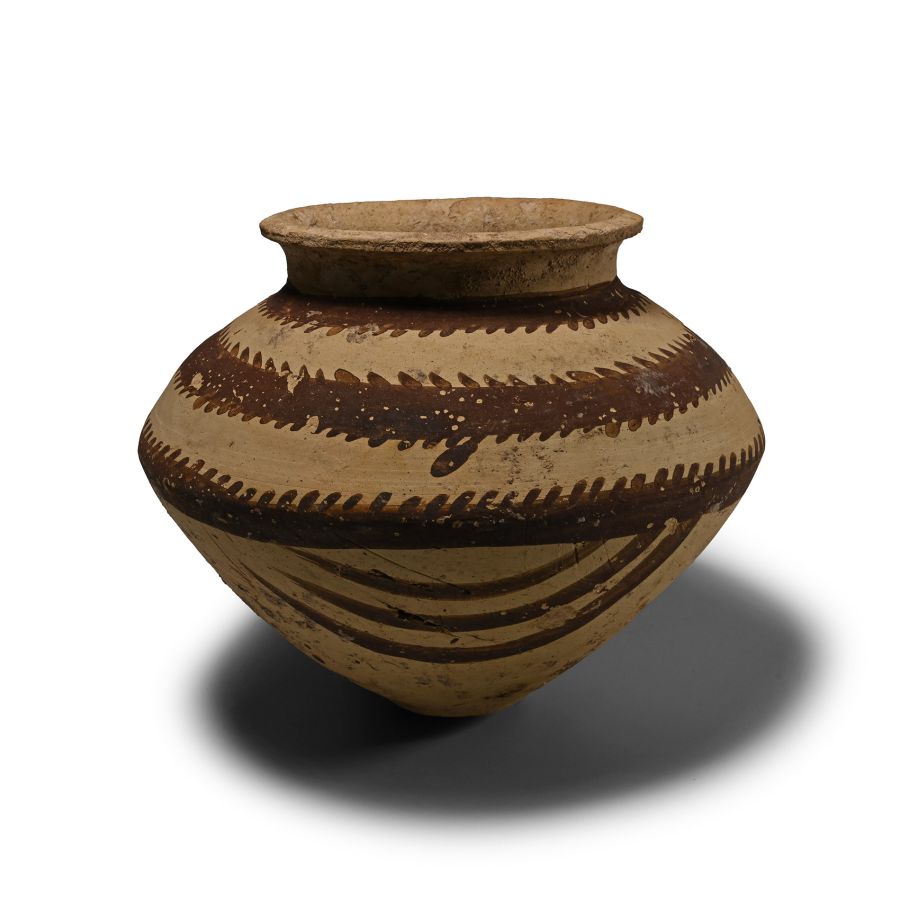
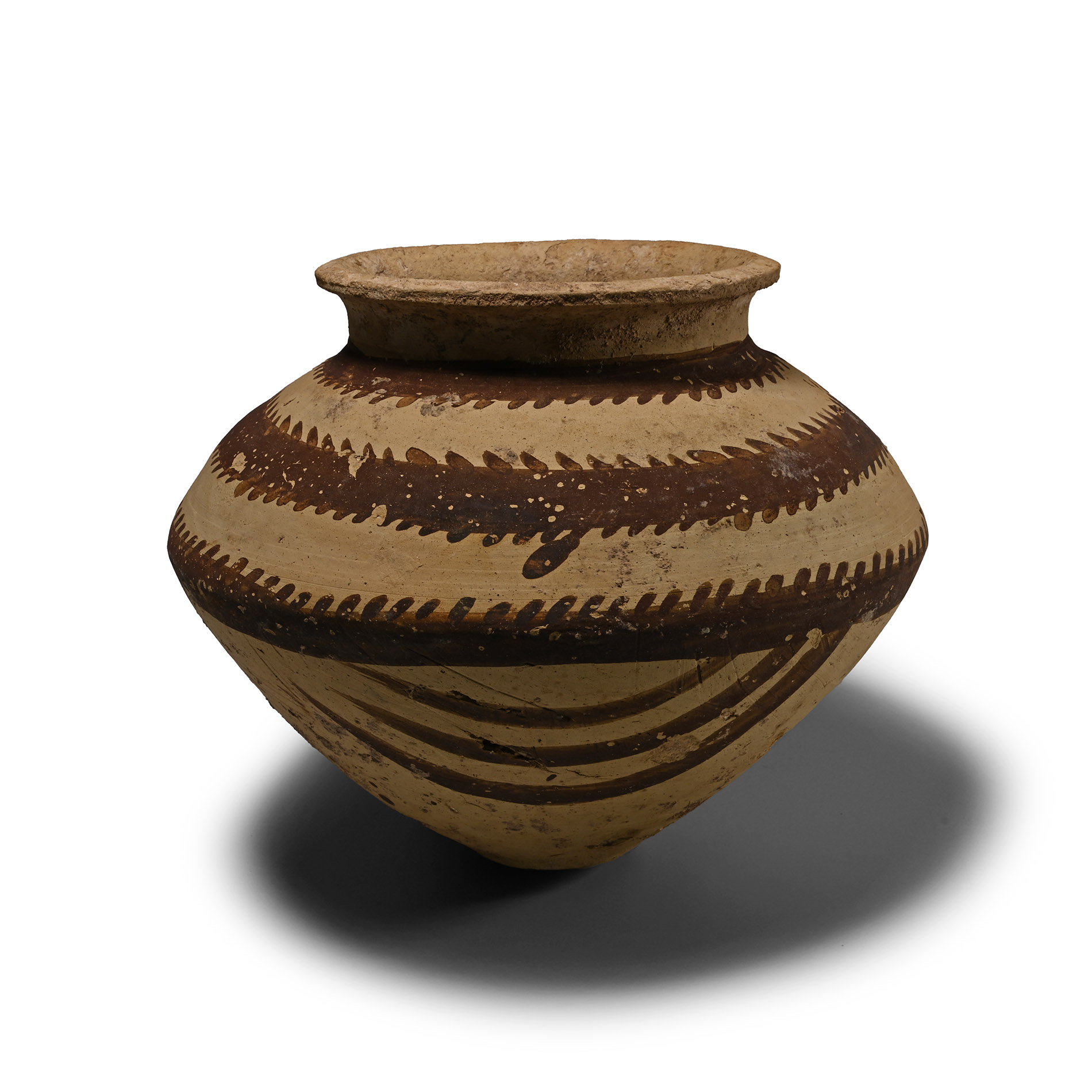
Tell Halaf Terracotta Painted Vessel
2900-2500 B.C.
7 in. (712 grams, 18 cm wide).
Biconical in profile with narrow base, broad shoulder and everted flared rim; painted concentric herringbone band to the shoulder and swags beneath.
ProvenanceAcquired in the mid 1980s-1990s.
Private collection, Switzerland, thence by descent.
Private collection, since the late 1990s.
This lot has been checked against the Interpol Database of stolen works of art and is accompanied by search certificate number no.12258-222363.
See Abd el-Mesih Baghdo, Lutz Martin, Mirko Novák, Winfried Orthmann, Ausgrabungen auf dem Tell Halaf in Nordost-Syrien. Vorbericht über die erste und zweite Grabungskampagne, Wiesbaden, 2009.
CONDITIONTimeLine Auctions follows a vetting process to ensure the authenticity and legality of all items, reinforcing our commitment to integrity and responsible trading. Each antiquity, antique, and coin lot undergoes thorough examination by a vetting committee of at least ten external specialists, professional trade association members, scientists, and archaeologists: Our Vetting Process
AUCTIONS:
TimeLine is a leading auction house specialising in antiquities, ancient art, collectables, natural history, coins, medals, and books. Our auctions offer museums, collectors, historians, and enthusiasts the opportunity to acquire unique and historically significant pieces.
LOT 0233
Tell Halaf Terracotta Painted Vessel
Estimate £1,800 - 2,400€2,090 - 2,780 (for guidance only)$2,430 - 3,240 (for guidance only)
-
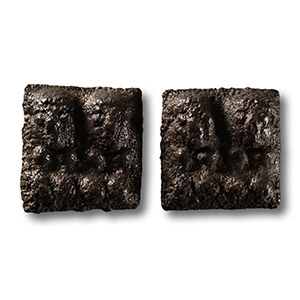
Western Asiatic Silver Inlay Pair with Human Heads and Animals
1st millennium B.C.Estimate: £100 - 140 (+bp*)
Opening Bid: £50
Comprising two matched inlays, each with a pair of facing heads, zoomorphic motifs below. 2.6 grams total, 16 mm each
Collected from 1970-1999. From the collection of the late Mr S.M., London, UK. -
.jpg)
Western Asiatic Mixed Stone and Glass Necklace Bead Collection
1st millennium B.C. and laterSold for (Inc. bp): £494
Comprising a quantity of small beads, mostly drawn coloured glass beads intended for embroidery. 84 grams total, 1-16 mm
UK gallery, early 2000s. -
.jpg)
Rolled Aramaic Lead Magical Text Scroll
2nd-8th century A.D.Estimate: £500 - 700 (+bp*)
Opening Bid: £250
A rolled sheet-metal magical document with inscribed text in Aramaic. 41 grams, 60 mm
Fine condition.
Acquired 1979-1999. London collection of the late Mr S.M., thence by descent.
