
Loading, please wait...
LOT 1149
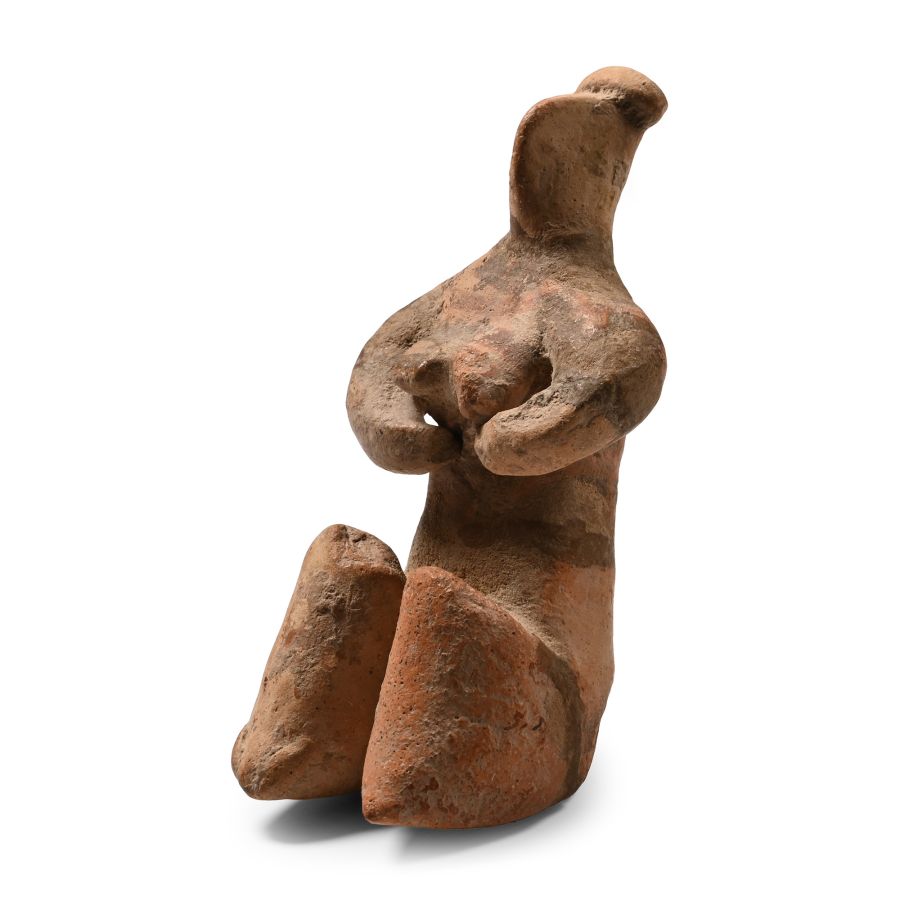
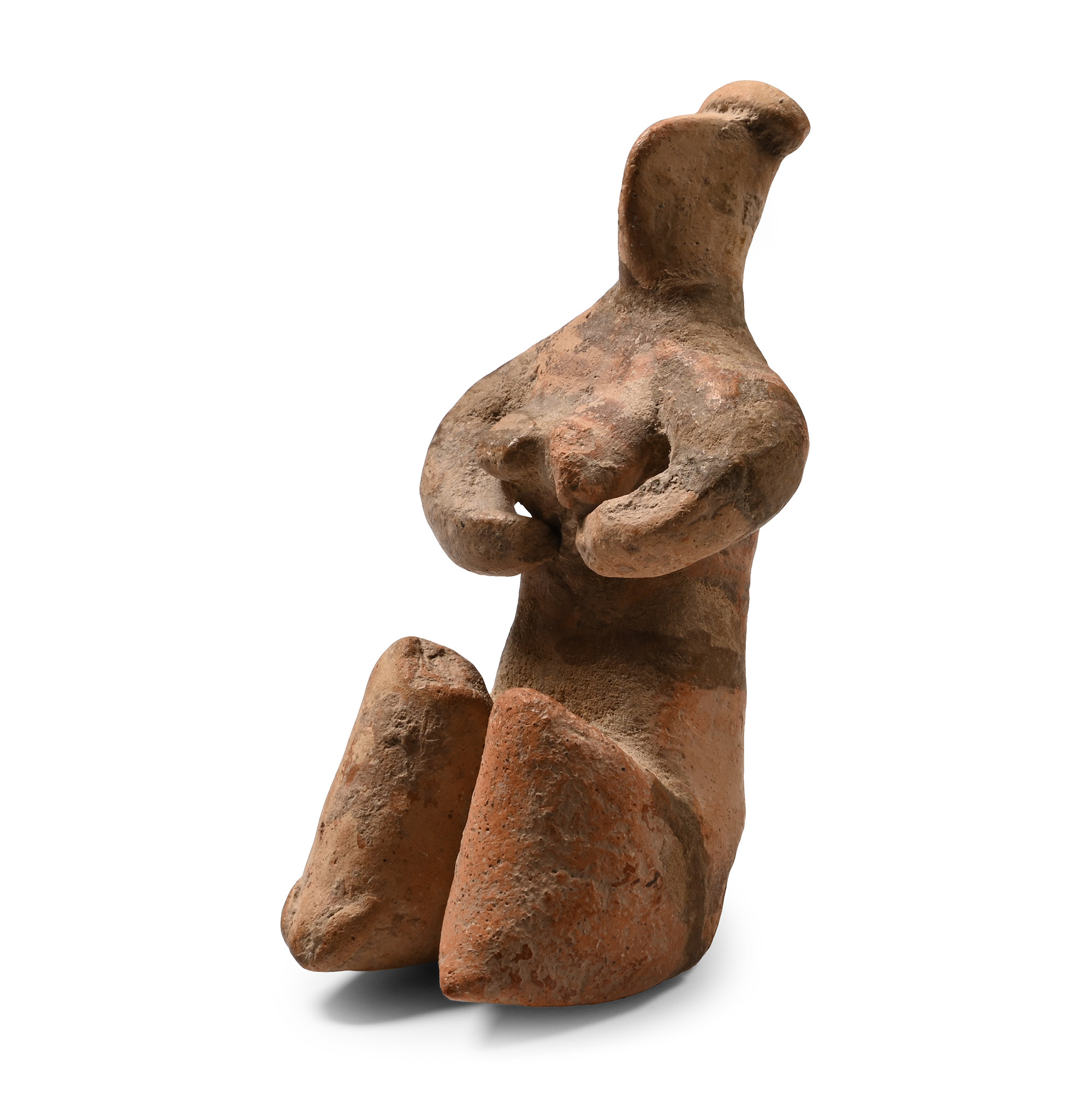
Tel Halaf Mother Goddess Fertility Figure
6TH MILLENNIUM B.C.
3 3/8 in. (71 grams, 86 mm).
Modelled in the round crouching female figure with hands supporting the breasts, knees drawn up, pinched facial features and applied-band headdress; pigment detailing to shoulders and thighs; restored. [No Reserve]
ProvenanceAcquired in York, Yorkshire, UK.
Ex P. Watson collection, UK, 1990s.
This lot has been cleared against the Art Loss Register database, and is accompanied by an illustrated lot declaration signed by the Head of the Antiquities Department, Dr Raffaele D'Amato.
In the 7th millennium BC, cultures in the Near East began creating organised settlements with developed religious and funerary practices. The Halaf culture of Anatolia and northern Syria produced a variety of figures representing females and associated with fertility. It is not known whether figures such as this were intended to represent real, ideal, or divine women. However, scholars believe that their primary purpose was to encourage female fertility.
CONDITIONTimeLine Auctions follows a vetting process to ensure the authenticity and legality of all items, reinforcing our commitment to integrity and responsible trading. Each antiquity, antique, and coin lot undergoes thorough examination by a vetting committee of at least ten external specialists, professional trade association members, scientists, and archaeologists: Our Vetting Process
AUCTIONS:
TimeLine is a leading auction house specialising in antiquities, ancient art, collectables, natural history, coins, medals, and books. Our auctions offer museums, collectors, historians, and enthusiasts the opportunity to acquire unique and historically significant pieces.
-
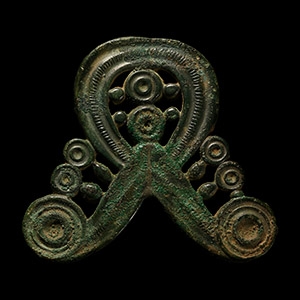
Western Asiatic Bronze Razor Handle
1st millennium B.C.Sold for (Inc. bp): £65
Flat-section openwork handle formed as a loop with roundel to each end and more roundels filling the void. 72.5 grams, 69 mm
From a private Essex collection, 1990s. This lot has been cleared against the Art Loss Register database, and is accompanied by an illustrated lot declaration signed by the Head of the Antiquities Department, Dr Raffaele D'Amato. -
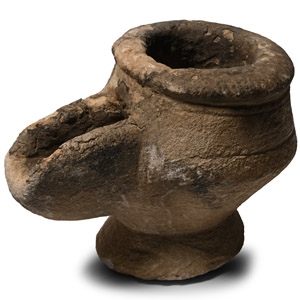
Western Asiatic Stone Libation Bowl
1st millennium B.C.Estimate: £100 - 140 (+bp*)
Opening Bid: £50
With a biconical body and flared foot set off-centre, large U-shaped spout and flat rim. 667 grams total, 11.9 cm
From a collection formed before 1988, London and Geneva. This lot has been cleared against the Art Loss Register database, and is accompanied by an illustrated lot declaration signed by the Head of the Antiquities Department, Dr Raffaele D'Amato. -
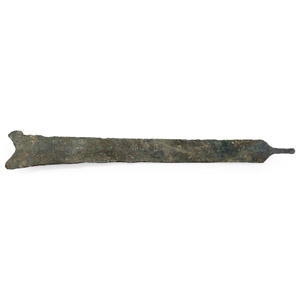
Luristan Bronze Splayed Spear Blade
2nd-1st millennium B.C.Sold for (Inc. bp): £117
Double-edged blade widening at the tip and forming two points at the tip, short rectangular-section tang. 112 grams, 35 cm
Ex London art market, 1980-1990s. This lot has been cleared against the Art Loss Register database, and is accompanied by an illustrated lot declaration signed by the Head of the Antiquities Department, Dr Raffaele D'Amato.
This blade was probably for a short sword or dagger, which was transformed into a working tool.
