
Loading, please wait...
LOT 0250
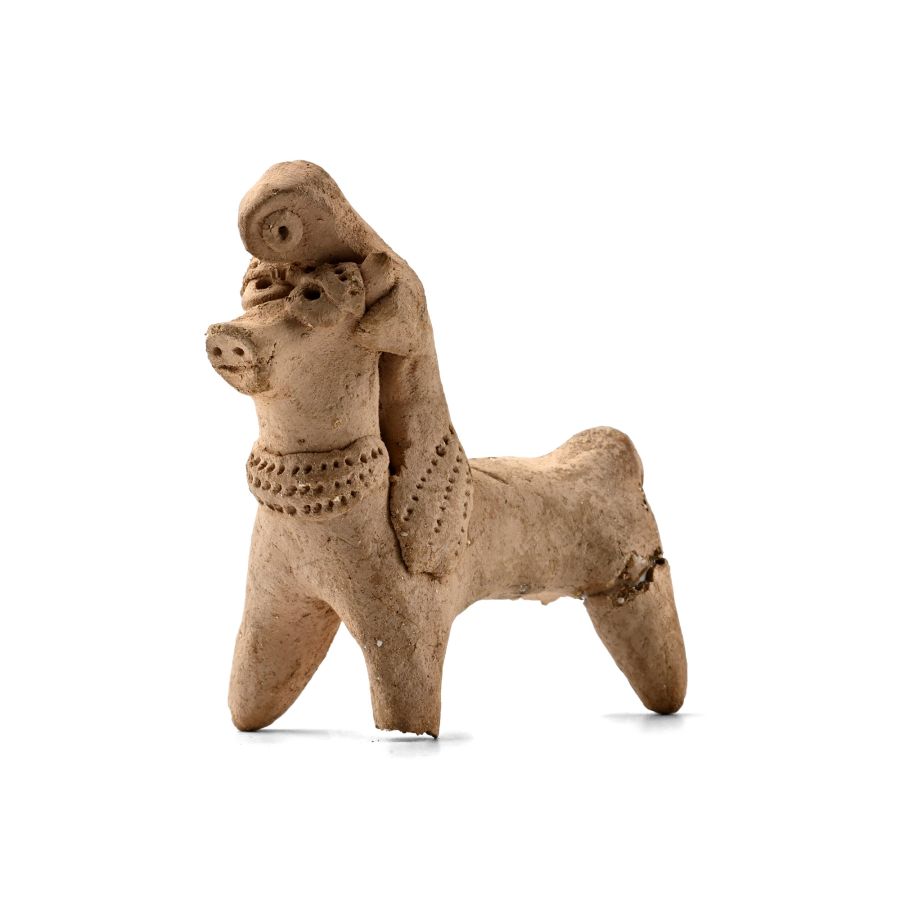
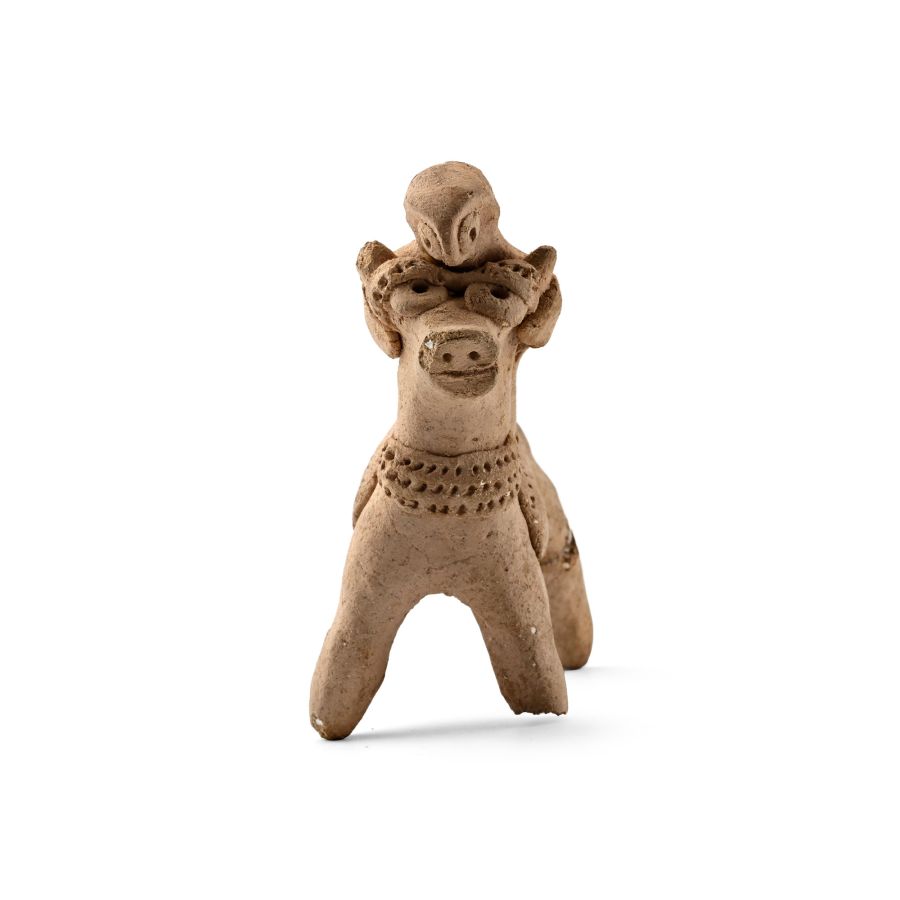
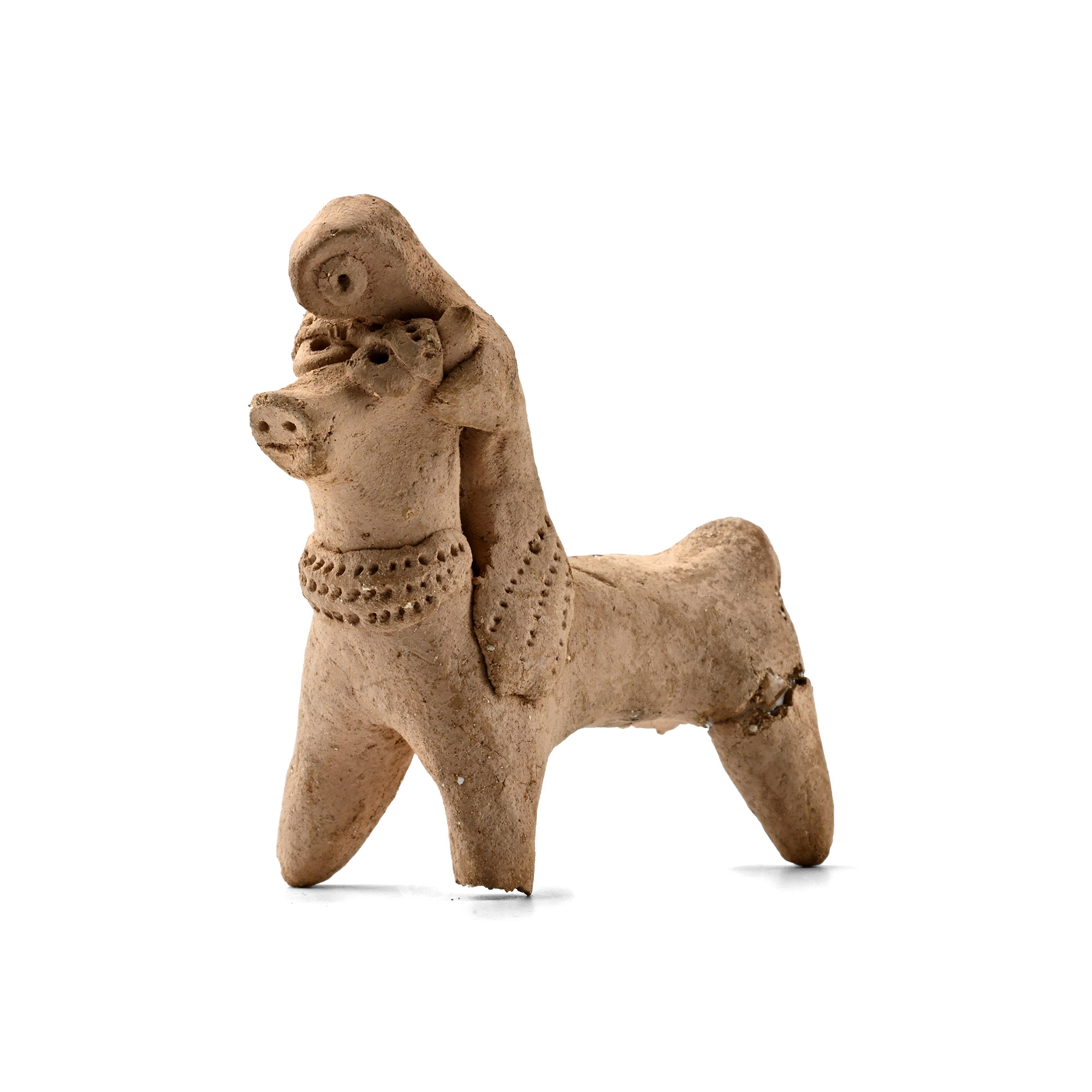
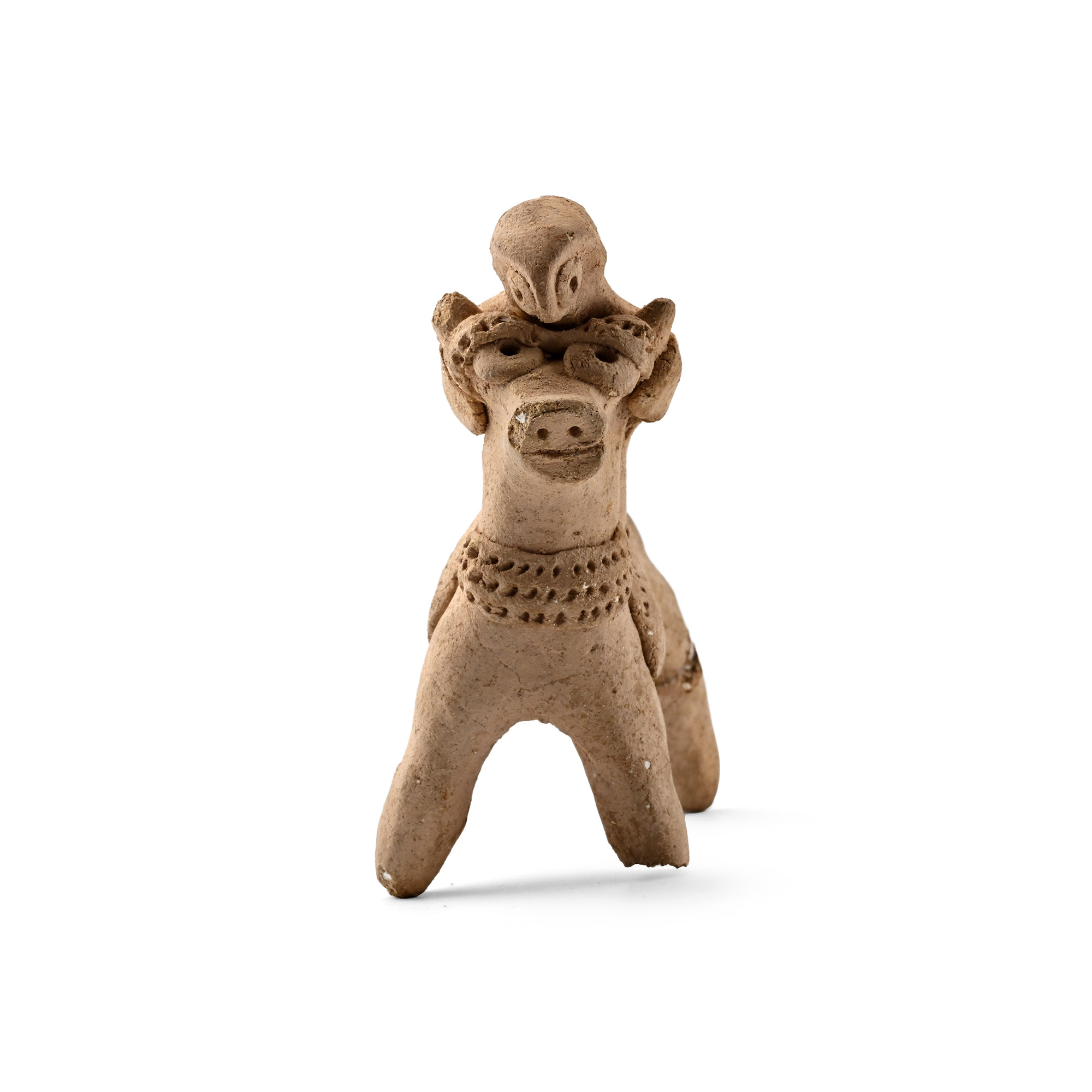
Syro-Hittite Terracotta Man Riding Bull
12TH-7TH CENTURY B.C.
2 1/2 in. (41.5 grams, 64 mm).
Standing bull with a rider on its back holding onto the horns, leaning forwards, staring the bull in the eyes and applying what is possibly a bridle decorated with a series of impressed 'dots'; the rider seated forward on the shoulders, applied eyes with central impressed 'dot', a series of dots impressed in an X-pattern between shoulders and hips at the rear and three bands of impressed dots to the legs; bull's tail held firmly between his back legs, applied eyes, shallow dots and incised line representing muzzle and mouth, applied collar at the neck decorated with three lines of impressed 'dots'. [No Reserve]
ProvenanceEx important Mayfair, London, UK, collection, before 2000.
From the private collection of John Meredith, acquired since the 1990s; thence by descent.
TimeLine Auctions follows a vetting process to ensure the authenticity and legality of all items, reinforcing our commitment to integrity and responsible trading. Each antiquity, antique, and coin lot undergoes thorough examination by a vetting committee of at least ten external specialists, professional trade association members, scientists, and archaeologists: Our Vetting Process
AUCTIONS:
TimeLine is a leading auction house specialising in antiquities, ancient art, collectables, natural history, coins, medals, and books. Our auctions offer museums, collectors, historians, and enthusiasts the opportunity to acquire unique and historically significant pieces.
-
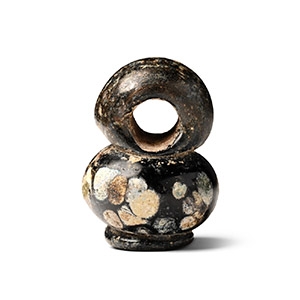
Western Asiatic Glass Jug Pendant
10th-14th century A.D.Estimate: £100 - 140 (+bp*)
Opening Bid: £50
With bulbous body and discoid base, thick loop, applied coloured inserts. 5.14 grams, 22 mm
From the private collection of the late Mr S.M., 1969-1999. -
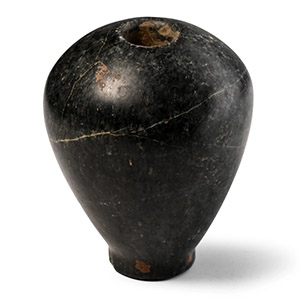
Mesopotamian Mottled Black Stone Macehead
3rd-2nd millennium B.C.Sold for (Inc. bp): £208
Piriform with narrow socket, shallow lip to the socket's mouth. 563 grams, 88 mm
Ex 1990s collection and with a central London gallery. -
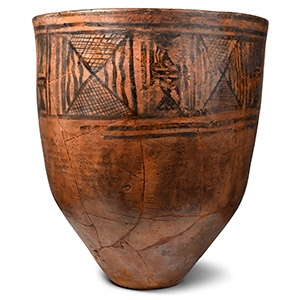
Monumental Western Asiatic Pottery Jar
Circa 3000 B.C.Estimate: £2,000 - 3,000 (+bp*)
Opening Bid: £900
Comprising a sharply tapering lower body, parallel-sided upper body and rounded rim; decorated in dark brown with thirteen square panels with central saltire on a hatched field; repaired. 17 kg, 64 cm high
with Mahboubian Gallery, London, UK, 1974. Private collection, London, UK. This lot has been checked against the Interpol Database of stolen works of art and is accompanied by search certificate number no.12972-245238.
