
Loading, please wait...
LOT 1241
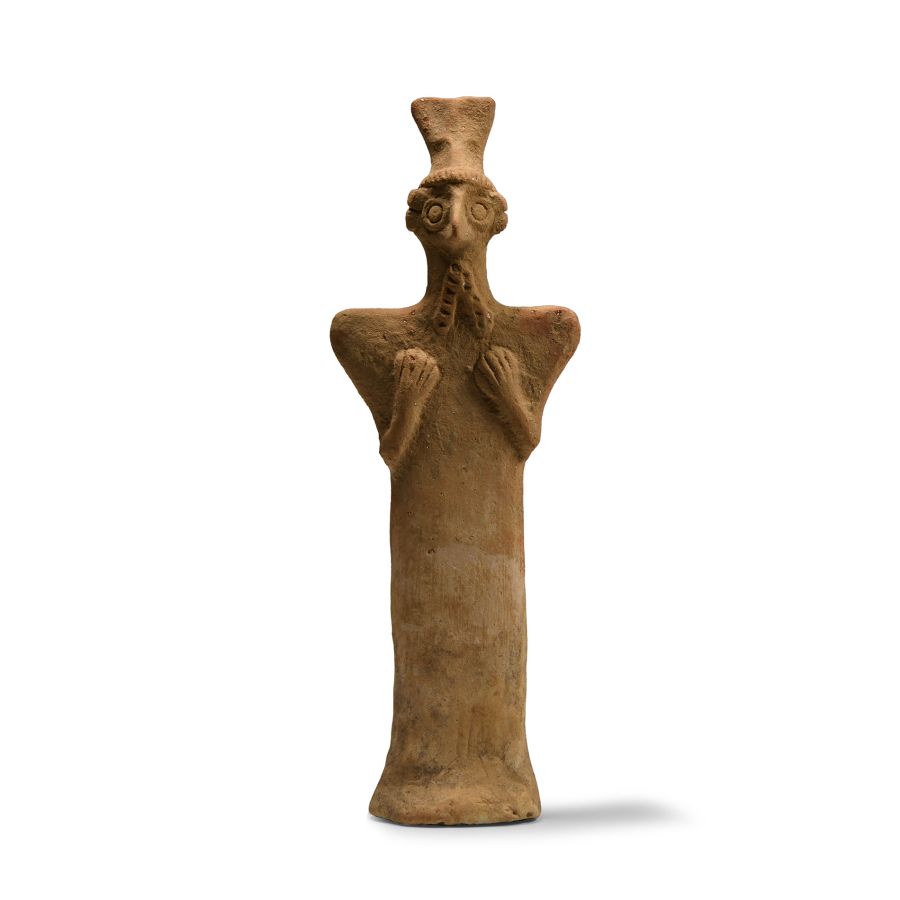
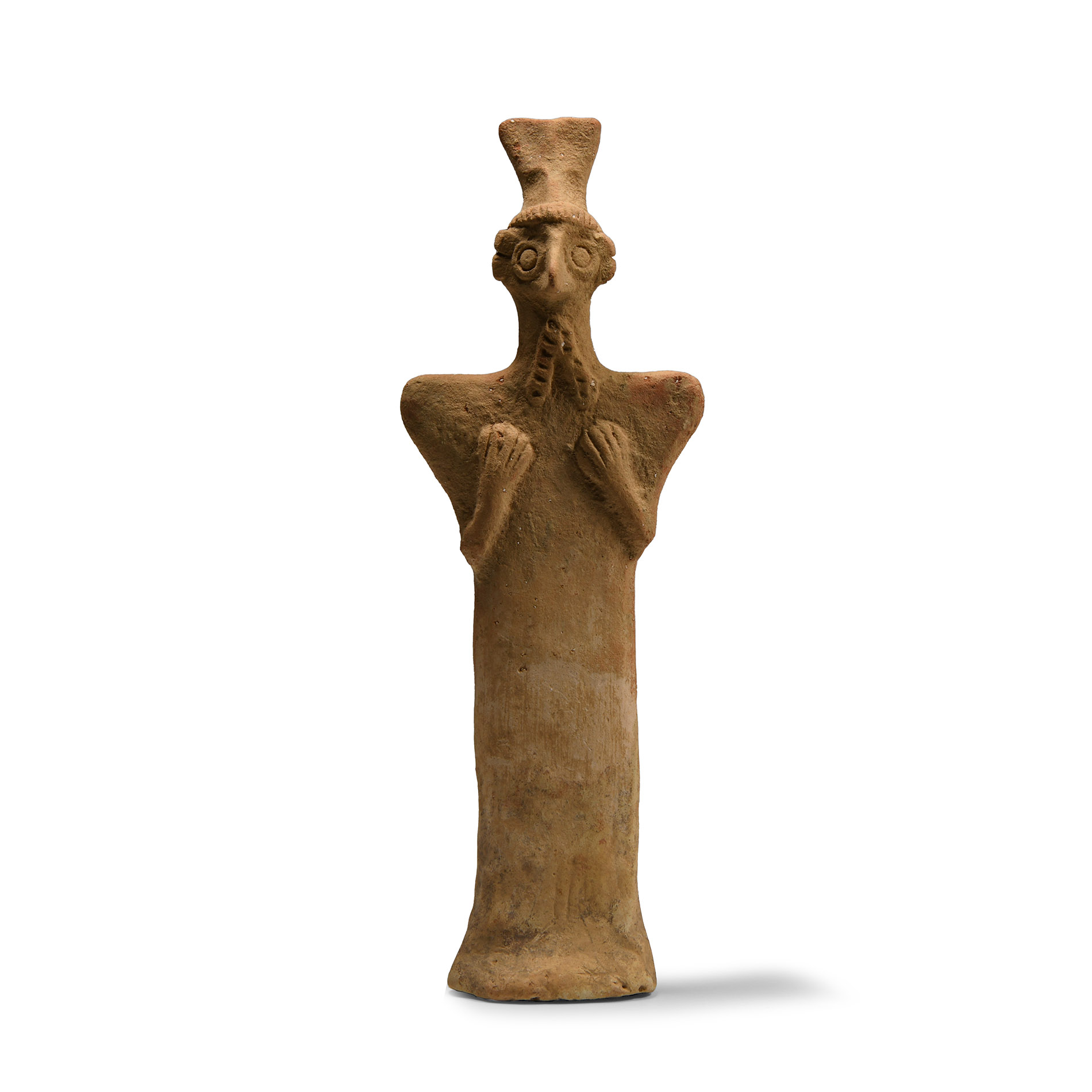
Syro-Hittite Terracotta Figure
1500-1200 B.C.
7 7/8 in. (150 grams, 20 cm).
With lentoid-section body and flared base (restored); the face with pinched profile, tall headdress with transverse segmented peak, applied disc eyes, applied chevron beard, hands raised to the chest.
ProvenancePreviously with Alex Szolin, Nottingham, UK.
Ex Gerrard collection, 1990s.
TimeLine Auctions follows a vetting process to ensure the authenticity and legality of all items, reinforcing our commitment to integrity and responsible trading. Each antiquity, antique, and coin lot undergoes thorough examination by a vetting committee of at least ten external specialists, professional trade association members, scientists, and archaeologists: Our Vetting Process
AUCTIONS:
TimeLine is a leading auction house specialising in antiquities, ancient art, collectables, natural history, coins, medals, and books. Our auctions offer museums, collectors, historians, and enthusiasts the opportunity to acquire unique and historically significant pieces.
-
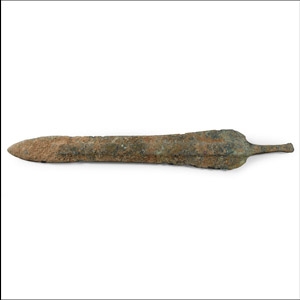
Luristan Bronze Dagger Blade
13th-7th century B.CSold for (Inc. bp): £98
Comprising a slender blade with a raised midrib extending towards the short tang. 147 grams, 27.7 cm
Property of an Essex, UK, gentleman. -
.jpg)
Western Asiatic Stone Beads with Engraved Animals
20th century or earlierSold for (Inc. bp): £52
Two roughly spherical beads carved from a milky stone, both possibly engraved later, a frieze of animal and mythical figures, together with a single, apparently human, figure. 22.1 grams total, 20-22 mm
Collected since the 1970s. Ex Everitt collection, acquired by descent 2017. -
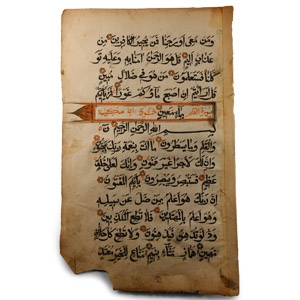
Paper Qu'ran Page
Circa 18th-19th century A.D.Sold for (Inc. bp): £33
With thirteen lines of Naskh script text to each side, red interlinear diacritics, rosettes, and a header bar; cramped marginal note at one edge. 12 grams, 33.8 x 20.6 cm
From the private collection of M. Cummings, Lincolnshire, UK, 1990s.
