
Loading, please wait...


LOT 0254
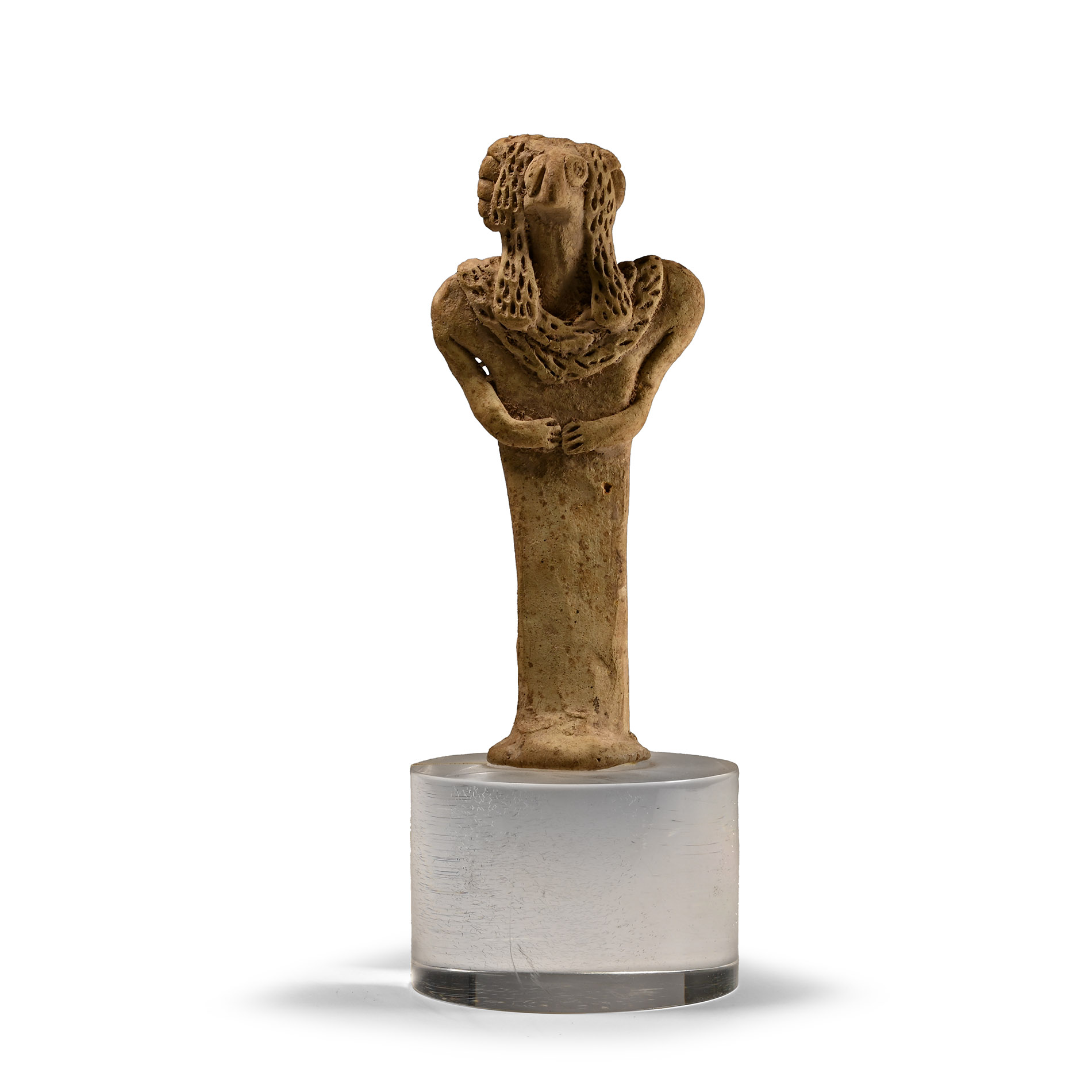
Syro-Hittite Terracotta Fertility Figure
1500-900 B.C.
7 3/4 in. (367 grams total, 19.6 cm including stand).
Standing female deity (Astarte?), wearing a long robe and a broad textured necklace; arms bent and hands placed on the abdomen; beaked facial features with applied eyes and two curved spurs to the rear; mounted on a custom-made stand.
ProvenanceCollected from 1970-1999.
From the collection of the late Mr S.M., London, UK.
Cf. Zahlhaas, G., Prähistorische Staatssammlung, Idole und Votive, München, 1993, p.32, fig.16, for type.
CONDITIONTimeLine Auctions follows a vetting process to ensure the authenticity and legality of all items, reinforcing our commitment to integrity and responsible trading. Each antiquity, antique, and coin lot undergoes thorough examination by a vetting committee of at least ten external specialists, professional trade association members, scientists, and archaeologists: Our Vetting Process
AUCTIONS:
TimeLine is a leading auction house specialising in antiquities, ancient art, collectables, natural history, coins, medals, and books. Our auctions offer museums, collectors, historians, and enthusiasts the opportunity to acquire unique and historically significant pieces.
LOT 0254
Syro-Hittite Terracotta Fertility Figure
Estimate £500 - 700€580 - 810 (for guidance only)$680 - 950 (for guidance only)
-
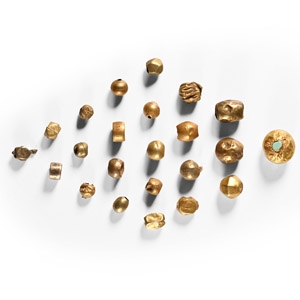
Western Asiatic Gold Bead Group
2nd-1st millennium B.C.Estimate: £500 - 700 (+bp*)
Opening Bid: £250
Including spherical, biconical, barrel-shaped and other types, 7.98 grams total, 5-12 mm
Ex property of a late Japanese collector, 1970s-2000s. -
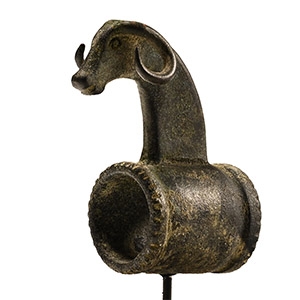
Western Asiatic Bronze Ram's Head Fitting from a Whetstone
1st millennium B.C.Sold for (Inc. bp): £234
Comprising a barrel-shaped collar with raised corrugated rim to each end; flat-section curved neck with beast-head finial, incised circular eyes, long curved horns. 115 grams total, 84 mm including stand
From a collection acquired on the UK art market from various auction houses and collections mostly before 2000. From an important Cambridgeshire estate; thence by descent. -
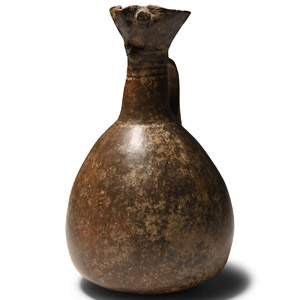
Luristan Terracotta Vessel with Bird Face
1st millennium B.C.Estimate: £200 - 300 (+bp*)
Opening Bid: £90
Ewer with broad bulbous body and carination at the base, tapering neck with loop handle developing to a raised spine, flared mouth with pinched rim and avian facial detailing. 298 grams, 18.5 cm
with a London, UK gallery, 1971-early 2000s.
