
Loading, please wait...
LOT 0269
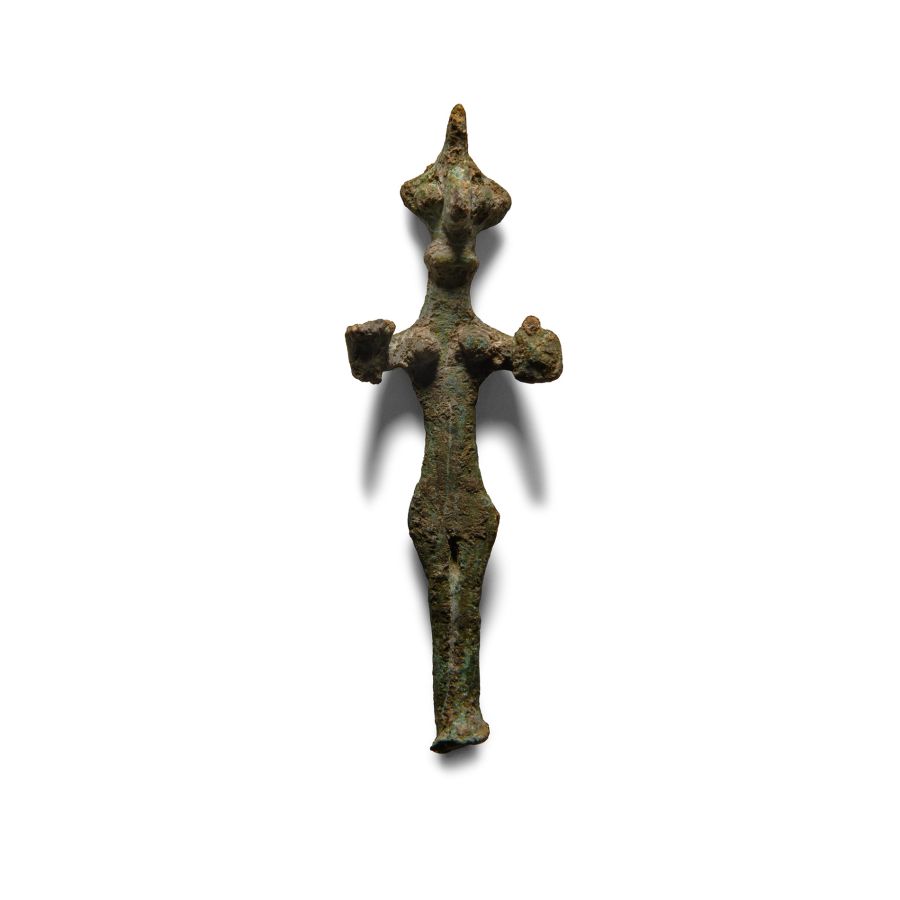
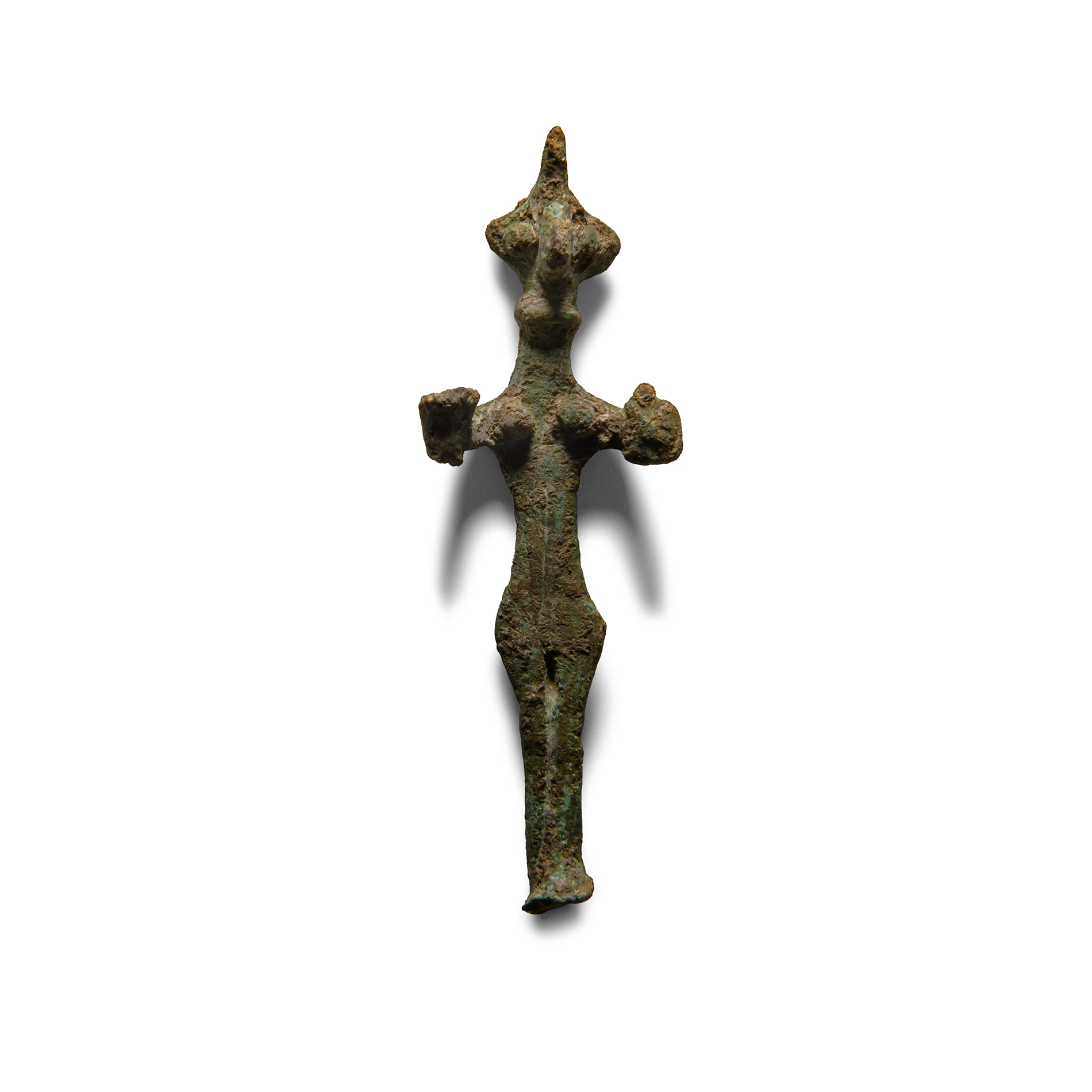
Syro-Hittite Bronze Female Idol
2ND MILLENNIUM B.C.
3 1/4 in. (17.7 grams, 83 mm).
Modelled in the round standing figure with pinched facial features, transverse collar, applied breasts, arms bent forward, legs close together.
ProvenancePrivate collection of Mr S.A., Switzerland, 1990s, thence by descent.
LiteratureCf. Zahlhaas, G., Prähistorische Staatssammlung, Idole und Votive, München, 1993, p.32, fig.16.
FootnotesThe Syro-Hittite states rose to prominence in northern Syria and southern Anatolia (modern Turkey) following the collapse of the Hittite Empire, during which time many such figures were produced and widely distributed for domestic use. Such figures, later pejoratively referred to as 'idols', depicted deities often carrying or standing with animals. The present figure's arms are positioned as if holding a lamb or other small animal.
CONDITIONTimeLine Auctions follows a vetting process to ensure the authenticity and legality of all items, reinforcing our commitment to integrity and responsible trading. Each antiquity, antique, and coin lot undergoes thorough examination by a vetting committee of at least ten external specialists, professional trade association members, scientists, and archaeologists: Our Vetting Process
AUCTIONS:
TimeLine is a leading auction house specialising in antiquities, ancient art, collectables, natural history, coins, medals, and books. Our auctions offer museums, collectors, historians, and enthusiasts the opportunity to acquire unique and historically significant pieces.
-
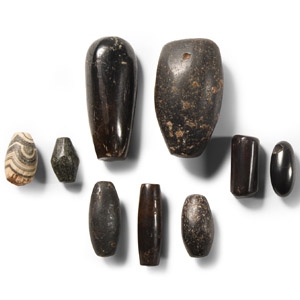
Mesopotamian Stone Weight Collection
Circa 1st millennium B.C.Sold for (Inc. bp): £104
Mainly fusiform and tubular types. 74 grams total, 14-38 mm
Ex Simmons gallery, London, UK. Ex North London collection, 1990s. -
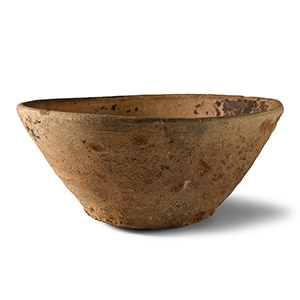
Aramaic Terracotta Bowl with Magical Incantation
4th-8th century A.D.Sold for (Inc. bp): £208
With conical body, the inner face bearing the remains of concentric rings of inked magical Aramaic text, cracked. 393 grams, 16 cm
From a collection acquired on the UK art market from various auction houses and collections mostly before 2000. From an important Cambridgeshire estate; thence by descent.
Aramaic incantation bowls are particular to the Sassanian period and have been found in regions of modern Iraq. These simple ceramic bowls, also known as 'magic bowls': each contains an Aramaic inscription, written in ink, which spirals from the centre. The bowls seem to have played an important part in domestic life. For example, during excavation in Nippur in 1889, one or more incantation bowls were found in each house together with domestic artefacts, most often in doorways or under floorboards in the corner of rooms. The bowls are predominantly apotropaic, and the inscriptions tend to protect their owners from misfortunes such as those faced in childbirth, from illness and from evil spirits. -
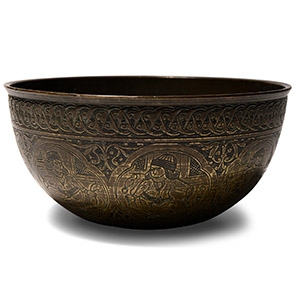
Qajar Period Decorated Bowl
19th century A.D.Estimate: £120 - 170 (+bp*)
Opening Bid: £60
Spun bronze bowl with everted rim, dense low-relief decoration of tendrils and interlace with quatrefoil panels each with a kneeling figure. 195 grams, 11.9 cm wide
Acquired by the vendor's father on the UK art market, before 1990.
