
Loading, please wait...
LOT 0597
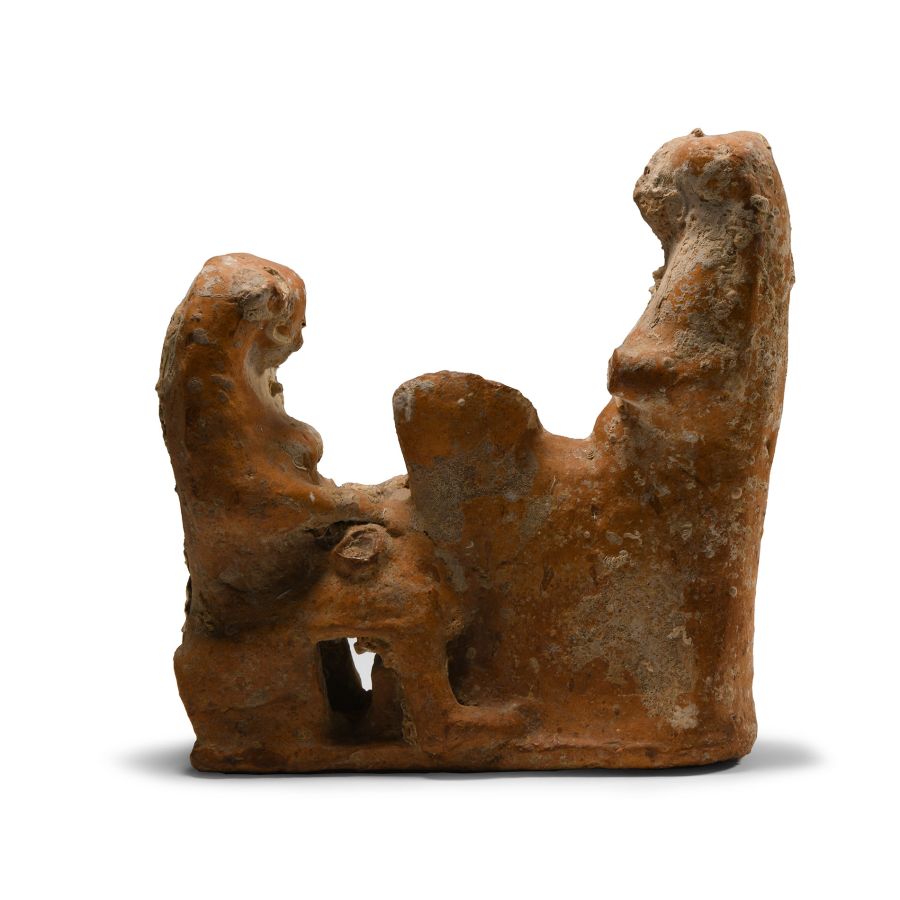
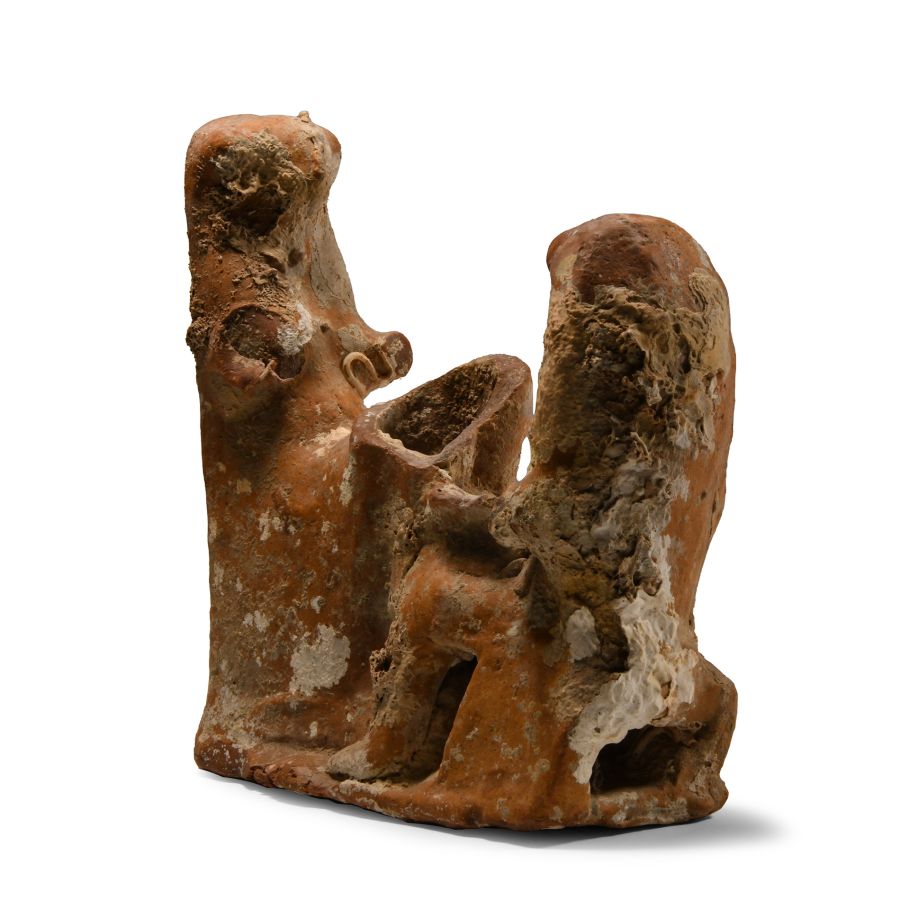
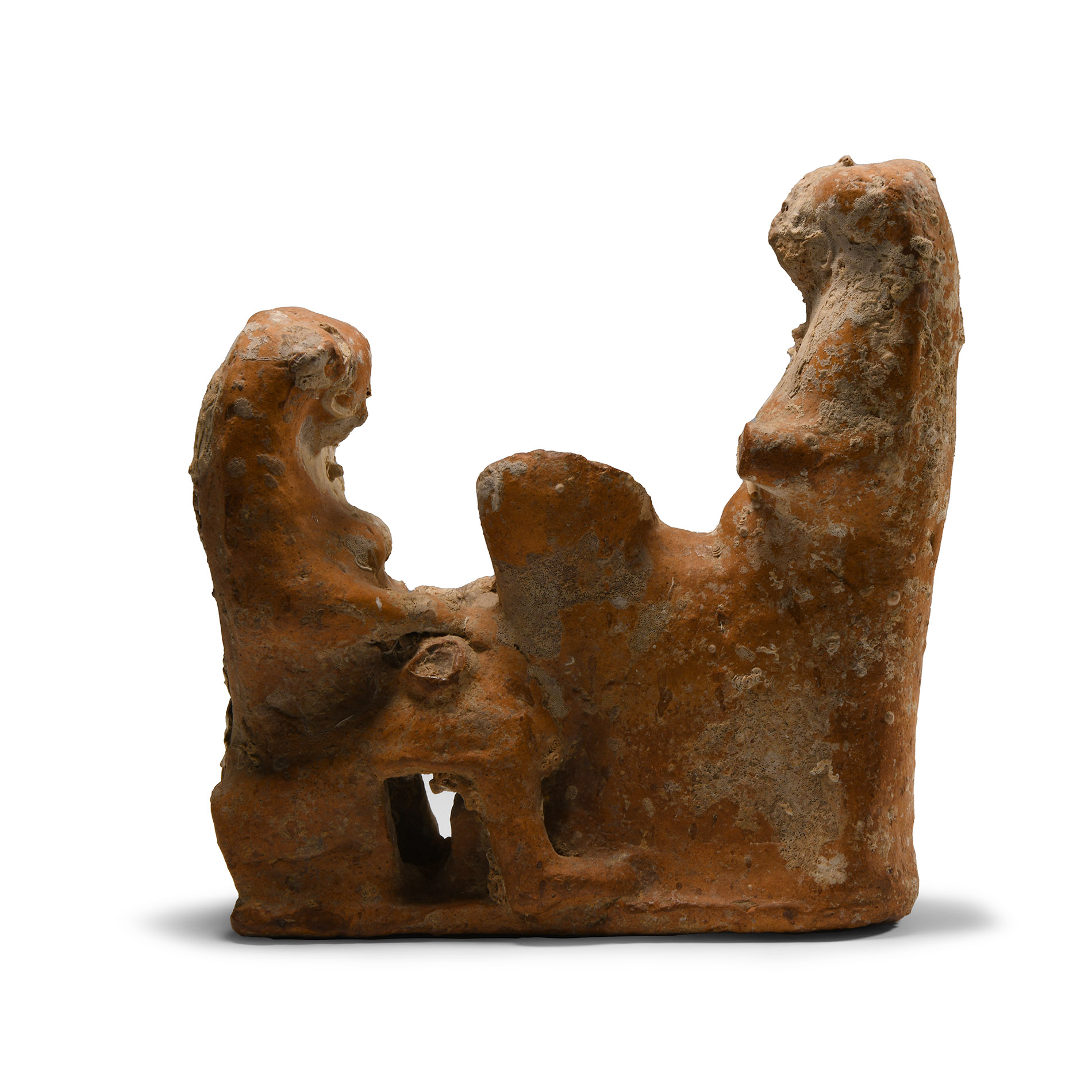
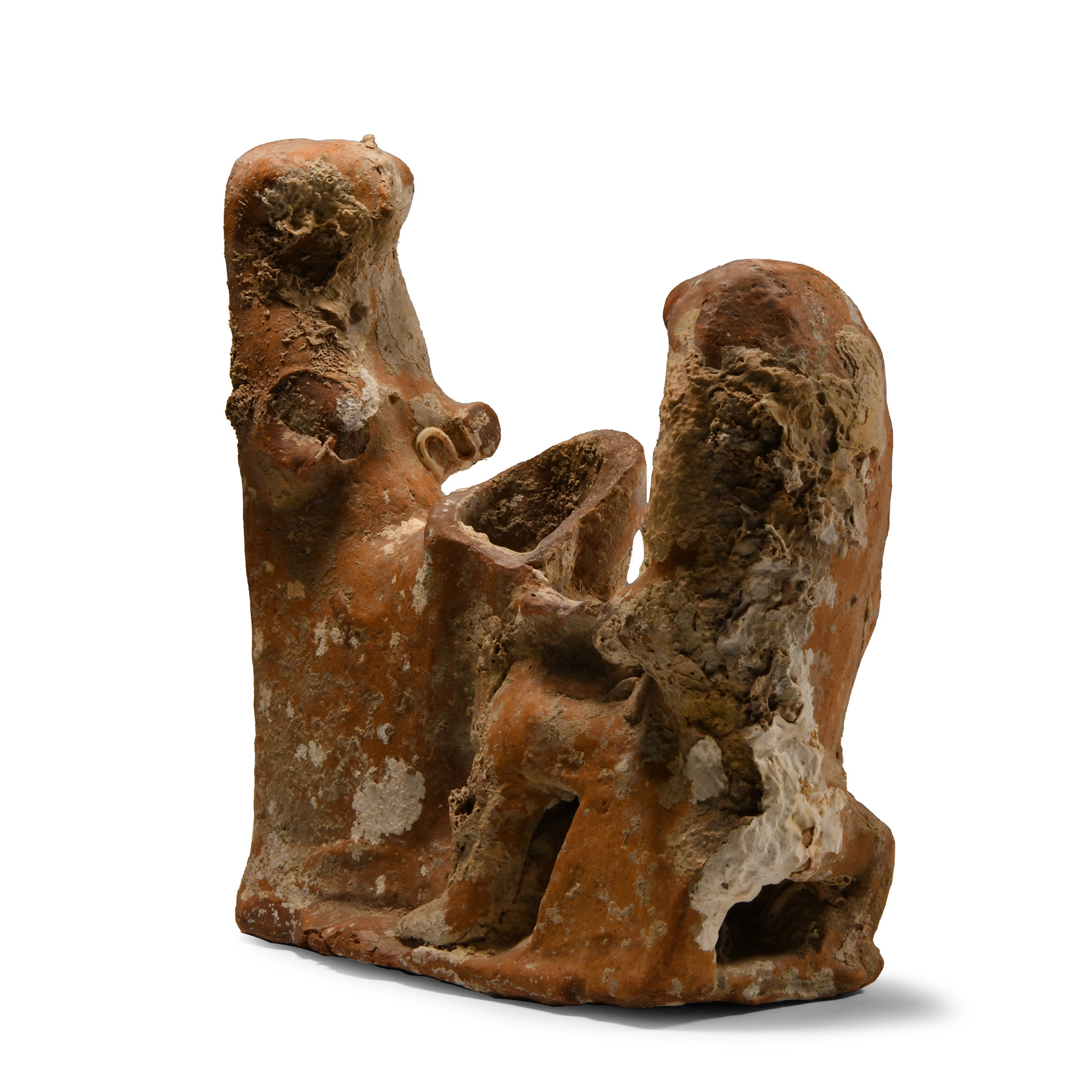
Syrio-Phoenician Shipwreck Terracotta Birthing Group
IRON AGE II, 8TH-6TH CENTURY B.C.
7 1/8 in. (844 grams, 18 cm wide).
Hollow-formed figurine comprising a nude female with dressed hair on a stool assisting with the birth of a baby from a taller figure; hollow to the underside; marine accretions. [No Reserve]
ProvenanceFrom an early 1960s collection.
From a collection acquired on the UK art market from various auction houses and collections mostly before 2000.
From an important Cambridgeshire estate; thence by descent.
Accompanied by an old handwritten identification tag with provenance.
TimeLine Auctions follows a vetting process to ensure the authenticity and legality of all items, reinforcing our commitment to integrity and responsible trading. Each antiquity, antique, and coin lot undergoes thorough examination by a vetting committee of at least ten external specialists, professional trade association members, scientists, and archaeologists: Our Vetting Process
AUCTIONS:
TimeLine is a leading auction house specialising in antiquities, ancient art, collectables, natural history, coins, medals, and books. Our auctions offer museums, collectors, historians, and enthusiasts the opportunity to acquire unique and historically significant pieces.
-
.jpg)
Minoan Bronze Statuette of a Lady
Middle Period, circa 1700-1450 B.C.Sold for (Inc. bp): £1,560
With a small, stylised face with detailed eyes, nose and mouth; right hand raised to hold a child; wearing a flounced skirt with double belt; mounted on a custom-made display stand. 499 grams total, 16.5 cm high including stand
British private collection, acquired by 2000. From a collection acquired on the UK art market from various auction houses and collections mostly before 2000. From an important Cambridgeshire estate; thence by descent.
In the Dictean Cave in Greece, many votive statuettes of this type were found. The flounced skirt is characteristic of Minoan women's dress, and it was lavishly decorated in folds of different colours. It could be worn with or without a narrow corselet, but in both cases exposing the breast. The exposed breast was connected to the cult of the mother goddess, and fertility, an element here reinforced by the presence of the suckling child. -
Classical Terracotta Head Group
Circa 4th-2nd century B.C. and laterSold for (Inc. bp): £286
Comprising: bust of a female (possibly Aphrodite) with diadem; hollow-formed mask of Silenus; a bearded head of Zeus or Poseidon, possibly not ancient. 772 grams total, 7.9-12.8 cm
From the collection of Jacques Schotte (1928-2007), Belgium, 1950s onwards. Acquired Bonhams, London, 29 April 2009 (part). Acquired from a Cambridgeshire gentleman. The comic actor from the Moonen collection, Belgium, 1980s; then Archea, Amsterdam, The Netherlands. Property of a North London collector. Accompanied by a copy of the relevant Bonhams catalogue pages and invoice. Accompanied by a previous owner's certificate of authenticity. -
Very Large Greek Stone Jeweller's Mould
Bronze Age, 13th-11th century B.C.Sold for (Inc. bp): £208
Of square shape, used for making various jewellery elements: small circles, ear-drop pendants, rosettes with striated lines and locating holes on the surface. 114 grams, 63 mm
Collected from 1969-1999. From the collection of the late Mr S.M., London, UK.
Plaques of this type were half of a mould for small objects such as ribbed bobbin-shaped or spherical beads or crescent-shaped pendants. They must have been made for casting, judging by the pouring channels and the circular holes for fixing it to another corresponding half. Ribbed globular and ‘grain of wheat’ gold beads were common in Cyprus and Crete. Similar moulds with pouring channels have been found in the Near East, while open moulds intended for glass ornaments with flat backs have been found in the Aegean.
