
Loading, please wait...
LOT 1322
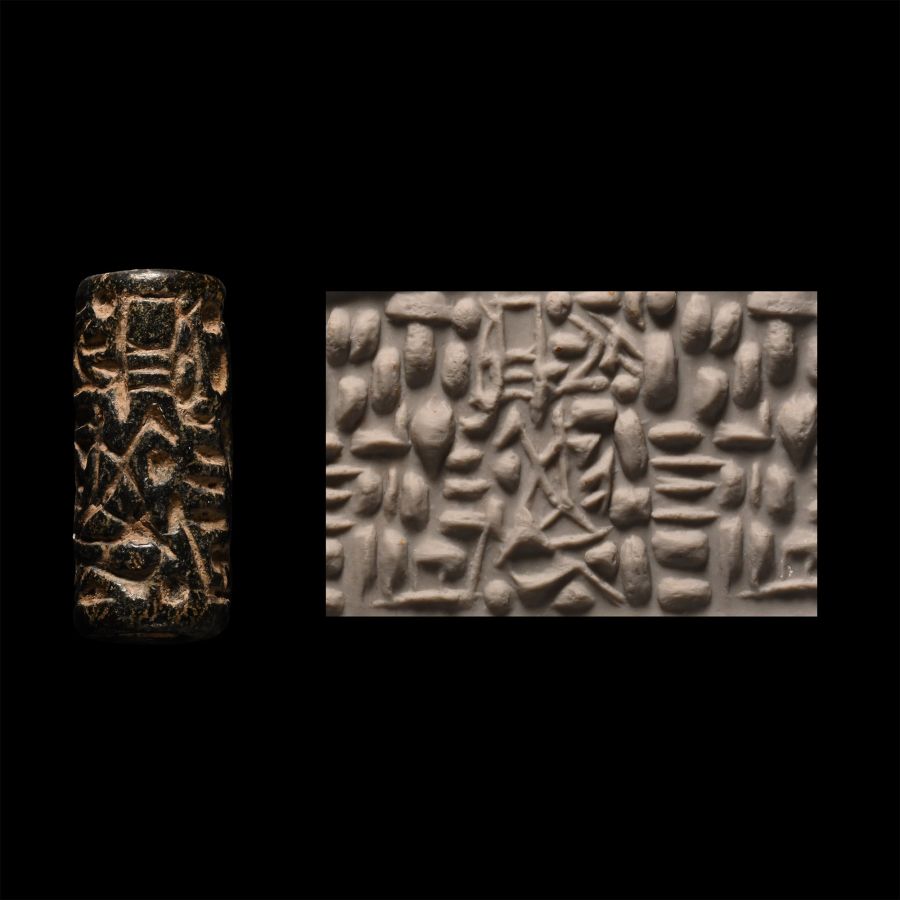
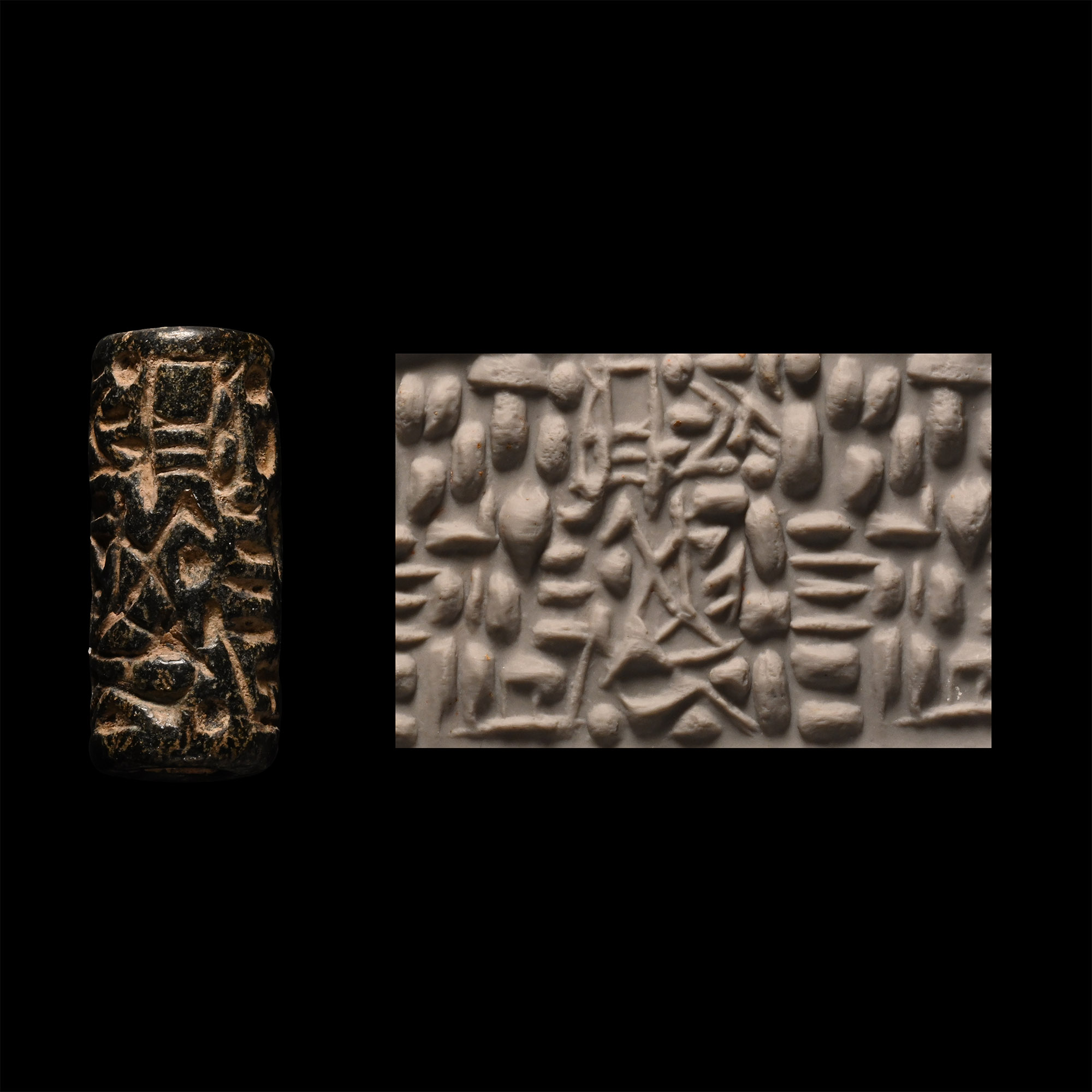
Syrian Steatite Cylinder Seal
3000 B.C.
1 1/4 in. (11.9 grams, 33.7 mm).
With enigmatic segmented design of foliage and other motifs; supplied with a museum-quality impression.
ProvenanceAcquired in 1992.
Private collection, Switzerland, thence by descent.
Private collection, since the late 1990s.
This lot has been cleared against the Art Loss Register database, and is accompanied by an illustrated lot declaration signed by the Head of the Antiquities Department, Dr Raffaele D'Amato.
TimeLine Auctions follows a vetting process to ensure the authenticity and legality of all items, reinforcing our commitment to integrity and responsible trading. Each antiquity, antique, and coin lot undergoes thorough examination by a vetting committee of at least ten external specialists, professional trade association members, scientists, and archaeologists: Our Vetting Process
AUCTIONS:
TimeLine is a leading auction house specialising in antiquities, ancient art, collectables, natural history, coins, medals, and books. Our auctions offer museums, collectors, historians, and enthusiasts the opportunity to acquire unique and historically significant pieces.
-
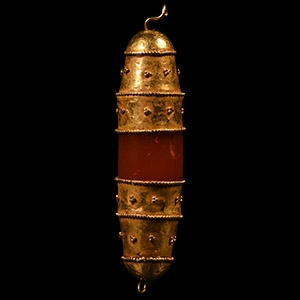
Early Parthian Carnelian Bead with Gold End Caps
1st century B.C.-1st century A.D.Estimate: £1,000 - 1,400 (‡+bp*)
Opening Bid: £450
Columnar bead with sheet-gold cap to each end, each with beaded circlets and applied granule clusters, domed end with loop; possibly assembled. 17.44 grams, 60 mm
Acquired in the mid 1980s-1990s. Private collection, Switzerland, thence by descent. Private collection, since the late 1990s. This lot has been cleared against the Art Loss Register database, and is accompanied by an illustrated lot declaration signed by the Head of the Antiquities Department, Dr Raffaele D'Amato. -
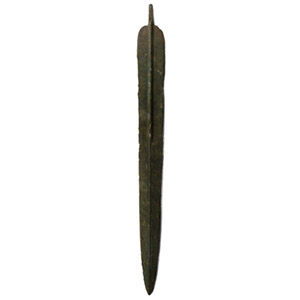
Very Large Luristan Bronze Dagger Blade
Early 1st millennium B.C.Sold for (Inc. bp): £169
Tapering leaf-shaped blade with a raised midrib developing to a short tang, pierced at the lower end. 374 grams, 49.5 cm
Ex London art market, 1980-1990s. This lot has been cleared against the Art Loss Register database, and is accompanied by an illustrated lot declaration signed by the Head of the Antiquities Department, Dr Raffaele D'Amato.
The Luri people produced a quantity of fine metalwork, which according to Dr. Khorasani, could be due to a settled period which arose as a result of the defeat of the Elamites by the Babylonians, leaving the Luristani people in relative peace for a period of time after 1200 BC. According to Khorasani 'A culture of innovation and experimentation flourished, and the repertoire of the Luristan smiths expanded in the period between 1150–1050 B.C.' -
.jpg)
Babylonian Head and Egyptian Shabti Group
Mid 1st millennium B.C. and laterSold for (Inc. bp): £65
Comprising of a male head from a figurine, and a possible Grand Tour fragment of a shabti with tripartite wig and arms crossed at the chest, mounted on a custom-made stand. 268 grams total, 4.3-16.5 cm including stand
From an old English deceased estate. Property of a London, UK, collector. This lot has been cleared against the Art Loss Register database, and is accompanied by an illustrated lot declaration signed by the Head of the Antiquities Department, Dr Raffaele D'Amato.
