
Loading, please wait...
LOT 0292
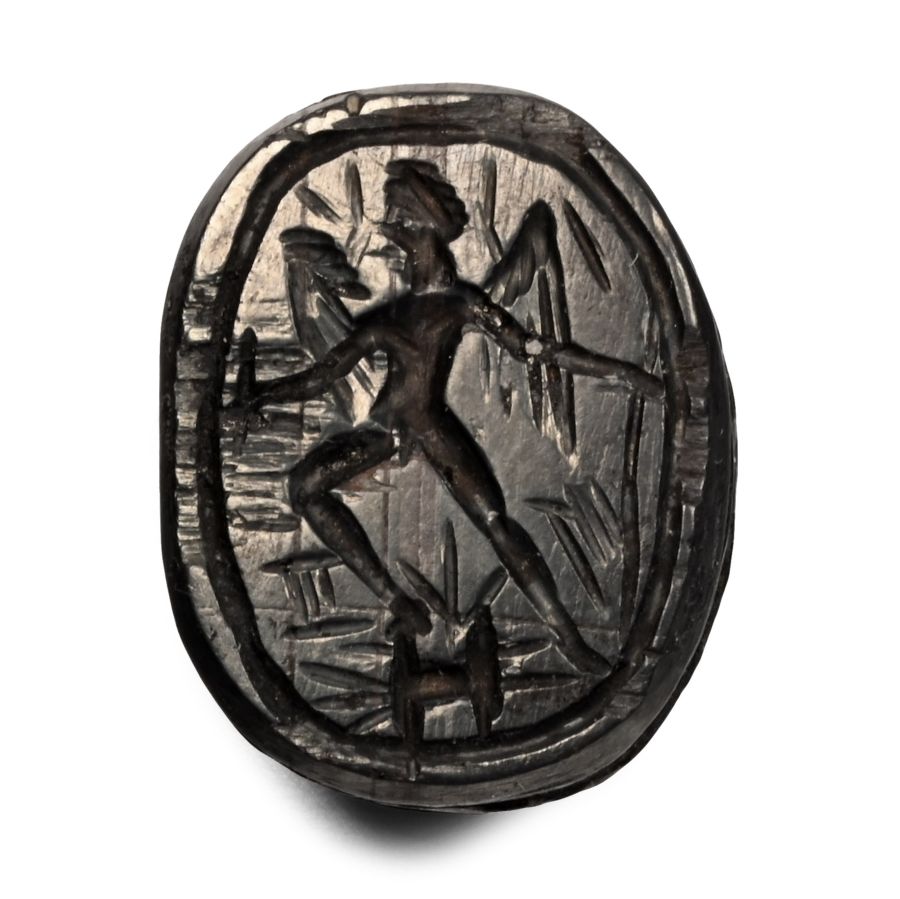
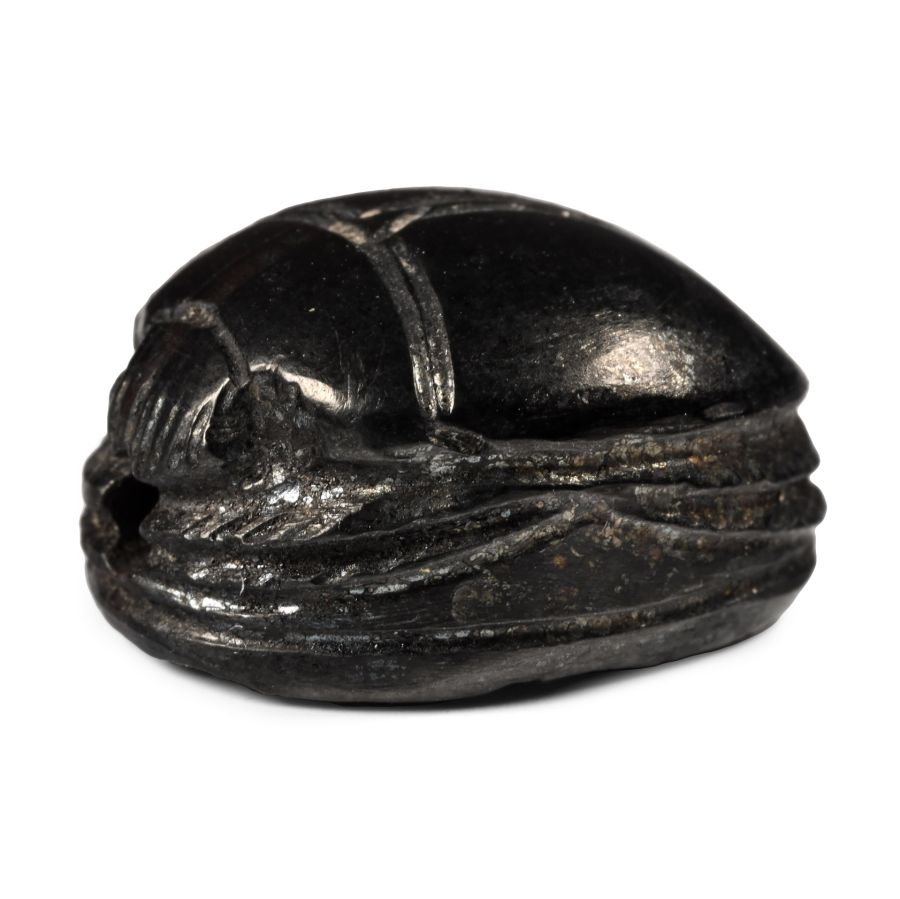
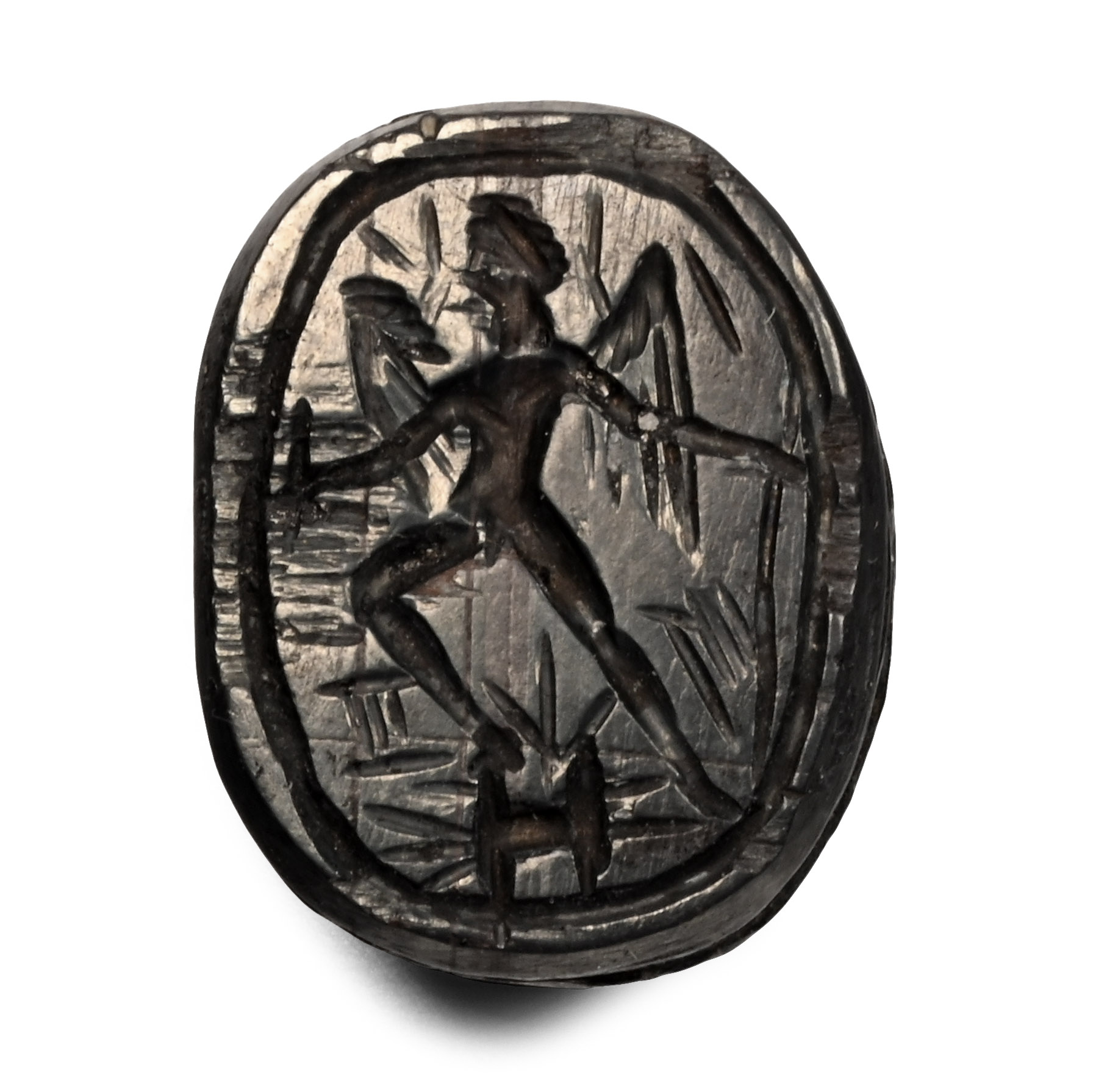
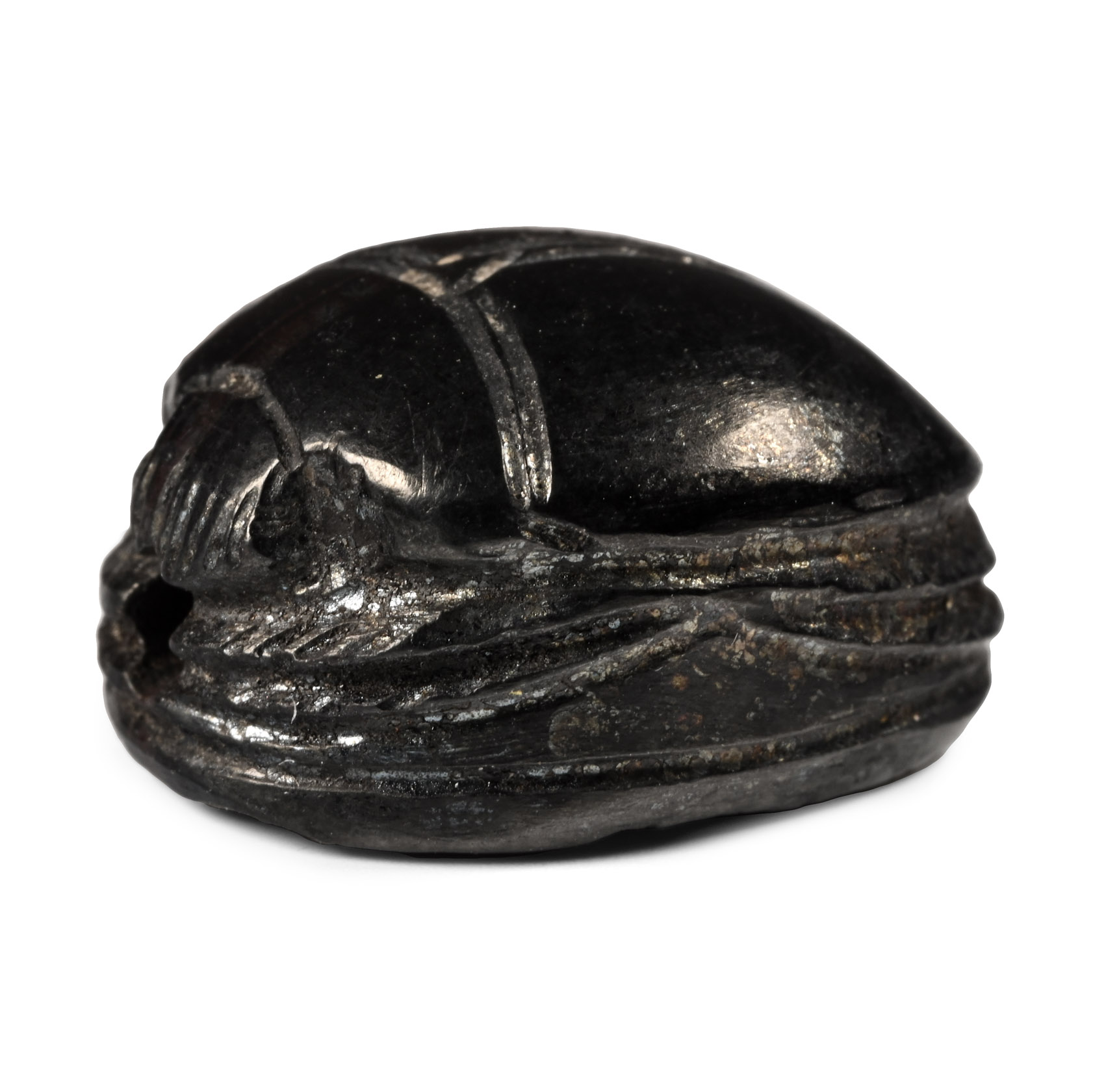
Syrian Haematite Scarab
8TH CENTURY B.C.
5/8 in. (6.52 grams, 17 mm).
With scene to underside of a winged figure advancing.
ProvenanceAcquired in the mid 1980s-1990s.
Private collection, Switzerland, thence by descent.
Private collection, since the late 1990s.
This lot has been cleared against the Art Loss Register database, and is accompanied by an illustrated lot declaration signed by the Head of the Antiquities Department, Dr Raffaele D'Amato.
TimeLine Auctions follows a vetting process to ensure the authenticity and legality of all items, reinforcing our commitment to integrity and responsible trading. Each antiquity, antique, and coin lot undergoes thorough examination by a vetting committee of at least ten external specialists, professional trade association members, scientists, and archaeologists: Our Vetting Process
AUCTIONS:
TimeLine is a leading auction house specialising in antiquities, ancient art, collectables, natural history, coins, medals, and books. Our auctions offer museums, collectors, historians, and enthusiasts the opportunity to acquire unique and historically significant pieces.
LOT 0292
Syrian Haematite Scarab
Estimate £800 - 1,000€930 - 1,160 (for guidance only)$1,080 - 1,350 (for guidance only)
-
Bactrian Bronze Stamp Seal with Human Figures
1st millennium B.C.Sold for (Inc. bp): £52
Formed as three nude male figures each with one hand to the mouth and the other covering the anus; with vertical bar handle and ring finial. 99 grams, 54 mm
Acquired in the mid 1980s-1990s. Private collection, Switzerland, thence by descent. Private collection, since the late 1990s. This lot has been cleared against the Art Loss Register database, and is accompanied by an illustrated lot declaration signed by the Head of the Antiquities Department, Dr Raffaele D'Amato. -
Western Asiatic Jeweller's Chisel and Pin Collection
3rd-1st millennium B.C.Sold for (Inc. bp): £65
Comprising: an awl, a chisel, various pins and pin finials. 102 grams total, 31-93 mm
Ex London art market, 1980-1990s. This lot has been cleared against the Art Loss Register database, and is accompanied by an illustrated lot declaration signed by the Head of the Antiquities Department, Dr Raffaele D'Amato.
Similar complete pins excavated by the Italian Archaeological Mission in Homs have been subdivided into two well-known categories, the melon headed pins and the simple pins, both here represented. This distinction in shape corresponds to a distinction in size: although the diameters are more or less the same. -
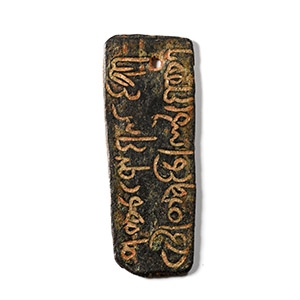
Personal Bronze Tag of Zahra Governor of Esphahan
14th century A.D.Estimate: £400 - 600 (+bp*)
Opening Bid: £222
A medieval period flat-section rectangular plaque pierced at the broad end with incised calligraphic legend: 'Zahra the splendid or the radiant governor of Esphahan ...', Zaraa or Zahra is a female name which also refers to boundless beauty (ذرع اصفهانی واسع الخلیفه با ما معمور). 10.6 grams, 51 mm
From the collection of a gentleman, acquired on the London art market in the 1990s. This lot has been cleared against the Art Loss Register database, and is accompanied by an illustrated lot declaration signed by the Head of the Antiquities Department, Dr Raffaele D'Amato.
