
Loading, please wait...
LOT 0233
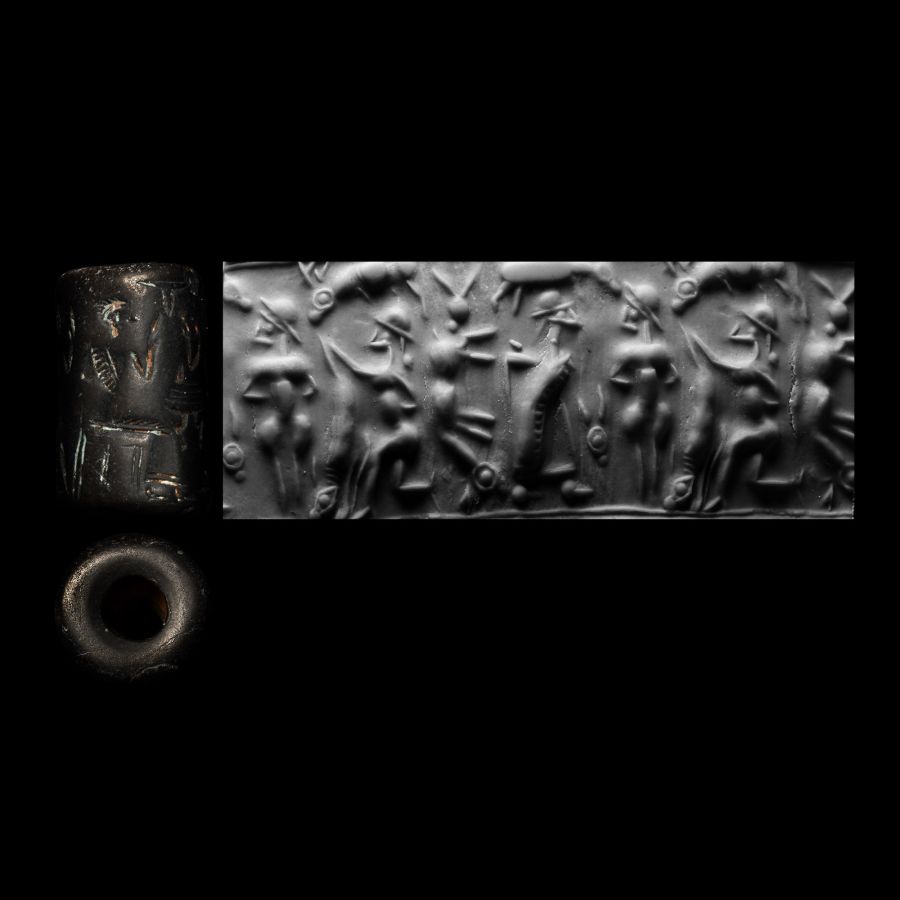
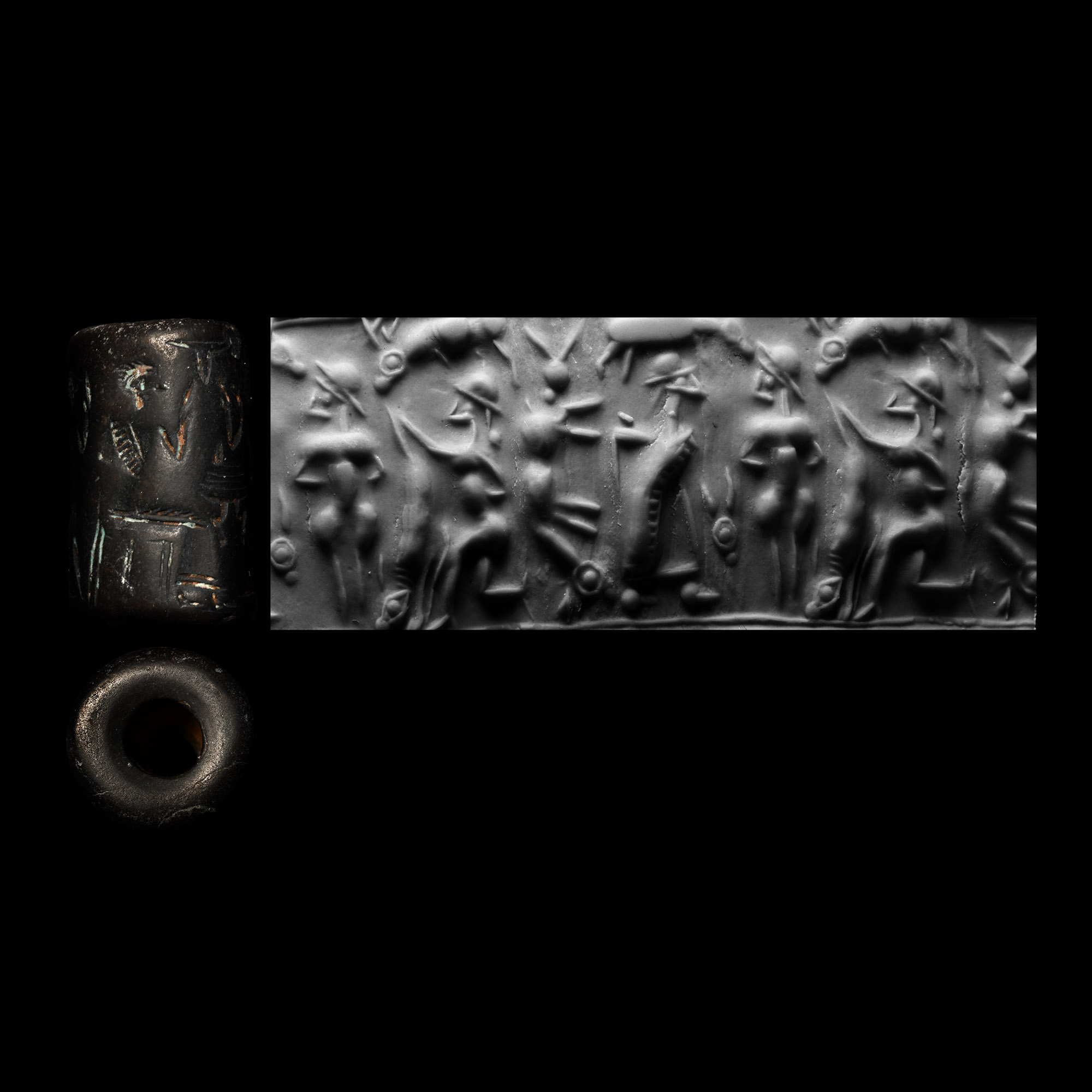
Syrian Haematite Cylinder Seal with Worshipping Figures
CIRCA 1900-1700 B.C.
5/8 in. (7.5 grams, 18 mm).
Cylinder with cord and bead handles; accompanied by a copy of an old scholarly note, typed and signed by W.G. Lambert, late Professor of Assyriology, University of Birmingham, 1970-1993, which states: 'Cylinder Seal of Hematite, 19 x 11.5 mm. The major part of the design consist of a seated figure, no doubt a god, holding up one hand in greeting to a standing figure, meant as a human worshipper, who similarly hold up one hand. Between them is a table with elegant legs on which rests a pile of breads. Above this is a motif probably intended as a stylized bull's head. The minor part of the design consists of a row of five walking men, the first raising one hand, the last carrying a crook over his shoulder. This is a Syrian seal, c. 1900-1700 B.C. and though the stone is somewhat worn, the design is fully clear.'; supplied with a museum-quality impression. [No Reserve]
ProvenanceUK private collection, acquired 1980-1983.
Accompanied by a copy of a scholarly note, typed and signed by Professor Wilfrid George Lambert in August 1991.
This lot has been cleared against the Art Loss Register database, and is accompanied by an illustrated lot declaration signed by the Head of the Antiquities Department, Dr Raffaele D'Amato.
TimeLine Auctions follows a vetting process to ensure the authenticity and legality of all items, reinforcing our commitment to integrity and responsible trading. Each antiquity, antique, and coin lot undergoes thorough examination by a vetting committee of at least ten external specialists, professional trade association members, scientists, and archaeologists: Our Vetting Process
AUCTIONS:
TimeLine is a leading auction house specialising in antiquities, ancient art, collectables, natural history, coins, medals, and books. Our auctions offer museums, collectors, historians, and enthusiasts the opportunity to acquire unique and historically significant pieces.
LOT 0233
Syrian Haematite Cylinder Seal with Worshipping Figures
Sold for (Inc. bp): £390
-
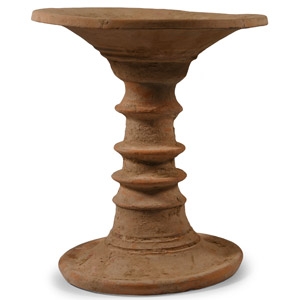
Bactrian Terracotta Chalice
1st millennium B.C.Sold for (Inc. bp): £39
Comprising a columnar stem with ribbed collars flaring to the broad base with carinated rim, the bowl broad and dished. 2.35 kg, 28 cm
From a West London, UK, collection, 1990s. This lot has been cleared against the Art Loss Register database, and is accompanied by an illustrated lot declaration signed by the Head of the Antiquities Department, Dr Raffaele D'Amato. -
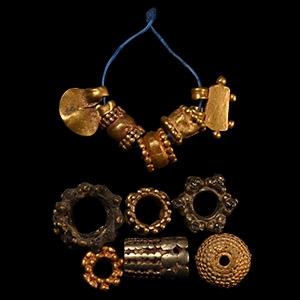
Western Asiatic Gold Bead and Pendant Group
1st millennium B.C.Sold for (Inc. bp): £468
Comprising: seven granulated tubular beads; on oblate bead with tight rows of applied pellets; two discoid pendants with double suspension loop above. 4.91 grams total, 5-8 mm
Ex property of a late Japanese collector, 1970-2000s. This lot has been cleared against the Art Loss Register database, and is accompanied by an illustrated lot declaration signed by the Head of the Antiquities Department, Dr Raffaele D'Amato. -
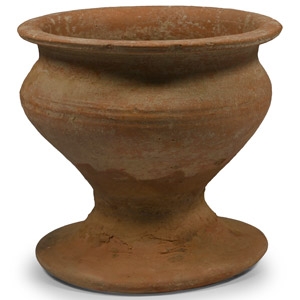
Western Asiatic Terracotta Jar
1st millennium B.C.Estimate: £100 - 140 (+bp*)
Opening Bid: £50
With trumpet-shaped base, thick stem, carinated bowl an everted rim; ribbed band to the equator. 1.06 kg, 16.8 cm
From the collection of a London, UK, gentleman, 1990s. This lot has been cleared against the Art Loss Register database, and is accompanied by an illustrated lot declaration signed by the Head of the Antiquities Department, Dr Raffaele D'Amato.
