
Loading, please wait...
LOT 1147
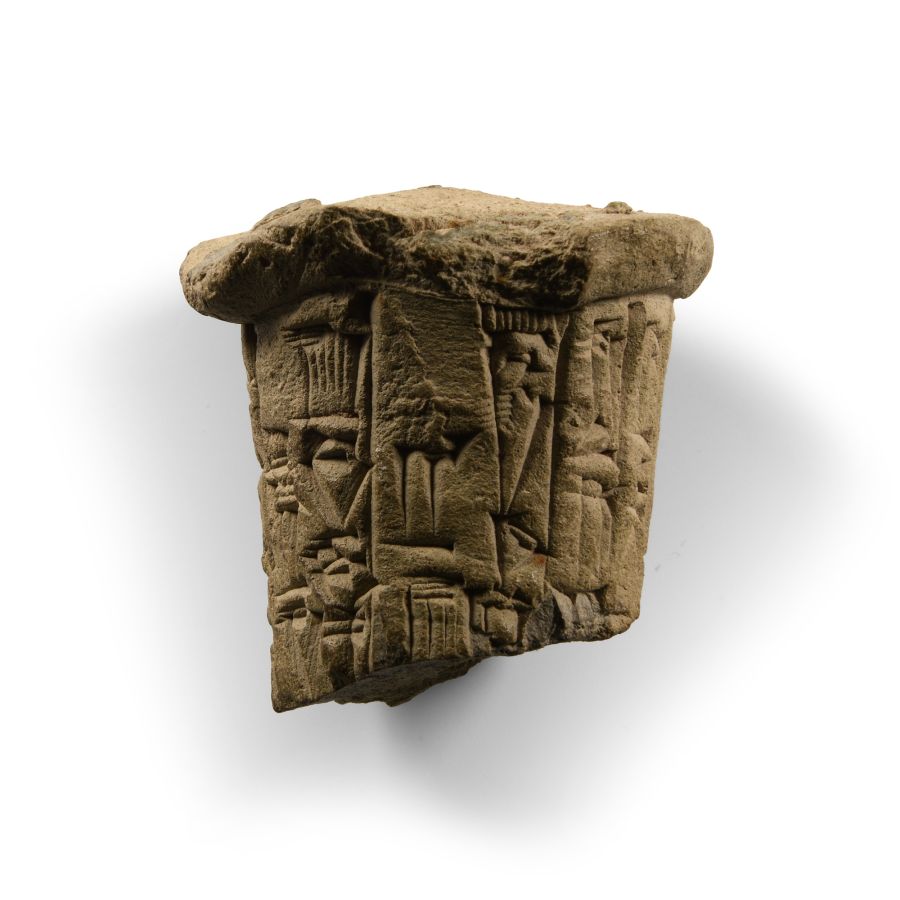
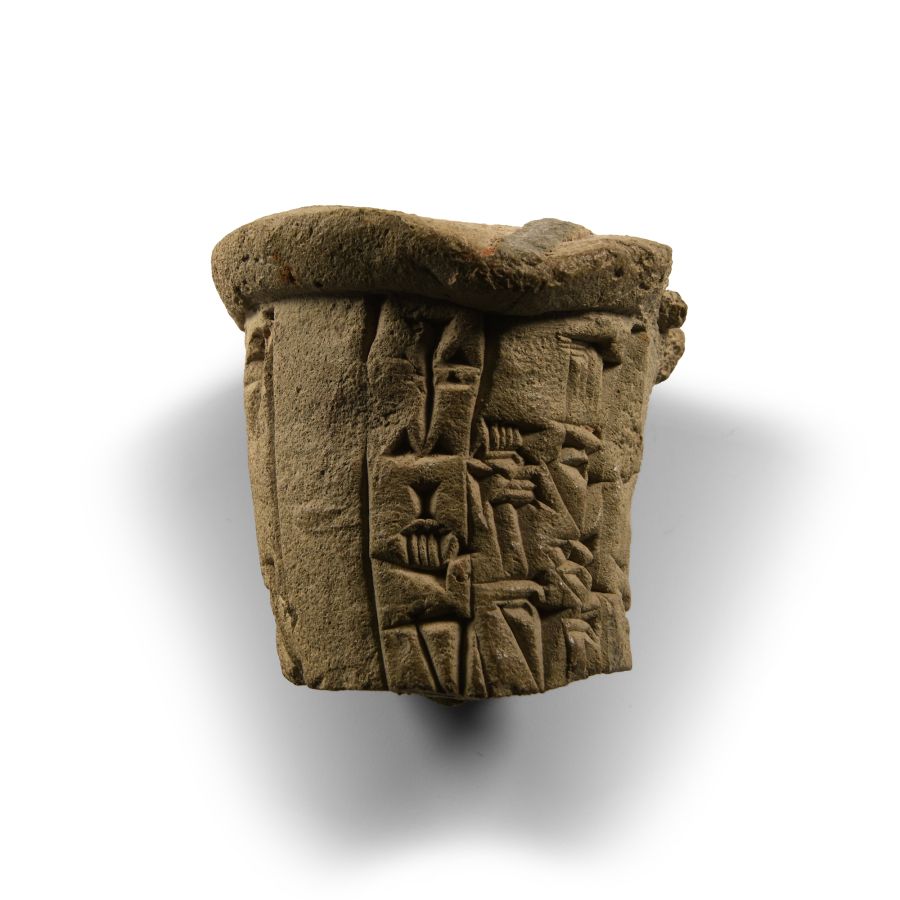
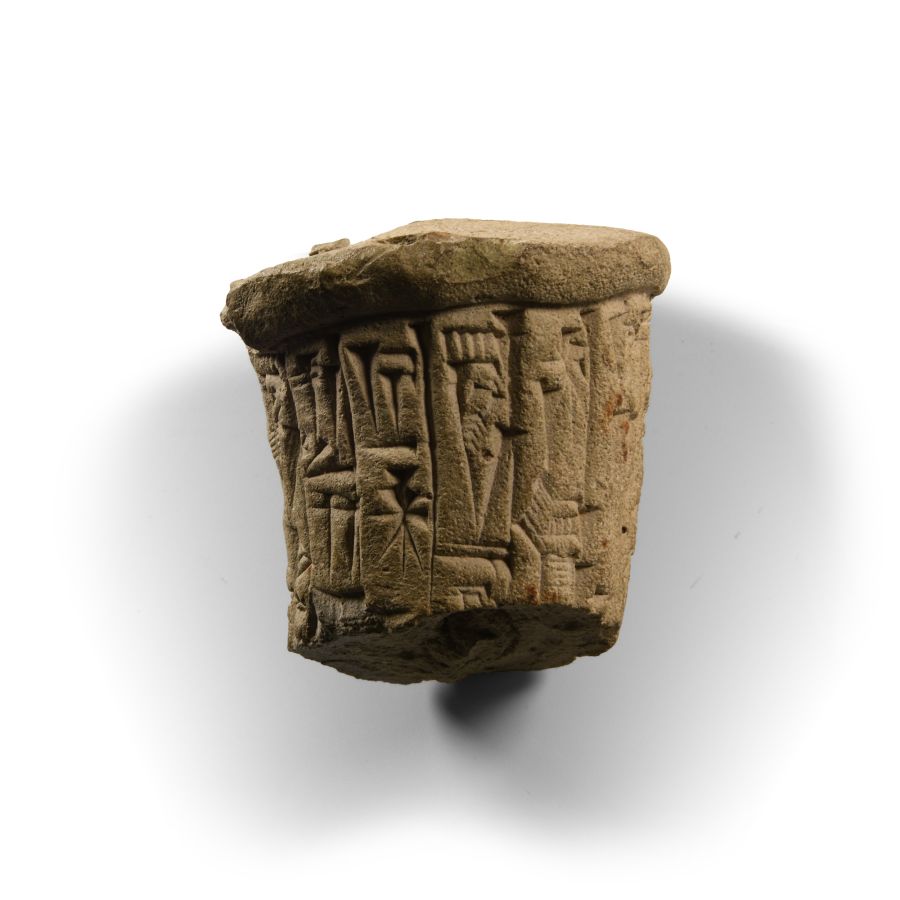
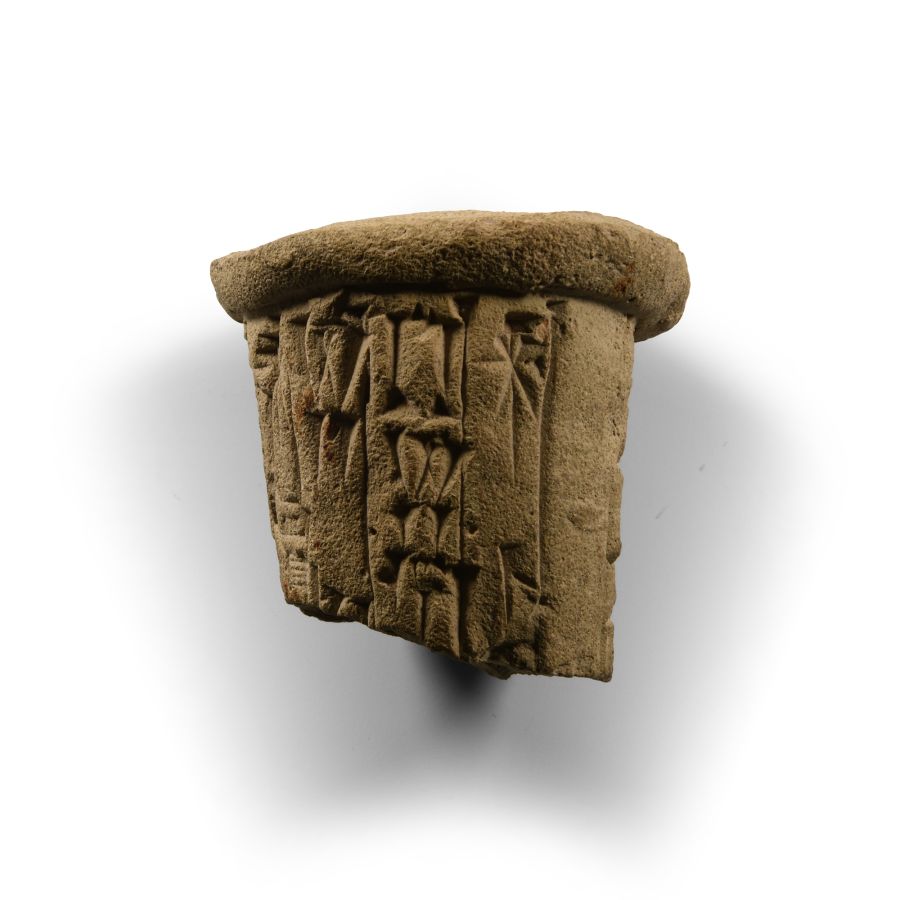
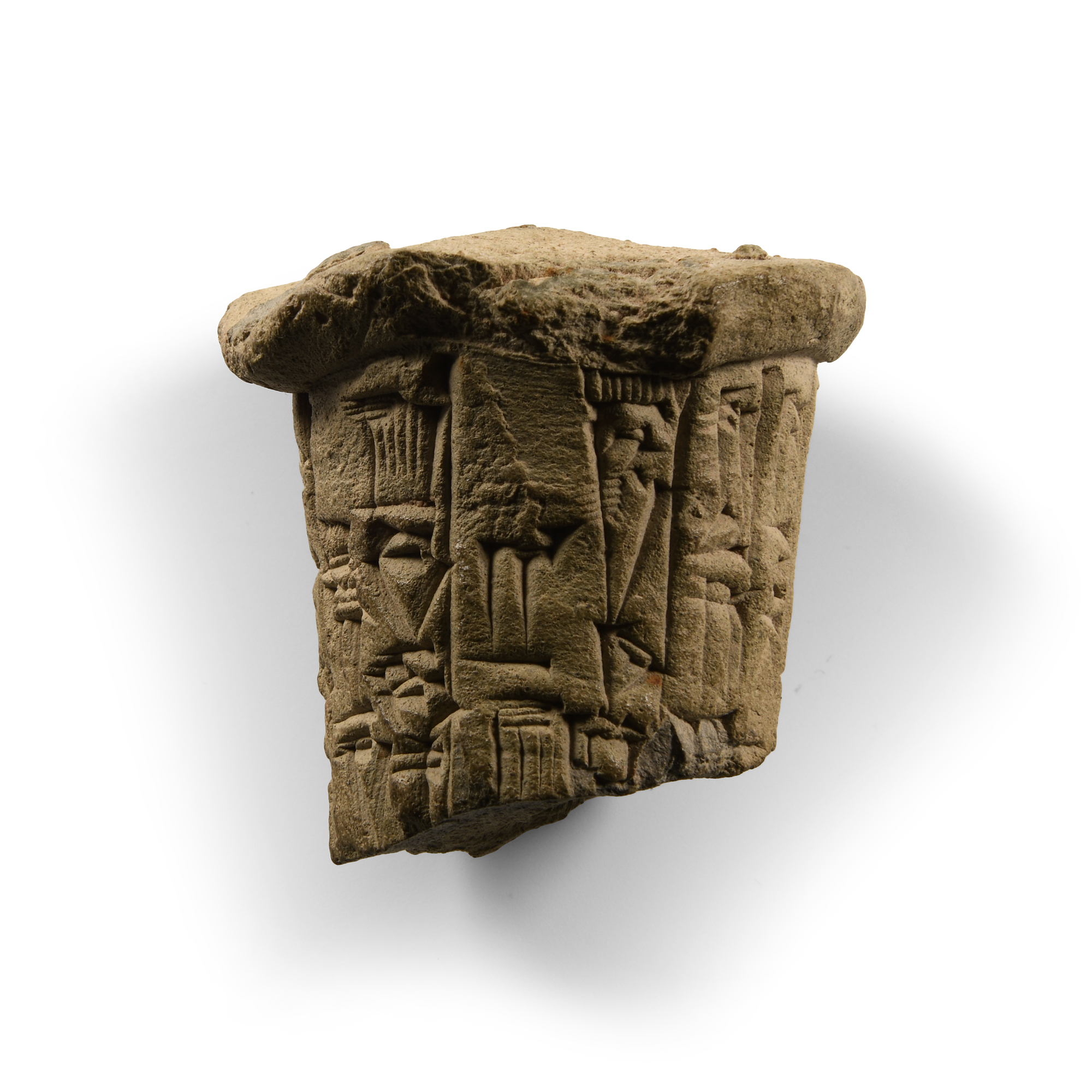
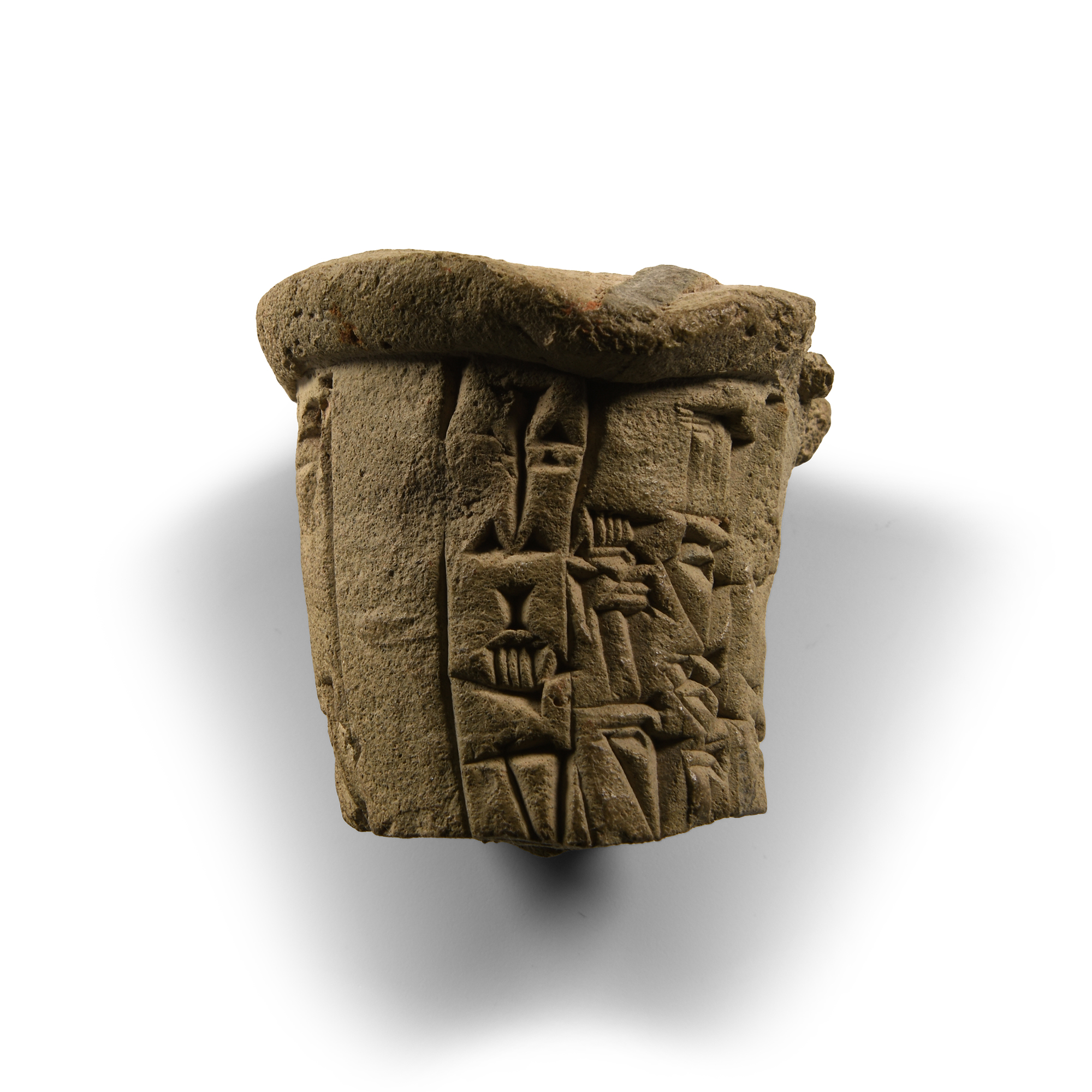
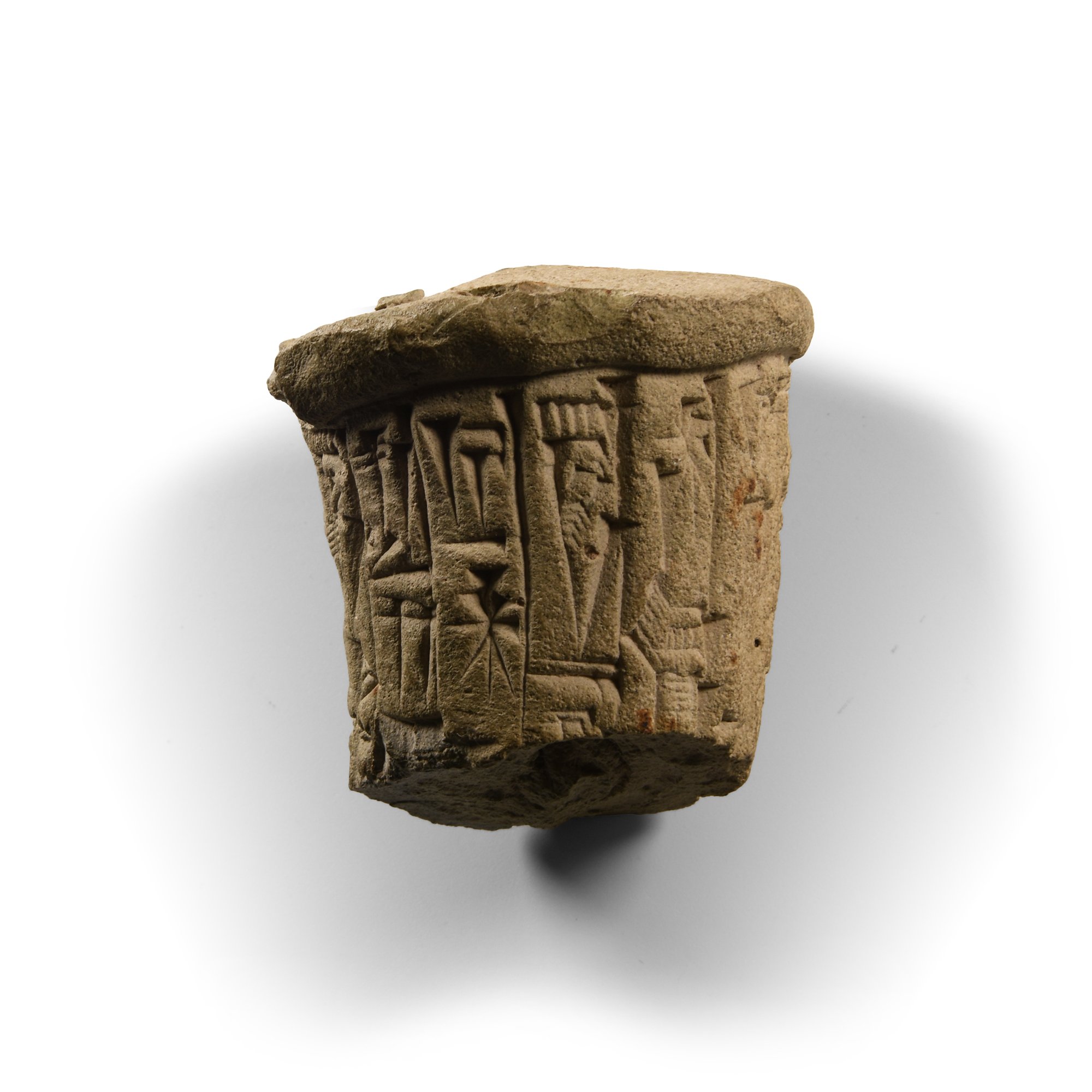
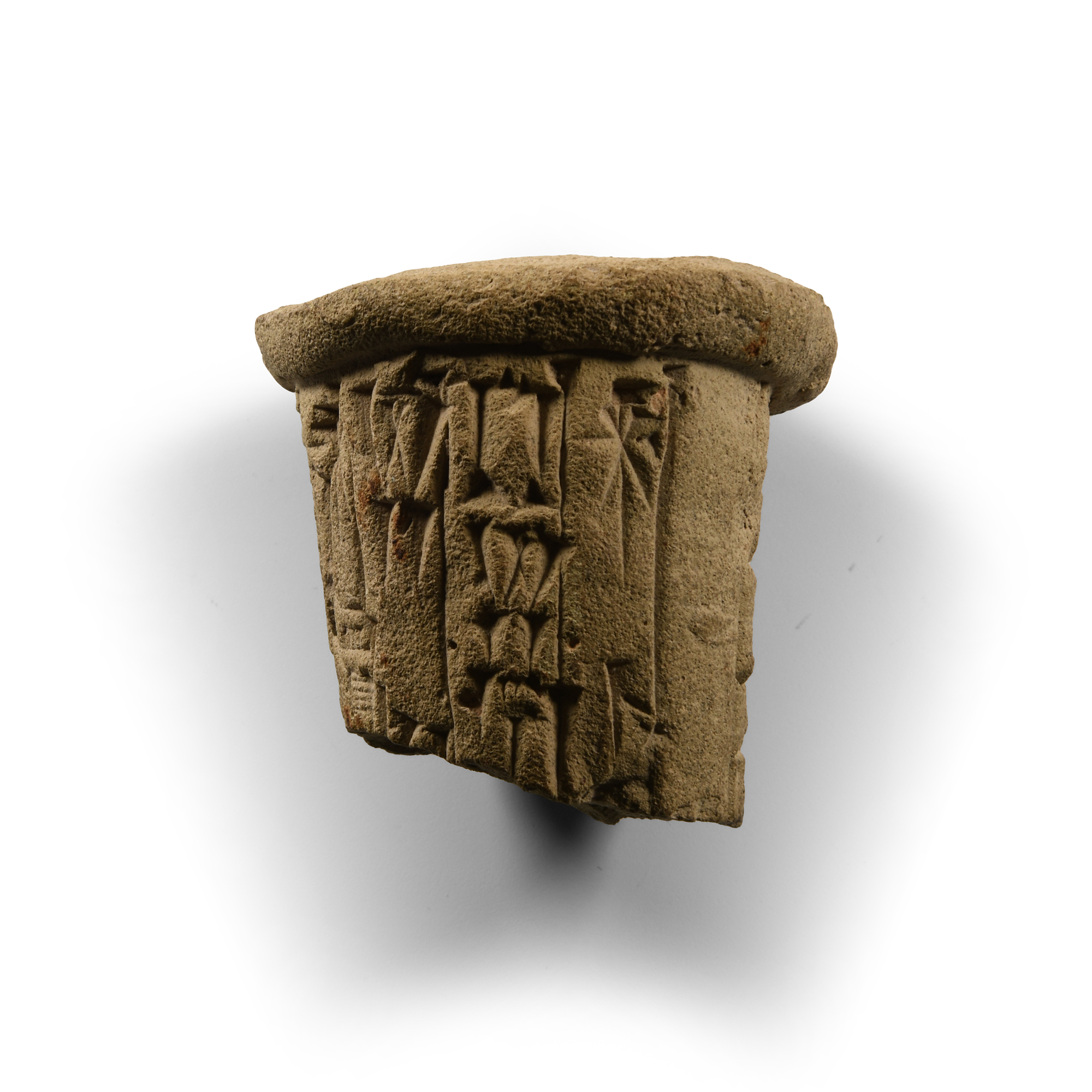
Sumerian Ur-Nammu of Ur Cuneiform Foundation Cone
2112–2094 B.C.
1 7/8 in. (108 grams, 48 mm).
The top section of a foundation cone from the reign of Ur-Nammu, with domed face, the side inscribed with columns of cuneiform text; from the Ziggurat at Ur, in the Third Dynasty. [No Reserve]
ProvenancePreviously from the estate of a West Sussex, UK, collector.
From a collection acquired from various auction houses in the UK.
From the estate of Mr R.W., a private Wiltshire, UK, collector; thence by descent.
Votive cones are one type of royal foundation deposit, objects that were buried in the walls and beneath the floors of important buildings during construction to sanctify the site and to create a historical memory of the ruler and his achievements.
Among Ur-Nammu‘s military exploits were the conquest of Lagash and the defeat of his former masters at Uruk. He was also responsible for ordering the construction of a number of ziggurats, including the Great Ziggurat of Ur. He was killed in a battle against the Gutians after he had been abandoned by his army.
TimeLine Auctions follows a vetting process to ensure the authenticity and legality of all items, reinforcing our commitment to integrity and responsible trading. Each antiquity, antique, and coin lot undergoes thorough examination by a vetting committee of at least ten external specialists, professional trade association members, scientists, and archaeologists: Our Vetting Process
AUCTIONS:
TimeLine is a leading auction house specialising in antiquities, ancient art, collectables, natural history, coins, medals, and books. Our auctions offer museums, collectors, historians, and enthusiasts the opportunity to acquire unique and historically significant pieces.
-
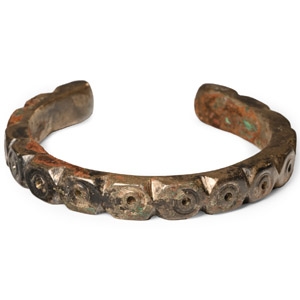
Western Asiatic Bronze Bracelet With Ring and Dots
13th-14th century A.D.Sold for (Inc. bp): £59
Comprising a penannular body with segmented ring-and-dot design. 55 grams, 62 mm
UK private collection before 2000. On the UK art market. Property of a London gentleman. -
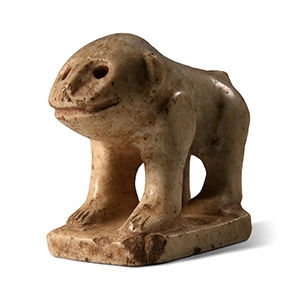
Western Asiatic Alabaster Quadruped
20th century A.D.Sold for (Inc. bp): £169
Carved figure of a hound standing on a rectangular base, ssockets to the eyes to accept coloured inserts. 641 grams, 11.3 cm wide
From the property of late Mr SM, London, UK, 1969-1999. -
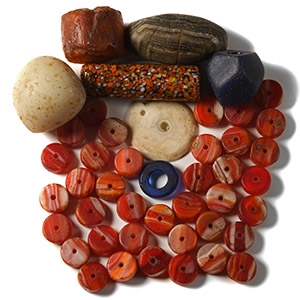
Mixed Glass and Stone Bead Group
20th century A.D. and earlierSold for (Inc. bp): £13
Including a tubular mosaic glass type, fusiform banded agate type, polyhedral lapis lazuli type, carnelian drum-shaped type and other beads. 99 grams total, 10-42 mm
From a collection acquired on the UK art market from various auction houses and collections mostly before 2000. From an important Cambridgeshire estate; thence by descent.
