
Loading, please wait...
LOT 0206
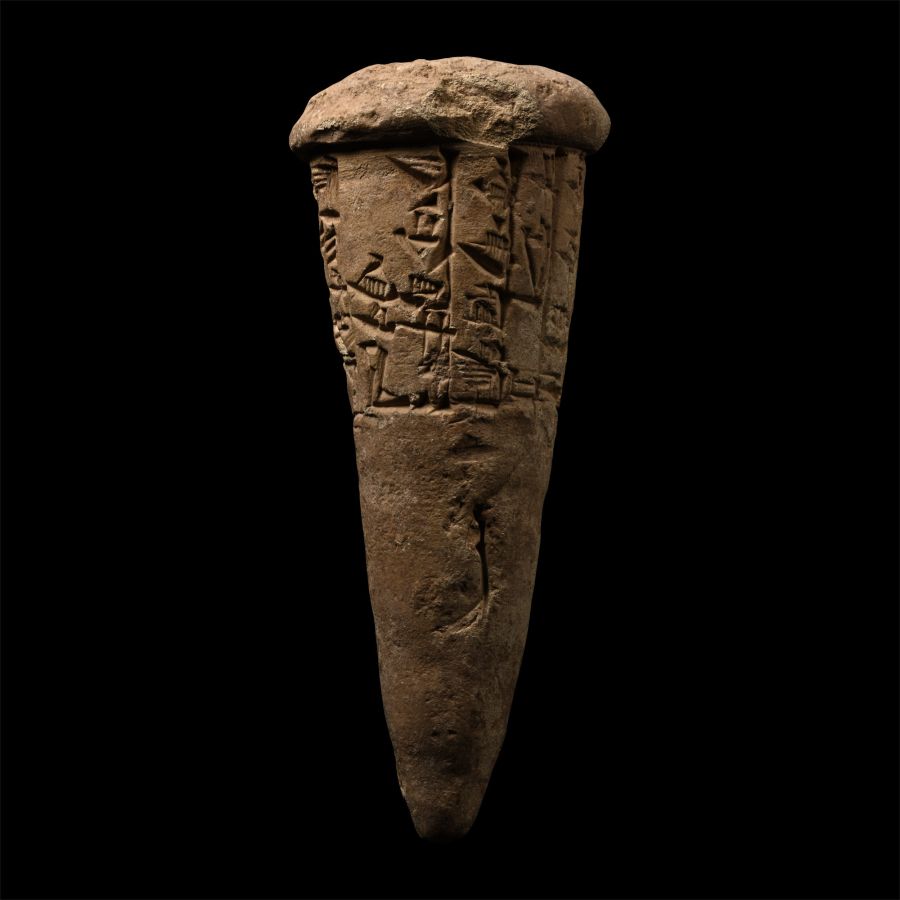
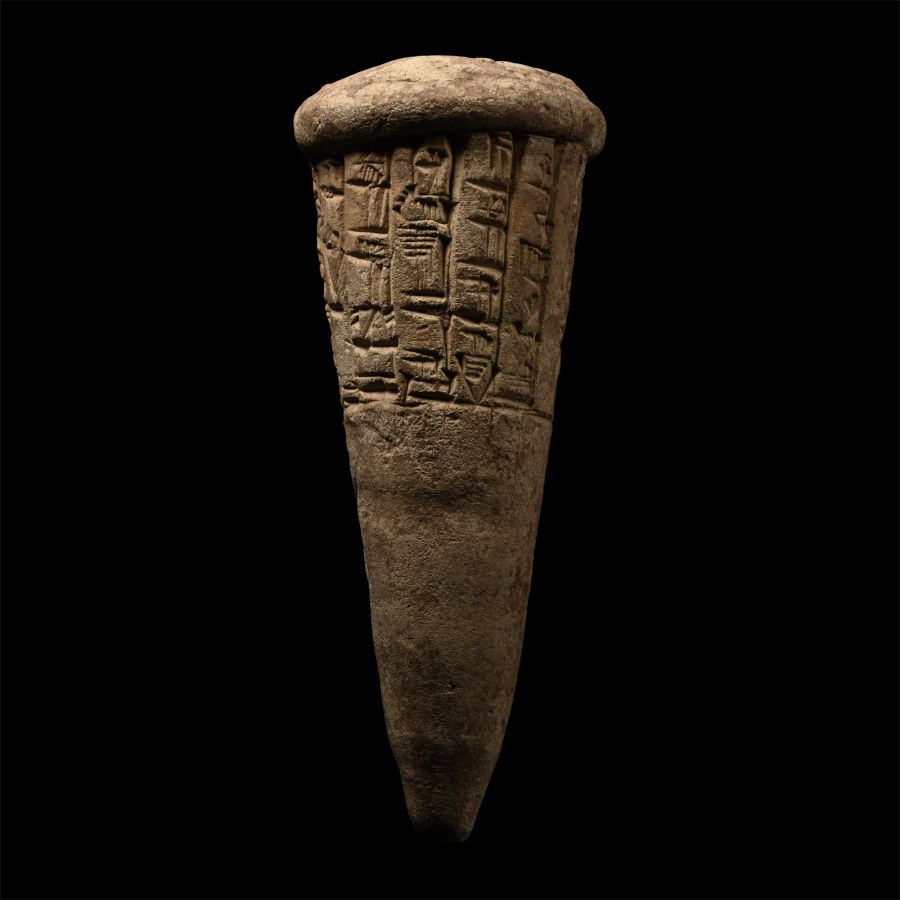
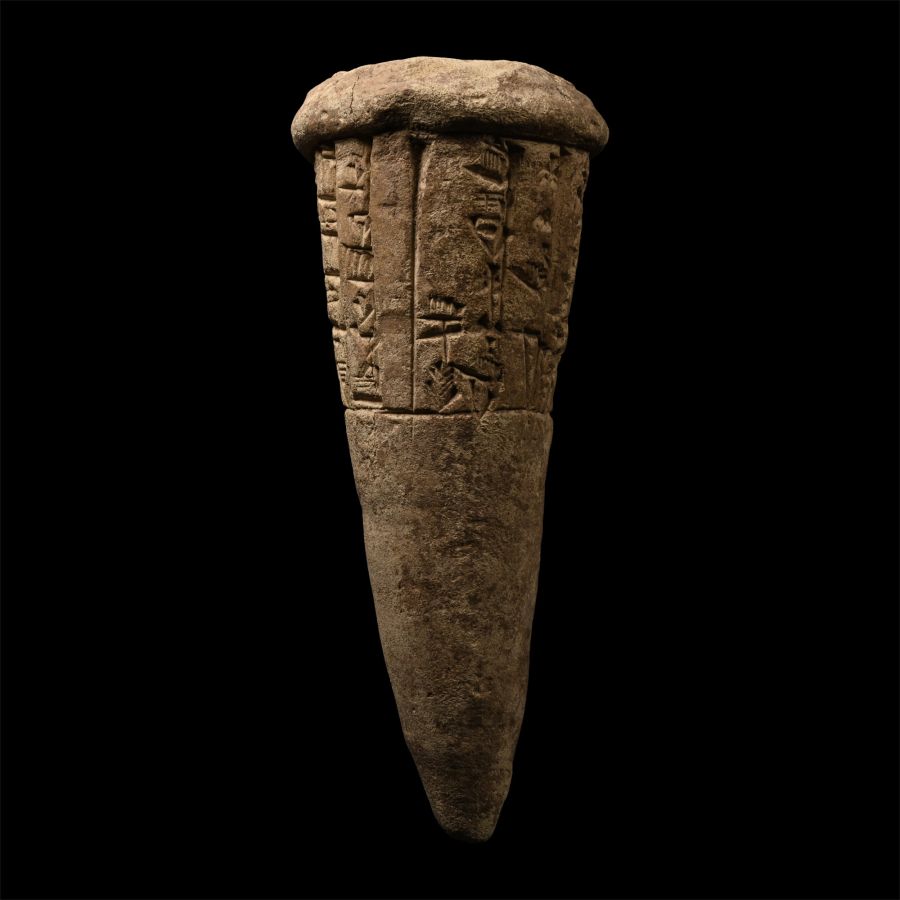
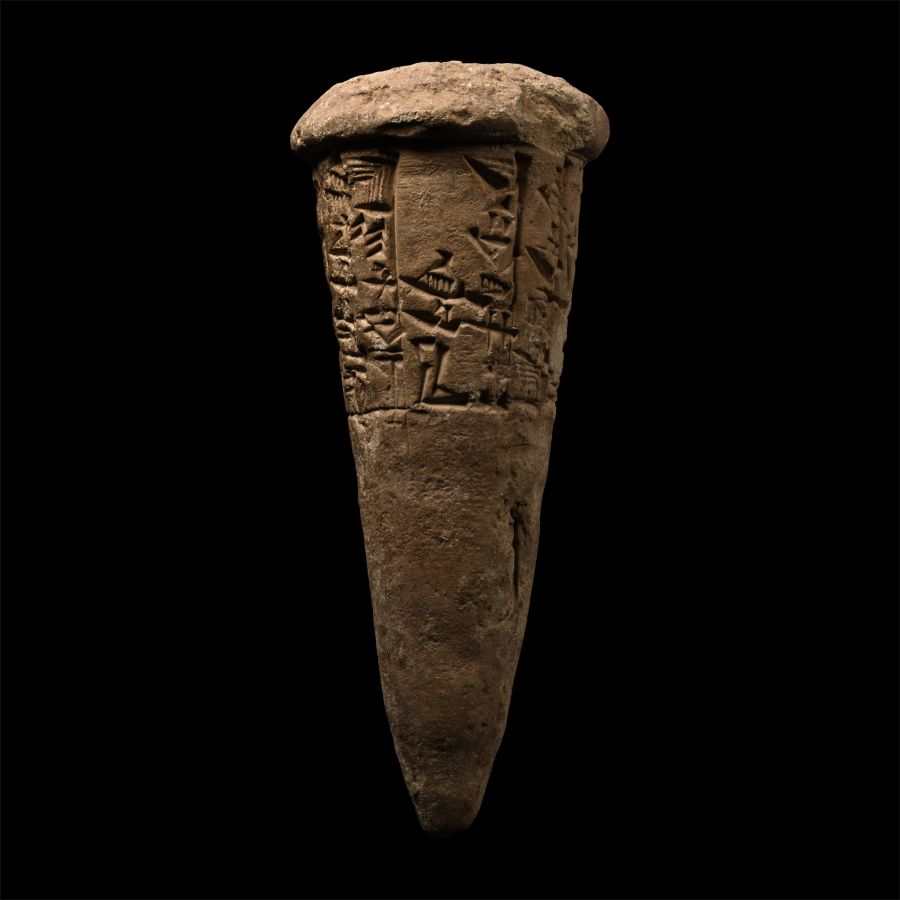
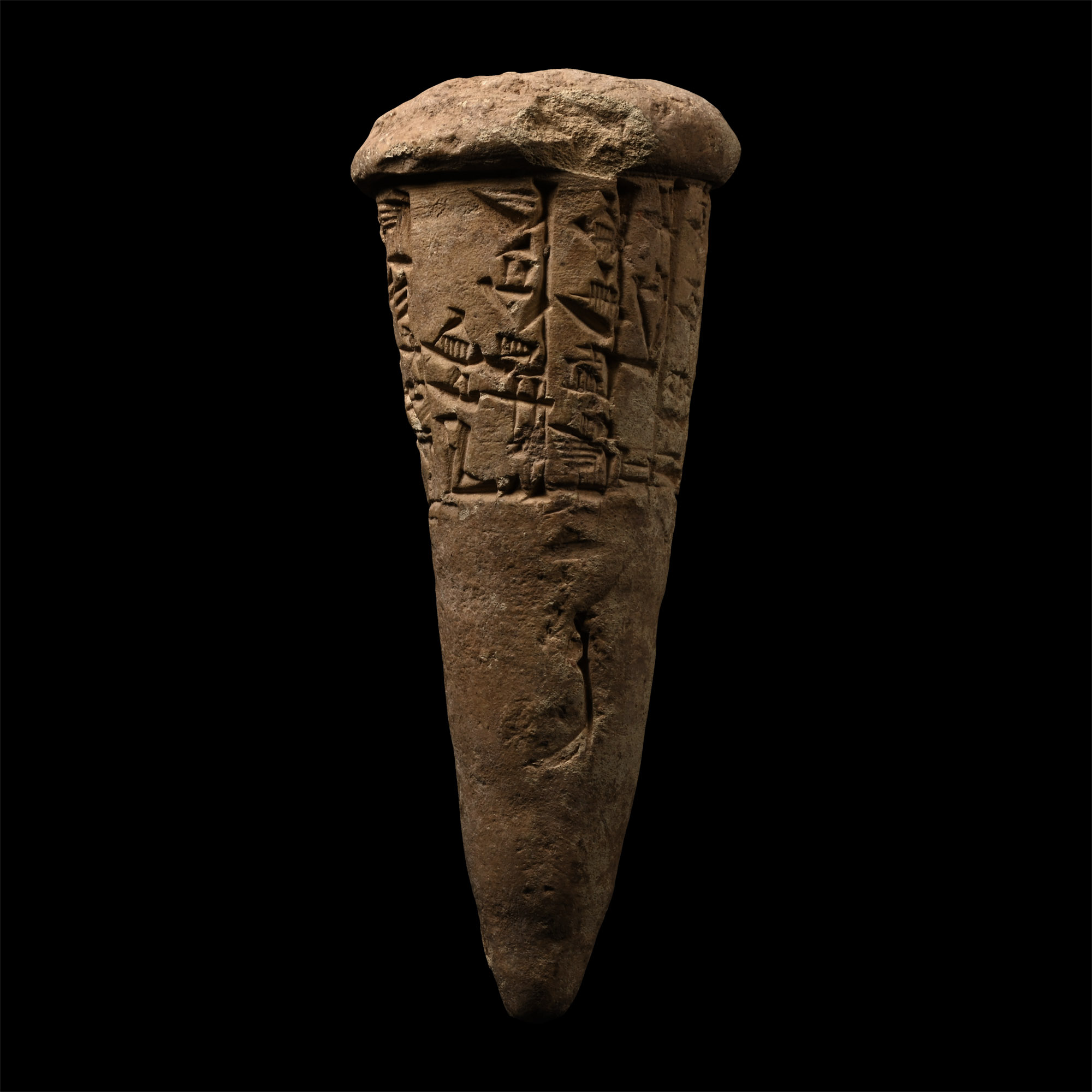
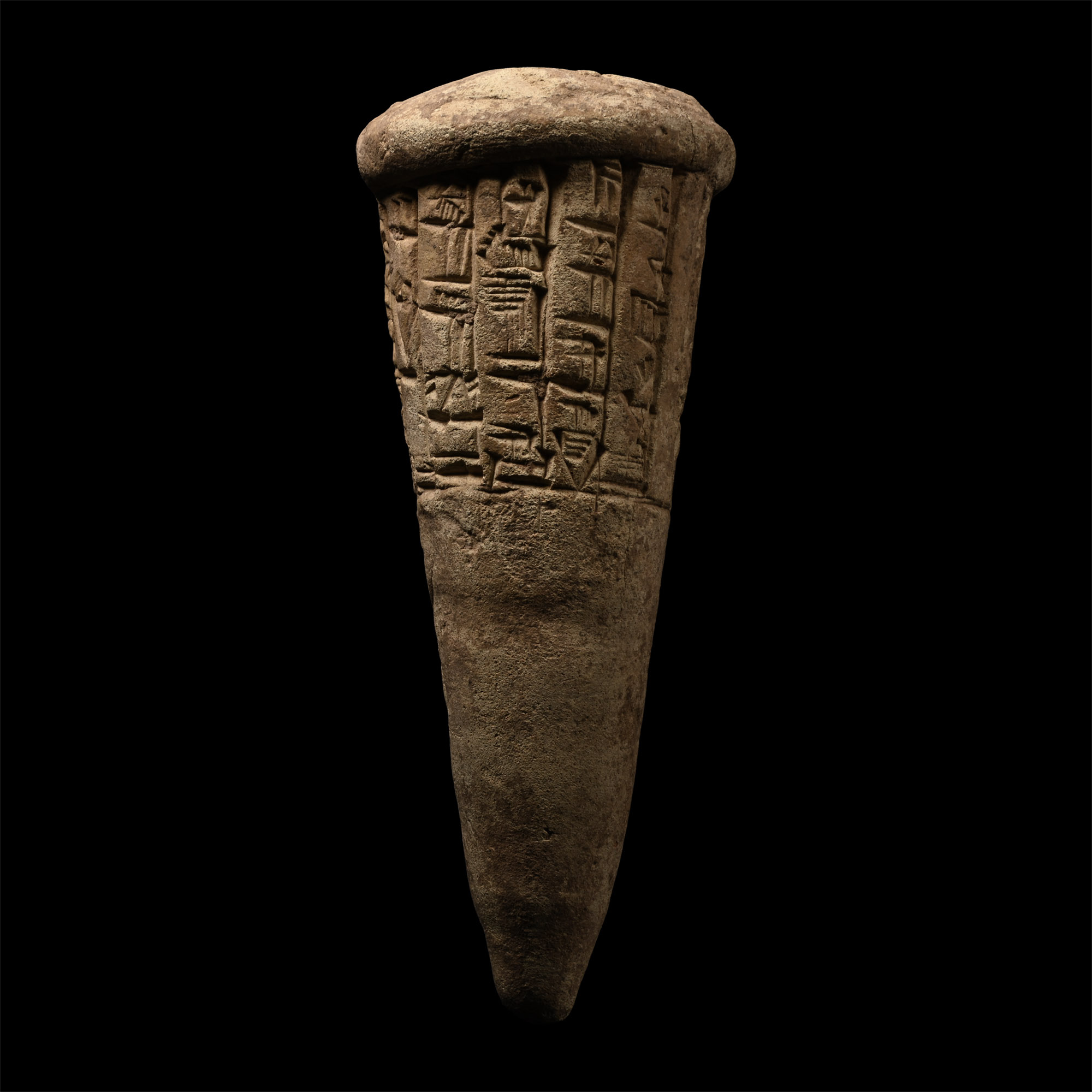
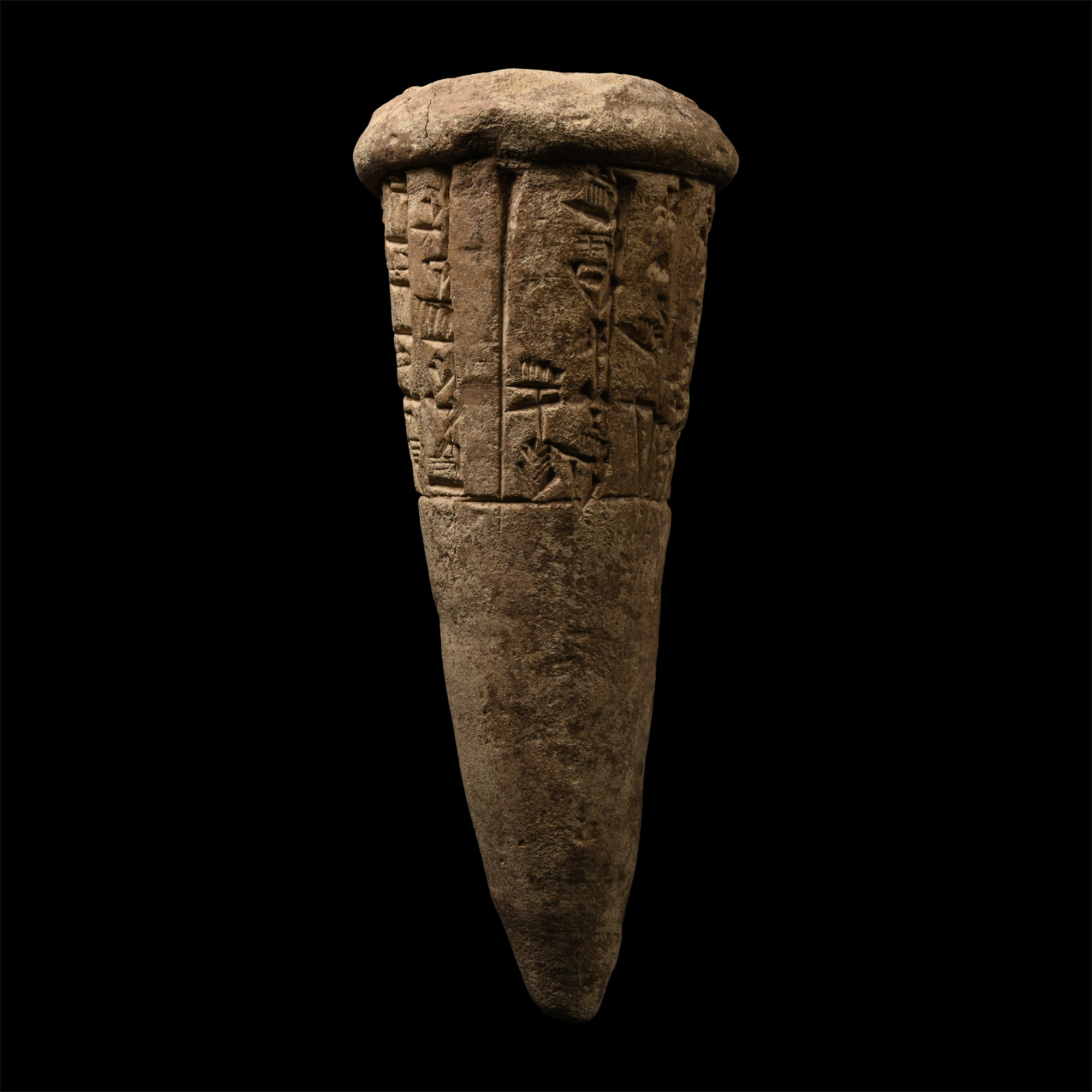
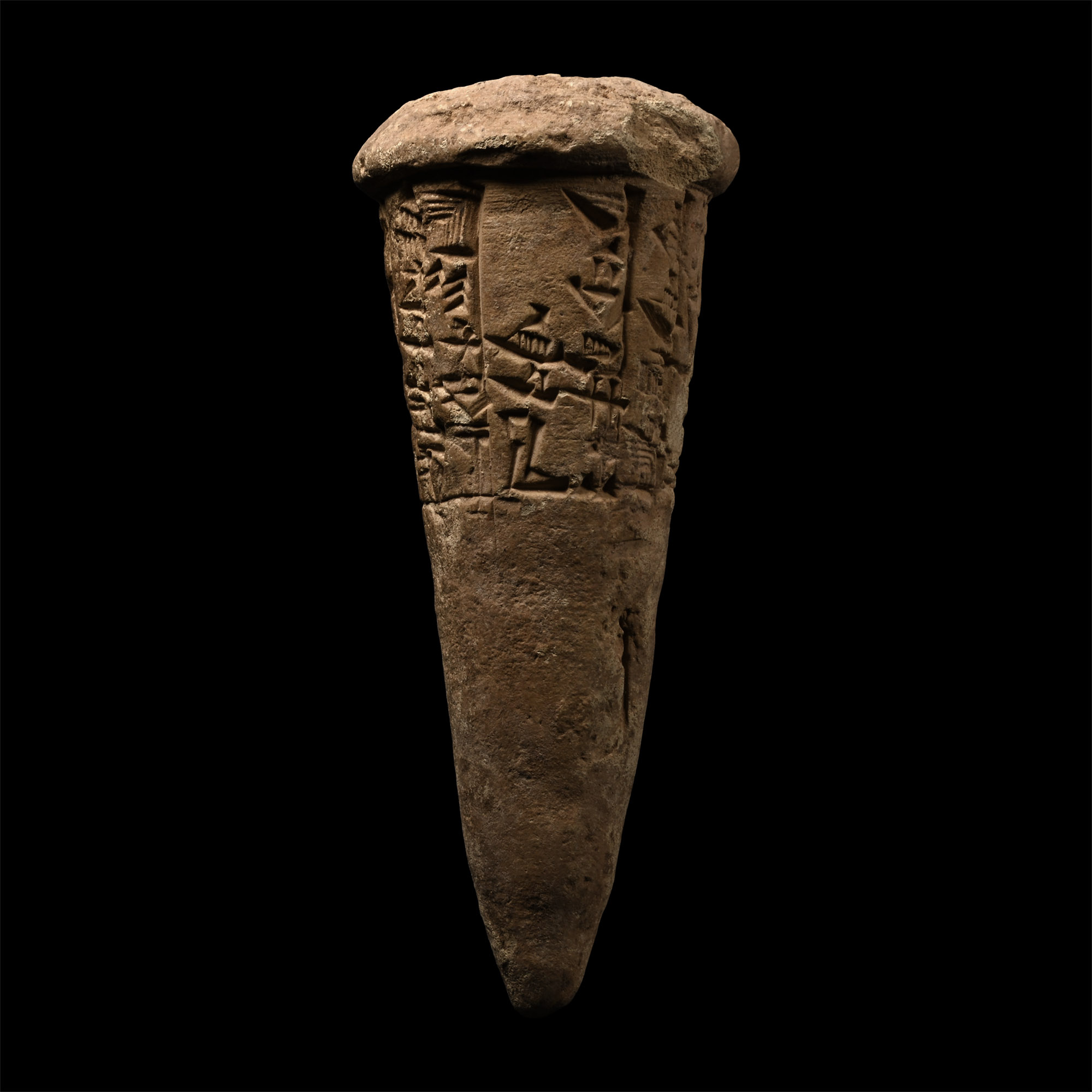
Sumerian Terracotta Foundation Cone From Lagash
CIRCA 2100 B.C.
4 3/4 in. (172 grams, 12.2 cm).
Conical with a domed top, ten-line inscription for Gudea of Lagash, giving a record of the building of Eninnu, the temple of Ningirsu: 'For Ningirsu, the powerful warrior of Enlil, Gudea, ruler of Lagaš, brought about perfection: he built and restored his E-ninnu-anzud-babbar.'
ProvenanceFrom an important collection formed before 1988.
Examined by Professor Wilfrid George Lambert FBA (1926-2011), historian, archaeologist, and specialist in Assyriology and Near Eastern archaeology, in the late 1980s and 1990s.
Accompanied by a copy of a scholarly note by Professor Wilfrid George Lambert.
This lot has been cleared against the Art Loss Register database, and is accompanied by an illustrated lot declaration signed by the Head of the Antiquities Department, Dr Raffaele D'Amato.
Votive cones are one type of royal foundation deposit, objects that were buried in the walls and beneath the floors of important buildings during construction to sanctify the site and to create a historical memory of the ruler and his achievements.
CONDITIONTimeLine Auctions follows a vetting process to ensure the authenticity and legality of all items, reinforcing our commitment to integrity and responsible trading. Each antiquity, antique, and coin lot undergoes thorough examination by a vetting committee of at least ten external specialists, professional trade association members, scientists, and archaeologists: Our Vetting Process
AUCTIONS:
TimeLine is a leading auction house specialising in antiquities, ancient art, collectables, natural history, coins, medals, and books. Our auctions offer museums, collectors, historians, and enthusiasts the opportunity to acquire unique and historically significant pieces.
-
.jpg)
Bactrian Lapis Lazuli Pin-Head and Bead
3rd millennium B.C.Estimate: £1,500 - 2,000 (+bp*)
Opening Bid: £400
Comprising: a lapis lazuli bead with high-relief figure of a snake in sinuous coils, head poised to strike, with eyes formed as turquoise annular beads; a bronze columnar handle; a tabular banded agate bead; all three bound together from the bronze corrosion products. 50 grams, 10 cm
with Gallery Rosen Ancient Art, Tel Aviv, 1968. with a London, UK gallery, 1971-early 2000s. Accompanied by a copy of the original 1968 invoice. This lot has been checked against the Interpol Database of stolen works of art and is accompanied by a search certificate number no.12409-225344. This lot has been cleared against the Art Loss Register database, and is accompanied by an illustrated lot declaration signed by the Head of the Antiquities Department, Dr Raffaele D'Amato. -
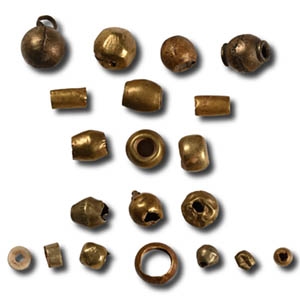
Western Asiatic Mixed Gold Bead Group
1st millennium B.C.Estimate: £350 - 450 (+bp*)
Opening Bid: £190
Including oblate, barrel-shaped and other types. 4.99 grams total, 2-9 mm
Ex property of a late Japanese collector, 1970-2000s. This lot has been cleared against the Art Loss Register database, and is accompanied by an illustrated lot declaration signed by the Head of the Antiquities Department, Dr Raffaele D'Amato. -
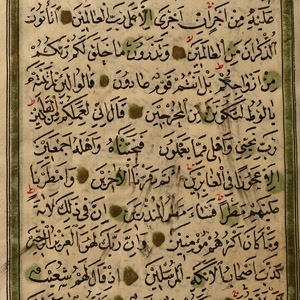
Illuminated Quran Page
18th-19th century A.D.Sold for (Inc. bp): £20
Manuscript leaf with nastaliq script text to both faces; rectangular panel with liquid gold frame and decorative roundels. 1.55 grams, 19.2 x 12.6 cm
Ex M.Cummings collection, UK, 1980s-1990s. This lot has been cleared against the Art Loss Register database, and is accompanied by an illustrated lot declaration signed by the Head of the Antiquities Department, Dr Raffaele D'Amato.
