
Loading, please wait...


LOT 0184
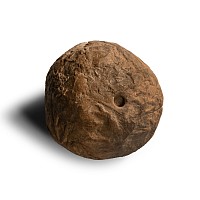
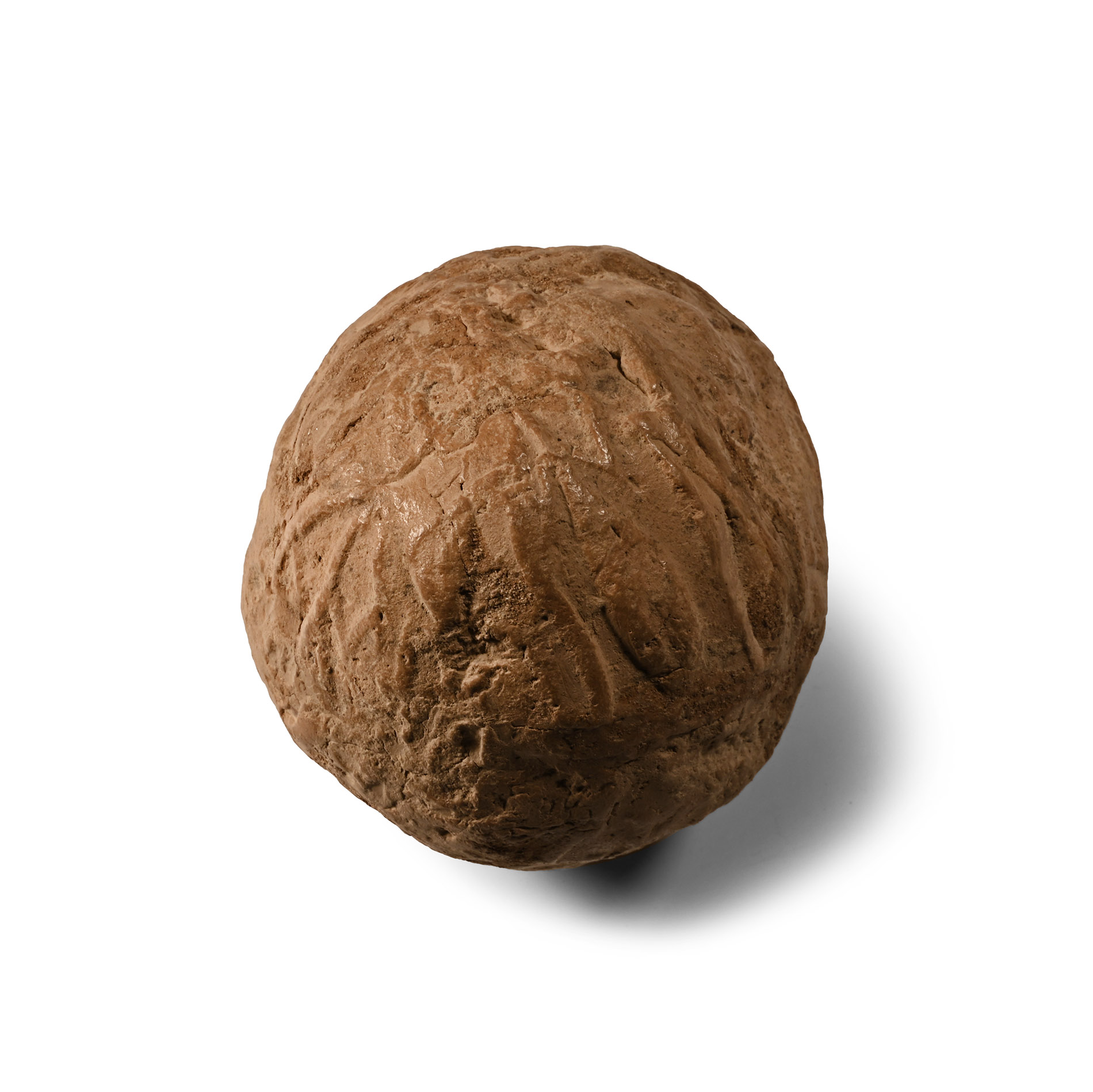
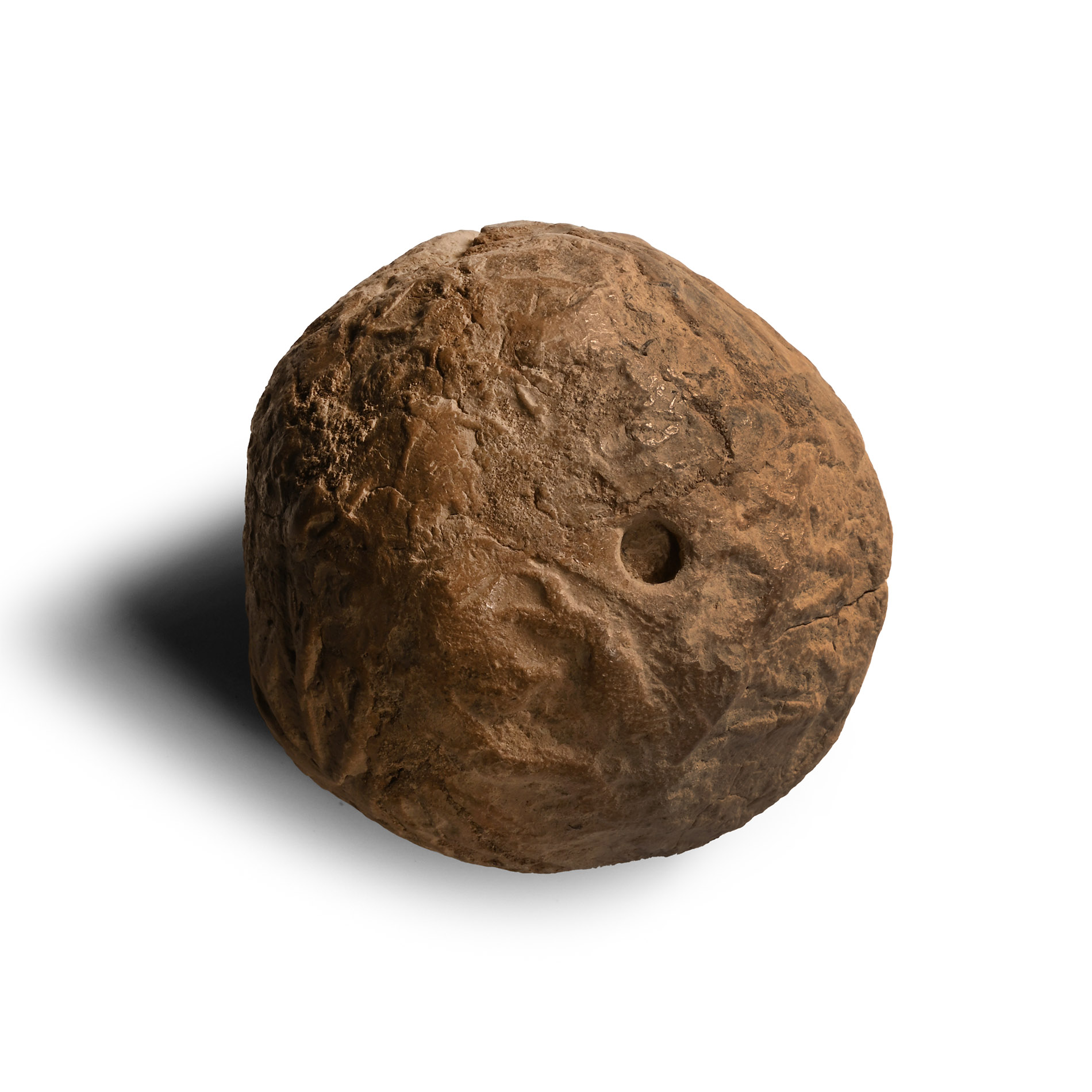
Sumerian Terracotta 'Bulla Envelope' with Impressed Decoration
URUK PERIOD, CIRCA 5500-3100 B.C.
2 1/2 in. (229 grams, 65 mm).
Complete and of spherical form, containing clay 'tokens'; the outer face impressed with enigmatic motifs. [No Reserve]
ProvenanceSpecialised collection of cuneiform texts, the property of a London gentleman and housed in London before 1988.
Thence by descent to family members.
Examined by Professor Wilfrid George Lambert FBA (1926-2011), historian, archaeologist, and specialist in Assyriology and Near Eastern archaeology, in the late 1980s and early 1990s.
The collection is exceptional for the variety of types, including some very rare and well preserved examples.
Cf. The Oriental Institute Museum, Woods, C. ed., Visible Language: Inventions of Writing in the Ancient Middle East and Beyond, University of Chicago, 2010, p.68, for this type of object and the whole article for relevant discussion.
FootnotesThe impressed detailing on the outer face of the sphere presumably gives an indication as to the contents, but since so few of these items survive intact there is little certainty on the subject.
CONDITIONTimeLine Auctions follows a vetting process to ensure the authenticity and legality of all items, reinforcing our commitment to integrity and responsible trading. Each antiquity, antique, and coin lot undergoes thorough examination by a vetting committee of at least ten external specialists, professional trade association members, scientists, and archaeologists: Our Vetting Process
AUCTIONS:
TimeLine is a leading auction house specialising in antiquities, ancient art, collectables, natural history, coins, medals, and books. Our auctions offer museums, collectors, historians, and enthusiasts the opportunity to acquire unique and historically significant pieces.
LOT 0184
Sumerian Terracotta 'Bulla Envelope' with Impressed Decoration
Sold for (Inc. bp): £2,860
-
.jpg)
Western Asiatic Bronze Spindle Whorl on Distaff
2nd millennium B.C.Sold for (Inc. bp): £39
Distaff with spiral slot to the thicker end, separate domed whorl and tapering shank. 60 grams, 32 cm
Collected from 1969-1999. From the collection of the late Mr S.M., London, UK.
Spindle whorls are one of the most durable traces of textile craft in the archaeological record. They can be found in copious quantities and diverse types. Whorls in the shape of discs, cylinders and cones of clay, bone, stone and other more precious materials are widespread in all areas and periods, evidencing the skills of craftswomen engaged in textile production. -
.jpg)
Western Asiatic Blue Glass Bead Necklace String
1st millennium B.C. and laterSold for (Inc. bp): £46
Composed of mainly opaque and translucent beads, graduated in size and in various shades of blue and green, including oblate, rounded and other types. 4.49 grams, 47 cm long
UK gallery, early 2000s. -
.jpg)
Trans-Jordan Polished Terracotta Bowl
Early Bronze Age, 3rd-2nd millennium B.C.Sold for (Inc. bp): £98
Hemispherical in profile with small foot, dimple to the underside; rim chipped. 145 grams, 65 mm high
From a family collection pre 1988.
