
Loading, please wait...
LOT 1804
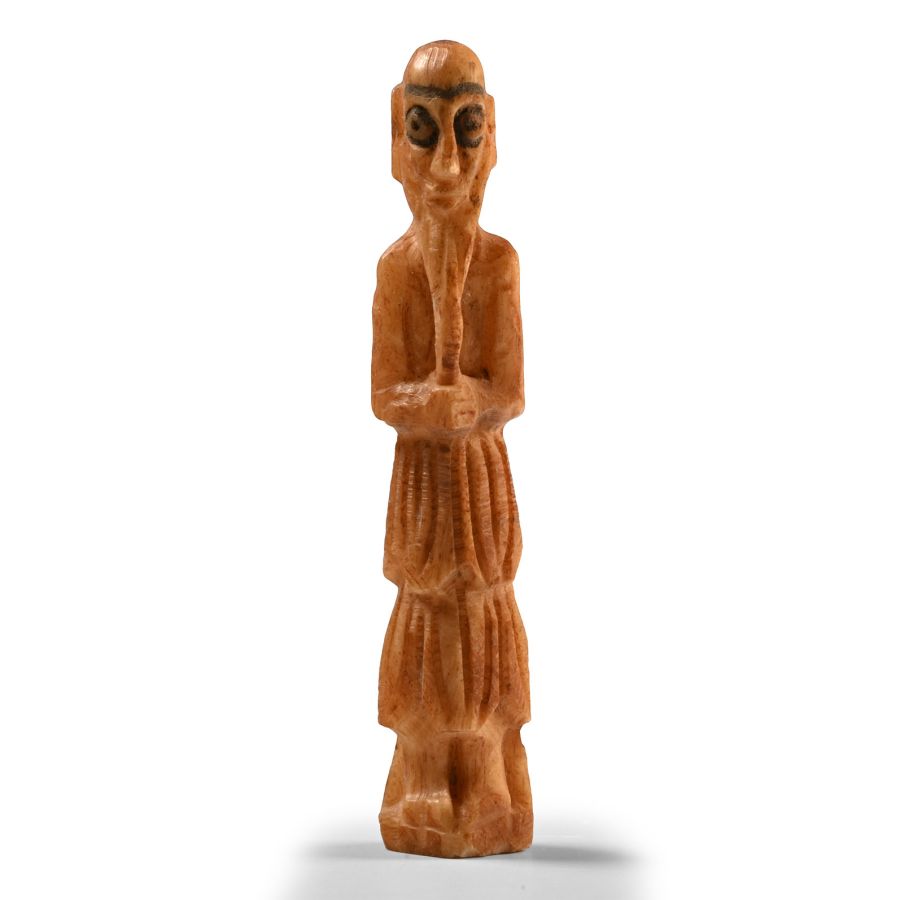
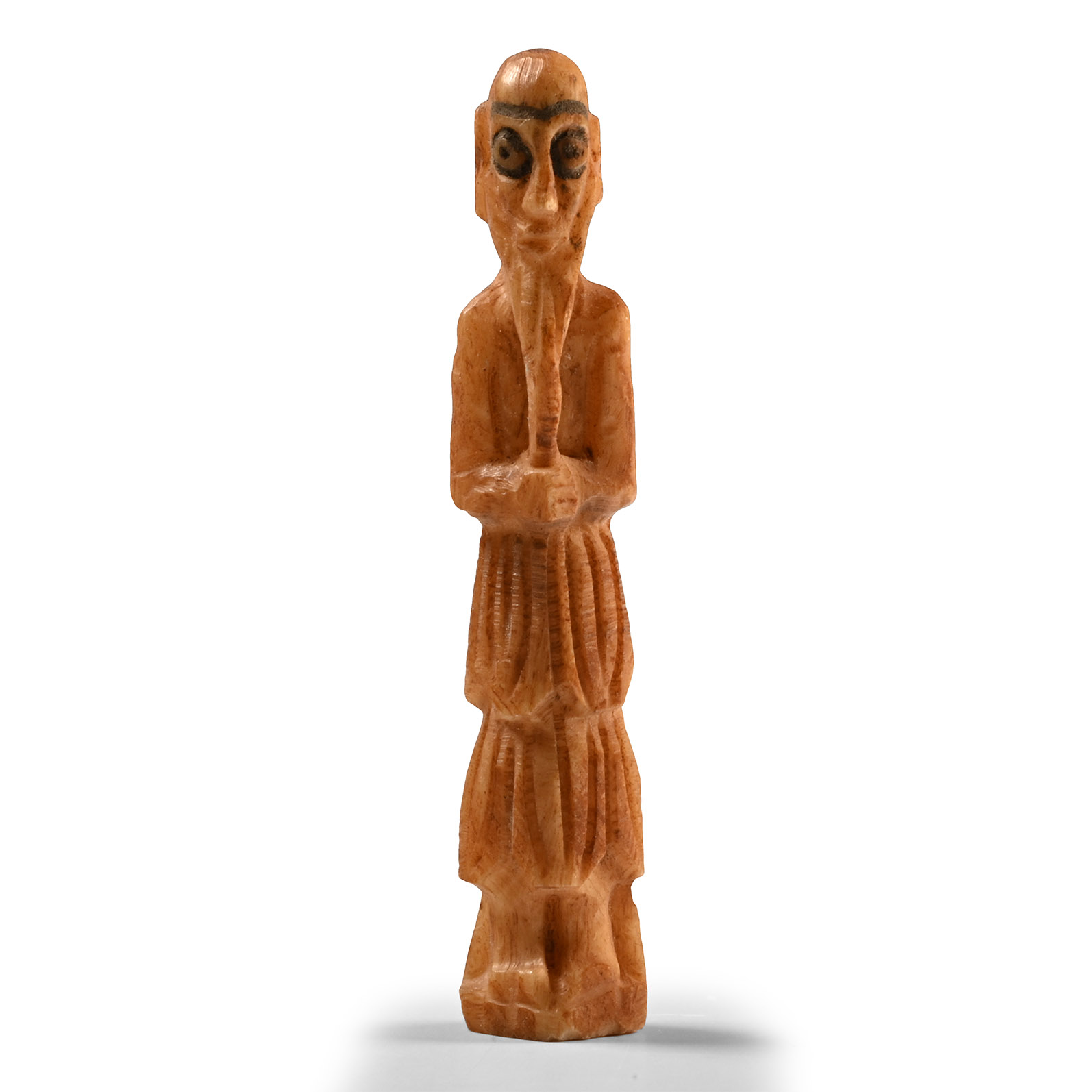
Sumerian Style Bone Carving of a God
20TH CENTURY A.D.
2 in. (3.73 grams, 49 mm).
Carved in the round and standing on a small rectangular pedestal, wearing a pleated robe; hands clasped at the waist; stylised facial features with large eyes rimmed with dark colour, the eyebrows indicated in a similar fashion, bald head a long beard extending above the hands; after the antique. [No Reserve]
ProvenanceFrom the property of late Mr SM, London, UK, 1969-1999.
CONDITIONTimeLine Auctions follows a vetting process to ensure the authenticity and legality of all items, reinforcing our commitment to integrity and responsible trading. Each antiquity, antique, and coin lot undergoes thorough examination by a vetting committee of at least ten external specialists, professional trade association members, scientists, and archaeologists: Our Vetting Process
AUCTIONS:
TimeLine is a leading auction house specialising in antiquities, ancient art, collectables, natural history, coins, medals, and books. Our auctions offer museums, collectors, historians, and enthusiasts the opportunity to acquire unique and historically significant pieces.
-

Post Medieval Bronze and Silver Artefact Group
16th-19th century A.D.Sold for (Inc. bp): £39
Including a lion-mask appliqué, school badge dated 1882, plaque with gorgoneion and other items. 219 grams total, 30-70 mm
Found various sites in Essex, UK. Property of an Essex collector. -

Russian Icon with Virgin of Kazan with the Blessing Child
19th-20th century A.D.Estimate: £500 - 700 (+bp*)
Opening Bid: £278
Painted on a wooden board with mounting slots and panels to the reverse, gessoed surface with painting of the Virgin of Kazan, head of Mary with gilded nimbus and russet-coloured veil, standing infant Jesus similarly nimbate with right hand raised in the pax gesture; gilt monograms to the upper corners and title to the lower left corner. 968 grams, 31 cm high
Fine condition.
Ex property of a London lady, part of her family's collection.
The original icon, also known as the Theotokos of Kazan, is thought to have originated in Constantinople in the 13th century before it was taken to Russia. When the Turks took over Kazan in 1438, the icon was most probably hidden to keep it safe. Ivan the Terrible liberated Kazan in 1552, and the town was destroyed by fire in 1579, after which the icon was found and brought to the Church of Saint Nicholas. It was subsequently stolen in 1904 and never found again, though there are many copies in existence. -
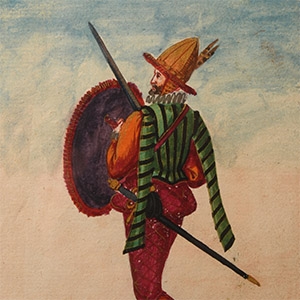
Watercolour Painting of a Soldier
Germany, 18th century A.D.Sold for (Inc. bp): £39
Hand-tinted figure of a 16th century soldier advancing on a green base with raised shield and drawn sword, basket-hilted sword at his left hip, slashed doublet and knee-length hose, cabaset with plume; all within a red rectangular frame with (blank) title panel below; mounted in a dark green reveal. 146 grams total, 35.5 x 28 cm including frame
Private collection, USA, formed in the 1980s.
