
Loading, please wait...
LOT 1375
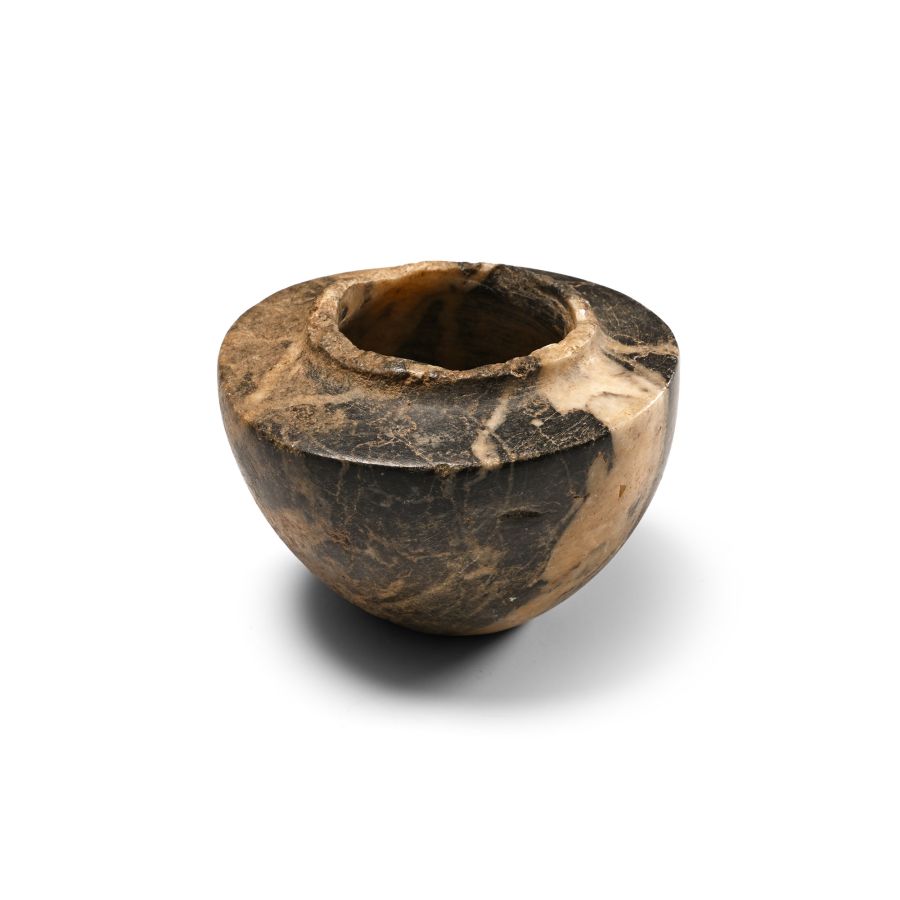
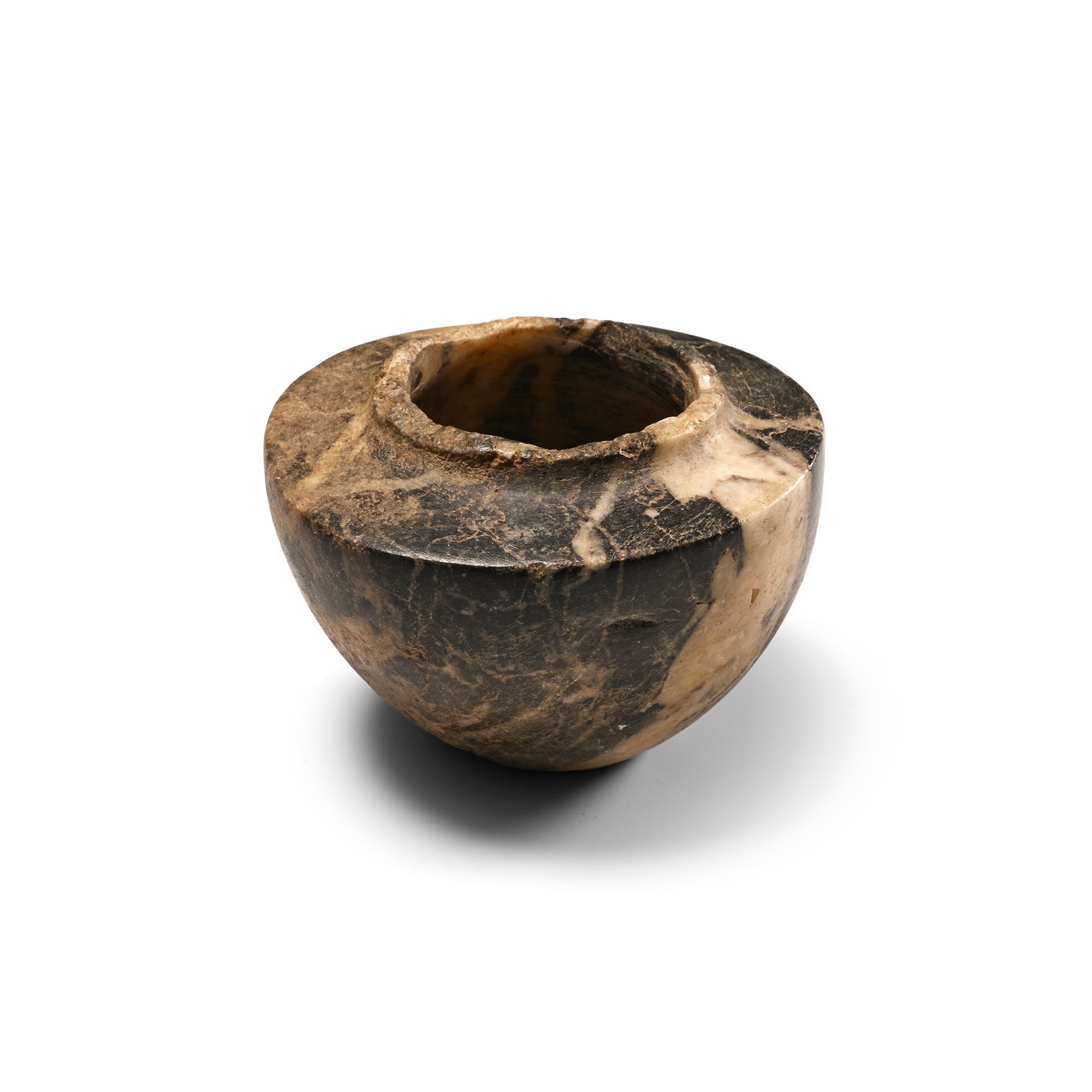
Sumerian Stone Pyxis in Veined Black and White Stone
4TH MILLENNIUM B.C.
2 3/4 in. (238 grams, 70 mm).
Comprising a hemispherical body with broad flat shoulder and low rim.
ProvenanceAcquired in the mid 1980s-1990s.
Private collection, Switzerland, thence by descent.
Private collection, since the late 1990s.
This lot has been cleared against the Art Loss Register database, and is accompanied by an illustrated lot declaration signed by the Head of the Antiquities Department, Dr Raffaele D'Amato.
TimeLine Auctions follows a vetting process to ensure the authenticity and legality of all items, reinforcing our commitment to integrity and responsible trading. Each antiquity, antique, and coin lot undergoes thorough examination by a vetting committee of at least ten external specialists, professional trade association members, scientists, and archaeologists: Our Vetting Process
AUCTIONS:
TimeLine is a leading auction house specialising in antiquities, ancient art, collectables, natural history, coins, medals, and books. Our auctions offer museums, collectors, historians, and enthusiasts the opportunity to acquire unique and historically significant pieces.
-
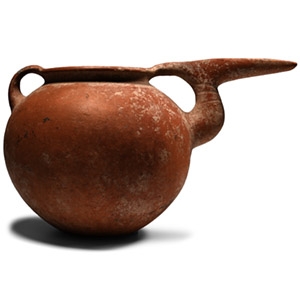
Large Amlash Terracotta Vessel
Early 1st millennium B.C.Estimate: £3,000 - 4,000 (+bp*)
Opening Bid: £1,350
Of zoomorphic form, with a globular body, u-section spout and loop handle to the rear. 846 grams, 30 cm wide
Acquired before 1978. Private collection, UK. Accompanied by a thermoluminescence analysis report no.N125e39 from Oxford Authentication. This lot has been checked against the Interpol Database of stolen works of art and is accompanied by a search certificate number no.12703-235149. This lot has been cleared against the Art Loss Register database, and is accompanied by an illustrated lot declaration signed by the Head of the Antiquities Department, Dr Raffaele D'Amato. -
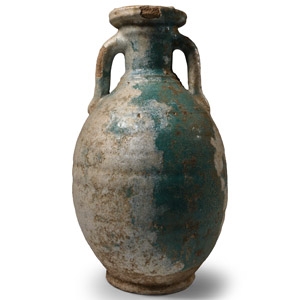
Parthian Lead Glazed Amphora
1st-3rd century A.D.Estimate: £300 - 400 (+bp*)
Opening Bid: £150
Barrel-shaped in profile with basal ring, short neck with rolled rim and two lateral strap handles. 1.5 kg, 28.5 cm
Ex West London, UK, collection, 1990s. This lot has been cleared against the Art Loss Register database, and is accompanied by an illustrated lot declaration signed by the Head of the Antiquities Department, Dr Raffaele D'Amato. -
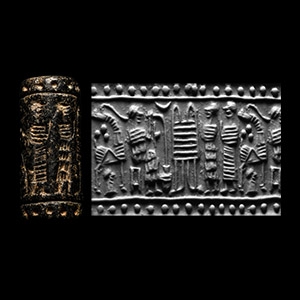
Cappadocian Stone Cylinder Seal with Court Scene
Circa 2000-1900 B.C.Estimate: £1,200 - 1,700 (‡+bp*)
Opening Bid: £540
Frieze including two standing attendants in flounced floor-length robes before a laden table and a seated figure in similar robes, the seated figure drinking from a vessel through a drinking pipe, behind him a stag with a small animal between its legs, a border of pellets above and below; supplied with a museum-quality impression. 21.9 grams, 40 mm
Acquired in the mid 1980s-1990s. Private collection, Switzerland, thence by descent. Private collection, since the late 1990s. This lot has been cleared against the Art Loss Register database, and is accompanied by an illustrated lot declaration signed by the Head of the Antiquities Department, Dr Raffaele D'Amato.
