
Loading, please wait...
LOT 0973
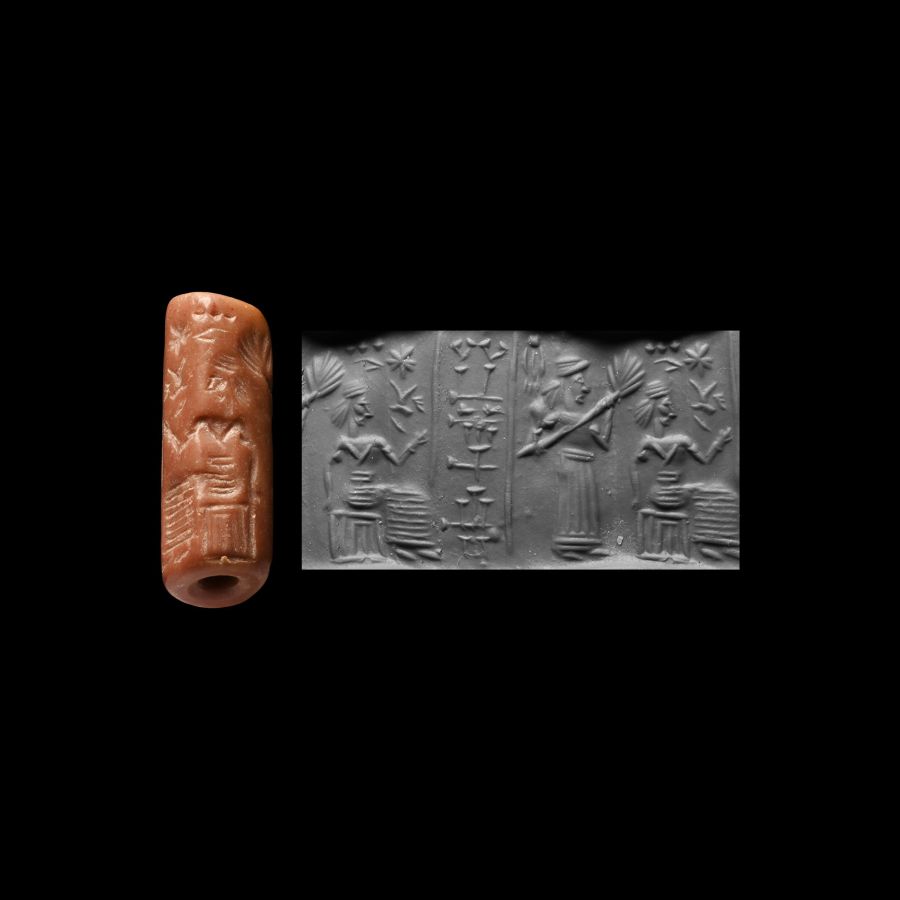
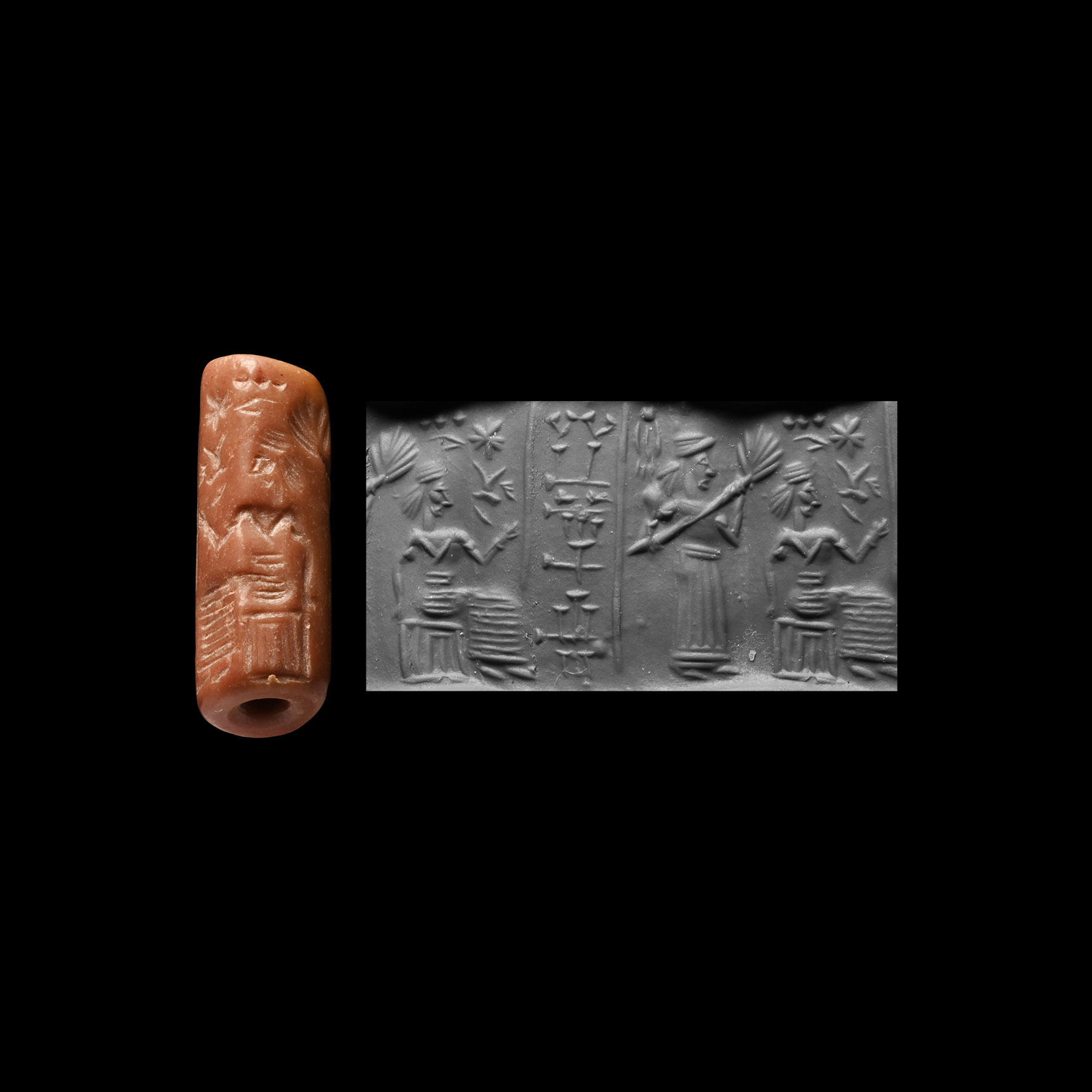
Sumerian Pink Limestone Cylinder Seal
3RD MILLENNIUM B.C.
1 in. (4.26 grams, 26 mm).
An attendant fanning a seated figure, a column of text in the field, together with zones of geometric shapes or symbols; drilled vertically for suspension; accompanied by a museum-quality impression.
ProvenanceAcquired 1980-1990s.
Ex West Country, UK, collection.
Examined by Professor Wilfrid George Lambert FBA (1926-2011), historian, archaeologist, and specialist in Assyriology and Near Eastern archaeology.
TimeLine Auctions follows a vetting process to ensure the authenticity and legality of all items, reinforcing our commitment to integrity and responsible trading. Each antiquity, antique, and coin lot undergoes thorough examination by a vetting committee of at least ten external specialists, professional trade association members, scientists, and archaeologists: Our Vetting Process
AUCTIONS:
TimeLine is a leading auction house specialising in antiquities, ancient art, collectables, natural history, coins, medals, and books. Our auctions offer museums, collectors, historians, and enthusiasts the opportunity to acquire unique and historically significant pieces.
-

Parthian Silver Bowl
Circa 2nd century B.C.-1st century A.D.Sold for (Inc. bp): £819
Hemispherical in shape with rounded base and convex interior rim. 329 grams, 19 cm wide
with a London, UK gallery 1971-early 2000s. -

Western Asiatic Textile Section
19th century A.D.Sold for (Inc. bp): £26
Displaying raised flowering vegetation; applied to a canvas backing, stretched across a wooden frame. 530 grams, 48.5 x 22 cm
London collection. -
Central Asian Bronze Compartmented Seal Matrix
2300-2000 B.C.Sold for (Inc. bp): £26
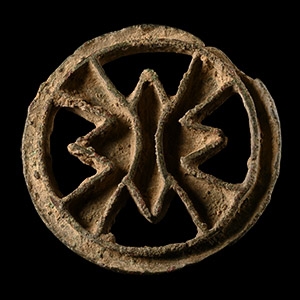
Wheel-shaped stamp seal; accompanied by an old scholarly note, typed and signed by W.G. Lambert, late Professor of Assyriology, University of Birmingham, 1970-1993, which states: 'Stamp Seal of Bronze. 38 x 37 x 15 mm. This is round, with flat face and flat back, on which is a handle of inverted U-shape. The design, which is compartmented and open-work, consists of a plain outer band, and within it but not touching it is a central rhomb, joined to the outer band by two rough crescent shapes, bulging at the ends, and close to each other in the middle. This comes from west central Asia and dates to c. 2300-2000 B.C. It is in very good condition save that the outer rim is worn down.' 15 grams, 37 mm
From an important London, UK, collection, 1970s. Accompanied by a scholarly note by Professor Wilfrid George Lambert FBA (1926-2011), historian, archaeologist, and specialist in Assyriology and Near Eastern archaeology.
