
Loading, please wait...
LOT 0230
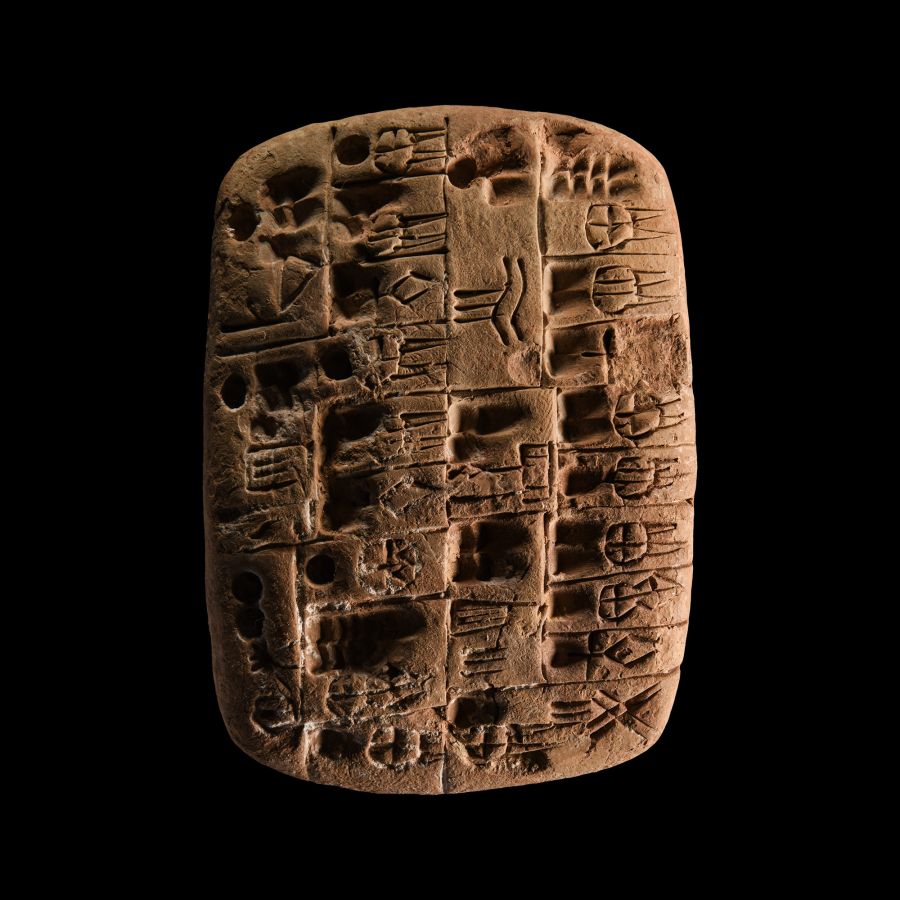
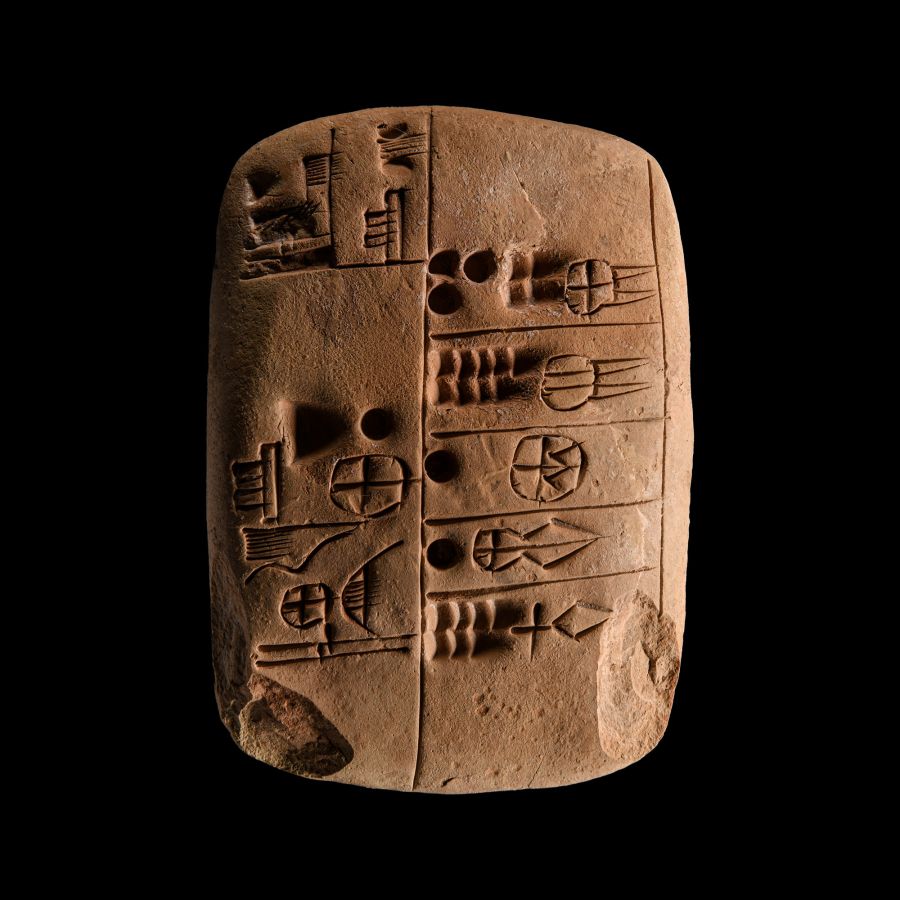
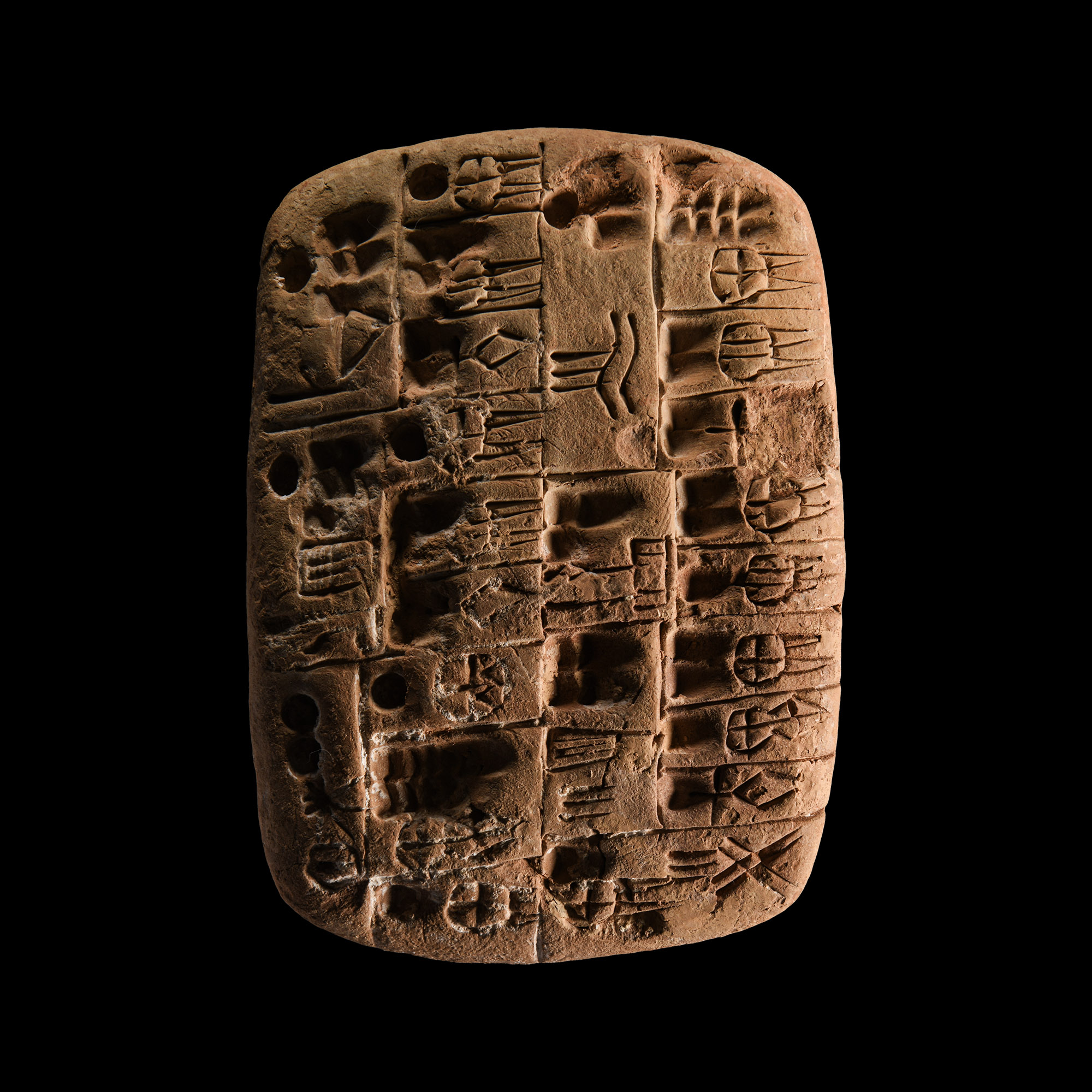
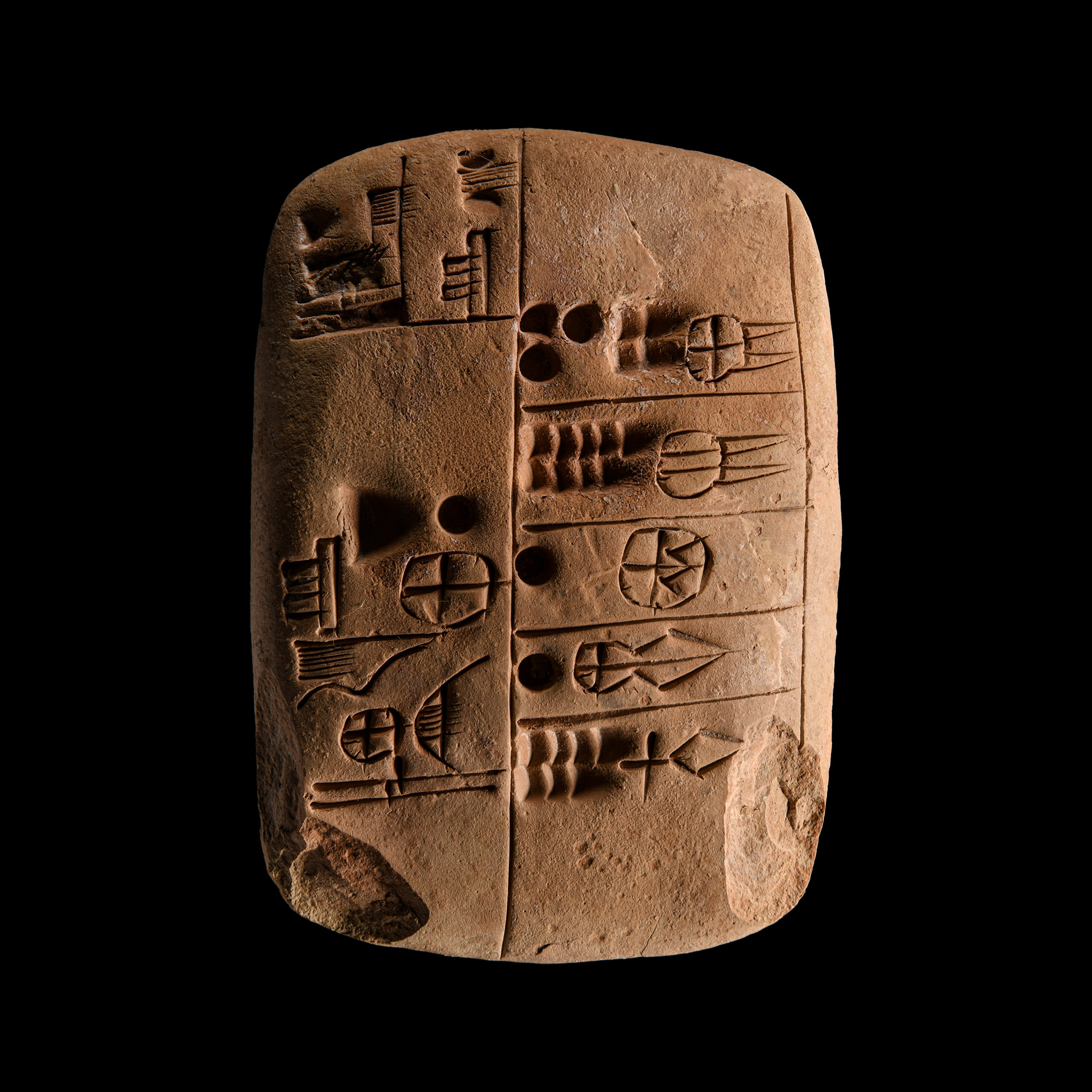
Sumerian Pictographic Tablet
4TH MILLENNIUM B.C.
3 1/2 in. (113 grams, 89 mm).
Of lentoid cross-section with impressed grid and characters or ideograms, an economic text relating to farm produce written over two faces.
ProvenanceSpecialised collection of cuneiform texts, the property of a London gentleman and housed in London before 1992.
Thence by descent to family members.
Examined by Professor Wilfrid George Lambert FBA (1926-2011), historian, archaeologist, and specialist in Assyriology and Near Eastern archaeology, in the late 1980s and early 1990s.
The collection is exceptional for the variety of types, including some very rare and well preserved examples.
This lot has been checked against the Interpol Database of stolen works of art and is accompanied by search certificate no.12093-213020.
Cf. similar example in the Metropolitan Museum of Art under accession no.1988.433.3.
CONDITIONTimeLine Auctions follows a vetting process to ensure the authenticity and legality of all items, reinforcing our commitment to integrity and responsible trading. Each antiquity, antique, and coin lot undergoes thorough examination by a vetting committee of at least ten external specialists, professional trade association members, scientists, and archaeologists: Our Vetting Process
AUCTIONS:
TimeLine is a leading auction house specialising in antiquities, ancient art, collectables, natural history, coins, medals, and books. Our auctions offer museums, collectors, historians, and enthusiasts the opportunity to acquire unique and historically significant pieces.
-
Bactrian Stone Idol
2nd-1st millennium B.C.Sold for (Inc. bp): £1,235
Columnar bar with tapering ends, repair to one end. 13.6 kg, 148.5 cm
Ex collection 'F', London, UK, 2000s. -
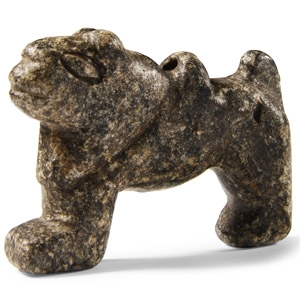
Western Asiatic Stone Lion Pendant
14th-16th century A.D. or laterEstimate: £200 - 300 (+bp*)
Opening Bid: £80
Carved in the round with low-relief mane and facial details, loop behind the shoulders. 58 grams, 58 mm
Ex London, UK, gallery, 1971. -
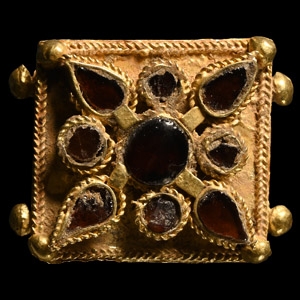
Western Asiatic Garnet-Set Gold Element
Circa 12th-13th century A.D.Sold for (Inc. bp): £468
Of square form, the central stone flanked by teardrop-shaped stone at each corner, with round stones to interstices, all with raised settings with braided borders; the reverse with two rows of pierced spheres, each end with an applied sphere. 4.06 grams, 24.66 mm
From a private family collection formed in the 1970s.
