
Loading, please wait...
LOT 0304
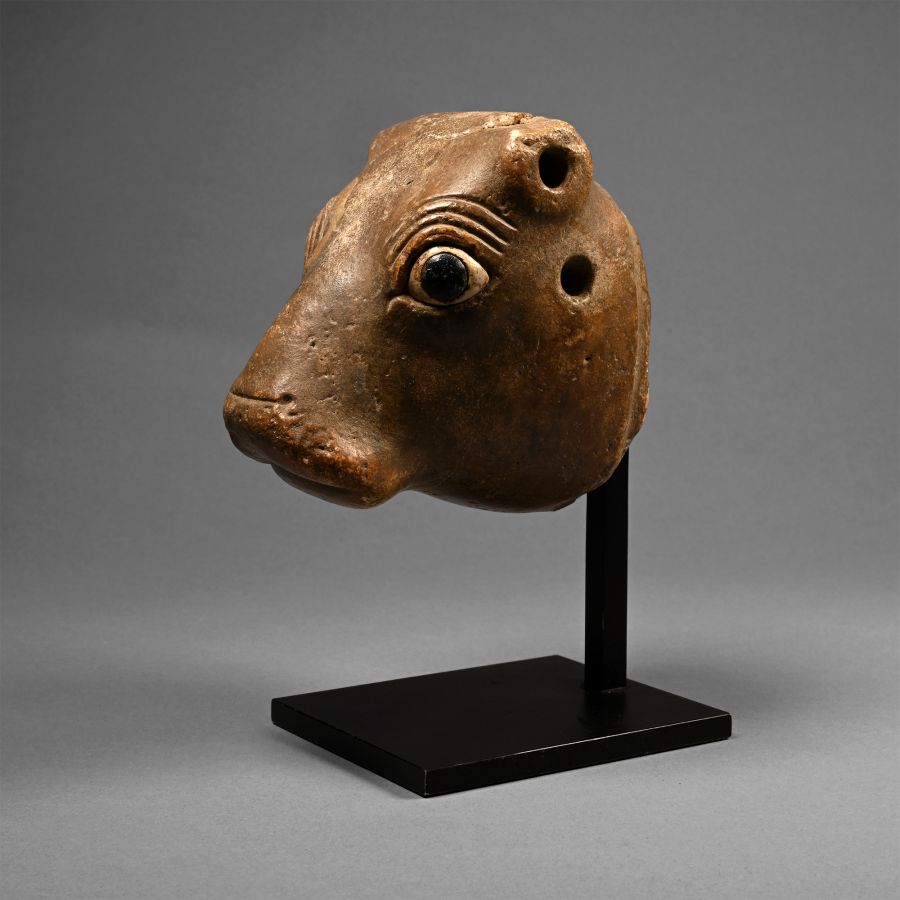
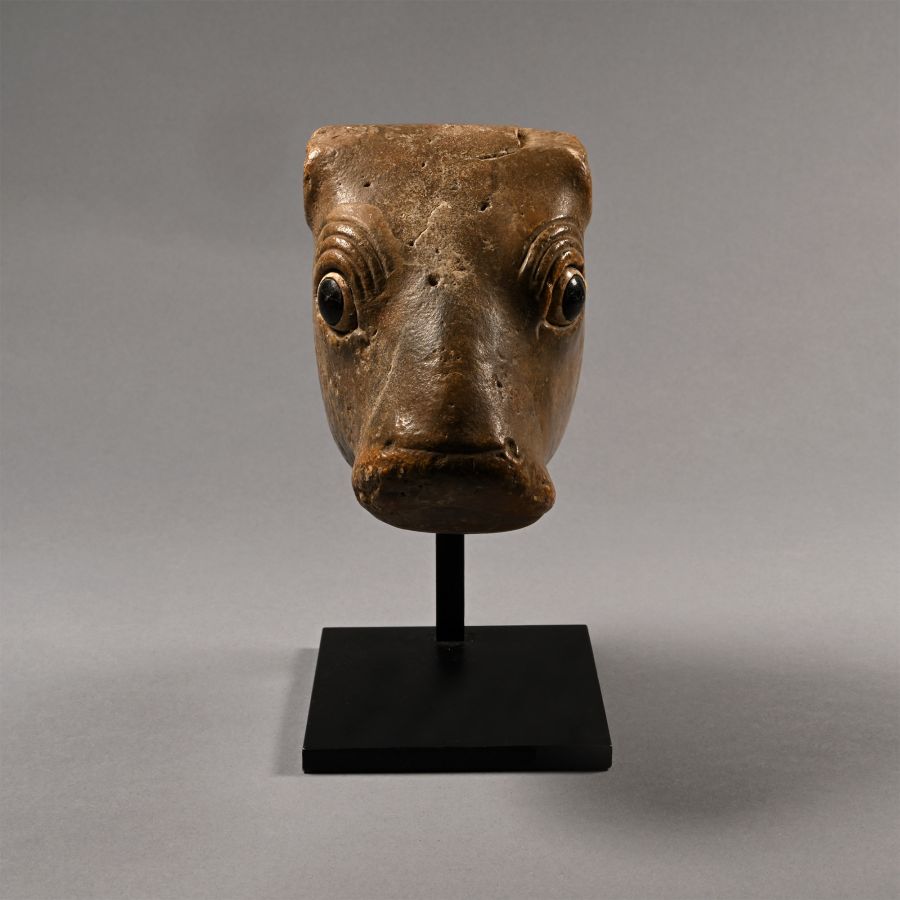
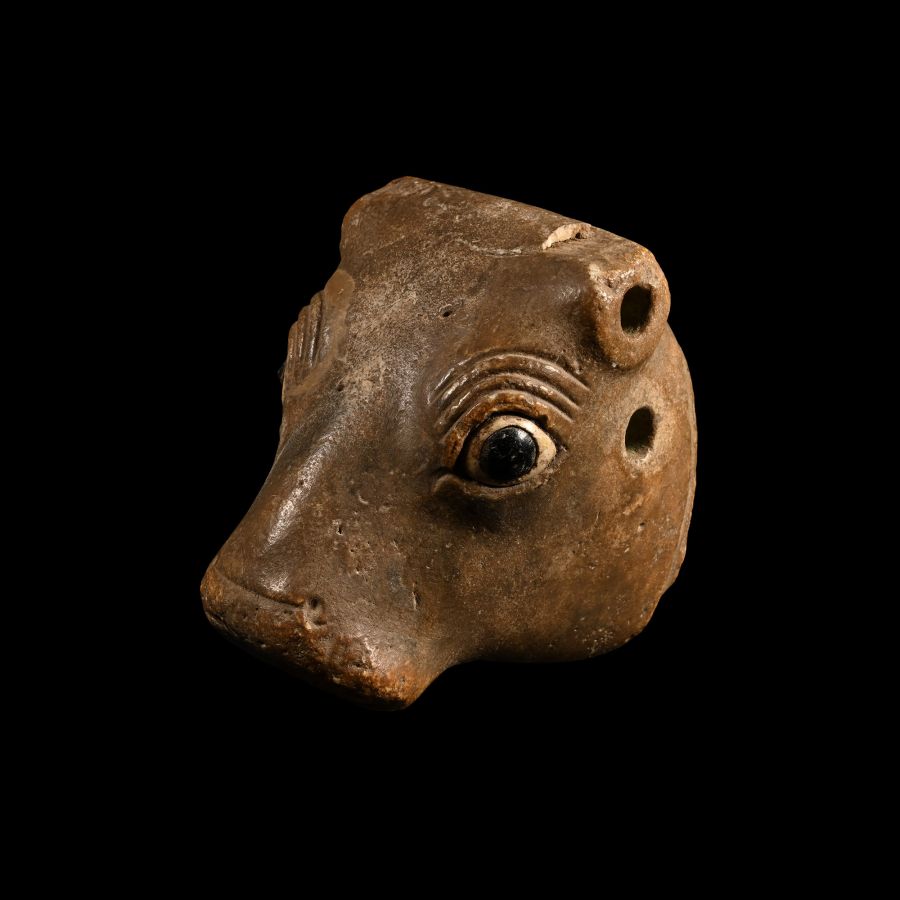
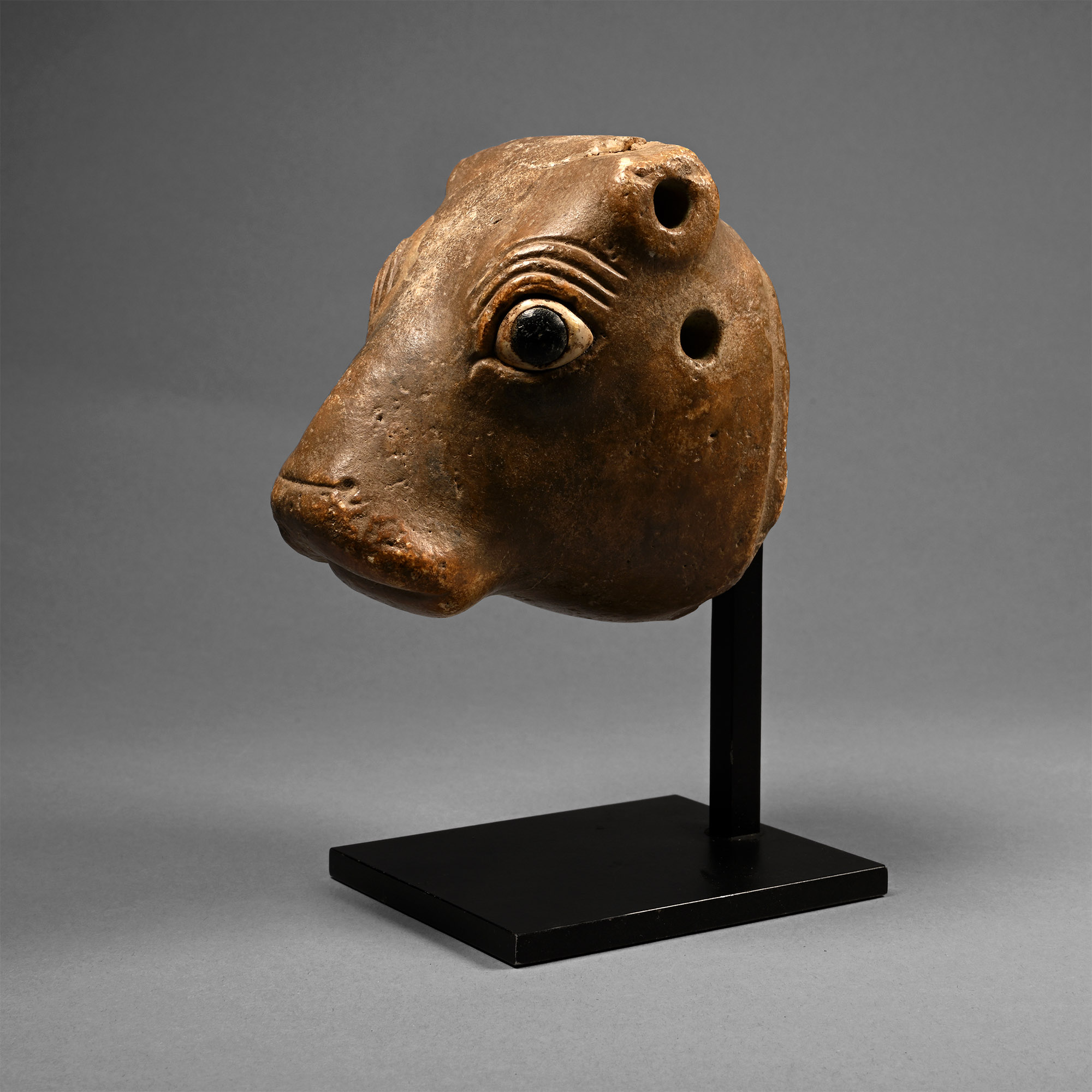
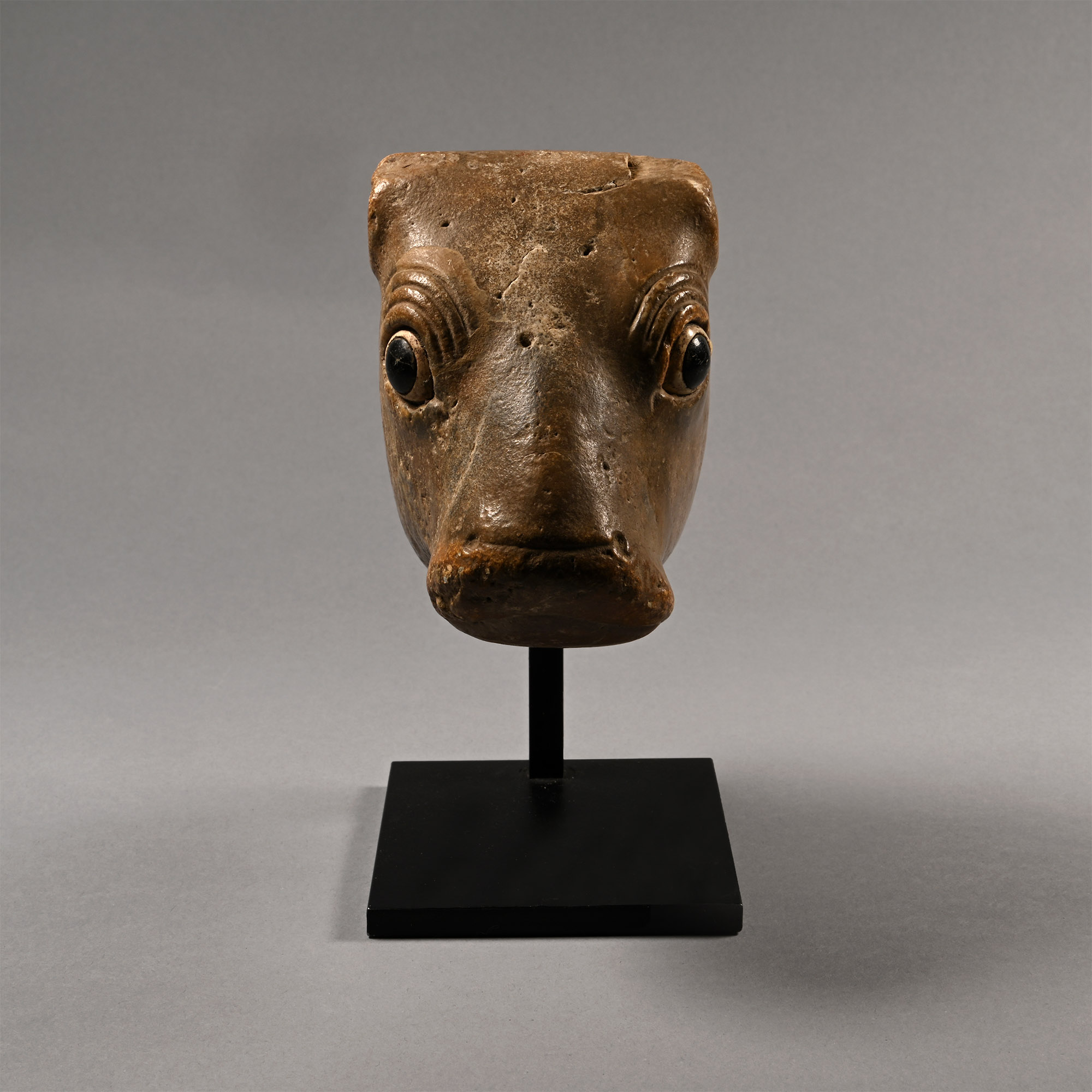
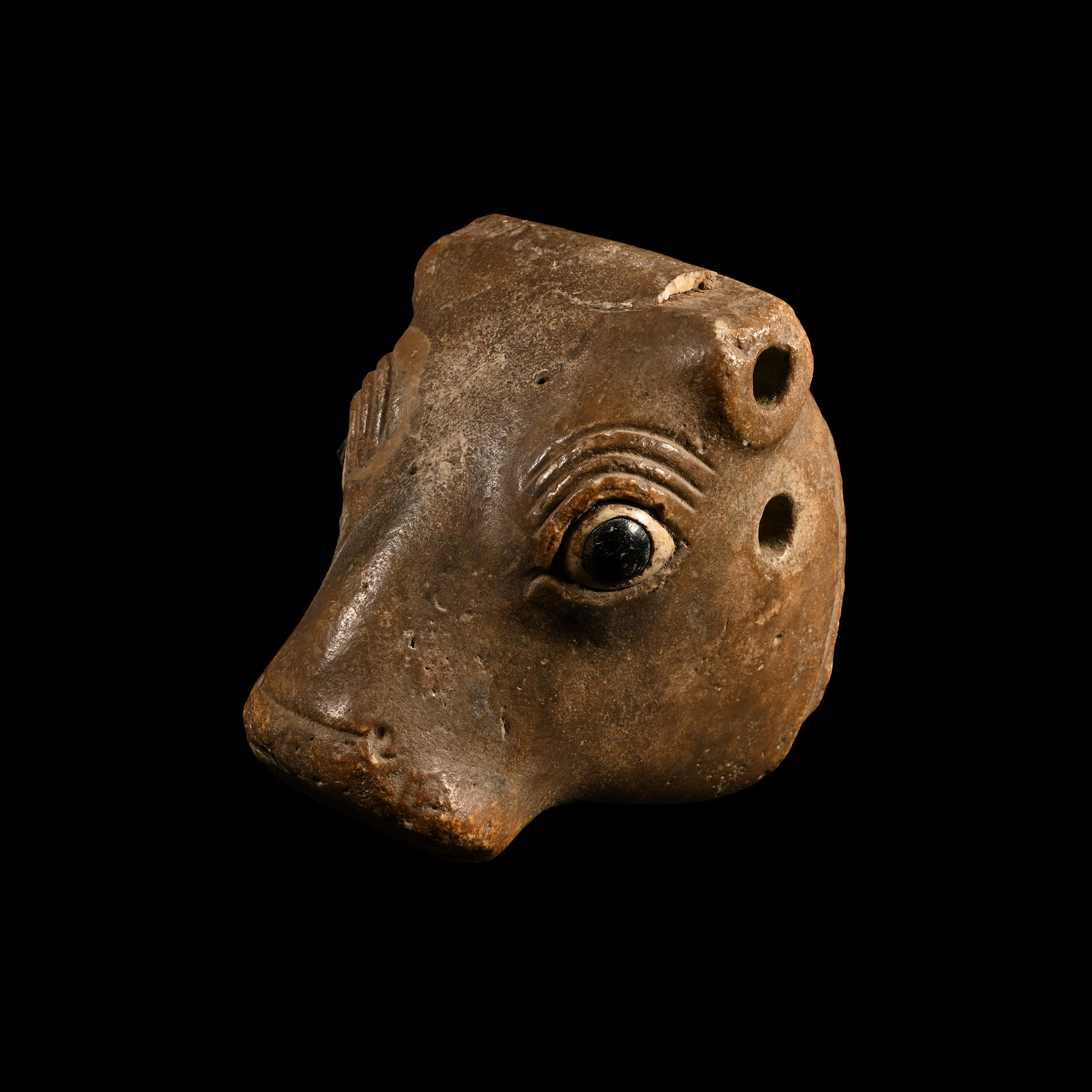
Sumerian Limestone Bull Head Protome
3RD MILLENNIUM B.C.
5 3/4 in. (1.24 kg total, 14.5 cm high including stand).
With large eyes, the pupils inlaid in black chlorite, bone insert for the sclerae, three arching grooved brows, the wide muzzle with a horizontal incision between the nostrils, closed mouth; sockets to the sides of the head to accept separately made horns and ears; the edge of the neck contoured for attachment; mounted on a custom-made display stand.
ProvenancePrivate European collection, 1985.
with Christie’s, New York, 3 June 2009, no.35.
Private collection, Europe.
Accompanied by an academic report by Dr Raffaele D’Amato.
This lot has been checked against the Interpol Database of stolen works of art and is accompanied by search certificate number no.12358-226703.
This lot has been cleared against the Art Loss Register database, and is accompanied by an illustrated lot declaration signed by the Head of the Antiquities Department, Dr Raffaele D'Amato.
Cf. Woolley, L., Medio Oriente, Milano, 1961, for a comparison with a famous gold bull’s head from the Ur’s lyre; Settgast, J., Von Troja bis Amarna, The Norbert Schimmel Collection, Mainz, 1978, no.120, for a club head with similar bull heads; Kramer, S.N., I Sumeri, alle radici della storia, Milano, 1979; see also a copper-alloy head in the British Museum, from Ubaid (Museum Number 118015) in Spicket, A., La statuaire du Proche-Orient Ancien, Leiden, 1981, p.137; Van Dijk-Coombes, R. M., ‘Mesopotamian Gods and the Bull’ in Sociedades Precapitalistas, 8(1), December 2018, pp.1-15.
FootnotesIn Sumerian mythology, the bull was associated with the storm and rain god Hadad (Iškur), and is widely represented on artworks (Woolley, 1961, pp.46, 52; Kramer, 1979, figs.17, 18, 22). The round inlaid eyes are typical of Sumerian art of Early Dynastic Period, as well as the triple eyebrows.
CONDITIONTimeLine Auctions follows a vetting process to ensure the authenticity and legality of all items, reinforcing our commitment to integrity and responsible trading. Each antiquity, antique, and coin lot undergoes thorough examination by a vetting committee of at least ten external specialists, professional trade association members, scientists, and archaeologists: Our Vetting Process
AUCTIONS:
TimeLine is a leading auction house specialising in antiquities, ancient art, collectables, natural history, coins, medals, and books. Our auctions offer museums, collectors, historians, and enthusiasts the opportunity to acquire unique and historically significant pieces.
-
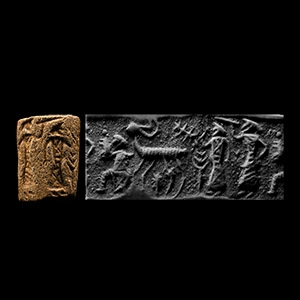
Anatolian Yellow Stone Cylinder Seal with Horned Quadruped
2nd millennium B.C.Sold for (Inc. bp): £98
Cylinder with cord and bead handles; accompanied by a copy of an old scholarly note, typed and signed by W.G. Lambert, late Professor of Assyriology, University of Birmingham, 1970-1993, which states: 'Description of Cylinder Seal of Yellow Stone (?), 31 x 23.5 mm. Standing horned quadruped with plant(?) between splayed legs, before it three figure of human form, the first seated, the other two standing, the first of them holding up a weapon(?), the other a branch(?) ; all three face away from the horned animal , and there is a tree in front of the last of the three. This is a very unusual piece, and the cylinder is irregular as though an existing piece of material had been used without trimming to a regular shape. Most probably second millennium and from Syria or Anatolia. Condition very good.'; supplied with a museum-quality impression. 24.8 grams, 31 mm
UK private collection, acquired 1980-1983. Accompanied by a copy of a scholarly note, typed and signed by Professor Wilfrid George Lambert in November 1987. This lot has been cleared against the Art Loss Register database, and is accompanied by an illustrated lot declaration signed by the Head of the Antiquities Department, Dr Raffaele D'Amato. -
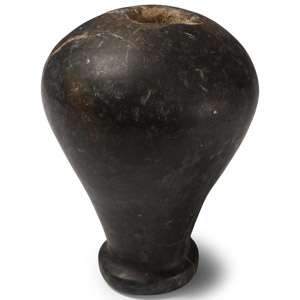
Western Asiatic Stone Macehead
3rd-2nd millennium B.C.Sold for (Inc. bp): £117
Tubular in form with tapering profile and balustered socket. 369 grams, 84 mm
From a West London, UK, collection, 1980-1990s. This lot has been cleared against the Art Loss Register database, and is accompanied by an illustrated lot declaration signed by the Head of the Antiquities Department, Dr Raffaele D'Amato. -
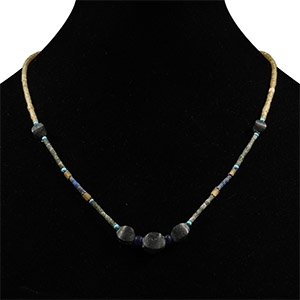
Western Asiatic Stone and Glass Bead Necklace
20th century A.D.Sold for (Inc. bp): £20
Composed mainly of tubular beads with larger facetted feature beads; restrung with S-hook clasp. 13 grams, 46 cm
Ex collection of a late London, UK, collector, 1970s. This lot has been cleared against the Art Loss Register database, and is accompanied by an illustrated lot declaration signed by the Head of the Antiquities Department, Dr Raffaele D'Amato.
