
Loading, please wait...


LOT 0223
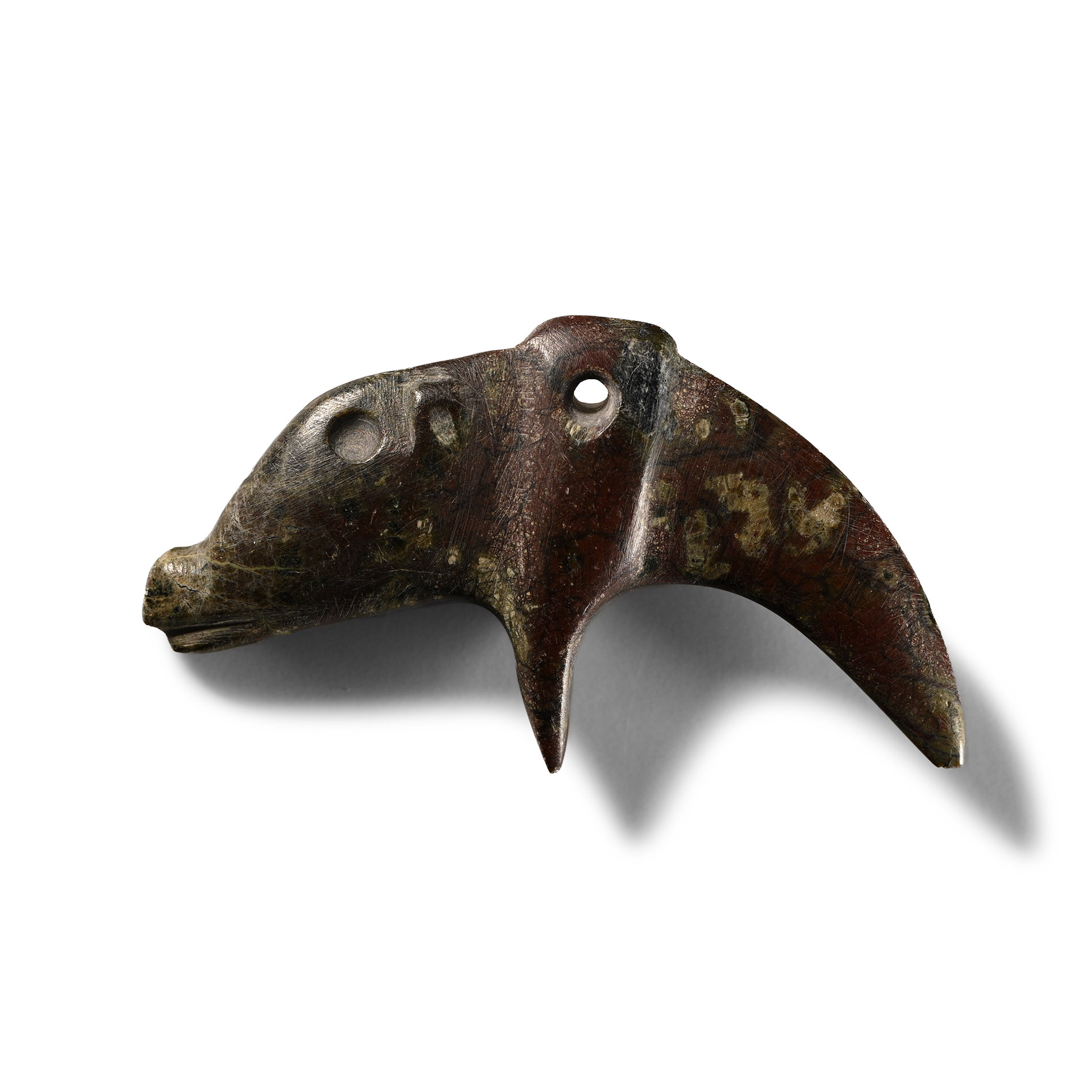
Sumerian Jemdet Nasr Stone Boar Amulet
3RD MILLENNIUM B.C.
2 1/4 in. (11.2 grams, 56 mm).
With a crescentic polished body, head with drilled eyes and slit mouth, pierced through the raised median collar.
ProvenanceCollected from 1970-1999.
From the collection of the late Mr S.M., London, UK.
TimeLine Auctions follows a vetting process to ensure the authenticity and legality of all items, reinforcing our commitment to integrity and responsible trading. Each antiquity, antique, and coin lot undergoes thorough examination by a vetting committee of at least ten external specialists, professional trade association members, scientists, and archaeologists: Our Vetting Process
AUCTIONS:
TimeLine is a leading auction house specialising in antiquities, ancient art, collectables, natural history, coins, medals, and books. Our auctions offer museums, collectors, historians, and enthusiasts the opportunity to acquire unique and historically significant pieces.
LOT 0223
Sumerian Jemdet Nasr Stone Boar Amulet
Estimate £500 - 700€580 - 810 (for guidance only)$680 - 950 (for guidance only)
-
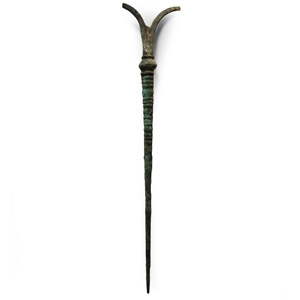
Luristan Bronze Cloak Pin
13th-7th century B.C.Sold for (Inc. bp): £33
With tapering round-section shank, stepped profile to the upper section and biconvex bulb; divergent antenna arms above. 60 grams total, 22.5 cm
From a 1990s German collection. Ex London, UK, gallery. -
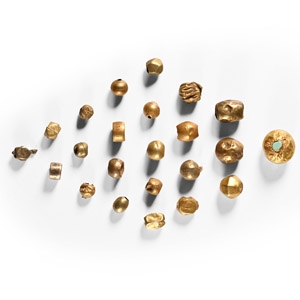
Western Asiatic Gold Bead Group
2nd-1st millennium B.C.Estimate: £500 - 700 (+bp*)
Opening Bid: £250
Including spherical, biconical, barrel-shaped and other types, 7.98 grams total, 5-12 mm
Ex property of a late Japanese collector, 1970s-2000s. -
.jpg)
Western Asiatic Pierced Stone Stamp Seal with Symbols
1st millennium B.C. or laterSold for (Inc. bp): £46
A polyhedral pyramid with cuboidal suspension black to apex; incised symbols to base. 27 grams, 36 mm
Ex Simmons Gallery, London E11, UK, in the 1990s. From a North London collection.
