
Loading, please wait...
LOT 1247
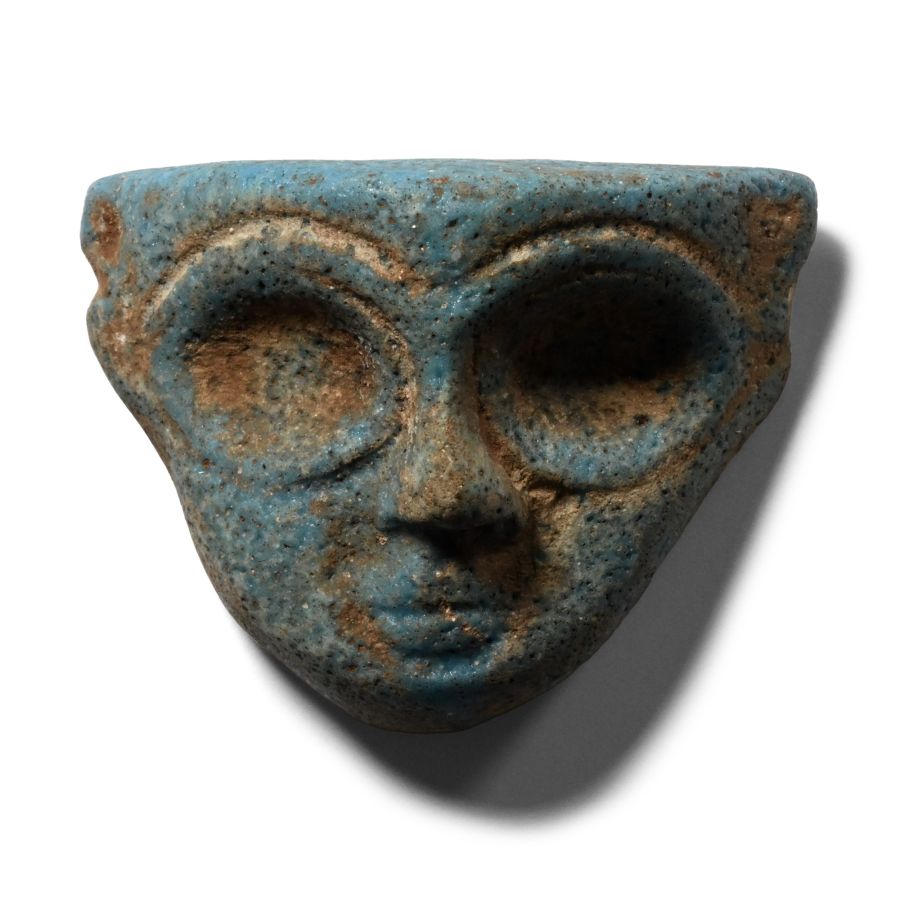
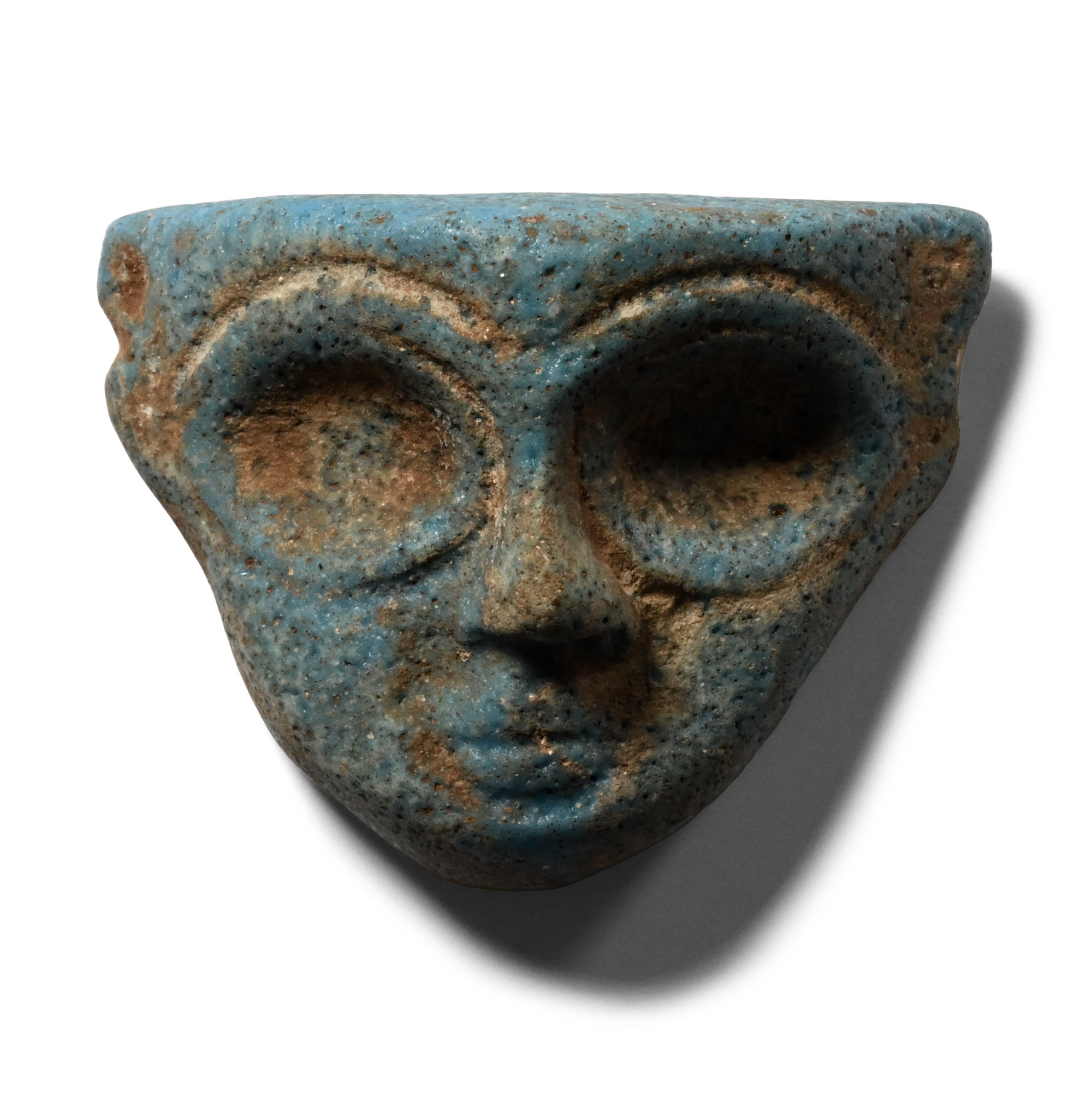
Sumerian Faience Face Mount
LATE 3RD MILLENNIUM B.C. OR LATER
1 1/2 in. (11.7 grams, 40 mm).
Slightly curved with wide forehead and large, hollow eyes, incised arched eyebrows and small pouting mouth.
ProvenanceFrom the collection of a late London, UK, gentleman, 1970s.
This lot has been cleared against the Art Loss Register database, and is accompanied by an illustrated lot declaration signed by the Head of the Antiquities Department, Dr Raffaele D'Amato.
TimeLine Auctions follows a vetting process to ensure the authenticity and legality of all items, reinforcing our commitment to integrity and responsible trading. Each antiquity, antique, and coin lot undergoes thorough examination by a vetting committee of at least ten external specialists, professional trade association members, scientists, and archaeologists: Our Vetting Process
AUCTIONS:
TimeLine is a leading auction house specialising in antiquities, ancient art, collectables, natural history, coins, medals, and books. Our auctions offer museums, collectors, historians, and enthusiasts the opportunity to acquire unique and historically significant pieces.
-
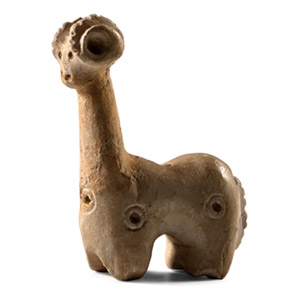
Sumerian Calcite Figure of a Ram
Uruk, 3rd millennium B.C.Sold for (Inc. bp): £650
Modelled in the round with tall extended neck, coiled lateral horns, incised ring-and-dot motifs. 39.2 grams, 62 mm
Ex collection of the late Mr S. M., London, UK, 1970-1990s. This lot has been cleared against the Art Loss Register database, and is accompanied by an illustrated lot declaration signed by the Head of the Antiquities Department, Dr Raffaele D'Amato. -
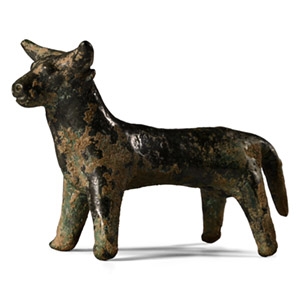
Large Western Asiatic Bronze Figure of a Bull
Circa 10th century B.C.Estimate: £10,000 - 14,000 (‡+bp*)
Opening Bid: £5,000
A heavy example modelled in the round with slender elongated trunk, thick neck and prominent horns, vestigial ears below; Anatolian workmanship. 1.32 kg, 19.2 cm
with Christie's, New York, 8 June 2001, no.363. Private collection, Europe. Accompanied by copies of the relevant Christie's catalogue pages. Accompanied by an academic report by Dr Raffaele D’Amato. This lot has been checked against the Interpol Database of stolen works of art and is accompanied by a search certificate number no.12414-226675. This lot has been cleared against the Art Loss Register database, and is accompanied by an illustrated lot declaration signed by the Head of the Antiquities Department, Dr Raffaele D'Amato.
Bulls with raised horns have been found in central Anatolian royal burials. Among the sacred animals found in the royal graves of Alacahöyük, the bull and the deer are always present. This simplified figure of a young and spritely standing bull recalls the Baltimore bull and other two examples in the Cleveland Museum of Art. Images of bulls were mounted on standards, used in battlefields or in religious processions, or like in the royal graves of Alacahöyük, they were used to decorate cult furniture or shrines. -
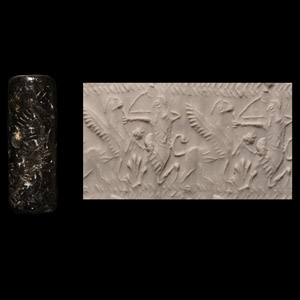
Neo-Assyrian Cylinder Seal with Combat Scene
Circa 800 B.C.Sold for (Inc. bp): £286
Design comprising two rearing gryphons within herringbone borders; supplied with a museum-quality impression. 13.8 grams, 39 mm
Acquired in the mid 1980s-1990s. Private collection, Switzerland, thence by descent. Private collection, since the late 1990s. This lot has been cleared against the Art Loss Register database, and is accompanied by an illustrated lot declaration signed by the Head of the Antiquities Department, Dr Raffaele D'Amato.
