Loading, please wait...

Use mousewheel to zoom in and out, click to enlarge

Details

LOT 1264

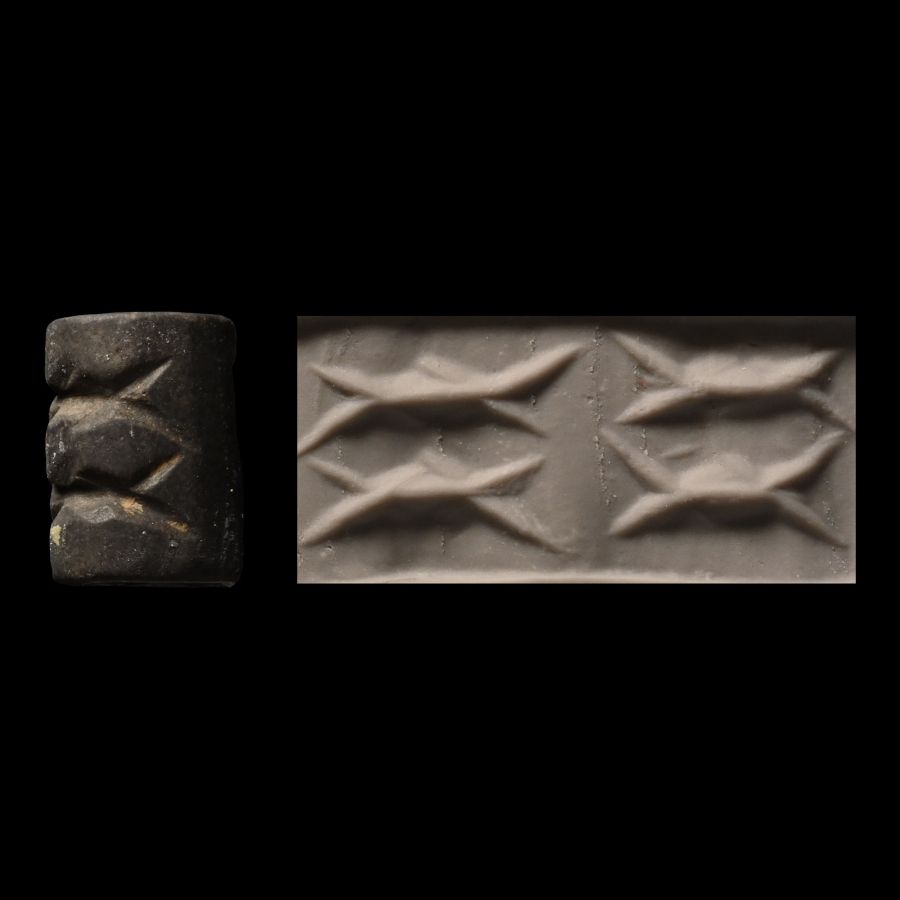
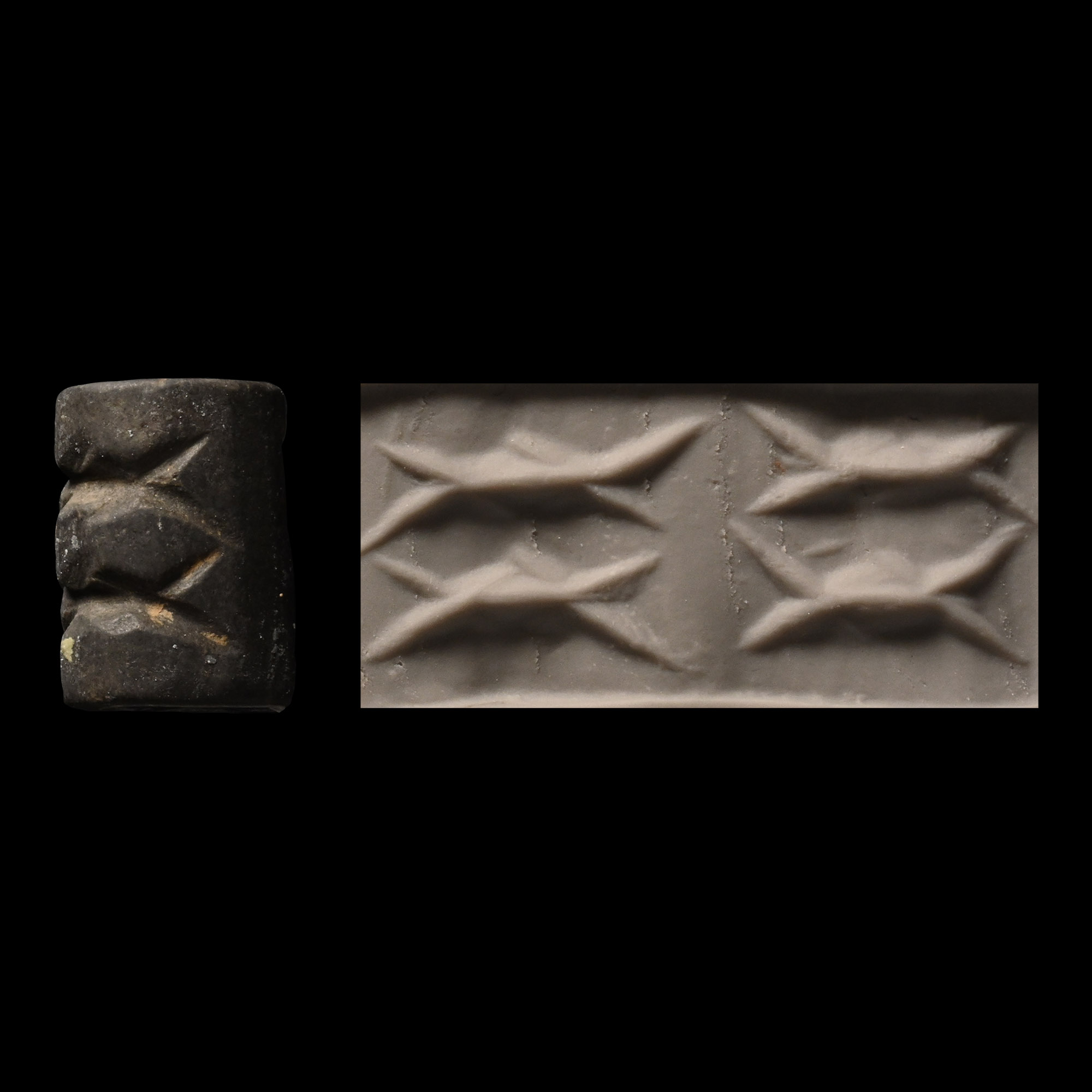
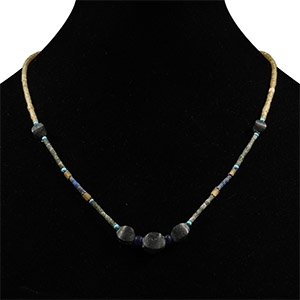
Sumerian Cylinder Seal with Fish

3RD MILLENNIUM B.C.

1/2 in. (2.49 grams, 14.09 mm).

With geometric 'stylised fish' motif; supplied with a museum-quality impression.

Provenance

Acquired in the 1996.
Private collection, Switzerland, thence by descent.
Private collection, since the late 1990s.
This lot has been cleared against the Art Loss Register database, and is accompanied by an illustrated lot declaration signed by the Head of the Antiquities Department, Dr Raffaele D'Amato.

CONDITION

VETTING:

TimeLine Auctions follows a vetting process to ensure the authenticity and legality of all items, reinforcing our commitment to integrity and responsible trading. Each antiquity, antique, and coin lot undergoes thorough examination by a vetting committee of at least ten external specialists, professional trade association members, scientists, and archaeologists: Our Vetting Process


AUCTIONS:

TimeLine is a leading auction house specialising in antiquities, ancient art, collectables, natural history, coins, medals, and books. Our auctions offer museums, collectors, historians, and enthusiasts the opportunity to acquire unique and historically significant pieces.

LOT 1264

Sumerian Cylinder Seal with Fish

Estimate £180 - 240€210 - 280 (for guidance only)$240 - 320 (for guidance only)

Print page

RELATED LOTS

  • Neo-Assyrian Stone Relief with Standing Figure
    Neo-Assyrian Stone Relief with Standing Figure
    9th-8th century B.C.

    Estimate: £4,000 - 6,000 (‡+bp*)

    Opening Bid: £1,800

    Corner fragment from a high-relief pictorial panel with raised border; domed dais with low-relief scaled detailing; lower legs and sandaled feet in advancing pose with ankle-length open-fronted robe, horizontal woven texture and curled fleece; high-relief stele with flared base, bulbous upper and sugar-loaf finial; pitted surface, with tooling to reverse. 2.81 kg, 24.3 cm


    Ex German collection, c.1980. with Toufic Arakji, Hamburg, 1997. Private collection, Europe. Accompanied by an academic report by Dr Raffaele D'Amato. This lot has been checked against the Interpol Database of stolen works of art and is accompanied by search certificate no.12579-232134. This lot has been cleared against the Art Loss Register database, and is accompanied by an illustrated lot declaration signed by the Head of the Antiquities Department, Dr Raffaele D'Amato.

    Stylistically, the figure seems to be linked to the kingdom of Ashurnasirpal II (883-859 B.C.) or his son Shalmaneser III (858-824 B.C.). The exposed lower leg with exaggerated musculature is seen in many Assyrian and Babylonian depictions of divine and heroic figures. The position of the figure, corresponding to some reliefs kept in the Louvre, where a spirit is worshipping a poppy flower (Houston, 1954, pl.V.1), and the high-relief carving strongly refer to a cult scene.

    Lot Details

  • Achaemenid Silver Bowl with Royal Egyptian Inscription for Darius the Great
    A Cartouche Signifying Influence Over the Egyptian Priestly Caste
    Achaemenid Silver Bowl with Royal Egyptian Inscription for Darius the Great
    6th-5th century B.C.

    Sold for (Inc. bp): £13,000

    Bowl fragment including section of the carinated rim, radiating repoussé teardrop bosses with interstitial lotus-flowers motifs and radiating rosette motif below; incised Egyptian hieroglyphic legend below the rim transliterated as 'ı͗nṯry(p sic )wš pr-ꜤꜢ pꜢ ꜤꜢ' (Darius, the Great Pharaoh); mounted on a custom-made stand. 1.23 kg total, 26.7 cm wide including stand


    Previously in the private collection of Mr S.A, acquired on the London art market in the 1960s. Accompanied by a copy of a previous illustrated three page cataloguing/report. Accompanied by a copy of an IADAA Interpol search certificate. This lot has been checked against the Interpol Database of stolen works of art and is accompanied by a search certificate number no.12709-235450. This lot has been cleared against the Art Loss Register database, and is accompanied by an illustrated lot declaration signed by the Head of the Antiquities Department, Dr Raffaele D'Amato.

    Egyptologist Paul Whelan writes: "The inscription reads: ı͗nṯry(p sic )wš pr-ꜤꜢ pꜢ ꜤꜢ (Darius, the Great Pharaoh). The ancient Egyptians encountered difficulties in rendering the name Darius in hieroglyphs, with at least seventeen known variants. This version differs slightly from those, as it also includes an erroneous ‘p’ hieroglyph. The presence of several cuneiform signs following the hieroglyphs indicates that the phiale likely once featured multilingual versions of the inscription - a practice more commonly found on stone vessels. The epithet ‘the Great Pharaoh’ on this fragment represents one of the earliest examples, appearing more frequently in inscriptions from the reign of Xerxes." A hieroglyphic inscription on an Achaemenid item is very rare, although examples on stone vessels are known. Darius I 'the Great' ruled from 522 to 486 B.C. His predecessor, Cambyses II, conquered Egypt in 525 B.C. and the presence of this inscription is probably linked to the subsequent rule of the dynasty over Egypt and its influence on the Egyptian priestly caste.

    Lot Details

  • Seljuk Gold Bracelet with Fluted Body
    Seljuk Gold Bracelet with Fluted Body
    11th-13th century A.D.

    Estimate: £4,000 - 6,000 (‡+bp*)

    Opening Bid: £1,800

    Triangular in section, the shank formed as continuous lops of gold rod tapering to the shoulders, closure formed as a domed disc with granulated top and collar, granulated triangular plaque to each shoulder. 46.8 grams, 70 mm


    Acquired in the 1980s. Private collection, Switzerland, thence by descent. Private collection, since the late 1990s. This lot has been checked against the Interpol Database of stolen works of art and is accompanied by a search certificate number no.12707-234683. This lot has been cleared against the Art Loss Register database, and is accompanied by an illustrated lot declaration signed by the Head of the Antiquities Department, Dr Raffaele D'Amato.

    Lot Details

Stay up-to-date with the latest from TimeLine Auctions by joining our mailing list