
Loading, please wait...
LOT 1178
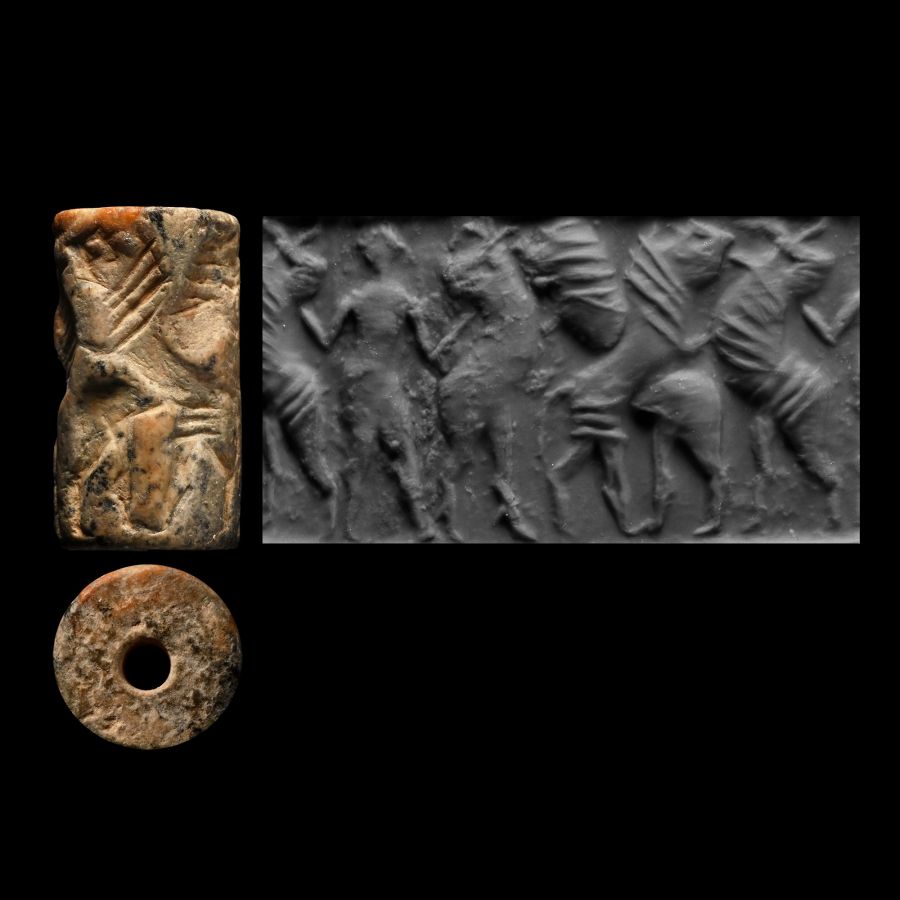
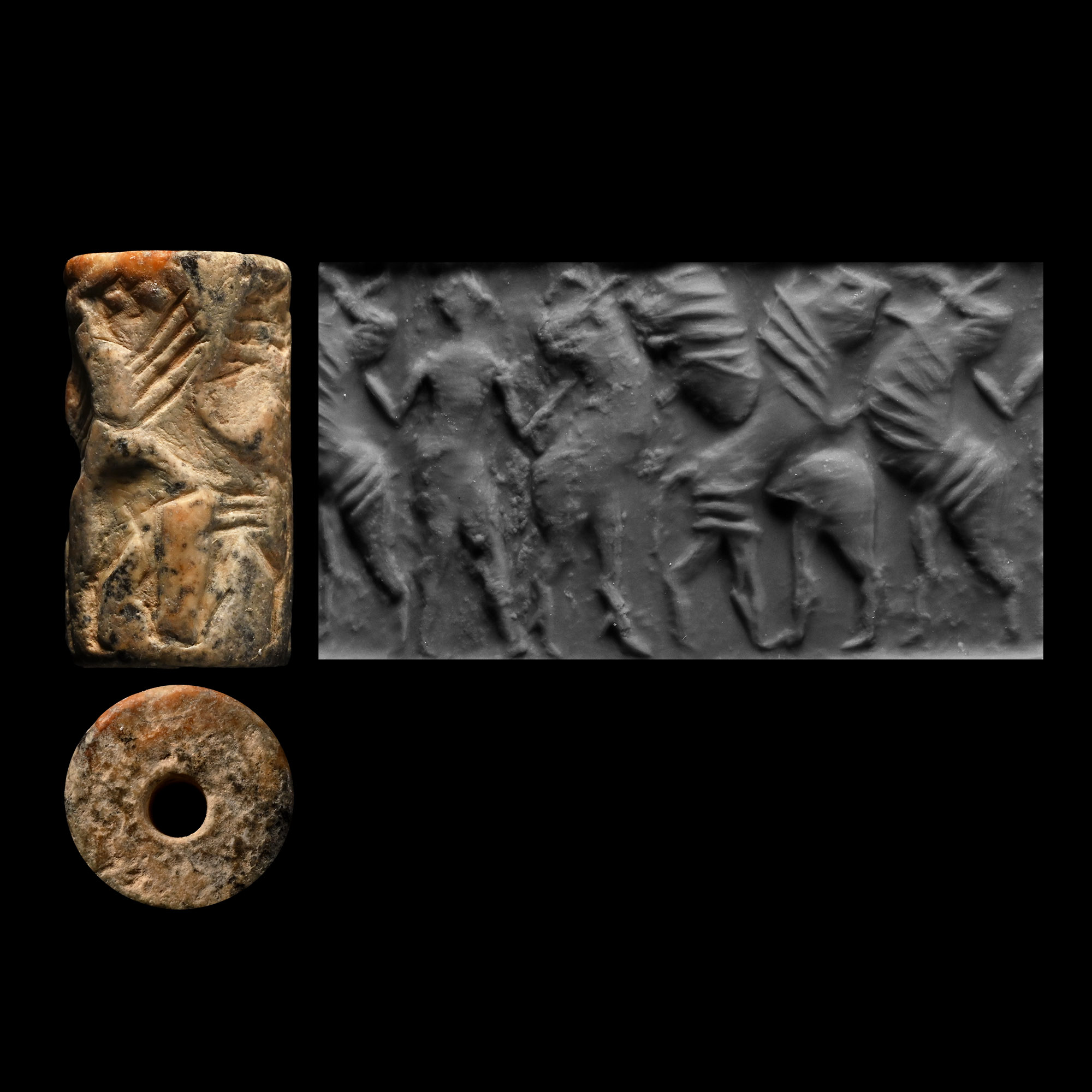
Sumerian Cylinder Seal with Animals
3RD-2ND MILLENNIUM B.C.
1 1/8 in. (13.3 grams, 29 mm).
With frieze depicting rearing beasts and anthropomorphic figure holding two by the neck, the 'Master of Animals'; supplied with a museum-quality impression.
ProvenanceAcquired in the mid 1980s-1990s.
Private collection, Switzerland, thence by descent.
Private collection, since the late 1990s.
This lot has been cleared against the Art Loss Register database, and is accompanied by an illustrated lot declaration signed by the Head of the Antiquities Department, Dr Raffaele D'Amato.
TimeLine Auctions follows a vetting process to ensure the authenticity and legality of all items, reinforcing our commitment to integrity and responsible trading. Each antiquity, antique, and coin lot undergoes thorough examination by a vetting committee of at least ten external specialists, professional trade association members, scientists, and archaeologists: Our Vetting Process
AUCTIONS:
TimeLine is a leading auction house specialising in antiquities, ancient art, collectables, natural history, coins, medals, and books. Our auctions offer museums, collectors, historians, and enthusiasts the opportunity to acquire unique and historically significant pieces.
-
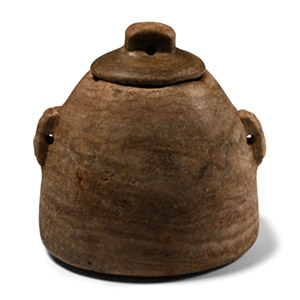
Sumerian Stone Kohl Pot with Two Suspension Holes
3rd millennium B.C.Sold for (Inc. bp): £442
Squat in profile with broad base and narrow rounded rim, two integral lateral lugs pierced to accept a carrying thong; discoid lid with integral lug pierced lug handle, incised saltire above. 610 grams, 98 mm
Private collection. Acquired in 2001. Private collection, Europe. This lot has been cleared against the Art Loss Register database, and is accompanied by an illustrated lot declaration signed by the Head of the Antiquities Department, Dr Raffaele D'Amato. -
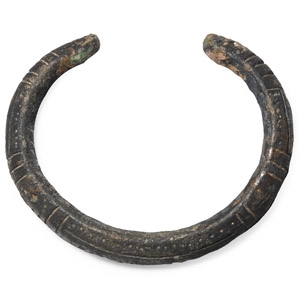
Luristan Bronze Zoomorphic Bracelet
1st millennium B.C.Sold for (Inc. bp): £39
Round-section penannular body with incised linear and pellet decoration, stylised beast-head finials. 52 grams, 66 mm
Ex H. Norry collection, Milton Keynes, UK, 1980s-1990s. This lot has been cleared against the Art Loss Register database, and is accompanied by an illustrated lot declaration signed by the Head of the Antiquities Department, Dr Raffaele D'Amato. -
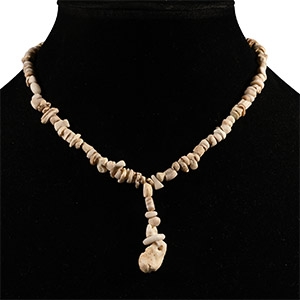
Western Asiatic White Stone and Shell Bead Necklace String
1st millennium B.C. and laterSold for (Inc. bp): £7
Restrung group of fusiform, cylindrical, rectangular and other beads. 15.4 grams, 31 cm
Ex London, UK, collection, 1990s. This lot has been cleared against the Art Loss Register database, and is accompanied by an illustrated lot declaration signed by the Head of the Antiquities Department, Dr Raffaele D'Amato.
