
Loading, please wait...
LOT 0227
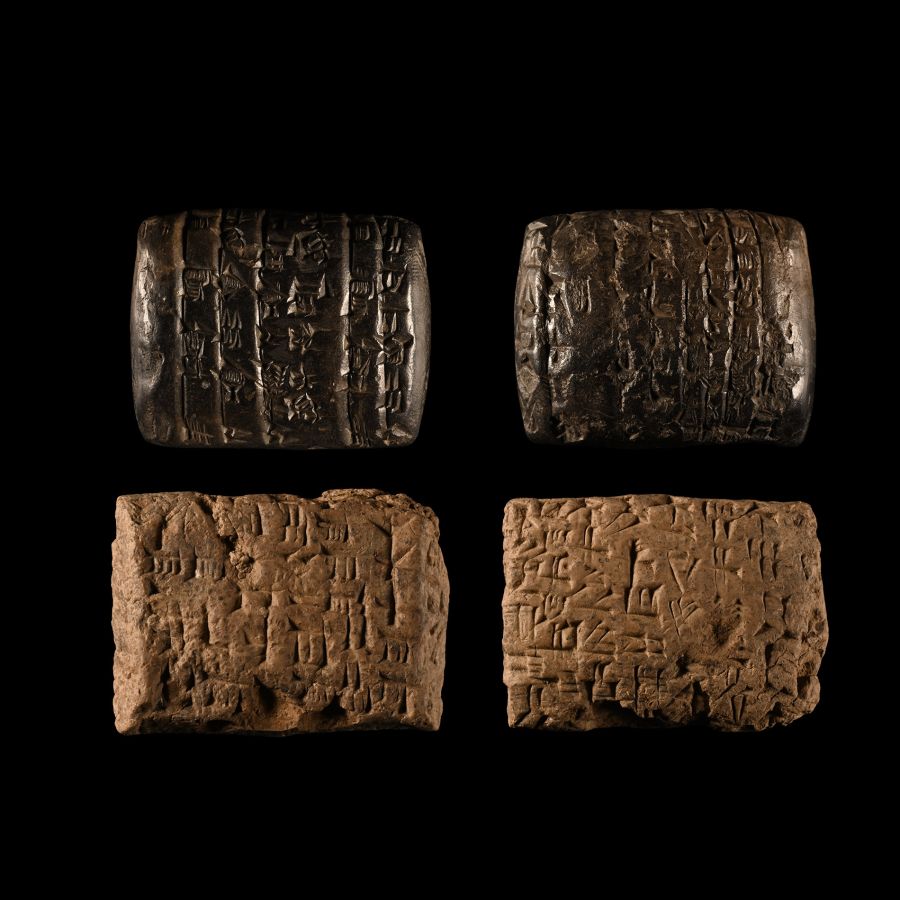
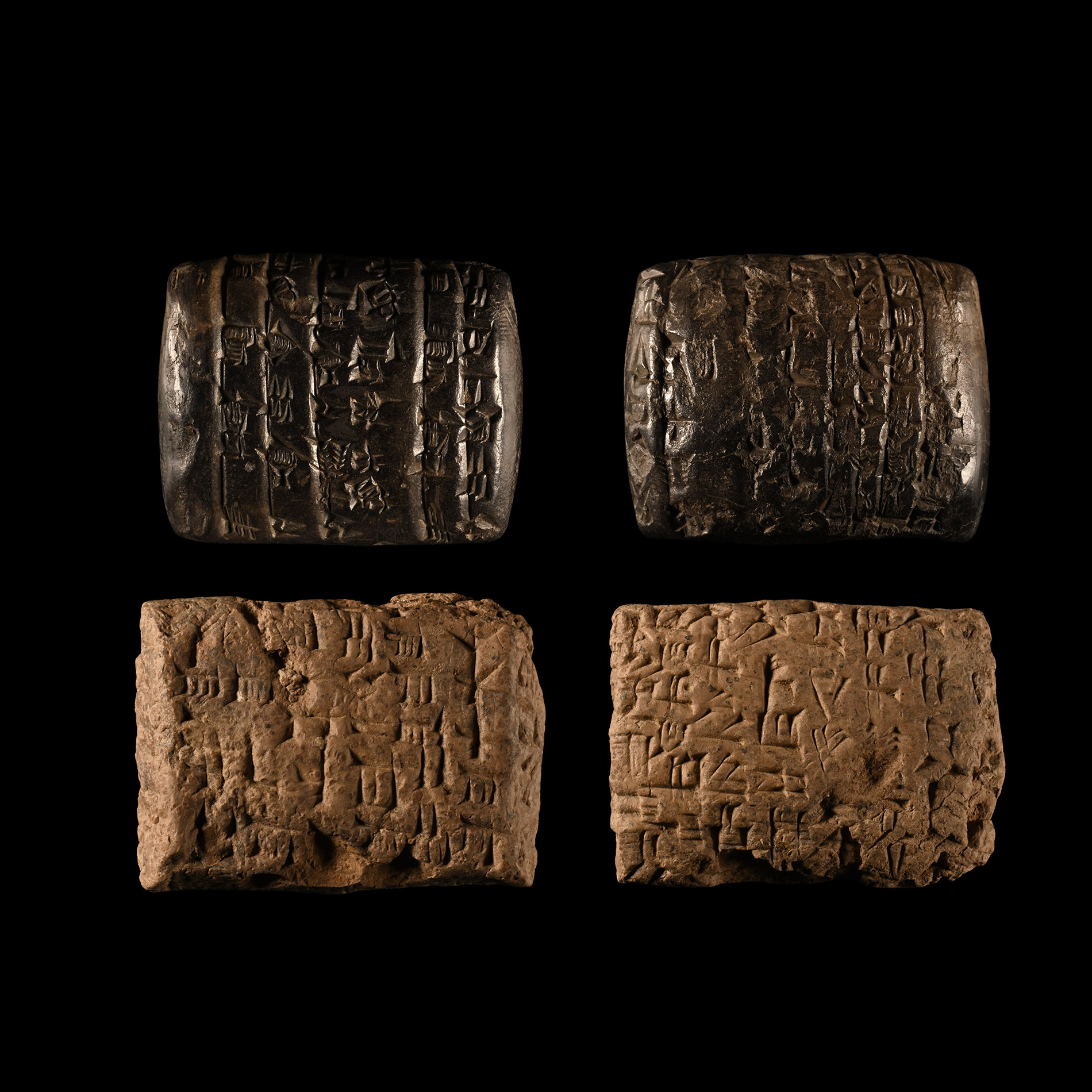
Sumerian Cuneiform Tablet Group with Legal Texts
LATE 3RD-EARLY 2ND MILLENNIUM B.C.
1 3/4 - 2 in. (90 grams total, 45-51 mm).
Comprising two pillow-shaped clay tablets comprising: one in dark brown material, cuneiform text to both broad faces and one edge, polished surface, end of the third millennium but with an Akkadian administrative text; one in tan-coloured material, cuneiform text to both broad faces and three edges, a legal text from the beginning of the second millennium. [2]
ProvenanceAcquired in the 1970s.
European private collection.
Cf. similar item in the British Museum, London, under accession number 1989,0130.4/ BM No.140855 and published in MacGregor, N., A History of the World in 100 Objects, London, 2010 (cat.no.15, pp.90-94).
CONDITIONTimeLine Auctions follows a vetting process to ensure the authenticity and legality of all items, reinforcing our commitment to integrity and responsible trading. Each antiquity, antique, and coin lot undergoes thorough examination by a vetting committee of at least ten external specialists, professional trade association members, scientists, and archaeologists: Our Vetting Process
AUCTIONS:
TimeLine is a leading auction house specialising in antiquities, ancient art, collectables, natural history, coins, medals, and books. Our auctions offer museums, collectors, historians, and enthusiasts the opportunity to acquire unique and historically significant pieces.
-
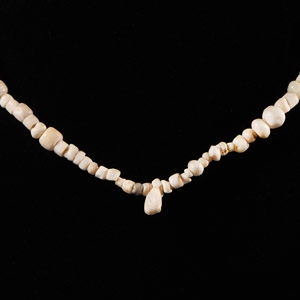
Western Asiatic Stone and Other Bead Necklace
Circa 1st millennium B.C. and laterSold for (Inc. bp): £26
Restrung, composed of white circular beads of stone, shell, and glass, including biconical, irregular and other types. 19.4 grams, 48 cm long
UK gallery, early 2000s.
Similar beads were found in the excavations of the Royal tombs of Nimrud. Thousands of beads were discovered in the sarcophagi (for example those of Nimrud’s Queens) probably originally composed as wide collars with multiple strands. -
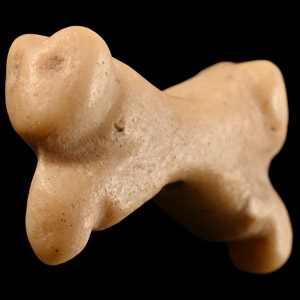
Jemdet Nasr Type Alabaster Animal Amulet
Sumerian, 3rd millennium B.C.Sold for (Inc. bp): £117
Carved in the round, double-headed leaping beast with hole to the centre. 2.67 grams, 24 mm
Collected from 1969-1999. From the collection of the late Mr S.M., London, UK. -
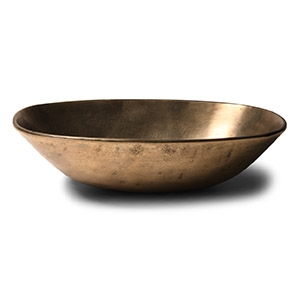
Sassanian Bronze Boat-Shaped Wine Bowl
4th-6th century A.D.Sold for (Inc. bp): £33
Featuring a rounded base; heavily cleaned. 292 grams, 16.5 cm
Acquired prior to 2000. British private collection of Mr D.M., London, UK.
