
Loading, please wait...
LOT 1190
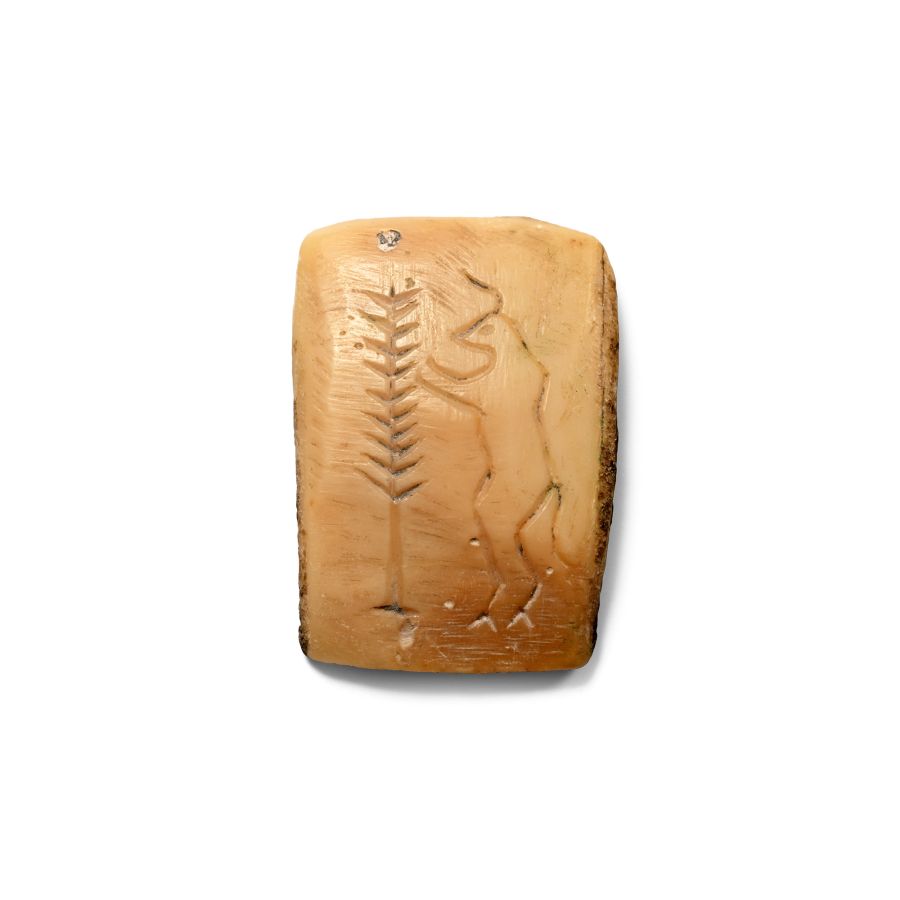
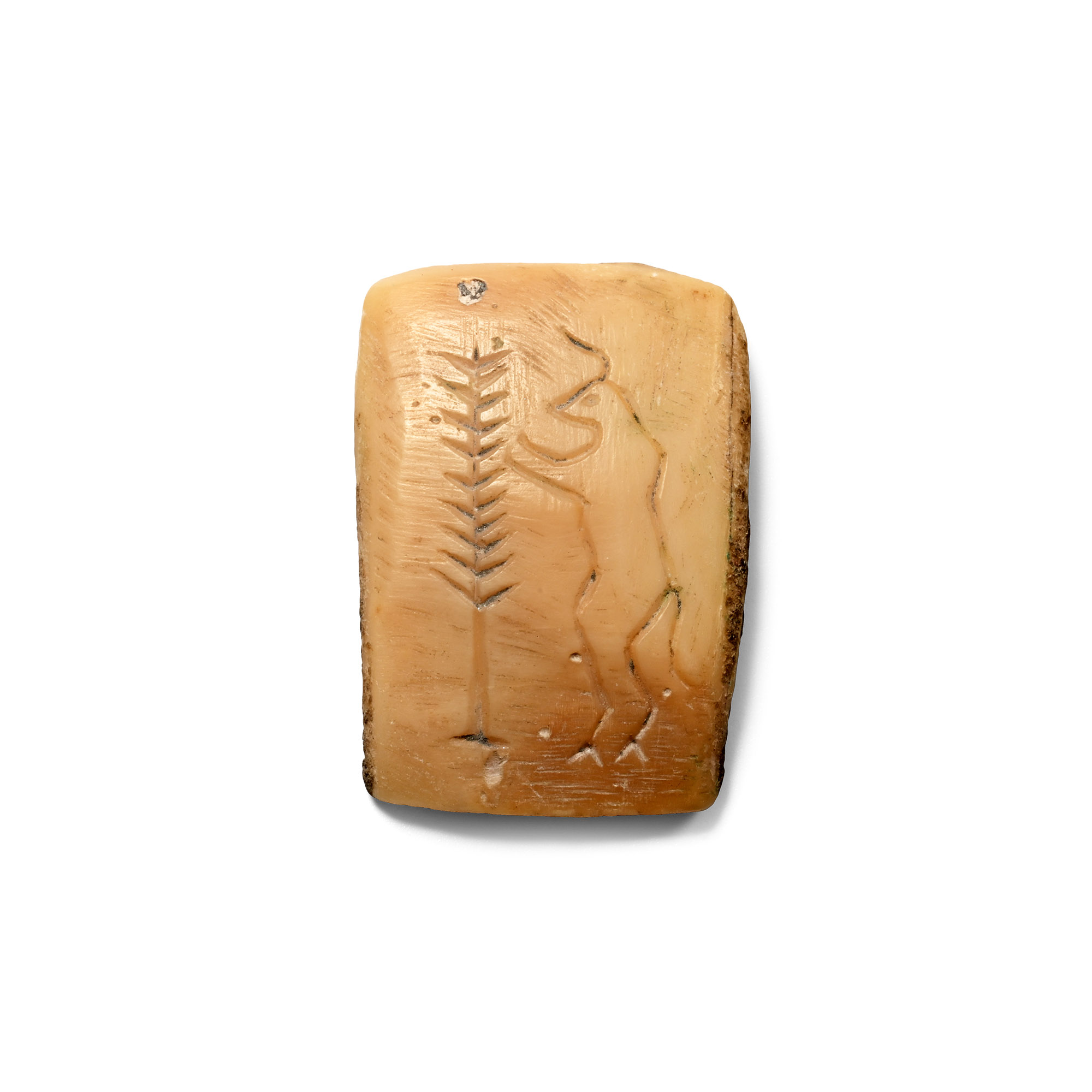
Sumerian Bone Inlay
3RD MILLENNIUM B.C.
1 in. (3.97 grams, 27 mm).
Rectangular with slightly convex upper face, engraved image of a rearing bull against a tree.
ProvenanceFrom an important gentleman's collection, London, UK, pre 1988.
This lot has been cleared against the Art Loss Register database, and is accompanied by an illustrated lot declaration signed by the Head of the Antiquities Department, Dr Raffaele D'Amato.
TimeLine Auctions follows a vetting process to ensure the authenticity and legality of all items, reinforcing our commitment to integrity and responsible trading. Each antiquity, antique, and coin lot undergoes thorough examination by a vetting committee of at least ten external specialists, professional trade association members, scientists, and archaeologists: Our Vetting Process
AUCTIONS:
TimeLine is a leading auction house specialising in antiquities, ancient art, collectables, natural history, coins, medals, and books. Our auctions offer museums, collectors, historians, and enthusiasts the opportunity to acquire unique and historically significant pieces.
-
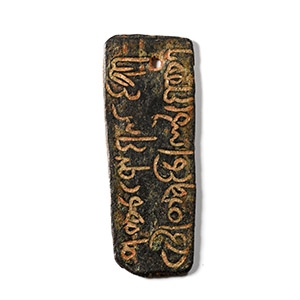
Personal Bronze Tag of Zahra Governor of Esphahan
14th century A.D.Estimate: £400 - 600 (+bp*)
Opening Bid: £222
A medieval period flat-section rectangular plaque pierced at the broad end with incised calligraphic legend: 'Zahra the splendid or the radiant governor of Esphahan ...', Zaraa or Zahra is a female name which also refers to boundless beauty (ذرع اصفهانی واسع الخلیفه با ما معمور). 10.6 grams, 51 mm
From the collection of a gentleman, acquired on the London art market in the 1990s. This lot has been cleared against the Art Loss Register database, and is accompanied by an illustrated lot declaration signed by the Head of the Antiquities Department, Dr Raffaele D'Amato. -
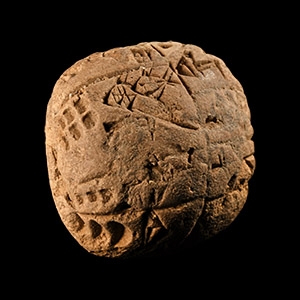
Mesopotamian Square Terracotta Tablet for the Account of Fish
Early 2nd millennium B.C.Sold for (Inc. bp): £468
Biconvex in profile with columns of cuneiform text to the upper face. 28.9 grams, 33.3 mm
Private collection, Jerusalem, assembled in the 1970s-1980s. European private collection, acquired in 1998. This lot has been cleared against the Art Loss Register database, and is accompanied by an illustrated lot declaration signed by the Head of the Antiquities Department, Dr Raffaele D'Amato. -
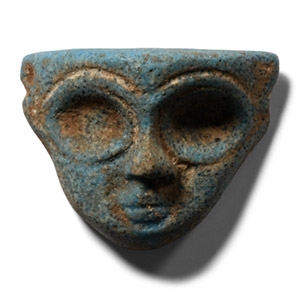
Sumerian Faience Face Mount
Late 3rd millennium B.C. or laterSold for (Inc. bp): £364
Slightly curved with wide forehead and large, hollow eyes, incised arched eyebrows and small pouting mouth. 11.7 grams, 40 mm
From the collection of a late London, UK, gentleman, 1970s. This lot has been cleared against the Art Loss Register database, and is accompanied by an illustrated lot declaration signed by the Head of the Antiquities Department, Dr Raffaele D'Amato.
