
Loading, please wait...

LOT 0240
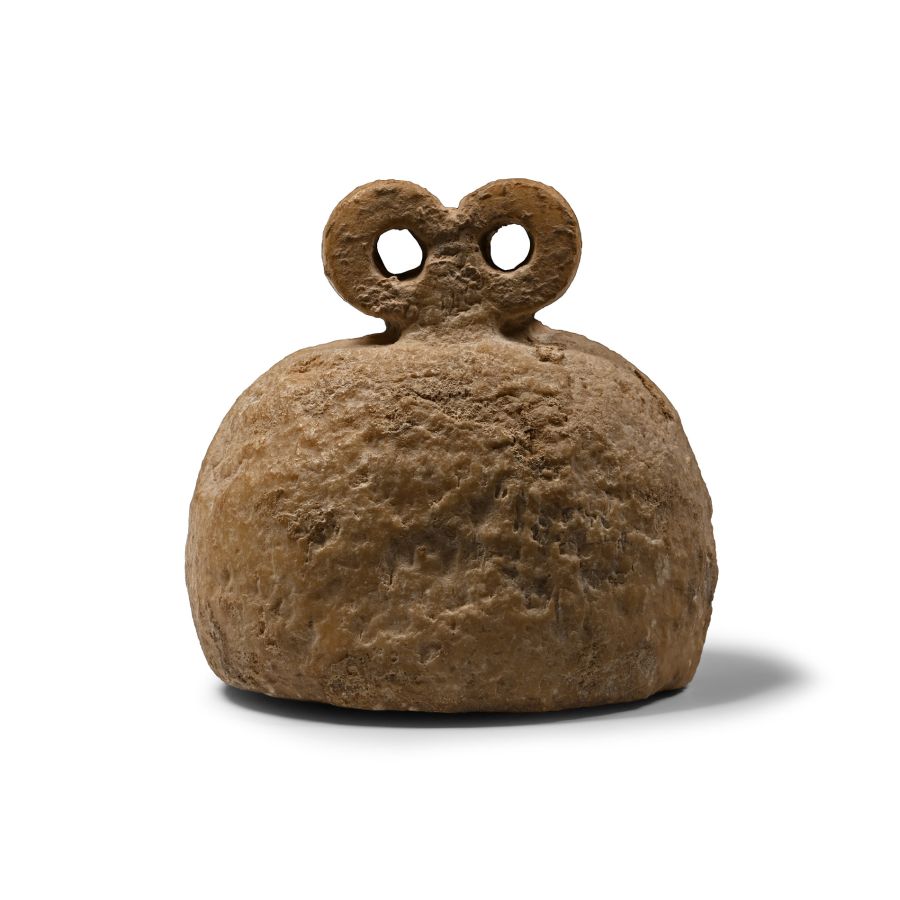
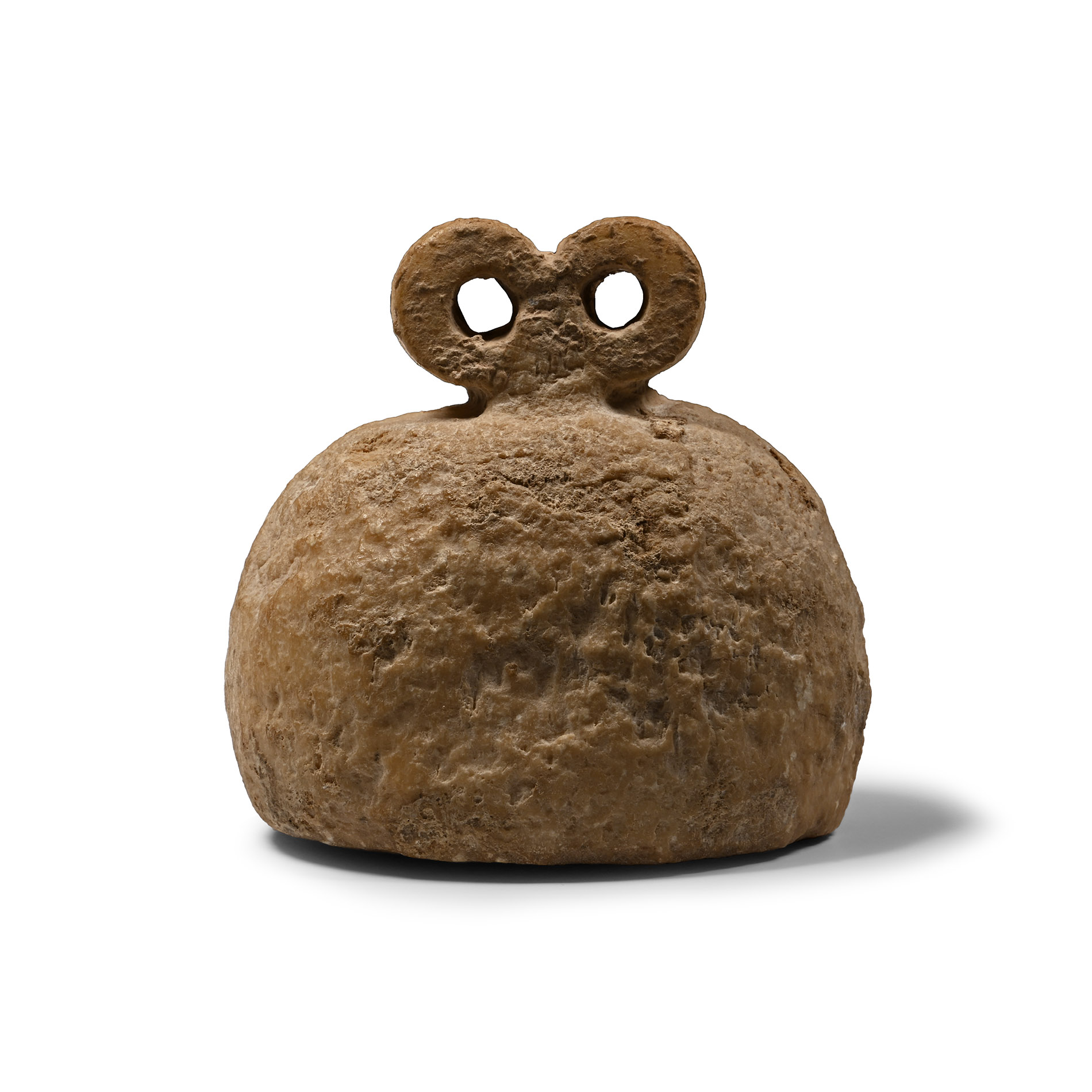
Sumerian Alabaster Eye Idol
4TH-3RD MILLENNIUM B.C.
2 7/8 in. (298 grams, 72 mm).
Formed as a squat, oblate body and dressed upper with two piercings forming eyes; flat underside.
ProvenanceAcquired in the mid 1980s-1990s.
Private collection, Switzerland, thence by descent.
Private collection, since the late 1990s.
Accompanied by an academic report by Dr Raffaele D’Amato.
This lot has been checked against the Interpol Database of stolen works of art and is accompanied by search certificate number no.12186-222131.
See parallel idols in Louvre Museum, accession number SB 9141, for similar; Metropolitan Museum of Art, accession no.1988.323.8; British Museum, excavated by Professor Sir Max Edgar Lucien Mallowan, inv. Nos.126473, 126477 and 126479; see also Collon, D., Ancient Near Eastern Art, London, 1995, p.47, for type; for the discussion on Tell Brak, their iconography and the religious meaning of eye idol see Green, J.B. & T.R., Gods, Demons and Symbols of Ancient Mesopotamia, An illustrated dictionary, London, 1992, pp.78-79.
CONDITIONTimeLine Auctions follows a vetting process to ensure the authenticity and legality of all items, reinforcing our commitment to integrity and responsible trading. Each antiquity, antique, and coin lot undergoes thorough examination by a vetting committee of at least ten external specialists, professional trade association members, scientists, and archaeologists: Our Vetting Process
AUCTIONS:
TimeLine is a leading auction house specialising in antiquities, ancient art, collectables, natural history, coins, medals, and books. Our auctions offer museums, collectors, historians, and enthusiasts the opportunity to acquire unique and historically significant pieces.
-
.jpg)
Bactrian Style Lapis Lazuli Bead Necklace
20th century A.D.Sold for (Inc. bp): £59
Composed of oblate beads. 6.33 grams, 55 cm long
Acquired 1980-2015. Ex Abelita family collection. -
.jpg)
Western Asiatic Orange Carnelian Bead Group
1st millennium B.C. or laterSold for (Inc. bp): £182
Comprising polished and 'natural' beads of mainly melon, facetted bicone and oval types. 50.8 grams total, 11-25 mm
UK gallery, early 2000s. -
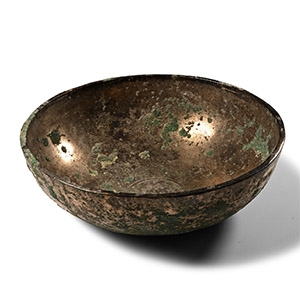
Achaemenid Bronze Bowl
Circa 7th-6th century B.C.Sold for (Inc. bp): £72
With high tinning to the inner face giving a lustrous silvery finish, a tribute to the techniques of the Persian craftsmen; decorated with lightly incised concentric circles inside centre, thickened rim. 338 grams, 16.5 cm
From an old Oxford collection, formed in the 1980s. Ex Chris Martin, UK.
