
Loading, please wait...
LOT 1143
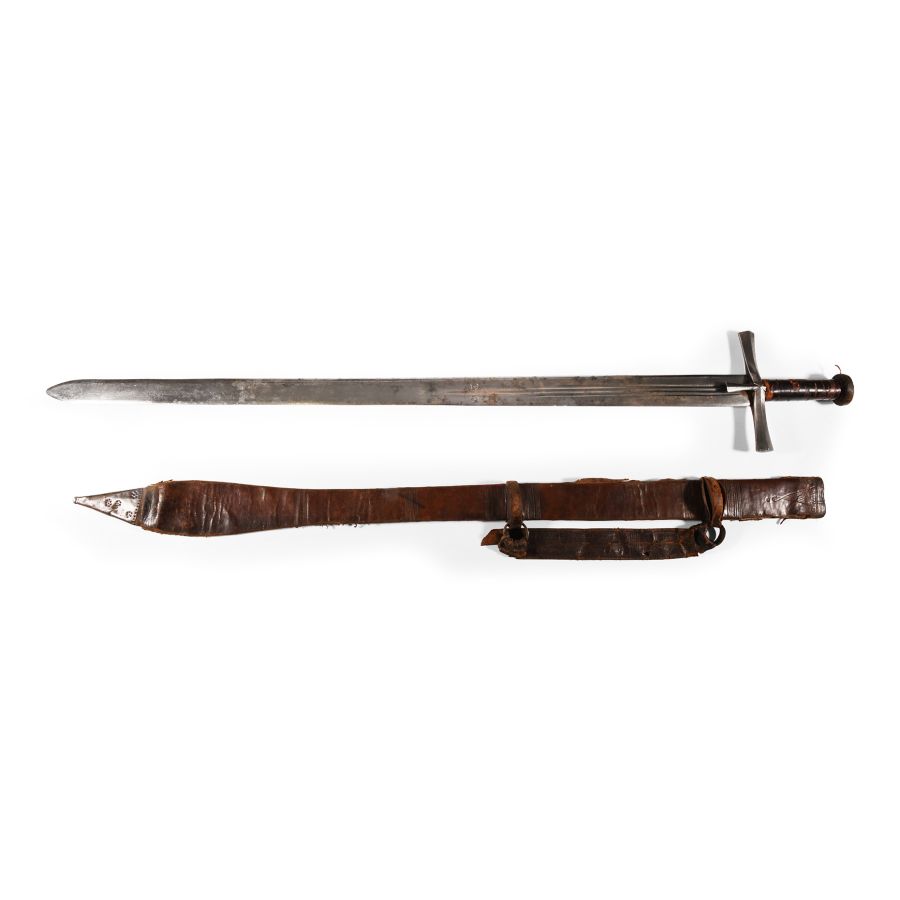
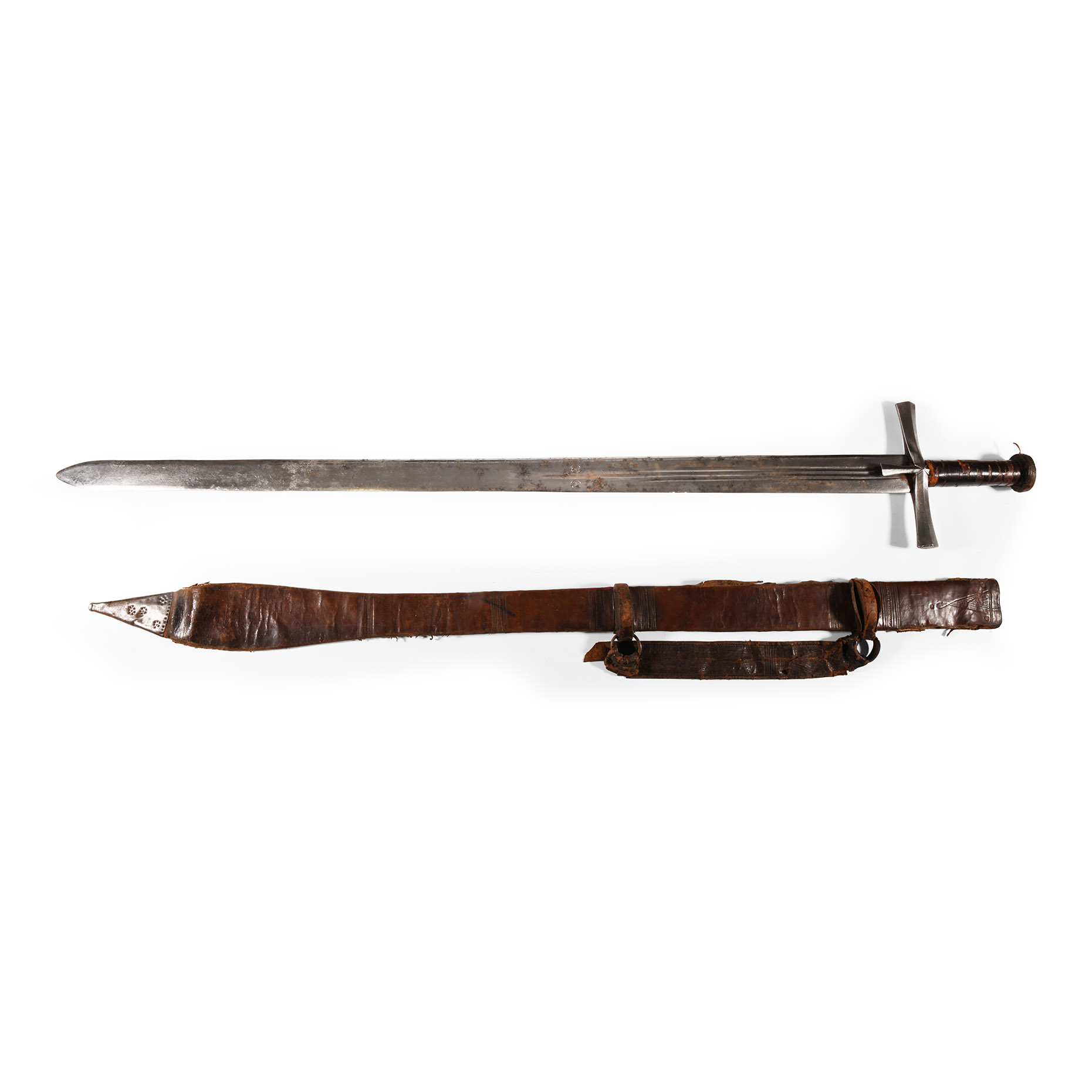
Sudanese Kaskara Sword
19TH CENTURY A.D.
42 1/8 in. (1.3 kg, 1.07 cm).
Of knightly form; composed of a straight double-edged blade of 35.5 inches in length and with central fuller, cruciform hilt, steel cross-guard and bound wooden handle; accompanied by a tooled leather scabbard.
ProvenanceAcquired from MDL Historic Military Antiques, IK, 2015.
The Kusmirek Collection, UK.
Accompanied by copies of the purchase invoice and details.
TimeLine Auctions follows a vetting process to ensure the authenticity and legality of all items, reinforcing our commitment to integrity and responsible trading. Each antiquity, antique, and coin lot undergoes thorough examination by a vetting committee of at least ten external specialists, professional trade association members, scientists, and archaeologists: Our Vetting Process
AUCTIONS:
TimeLine is a leading auction house specialising in antiquities, ancient art, collectables, natural history, coins, medals, and books. Our auctions offer museums, collectors, historians, and enthusiasts the opportunity to acquire unique and historically significant pieces.
LOT 1143
Sudanese Kaskara Sword
Estimate £300 - 400€350 - 460 (for guidance only)$410 - 540 (for guidance only)
-
Sudanese Kaskara Sword
19th century A.D.Estimate: £300 - 400 (+bp*)
Opening Bid: £83
Of knightly form; composed of a straight double-edged blade of 35.5 inches in length and with central fuller, cruciform hilt, steel cross-guard and bound wooden handle; accompanied by a tooled leather scabbard. 1.3 kg, 1.07 cm
Acquired from MDL Historic Military Antiques, IK, 2015. The Kusmirek Collection, UK. Accompanied by copies of the purchase invoice and details. -
.jpg)
Post Medieval Horseman's Axe
Late 17th century A.D. or laterSold for (Inc. bp): £546
Featuring an openwork blade stamped with maker's marks on both faces: three punched starburst marks to one face, starburst and cross with two pellets to the reverse; later wooden shaft, collar and rivet. 740 grams, 67 cm
Acquired 1990s-early 2000s. East Anglian private collection. -
.jpg)
Nathan Starr 1816 Pattern Musket
1832 A.D.Sold for (Inc. bp): £715
Type III, made under contract by Nathan Starr of Middletown, CT; with .69 calibre, 107 cm (42”) browned barrel with side lock marked with Starr’s earlier style of 'US / (ornate sunburst) / N. STARR' ahead of the cock and 'MIDDTN / CONN / 1832 / (rosette)' to the rear with 'US / JM' over a raised 'P' in sunken circular cartouche to top of breech, with various inspection and other small marks, fitted with sling swivels (upper possibly a replacement), steel ramrod with flared tip, full wood stock with steel butt plate, trigger guard, side-plate, barrel rings and fore-end, lock with brass pan; action in good working order. 4.10 kg, 148 cm
Acquired from M J Noble Ltd, UK, 2015. The Kusmirek Collection, UK. Accompanied by the Noble purchase invoice and listing.
Sold as an exempt item under Section 58 (2) of the Firearms Act, 1968, to be held as a curiosity or ornament. No license required but buyer must be over 18 years of age. Overseas bidders should note that, due to UK regulations governing export of all firearms, overseas buyers will need to make arrangements for shipping this lot out of the UK directly, by air freight, with a specialist company or agent.
